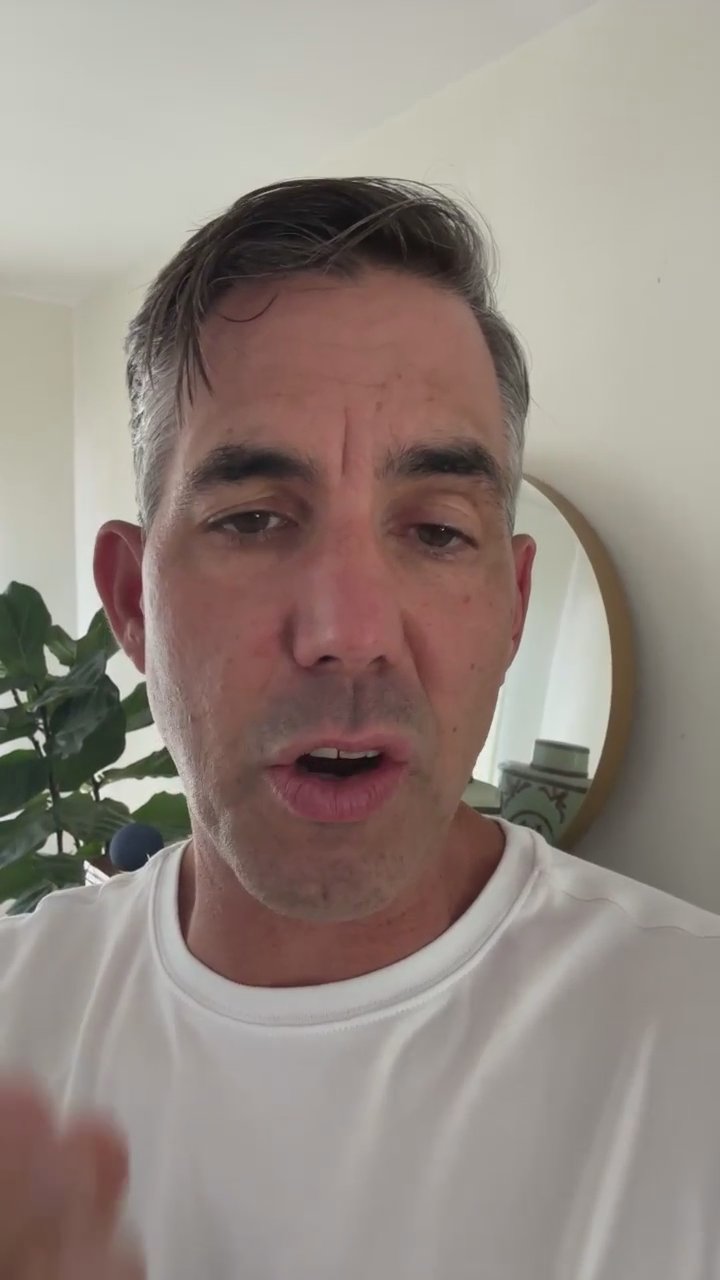
We all have them. Many of us ignore them. But they still have an impact. What does it look like to notice and even make friends with them.
All right. Hello, cadre, cadre community. Hello? Hello. Yes. Today is a beautiful day. It's Saturday. September something 18th. Maybe sounds good. Um, and, uh, yeah, you know, so I wanted to talk about making peace with the voices inside. You know, some people are like, well, what voices are you talking about? And other people are like really clear, like, oh no, there's voices in my head. Like, it's not just the crazy. People. Hey, speak wonder. How's it going? Um, but I was thinking about that.
Because I'm like, I got 32 years in recovery. I've done a lot of personal work and I still. Still oh have Hey Davis, what's up. And I still have these voices in my head. Sometimes they're nice. Sometimes they're not, sometimes they're quiet sometimes they're loud. But they're in there. And like, the question is like, do you just pretend like they're not there? And then just try. To go about your, your world, you know? So when you walk into a room and the. Voice says, oh man, these people don't like you, or when you walk into a room.
And it's just like you don't belong or when you walk. And, and the feeling maybe even precipitates the thought. I don't know. I, I don't know how that works. I don't believe that the thought always precipitates the feeling. That's a very Western. Idea, but it doesn't matter. Right because there is insecurity. There's some fear comes up. And then there's voices that either support it or are driving that. But it's like, how do we make peace with that? And I'm a part of the adult children of alcoholics.
Alcoholics fellowship. And that has really been a wonderful thing because then what. What it really begins to do is to, to notice how. Those voices are connected to parts of myself. Before. Were, um, you know, any of the parts. Therapy came about, um, or Richard Swartz. Schwartz and his work. Came about, there was ACA. And it said like, look, there's this, there's the young. Little person inside of us often carrying these wounds. There's a teenager. There's a parent and then like, there's a. A loving parent.
And, uh, the big thing is, is that. I don't know if I'll ever not have these voices in my head. Right. I don't know. If I'll ever not have like some critical voices, I just, I. Lived in too much negativity. And I mean, and we still we're, this is such a negative. Reactive soup that we are constantly in. As human beings in our world. That the voices are probably not gonna go away, but how do I. Respond to those voices. That's the key. That's the key for me, right. And so I begin to notice and like, I was just, just now.
I was feeling a little insecure, a little reluctant to go to this work meeting. I hadn't. Hadn't been to in a while and I was on the board at this organization. And I was Y, you know, like a little. Nervous to be there. This is how it started having like, some of those thoughts of like, well, maybe I just don't go or maybe I do it online or, you know, whatever. And then of course how I respond to those, how we respond to those. Voices. That's the key, cuz I don't think I'll ever get rid of 'em per se.
I think they'll always. Be there to varying degrees. I mean, here I am. This amount of recovery and the amount of trauma work and personal work in men's work. And all the work that I've done. And there's still there. Chances are they're gonna be there for a while, but it's like, what do I do with. It, how do I respond to it? And so there's this idea of a loving parent and the loving parent basically. Responds to that wounded. Insecure afraid part of us. The way we needed. Growing up that we didn't get.
And so that loving part was like, Hey. Just go. Have fun. It's not about you. Look for people who are new. And have a good experience. That's great. And so I was able to do that and I had a great experience. And then there was. Still the voice. Is during that. Um, meeting, you know, it was like a workshop and it was a workshop about creating webinar. Webinars and all this sort of stuff and blah, blah, blah, all, all work stuff. But like, I, I started, I started kind of having this stuff around this guy.
And started making up some stuff in my head and I was like, oh my gosh, Hey, what if. What if we just let go of any need for conflict or tension? With this guy and just celebrate him. In his role for the organization. That's what a loving parent would say to an insecure. Kid who's feeling hurt and jealous. And, you know, something like that. So you know, I truly. Believe that all human beings have voices in their head. Right. Some of us do our damnedest. To ignore them, pretend that they're not there.
Et cetera. And then some of us. You know, pay attention to them. And say, Hey what is, what is that? Because I, I don't want that to drive my behavior. I don't want to be acting. Um, you know, Al like trying to one up. This guy, because I feel insecure. About something that happened or I feel hurt about something that happened. So now I got. A one up 'em or at the very least I have to dismiss his efforts. Efforts as being effective. Um, why, why do that? That's what we do. I believe unconsciously, and we don't even realize we're doing it.
And then we. Have these interactions and we're passive aggressive, or we're just aggressive or we're passive. We're doing all. These things. Yeah. Vengeance. And rumination. Right. And it's like, that's inside of us. So. I am great. Right. I'm great. At, um, like aggressive, aggressive (laugh). I'm great at putting a smile on I'm great at being a nice guy. But then there's conflict and then there's conflict in my head. And then I don't necess. Necessarily resolve that conflict. And this is something like I'm really, really starting to pay attention to.
Because I have a voice in my head. I have like a fighter. Right. And that fighter wants to create conflict with everybody. Because it's insecure, it feels hurt. Easily. So the truth is I feel hurt easily. And the lie is that I want conflict because the truth is I don't want conflict. I don't like conflict. I don't like the after effects of conflict. Any of that. And so that is all. Part of it, right? It's all part of this beginning. So what I encourage people to do. Is start paying attention to what are the voices in their head?
What are the characters, right. That. That's where that's where Richard Swartz is. Schwartz's work really can come in handy. Family systems, internal family systems. Right. Is it's like, there is this part of me. That really wants to create conflict. And there's this part of me. That's easily hurt. How do I tend to them? How do I hear them? Without allowing them to control me. And the fact that I'm not. Behaving based on those thoughts or those messages does not mean they're still not. Controlling me.
They're still having an impact on me that I don't want. And then that's where this loving parent can come in. And just be like, Hey, Hey. You know what I I'm guessing you don't have all the information. In this situation. And what, if you just saw this guy doing the best that he could. To belong and to make a difference. And to be of service. What if you did that? And that's that higher self that loving parent. That can then help with that. It's a practice. It's a practice. Like anything else? You gotta build the muscle.
Doesn't happen overnight, you know, for a lot of the time, it's just. Spinning it's just spinning. It just feels like it's constant and it feels. Like it's just default. But I can say in all honesty. That that's that can change. That can change with some discipline that can change with some counseling that can change. With other people. In our lives that we can be honest with about that. Like, you know, Hey, tell the truth about what's really going on with you. At the risk of seeming crazy. To somebody else and you can get better.
Pretend that it's not there. Chances are we'll pay for that one way or the other. You know, so my suggestion, folks pay attention to the voice, listen to the voice. And compassionately. Respond to the voice. So that you are not being. Uh, negatively. Impacted by that voice. And feeling as though it has somehow. Uh, taken your inner life hostage. So those are some thoughts. Thoughts on, uh, Saturday September. Beautiful. It is recovery month, everybody. So if you know people in recovery. Celebrate people in recovery.
If you're in recovery yourself, celebrate your recovery. It's it's and let. Me say it's specifically it's national. Alcohol and other drug addiction, recovery. Month September is so let's celebrate that because, uh, some amazing things have come. Out of people. Who were destined to use or drink themselves to death. Uh, to create amazing lives. So have a wonderful Saturday and take care and great to see you speak wonder Davis. And, uh, y'all take care.