The neuroscience of attunement
Dr. Charisse Johnson is a licensed clinical mental health therapist, mindfulness practitioner and author. Rate your week 1 to 10. One your week is working you, you're not working your week. And then 10, you know, given the craziness of the week,. you're doing the best you can.
There's something really important that I want us to focus on, which is why you might ignore yourself. On a scale of one, very rarely, if at all, to five. If you have overridden your gut or have a tendency not to trust your instinct, then this live is for you.
Self attunement is the ability to notice and respond to internal signals like hunger, fatigue, emotional shifts, intuition, overwhelm, desire, and boundaries. Early, early conditioning often trains us to override our internal signals. Because you adapt and that adaption likely helps you succeed somewhere in life.
Sometimes what helped you survive may now be costing you regulation. You're not self attuning the way you could. Caring for yourself in spite of all the things that you like or don't like about yourself is a sign of dignity and self worth.
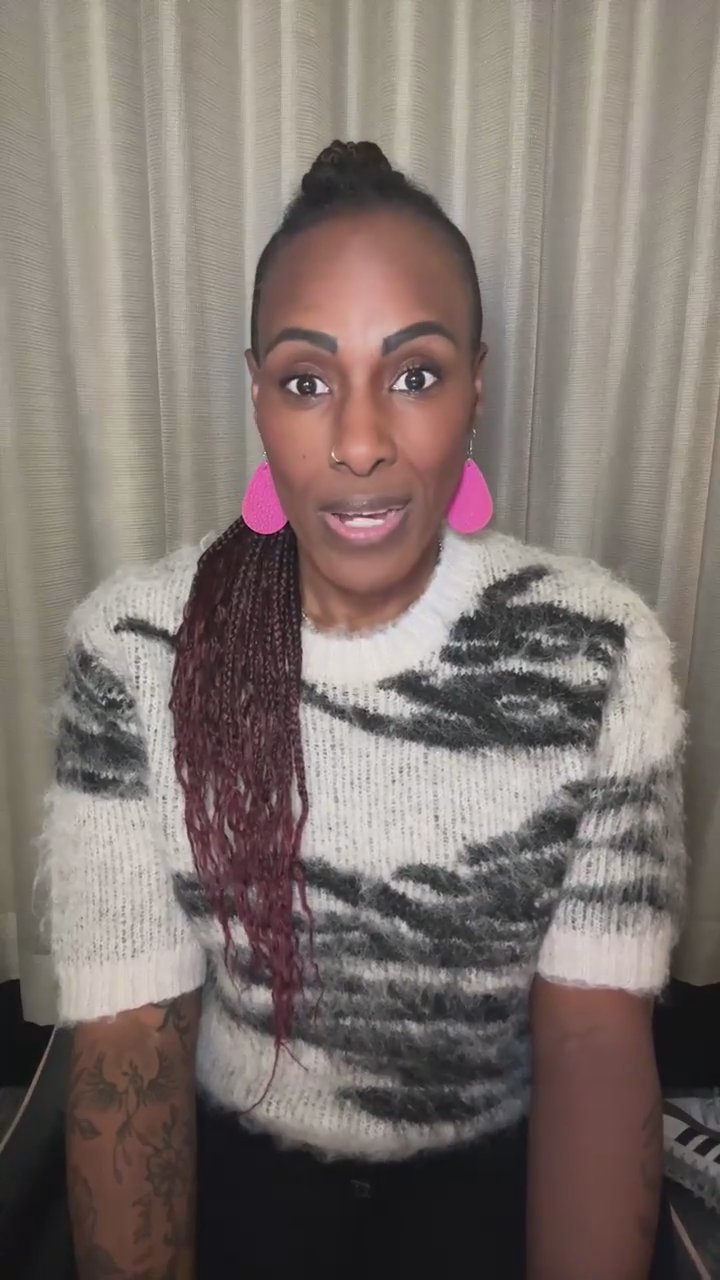
Cadre, Cadre, Cadre. What's up? Beautiful, beautiful people. And you might be thinking to yourself, well, oh, if you saw me right now, I'm not beautiful. Or maybe you're not comfortable with that word. Whatever it is. I believe that you have a beautiful spirit. Even if I can't see it, even if I can't feel it. I just innately believe that about people. If this is your first time in Alive, welcome. I'm Dr. Charisse Johnson. I'm a licensed clinical mental health therapist, mindfulness practitioner and author.
But I come into this space more than anything as a human, as a wife, as a mother, as a friend, and as someone who has absolutely navigated her own struggles and challenges along the way. I'm a proud neurodivergent. I claim that have actually been diagnosed with that you're not gonna be diagnosed in this space. But I think those are all things that you'll hear and notice. So that's probably important to tell you. One of the ways that I love for us to come into this space is for you to tell me, where are you in the world right now?
Because it's a powerful reminder that we are community, which is a huge pillar within Cadre. And rate your week 1 to 10. One your week is working you, you're not working your week. And then 10, you know, given the craziness of the week, you're doing the best you can. I'm gonna grab my notes and let's get into it. I feel like it's been a minute since I have done one of my kind of traditional teaching lives. But we back. There's something really important that I want us to focus on, which is why you might ignore yourself.
And if your first thought is, oh, I don't do that, or maybe your thought is, oh, actually I do that to myself. Let's just start with a little bit of transparency and honesty. If you had to think about the dynamic of moments, you ignore yourself just in general. On a scale of one, very rarely, if at all, to five. Oh, I kind of know I ignore different parts of what's going on with me. Where would you rate yourself? I will even do it? I would say it depends, right? As a general whole, ish. I feel like I'm like a two.
I'm pretty self attuned. But there are certain people or moments that I will kind of push things to the side. And I'm not talking about just for the better good. Sometimes I do it because I'm like, I can't. I don't want conflict. It's not the end of the world. We all choose those moments. But I do want us to focus on. If you know that this is a chronic pattern for yourself, let's get into why it could be a struggle. So if you are an individual and you've ever said things to yourself like, I'm fine, it's not a big deal, even though it really is, if you have overridden your gut or have a tendency not to trust your instinct even when it hasn't really failed you, then this live is for you.
All right, so let's get into first, what is self attunement? So self attunement is the ability to notice and respond to your internal signals. Internal signals like hunger, fatigue, emotional shifts, intuition, overwhelm, desire, boundaries. As a practical tool, maybe you take those list of things and you put a little tick or check mark beside the ones that you recognize up. Yep. Over, overwhelmed. I do that. Oh, fatigue. I'll say them again. Self attunement is the ability to notice and respond to internal signals like hunger, fatigue, emotional shifts, intuition, overwhelm, desire, and boundaries.
It's not indulgence to pay attention, to, notice, and respond to these things. It's actually alignment. And a lot of times, those of us that would consider ourselves kind of high functioning, which just basically means you get done what you need to get done in general on a daily basis. We don't just struggle sometimes with the self attunement. We also struggle with self permission. All right, three core teaching points. One, early conditioning is often the foundation of how we override. It trains us to override our internal signals.
Early, early conditioning often trains us to override our internal signals. So some of us were praised for not crying, not complaining, being mature for our age. Boy, if I had a dollar for every time I heard somebody tell me, you're so mature for your age. When people say that to me, can't say it as much now because I am mature. But when I was younger and realized it and people said that to me, sorry, there's like, so much something on my nose. Probably something from this sweater. I would be like, yeah, trauma taught me.
And they would just look at me, and I'm like, hey, I'm just letting you know that sometimes this calmness that you see is purely a blunted sympathetic nervous system. Because I have been in so many situations where I couldn't react and maintain safety, which can seem like a strength, but it's a struggle at the same time. So you might have also been Praised for taking care of other people or being low maintenance. Those are all very common things. And don't get me wrong, it doesn't mean that your family intended harms.
Right? Sometimes it could be. You're the oldest, you were raised by a single parent. Just parents that didn't know that their proximity wasn't present and that you needed both. There's a number of different factors. So it's not about looking at your family and going, but it's about recognizing, oh, yeah, I kind of have done this all the time, and I'm more comfortable taking care of other people than I am caring for myself. And so what happens over time is that your nervous system adapts and you learn very early.
Your needs are inconvenient, your emotions are too much, and being strong means not needing anything. I'll share. I'll be very honest with you. Just in my own journey, I wasn't necessarily taught that my needs were inconvenient, but I was watching a parent who had so much on her plate that my way of trying to make things better was, I won't have needs. So if I will just pull my needs back, then maybe that's one less thing that she will have to do. She never taught me my emotions weren't too much.
I felt very safe with her. But I stepped into a role in our family out of survival. And due to the nature of the family, I also spent a lot of time by myself. So I did mature in a very different way because there really wasn't any option. Right? So survival equals suppression when that's your reality. And I would definitely encourage you to consider, hmm, what is that like for me? What does the foundation of my story say? Because you adapt and that adaption likely helps you succeed somewhere in life right now, I'll be honest, there are parts of that adaption that absolutely inform my ability to support people in crisis and trauma, which is such a gift.
And I have to work really hard not to step into that same role in my everyday life, in my personal life, and make sure that I stay connected and know how to use that survival coping skill as a gift and recognize when it's a struggle. Here's something I want you to keep in mind. And I'm going to break this live up. I would typically give you a ton of information, which I know many of you are okay with, but I'm gonna break this one up. I said three core teaching points. So I'm going to break this into three lives so that you can just focus on this one Thing.
Here's how I want to wrap up our core teaching point for today. Sometimes what helped you survive may now be costing you regulation. I want you to do two things. I want to invite you to do things. One, what did your early life experiences teach you about your needs? And I want you to be as honest as you can. Like lean into that truth. Don't worry about you know who it involves. You don't have to share this with anyone. This is just your truth. The second invitation is to consider where are you and anywhere in your life currently minimizing your needs?
But it's creating an internal storm and you lack or you. You're not self attuning the way you could. You might notice it. But remember, self attunement is notice and respond. So knowing that you're overwhelmed and anxious and frustrated and stressed is one thing, but noticing and responding to it is self attunement. So consider those two things. That's all you need to do. There's nothing to change. There's nothing to fix. You are not broken. Just a simple state of an awareness. And then let's normalize.
It's okay. We're learning. We're here in this space together and this is what we do. As you go throughout the rest of the week, I want to remind you that you are important. And not because of all the things that you accomplished, but just you in the nature of being human are important. And one of the most important things that you can do is to make sure that you give to yourself the same level of care and self respect and dignity, another pillar here in Cadre that you give others. I want you to think about that.
Caring for yourself in spite of all the things that you like or don't like about yourself is a sign of dignity and self worth. And we definitely believe that about you here. I look forward to reconnecting with you and we'll finish this up the next time we're together. Have a good one.