When those boundaries are crossed, you have an internal knowing of what they are and how to proceed. It is okay to change your mind about boundaries.
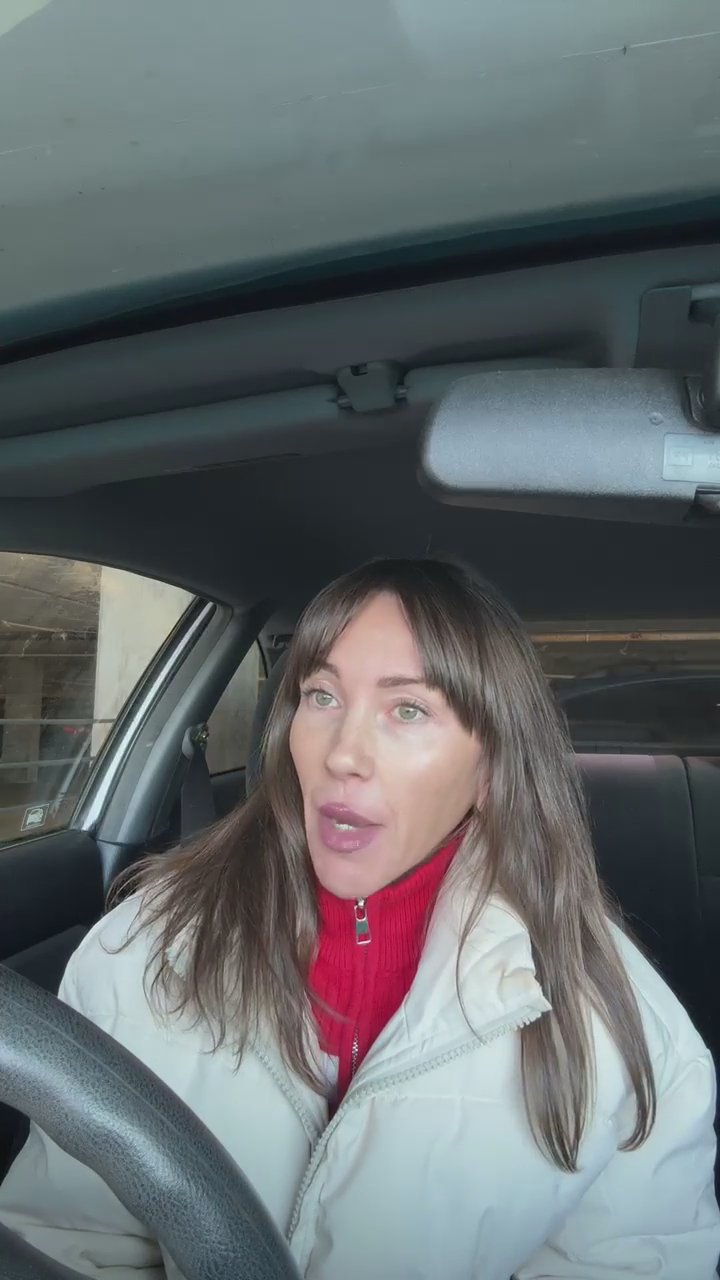
Milo's getting a haircut right now, so I just dropped him off at the groomer. It's time for all of our winter coats to be shed. Cadre Crew coming to you live from my vehicle.
Rachel: Today we're talking about boundaries. What do I mean by that? I mean boundaries that you state clearly to other people and communicate external boundaries versus internal boundaries. When those boundaries are crossed, you have an internal knowing of what they are and how to proceed.
Internal boundaries can be boundaries we have with ourselves as well. boundaries are also a way for us to protect ourselves internally from ourselves. It is okay to change your mind about boundaries. Knowing what we need is also a really important prerequisite for setting a boundary.
Happy Thursday. Cadre Crew coming to you live from my vehicle. We've been running around today. Milo's getting a haircut right now, so I just dropped him off at the. The groomer. It's time for his winter coat to be shed. It's time for all of our winter coats to be shed. Emotionally, I think. I don't know. So today we're talking about boundaries, which, not my strong suit. Something that I've been working on for many years in therapy, Something I'm so much better at than when I was growing up and in my 20s, and something that has been quite relevant for me lately is this concept of internal versus external boundaries.
So what do I mean by that? I mean boundaries that you state clearly to other people and communicate external boundaries versus internal boundaries. Boundaries that, you know, that you hold for yourself, that don't necessarily get communicated to other people. But when those boundaries are crossed, you have an internal knowing of what they are and how to proceed. So we're gonna talk a little bit more about internal boundaries today. Cause I think that's one that less of us are familiar with and how that looks and how that works.
So I'm gonna use an example, which is. So I have gone on a couple dates with somebody that I met on a dating app. And I really, really struggle, like in early dating with. Well, it's a lot of things, but one thing I struggle with is my boundaries. Because this is a person I'm getting to know. So they don't know. They don't know me from Adam, and they don't know what my boundaries are. They don't know what my needs are. They don't know what my expectations are. And at the same time, it's not necessarily important or effective for me to try and communicate all of my boundaries to a new person that I'm getting to know.
At the same time, it's important that I hold my boundaries so that I don't get mistreated or feel disrespected or end up in scenarios that I don't wanna be in. So an example of an internal boundary when dating early on might be. I know for myself that planning is really important. I'm a planner. I'm somebody that likes to have a date planned. I like to know that it's happening a few days in advance. Where we're going, what we're doing. That's just me. And so I have internal boundaries around. If someone that I'm seeing and dating early on doesn' is not able or willing to create plans with me, then I use that information to make a decision as to whether or not it's someone I want to keep seeing.
And that's not necessarily something I'm going to communicate to somebody and say, if you don't make a plan with me, I'm not going to date you anymore. I just know that when I'm dating early on and seeing if someone's a good match for me, I'm gathering information around if it's somebody that I want to keep seeing. And parts of that information are, are they good planners, are they effective communicators? And if they're not, then usually if I'm holding my own boundaries, my own internal boundaries, I'll make a decision not to see them again or to then communicate.
Hey, it's really important that we make a plan and see if they follow through. So this is not about expecting people to read our minds. This is not about having hard rules or invisible rules that people are supposed to be able to follow. And if they don't, we cut them off. It's more about inside for me, knowing what my needs are and where I draw the line and what I tolerate. And then I use those internal boundaries as information for me to act. So that's different than an external boundary where I might communicate with somebody who I do have a relationship with or a longer standing relationship with something that is a boundary for me and let them know what it is.
And if that boundary is crossed, then that's also information. And so I think this is also something about boundaries that a lot of people get mixed up is like a boundary is not, is not a wall, it's not a rule. It's not a. If you don't do this, then I'm not going to do this. Or if you don't act this way, then I'm going to cut you off. It's here's what I will tolerate, here's what's okay with me. And if that does not happen, I use that as information as to how I want to move forward. So sometimes that means that people cross our boundaries and then we have a conversation about it and everything is okay and it's resolved.
And then they know for next time, like, oh, that's something. That was Rachel's boundary and I crossed it. Sometimes it's a matter of this person continues to cross the same boundary over and over, despite me communicating it. And that might be information that it's not a relationship I want to maintain. So boundaries are not necessarily these hard lines that, that create rules of this. This person's in my life, or they're not in my life. They're. They're delineations of what we tolerate and then how we want to move forward.
So another. Another thing to think about when it comes to internal versus external boundaries are. Internal boundaries can be boundaries we have with ourselves as well, right? So, like, for example, for me, I have an internal boundary of not drinking alcohol that has nothing to do with anybody else, right? Like, not drinking alcohol. Again, this is not a rule. It's more like thinking about what my. Like, for example, we can think about, like, what my internal boundaries might be around social environments that include alcohol.
So it could be, for me, like, I have a boundary of, you know, like, there are certain social situations that I'll put myself in that I'm comfortable in, but there are certain ones that I'm not. And that's where I draw the line. Or if I'm starting to feel pressured to drink alcohol, or if I'm starting to feel triggered, or if I'm starting to feel like I'm in a scenario where I'm not sure that I can stay away from alcohol, I remove myself or I call a certain person. So boundaries are also a way for us to protect ourselves internally from ourselves.
And it's really important that we, again, that we try to think of them not as rules, but of what we'll tolerate and also as an edge that we can be clear about so that when we meet that edge in real life where we can have awareness around it. So by naming something in advance and saying, this is. This is a boundary for me, then when it happens in real life, if we're already dysregulated, we don't have any confusion about, well, is it okay if I do this, or was it okay that they did that? Because we already.
We've already named where that line is. As I'm speaking about this, I understand that it can feel. Boundaries can feel really, really confusing. And so the other thing I want to say about boundaries is it is okay to change your mind. You can, excuse me. Whoa, whoa. She's got, like, a burp hick up there. You can set a boundary and then later on decide, you know what? That was actually a stricter boundary than it needed to be. I think I'm going to soften that boundary. Or you can set a boundary and in years be like, that's actually not a boundary for me anymore at all.
Or you can not set certain boundaries and then later on realize, you know what? I think I need a boundary here. So it's okay if you don't know what a boundary is. And then like, okay, wait, sorry, this is an example of this. So first of all, resentment is a huge indicator that a boundary has been crossed. So if you experience resentment in your life, that is an amazing opportunity for you to pause and go, okay, where was there a boundary that was crossed or not communicated? Because when we experience resentment, chances are our boundary has been crossed.
The other thing I will say is that oftentimes we don't know what our boundaries are because we don't know what we need. And oftentimes we don't know what we need until a need hasn't been met. So a lot of times boundaries will be defined after we realize that a boundary has been crossed because we didn't know it was a boundary to begin with. So a lot of times, like in relationships or just in day to day life or at work or whatever, when one of our needs has not been met either once or continuously, that's often a clue that we need to set a boundary so that that need can be addressed.
So knowing what we need is also a really, really important prerequisite for setting a boundary. I don't know about you, but I'm like a super, super visual learner. And I find that when it comes to boundaries, it's one of those things that when I hear people talking about it or even when I talk about it myself, I feel like I get lost. Like, I feel like I get confused about what's a boundary, what's not a boundary, how do I set one, how do I hold one. And I find that, like, being visual about it really helps me.
So something that also helps me a lot is thinking about. I just posted a video about this which has one metaphor, but I'm gonna use a different one in this video which is thinking of boundaries as a bridge. So let's say this is me and this is everybody else. A boundary is a bridge. So a boundary is actually not like a wall. It's not, here's where you cannot come through, and I'm over here and you're over here. A boundary is a bridge. And now let's think about bridges having some capabilities, right?
Bridges can be like drawbridges that open and close. Bridges can have gates that can also open and close. Bridges can be one way or they can be two ways. So we want to think about boundary or boundaries as being a bridge that have those capabilities. And we decide when and when and where and with who we open the drawbridge. Or when and where with who we open our side of the door versus their side of the door, when and with who we have a one way bridge versus a two way bridge. But the whole idea is that we are, we're trying to maintain connection.
The point of a boundary is not to stop connection. The point of a boundary is to maintain connection while still remaining two autonomous beings that understand each other and know that for access there are some, again, I want to say rules, but we need to understand when is it appropriate for me to cross the bridge, for you to cross the bridge, and where we're going to meet. So when I think about boundaries this way, it really helps me because it allows me to both define and set my boundaries in ways that maintain relationships rather than cut them off.
And if I start to notice that, like I'm setting a lot of boundaries and suddenly I feel like actually just like there's a wall or like my, my bridge is always closed, that's a sign that maybe my boundaries are too rigid and that they're not actually creating room for people to cross and meet me, but they're just saying, you cannot come in. So that's my spiel on boundaries. And God, I feel like I could talk about boundaries all day long because it's so nuanced. But if you struggle with boundaries, same, you're not alone.
If you don't know what your boundaries are, try asking first, what do I need in relationships? And then try asking second, when in my life have I felt resentment and doing just some, like, inventory around, like, what was I resentful about? What happened? Where did I feel like I wasn't respected or a need wasn't met? And that's information about perhaps what boundary was crossed that you were not aware was a boundary for you or that was not communicated. Let me know if you have any questions. And as always, I love you very much and I'm proud of you and I hope that you're doing okay and hanging in there.
I know it's been a pretty f****** crazy a** week in the news, so I'm just gonna make a quick aside and say that if you are a survivor of sa, I love you. I believe you. I see you. You are not alone. And please, please, please take extra care of yourself right now. All right? I will see you. Actually not same place, because I'm gonna.