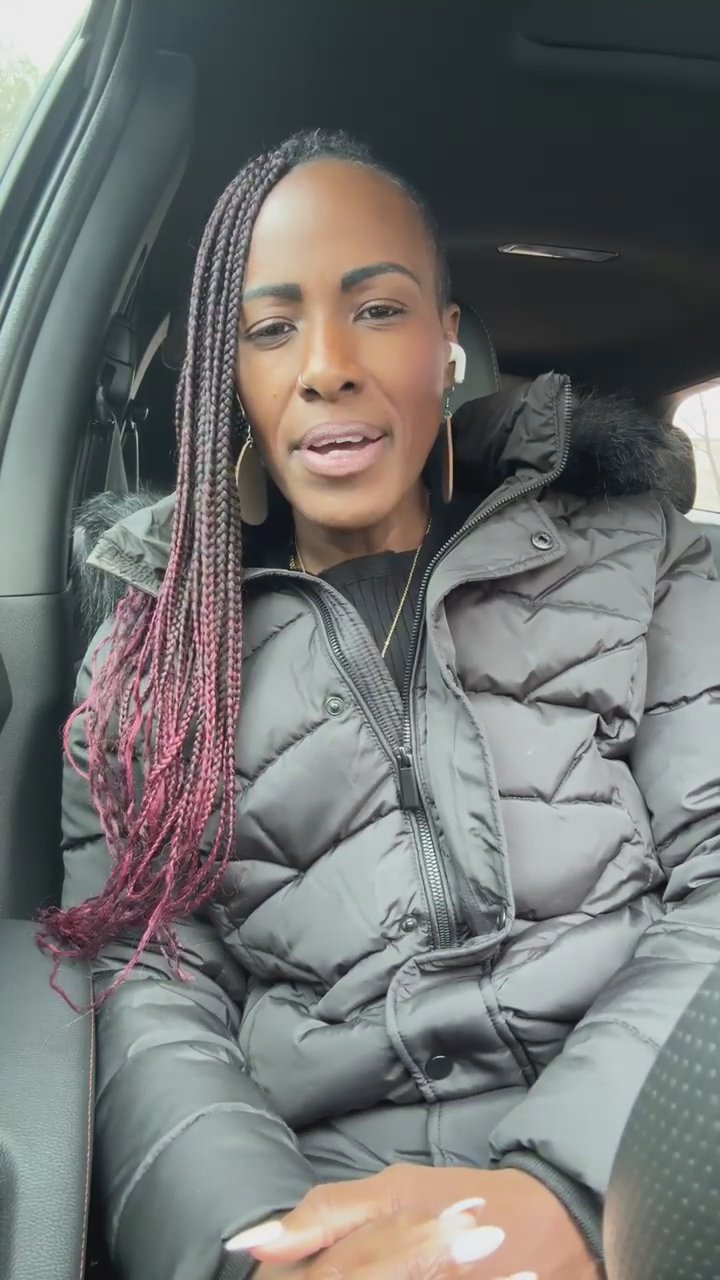
Dr. Charisse Johnson is currently in Charlotte, North Carolina. She asks you to rate your week on a scale of 1 to 10. Give yourself permission to move those things off of your plate.
Dr. Charisse Johnson is currently in Charlotte, North Carolina. She wants to talk about the expectations we place on ourselves. She asks you to rate your week on a scale of 1 to 10. Johnson wants to encourage, to give you insight and for us to be community.
We often have this vision of how we think we're supposed to show up. I want you to consider what's on your plate that doesn't need to be there right now. Give yourself permission to move those things off of your plate. There are a lot of things we can't influence.
If you feel scattered, overwhelmed, like there's too much going on, I want you to consider what have you accomplished this week that you're kind of proud of. It's so important for us to acknowledge what we are doing well. And then I remind you that we are here for you.
Hello, Cadre. Let me take my earphone out or you guys tell me if you can hear me. It shouldn't be in the earplug. I just popped out of sessions and getting a little fresh air here in Charlotte and just want to pop in and have our time. How are you? Right. Most important question to start us and to anchor us. Hello, Janet. As everyone comes in, you know the drill. For those of you who have joined me before or we do two things. One, you rate your week and let me know on a scale of 1 to 10. 1. It's been awful, rough, tough.
10 it is going as well as possible given the context of your life. And that's so important to remember. I was having a conversation with someone yesterday, which is part of what I want to talk about around the expectations that we place on ourself and really having a hard time at moments adjusting those expectations to the reality in the full context of our life. Thank you for those giving hearts right back to you. Also, let me know where are you? I see you, Janet, in the world. I am currently in Charlotte, North Carolina, my home city.
And if this is your first time on a live with me, I'm Dr. Charisse Johnson. I come into this space a couple times a week. Been more inconsistent lately because of life and travel, but I come into the space as a human, as a woman of color, as a neurodivergent, as someone who is in the middle of perimenopause and raising young adult kids and all the different dynamics. But most of all, I come in here just like you, looking to encourage, to give you insight and for us to be community. So know that you're welcome here.
One of the things that I want to focus on or the thing I want us to focus on today is I was talking to a friend and you know, kind of similar to our conversation, just like, how are you? And I will often ask, how are you really? Because it's very easy for people to ask us how we're doing. And as for us to quickly just go, I'm doing great. Everything's fine. And that's not necessarily true. Doesn't mean that I'm always looking for things to be wrong. But we often have this vision of how we think we're supposed to show up, how we are supposed to engage with other people, the amount of productivity that we're supposed to have.
And then I say, okay, well, I hear the way that you want to show up or the expectations that you're placing on yourself. But what's been happening in your life over the last six weeks, two weeks, sometimes a week. And in our conversation, she started mentioning, you know, some dynamics that she was facing with work, different dynamics around fears that she has, challenges around, sleep, some things in her health, or just multiple things. And I have her permission to share this story. And then I asked her, would you expect someone else going through the things you name to be showing up like, everything is fine and let me just go ahead and knock out this project, clean this up and do all these things the way I normally would?
And she was like, oh, my goodness, no, I would never expect that out of anybody. So then I said, well, then why would you expect that out of yourself? So I want you to take that story as a springboard to really consider for yourself what's on your plate. Plate, Right. What's on your plate. Symbolically, I would even encourage you get a circle and literally write in the things that are on your plate and don't lump them together and just say family. I mean, be very, very specific around the things that you are carrying.
Being able to name the things that you are holding, even the great things is still on your plate and will really help you see. Oh, well, this makes a lot of sense now that I've taken a look at it. There's a lot going on. So I want you to think about where you are physically, where you are financially, where you are socially, where you are emotionally, the things that you're carrying that people might know about and you can name, and the things that you're carrying that only you know about and that you're not naming or you're trying not to acknowledge or minimize, but you really know that those things are top of mind.
So step one is, how am I doing really, what's on my plate? Identifying, writing it down. Because I want to give you this tangible tool of, okay, I recognize that. What do I do with it all? And then I want you to consider what's on my plate that doesn't need to be there right now. One, maybe it's actually not yours to carry. You're taking on ownership of something that belongs to someone else. Two, maybe it's a situation or dynamic that you really have no influence over. We don't control anything, so we really want to spend our time and energy focused on what can I influence?
So if you have something on your plate and then you realize I actually have no influence over this, I can't make this person do what I want them to do. I cannot change the situation that's happening at my job. I cannot flip force my body to exist in a way beyond what it is able to give me at this moment. Then I want you to give yourself permission to move those things off of your plate. And sometimes that's really as simple as saying, I give myself permission to pause the energy I'm directing towards X.
I give myself permission to release worrying more about this situation than I have the power to influence. And there's something that shifts when we verbalize and name. I give myself permission. There might be a part of your brain that's thinking, well, if I don't worry about it, then who will? We'll see, right? There are a lot of things that we spend time trying to influence and control that aren't ours to carry. And that energy you need, right, you actually need it to take care of you after you go through that process.
There's one other thing that I would encourage you to consider. If you feel just a little scattered, overwhelmed, like there's too much going on, like things won't slow down for you, I want you to consider what have you accomplished this week that you're kind of proud of, right? Whether that was the way you showed up for a situation. Maybe you are getting back into gear with your self care. Maybe you're moving your body more, Maybe you're honoring boundaries that you had put aside for a while. Maybe you stood up for yourself, maybe you did something for someone else or had a big breakthrough on something that you're working on.
It's so important for us to acknowledge what we are doing well and to recognize the dopamine that creates dopamine is that happy neurotransmitter that just floods our brain and our reward center and really helps balance out the parts of our life that may feel difficult. If you have a moment, whether you're listening to this now in person or on replay, let me know what's going well. I want to celebrate with you. That's a really great way for us to come together in community and go. Regardless of all the things that feel really hard right now, here is what's going well.
And then I want to remind you that we are here for you, that you are always welcome to come into this space as many times as you need to, to share, to name, to acknowledge, to receive encouragement, to give encouragement, or to just be whatever you need. All are welcome. And I can't wait for us to hang out again soon. Have a good one.