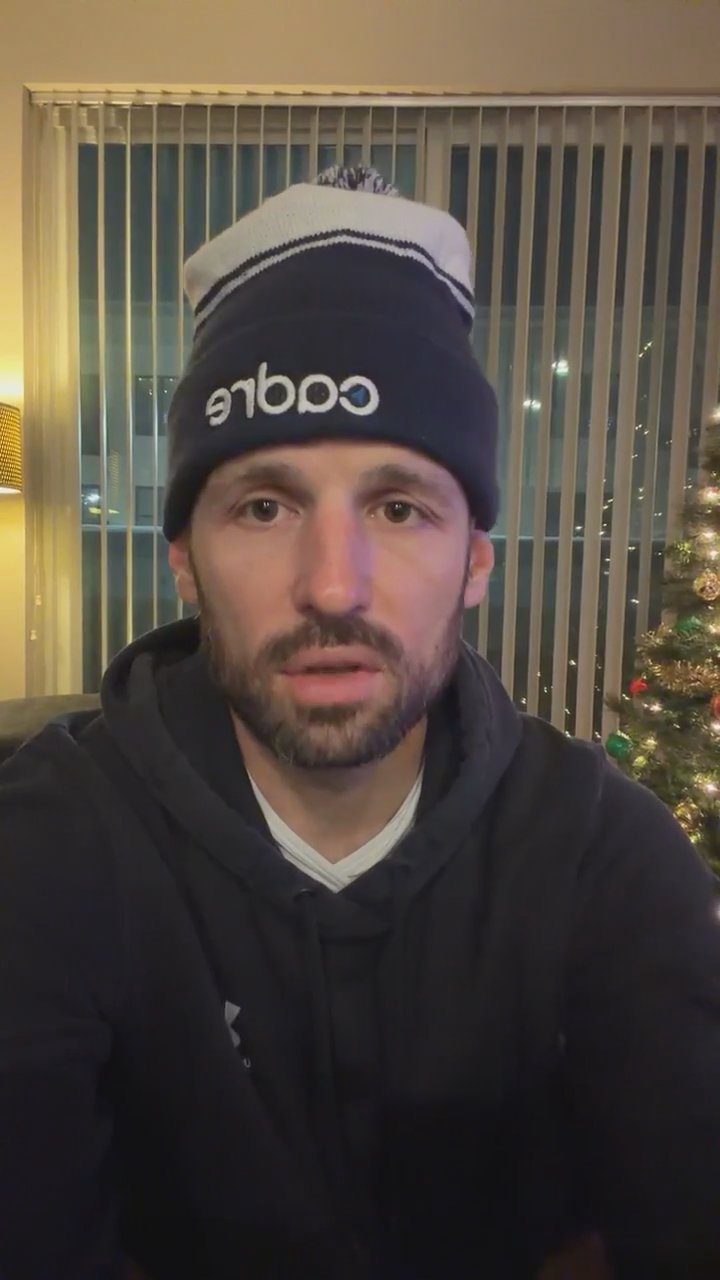
Jason Lennox coming at you here Sunday night. So grateful to be back getting into the swing of things of 2026. "If you can stay grateful, you'll stay healthy and well and satisfied, " Jason says. Gratitude and generosity keep him from going down a path of getting sick, he says.
Jason Lennox coming at you here Sunday night. It's been a few weeks since the last time that I've been on here. So grateful to be back getting into the swing of things of 2026.
The word that came to mind that I really wanted to touch on tonight is ego. I think it's what's behind so much of this. And I was reminded early in my recovery about a realization I had. I believe it contributes to some of what we're experiencing today.
"If you can stay grateful, you'll stay healthy and well and satisfied, " Jason says. Gratitude and generosity keep him from going down a path of getting sick, he says. "Most days, I'm able to live up to those two things "
Good evening, everybody in the Cadre sphere. Jason Lennox coming at you here Sunday night. It's Sunday Serenity. It's been a few weeks, actually 20, 25, since the last time that I've been on here. I was out of the country, on the other side of the world in Vietnam for two, two and a half weeks. So grateful to be back here getting into the swing of things of 2026, and grateful to spend a little time with you all. I was finished up my dinner and doing a little bit of a walk around the apartment here and just do a bunch of laps.
By the way, if I do 70, that's one mile. When it gets, you know, negative degrees outside, I'm not getting out there and doing a whole lot of walking. So we get it in inside. Good evening, Sherry and junk food junkies. Good to see you here. But I was doing a little walk, putting a mile in here, and the word that came to mind that I really wanted to touch on tonight is ego. And a couple reasons that came up. One, obviously, in the United States, especially in the state of Minnesota, we've got quite the battle going on politically just between people, and, um, it's really unfortunate, the events that are playing out.
And I'm not going to get into that because I'm not here to kind of talk through that. But I just, you know, ego is what comes to mind because I think it's what's behind so much of this. And I was reminded early in my recovery about a realization I had. And if you've been in the rooms of recovery, if you've been in Alcoholics Anonymous, Narcotics Anonymous, something, then I'm going to do. And I know you're saying it's a bad idea and it's not possible, but I'm going to show you different. I'm going to prove to the world how important I am.
That was his mindset. So in a matter of a couple pages, this guy went from feeling like he didn't belong to, I'm going to prove all the brightest people in the world wrong by showing them how great I am. My point in sharing that is he documents the progression of his alcoholism, and that was the beginning, and it had nothing to do with alcohol or drugs. That was, you know, he said he discovered alcohol and drugs and, you know, it had become fun, but it wasn't a problem for him. So his problem really was in the greed and the progression of ego that happened there.
Again, he goes from feeling like he's less than. Like he doesn't belong to I'm going to prove to you all how important I am. And I had a striking parallel to my own life because as a kid, I grew up just wanting what all the other kids had. I just wanted to, you know, play the sport, spend time with people on weekends, have a girlfriend, those kinds of things, be one of the cool kids. And by the time I started to get some of those things, the progression of ego kicked in. And I was in a place where I forgot where I came from and that I actually had everything I ever wanted.
It wasn't good enough. So I wanted bigger, I wanted better, I wanted faster. And that was the progression for me also independent of drugs and alcohol being my problem. So I articulate all of that because, again, I think ego. We know that alcohol and drugs cause problems. They force us do things that create problems in our lives. But underlying that for me was always the ego and the progression of that and not feeling like I had enough and not feeling like I had what I had was good enough. And that made me sick.
And the only way to kind of deal with that was to, again, bigger, better, faster, more drugs, more alcohol, more problems, more pain. And that vicious cycle. We all know how that goes now. The same thing can happen on the other side when we get into recovery. Thankfully, I found recovery, but I had to really hit that nail on the head and then go, go, go at it and say, this is going to be the ego that drives us forever. It's, it's natural. It's, you know, it's within us to have that ego and to, to feed that and to continue to want to be you that we try to be.
And if we don't curb that, then we can really get ourselves into some trouble. And we see that play out over and over in our world, not even just people in recovery, but generally where everybody's just defending positions and we're throwing stones, and next thing you know, it's just like a little bit of ego turned into, you know, you all are wrong, and I'm going to show you why you're wrong. And that's a dangerous place to get. I believe it contributes to some of what we're experiencing today. And, you know, as I was in Vietnam, I really came to another realization that, you know, happened last year, too, when I was in Hawaii and just learning more about these foreign wars, and we were taught about them as kids.
I think I've forgotten most of that. And I was in Hawaii, in Pearl harbor, and just doing more studying when I was in Vietnam, completely disconnected from Work all the things, which was great. First time that it happened, but I still wanted to learn. So I studied a little bit about the history of the war and how it was experienced over there and just asked questions and did a lot of those things. And again, the core of so much of that is ego and power and money and greed. That's, again, my opinion, the core driver of so many of the wars and things that we go through, both internally, externally, politically, nation against nation.
It really comes down to ego, to greed and to wanting more, bigger, better, faster, and believing that we're superior and that we're better, they're worse, all those things. So it's not just in the world of recovery, but that's where it starts for us. That's where it starts for me. I know I can't necessarily control all the things that happen around the world, but I can control my own just sense of ego. And I believe that the United States, unfortunately, good, bad or indifferent, we're the most ego country probably in the world.
And I think we have been for a long time. And again, we give you an example. We were in that war over in Vietnam. And you go down in the history books and what we teach here, it seems like that war was really about us, and we're the ones who fell short in there, and we had to withdraw and we lost. And you get over there and you get into the world to the Vietnamese, and they say, how come this is all about you guys? This is our war. This is a North against south, and north beat the south, and the south lost a lot, including some of my family over there.
It plays out all over in many ways and on many levels. But it starts with us individually and again. My own experience just shows that I can get sick into that greed, into that wanting more, into that ego taking over, thinking I'm somehow better than. And all those things can be very dangerous for me. It's what drove me and continued to drive me, me down the destructive path of addiction. And if I'm not careful, it can do the same in recovery. And maybe it won't lead me back to drugs, alcohol, any of the things, but it can still lead me to a really tough place.
And I see it play out over and over and over in our world today, on social media and between people. And it's really unfortunate. It costs a lot of relationships. Relationships costs a lot of things, but it's ego. And at the end of the day, ego is a killer. It's a silent killer. And it destroys relationships, destroys people, causes us to continue again with this addiction, even if we're in recovery and we don't go back, sometimes the result is worse when we're here and miserable, inflicting misery on a lot of other people.
So ego, ego, ego. It's a thing that we all need. It's a natural part of us, but we tend to let it get out of control. At least I know I have in the past, and I kind of witness that regularly, individually, but also politically, you know, just on a world scale. This is what happens, and this what causes a lot of our problems. So what do we do about it? I think there you go. That's a beautiful, beautiful question, because it's right where I was going. What do we do about it? What can we do to keep our ego in check?
I know for me, it's two things, a lot more than two, but two primary things that I know can balance ego and can really knock it down before it goes too far. One is gratitude. When I can think about regularly the things that I'm grateful for, and I do this every morning. It's the first thing I do. Three things I'm grateful for. I write them down, and then I think about what it is about them that makes me grateful. And usually, if there's a person in there, I'll just try to give them a little note to let them know just how grateful I am and why I'm grateful.
So gratitude for me is key. It's gratitude as what am I grateful for? But then also putting that into action and letting people know, returning the favor, doing things like that. So, number one, gratitude. Number two, generosity. If I can continue to live in service and to do for others and to show up and to be there and try to contribute to this world and just get outside of Jason's little world, get out there in the world and pack it in. Gratitude and generosity keep me from going down a path of getting sick, and I'm not immune to that.
There are things that certainly come up in my life, but gratitude and generosity are at the top of the list of things I strive to be and do. And it really makes a big difference for me. And I can't take a lot of credit for that. Those are just things I learned early in recovery. I had a counselor one time say, if you can stay grateful, you'll stay sober. And not only was he right about that, but I say, if you can stay grateful, you'll stay healthy and well and satisfied. And if I can do that, then I stop chasing what I was always Chasing before, chasing that, you know, whatever would fill that void.
So the gratitude was key. And again, I just had people early on steering me in that direction. And I had this innate, like, natural, intuitive sense of gratitude. And I think we all have that. And I just leveraged it and I made it a habit, and I don't ever stop. And then the generosity, I just had the people before me saying, you've got this life now. Now you. You found a way out. You found a new way. It's not about you anymore. Chase. This life is now about what are you willing to do to go out there and pack it back into the world?
Because we can find recovery. We can get away from drugs and alcohol and be absolutely miserable. There's recovery from that, being removed from the. This. The. The vicious cycle of addiction, and then there's actually a fulfilling, happy, satisfied life. And that's what they taught me, the people in the rooms recovering in my circle was that next realm of happiness, of existence, satisfaction is going to depend on what I'm willing to do for other people. And I took that and I ran with it in the rooms of recovery and outside the rooms of recovery.
Again, I don't always do that the greatest. And I struggle sometimes still, and I'm not perfect, but I use that. And I live by those two things, gratitude and generosity. And most days, it works out for me. Most days, I'm able to live up to the expectation of those two things and what I want them to be in my life again. Not always, but that's. That's what I strive for. And I think as long as I have those two on the other side of the windshield and I'm looking forward and I'm headed in that direction, I'm going to hit more days than not.
So that's what I do. If I can stay grateful and I'm not out there thinking, I need more, bigger, better, faster, your lesson. And if I can be in service, I can really see this world in a different way, and I can see all the people that need us, and I can really just try to be thinking about other people instead of being caught up in Jason and what Jason needs, because that's just such a natural, easy thing to do. So we have to have tools. Those are two of the biggest ones. I really hope that you find some value in thinking about ego and not necessarily beating ourselves up over it.
It's, again, this natural happening that just. We all deal. So we have to find ways to combat it. And for me, gratitude, generosity, the two big ones So I look forward to catching up again next weekend. I'm grateful for all of you and just everybody checking back in. S. in Minnesota, even with everything going on. It's always good to be home and good to be back with you all and get back in these routines of sharing and just living this life that is so beautiful. So thank you all for being here again.
Look forward to you all joining in again next week. See you soon. Bye. Bye.