There's no, like, right or wrong pace. A good personal pace is one that you can sustain and is manageable. If you initiate the slowing, if you start slowing down first, it will come. It's a trial and error and something to experiment with. It's too cold here.
This month, Cadre is doing something really cool. There's no, like, right or wrong pace. We all have our own pace that is best for us. A good personal pace is one that you can sustain and is manageable.
Shannon: Everything around us is also going to respond to our pace. If you initiate the slowing, if you start slowing down first, it will come. Our personal place can also change. It's a trial and error and something to experiment with.
I cannot believe it is only and already January. Personal pacing is not, you know, not going great personally for me. But I'm very excited to get some sunshine. It's too cold here. I need some more of my life now.
So. All right, my loves, I adore you. I'm proud of you and the fact that you show up here to learn to be curious and just to engage is a huge win. And I will see you at same time, same place next week. Check out posted yesterday for more tips on personal.
Happy Thursday. Cadre crew. Hello. I don't know about y', all, but I'm freezing my tuchus off in Seattle right now. It is so cold. Somebody told me it was gonna snow, which would be crazy, because I guess it wouldn't be that crazy. It's snowed here before, but it is definitely a chilly one. I'm out here rocking my space heater and just blasting my. My electric bill to the. To the extreme. So we out here, we surviving, we doing what we can. Hi, Rach. So this month, actually, like, this whole year, Cadre is doing something really cool.
So I think. Hi, Jules. You may have noticed that in the last few months, like, there have been themes to some of the content on this app. And starting this month, there are going to be, like, even more specific themes. So, like, every week there will be kind of like a different. Not, not necessarily a prompt, but sort of like a more specific direction within the monthly how, you know, how much time we spend on certain tasks versus others. And there's no, like, right or wrong pace. That's why we call it the personal pace.
We all have our own pace that is best for us. And the. The best way to kind of figure out what our personal pace is is through trial and error. Because the best personal pace is going to be one that doesn't burn you out, that doesn't leave you feeling exhausted. So a good personal pace is one that you can sustain and is manageable. So that's gonna look really different for a lot of people. And if we sort of, like, you know me, I love metaphors. If we think about, like, a metaphor with, like, runners, for example, right, there are sprinters, there are marathon runners, there are relay racers.
You know, there are people that better in different formats, at different lengths, at different speeds, at different durations, at different frequencies or intervals. And so it's a matter of finding what works best for your body, brain, and nervous system. So that could be that your personal pace is one where you operate in short spurts of great energy and then take spurts of rest. It could be that you. Your personal pace is one where you operate really slowly and really focus on one thing at a time.
Your personal pace could be one that is just sort of like constantly, pretty quick, but you're still only doing one thing at a time. So it's going to look really different for a lot of people. And I am somebody who is prone to multitasking, asking, and I oftentimes feel like I don't have enough time. I. I operate with this like, internal clock of I am running out of time, so I have to do things fast, and I have to do things all. Like, I have to do multiple things at once. And. And this often leads me to crash.
And it's not even necessarily, like, I'm doing, like, extreme things all at once, but it could be the kind where, like, I find weird ways to save time. So, like, while my microwave is heating something up for two minutes, I have to use that two minutes to do something else. Whether it's like, I have to, like, answer a message while the microwave is going, or I need to, like, clean as many dishes as I can in those two minutes. The same thing is true if, like, I'm going on a walk with Milo instead of just going on a walk with Milo, I'm going on a walk with Milo and I'm answering emails.
So it's this sort of, like, odd, like, I'm not. It's not like I'm at my job, like, doing multiple things at once. It's like, I'm. I have this undercurrent of I need to make the most of every second because I'm running out of time. And this is not actually a good personal pace for me. That is actually not effective for me. I operate much better when I. When I single task and when I focus on one thing at time and I take things step by step. And so slowing down and doing one thing at a time is actually much, much better for me.
And. And I have found that when I really force myself to get into that zone, my. My body will adjust, right? So, like, initially, it'll be really hard because I won't even notice I'm doing it. And I'll have to catch myself and be like, rachel, you're doing five things right now. You're checking a message while you're doing something else. Or you're like, you're waiting for the elevator, but, like, you were pushing the button, and then while the elevator is coming, you're checking your mail instead of just checking your mail and then pushing the button.
And so, like, I need to catch myself often. And then once I start to get into that pattern, then it actually becomes hard to do what I used to do. It. It's like my brain stops crav doing things all at once. And so it takes time. It takes a lot of time to develop this. But it's so lovely for us to have a personal pace instead of thinking about pacing it as, like, a universal pace of, like, well, this is how everyone else is doing it. This is how I have to do it too, or everyone tells me to slow down, so I have to slow down.
It's personal. It's whatever works best for you and your nervous system and your body. And one thing too about, about our pacing is it's very, very easy for us to adapt our personal pace and be responsive to everything around us. But the reality is everything around us is also going to respond to our pace. So I talk a lot more about this in the video I posted yesterday. But an example of this is like, let's say like if you work a to Friday job night, like nine months Monday through Friday or Monday to five.
Wow. Monday through Friday, nine to five job. Let's say you get an email at 7pm on Friday outside of business hours. If you respond to that email on Friday evening, you then open up a window for you to get a response back over the weekend outside of regular workout hours, which then increases the pace at which you start to interact with a work person outside of your work hours. If you don't respond, then there's no risk of that happening. If the person doubles down and emails you back, it's either actually really urgent or the person is operating from their own anxiety and stress and you don't have to match that.
So when we start to open ourselves up to a faster pace, the, the fast pace is going to respond back to us. So sometimes it can feel like I, I can't slow down because nothing else around me is slowing down. But the reality is if you initiate the slowing, if you start slowing down first, it will come, it will come back the same way. The same is true in our relationships. Like, if I really want to feel like super under understood and heard in conversations, then I need to show up being really present and listening and speaking slowly.
But if I'm in a conversation with someone and I feel like I'm not being heard, so I start interjecting, I start interrupting, I start like, you know, speaking quickly. The other person isn't gonna slow down and pause to give me space. They're gonna match that energy with me. So a lot of times we learn when we start practicing new pacing what things in our lives are actually serving us and which ones aren't. Because if those things are not responding to us in a similar fashion and they're not meeting us, where we're at, maybe it's an indication that those things are actually not good for us in the first place.
So our personal place can also change. I also always, yes, absolutely, personal pacing can change. It's and that's why it's a trial and error and something to experiment with. Right. Like we need to sort of try on different pacing to see what feels good. And also it's going to be seasonal. It's going to depend on what we're doing in our lives, where we are personally, emotionally, mentally, what we have space and energy for. It's absolutely going to change. So it's. It's going to change whether we want it to or not.
And also we have the power to change it. I felt like I was just doing that real fast, not in my personal pace. So I'm working on this right now. I'm really working on single tasking and slowing down and trying to be a lot more present with the thing that I am doing or the person I am with than getting really caught up in all of the other stuff that's happening and trying to. I'm trying really hard to slow down. It is very difficult, Trust me. I know. I know. So that is our like mini theme of the week.
Definitely. Go check out some other creators, see what they're saying about it. Because again, it's not. There's not a one size fits all. And there's probably some really lovely ways to approach this topic that are not my wheelhouse or not, you know, the way I think about things. So it's really great to go see what other folks are talking about. And if you want more on this and more like sort of like tools or like questions to ask yourself to identify your personal pace. I talk a lot about that in the video that I posted yesterday.
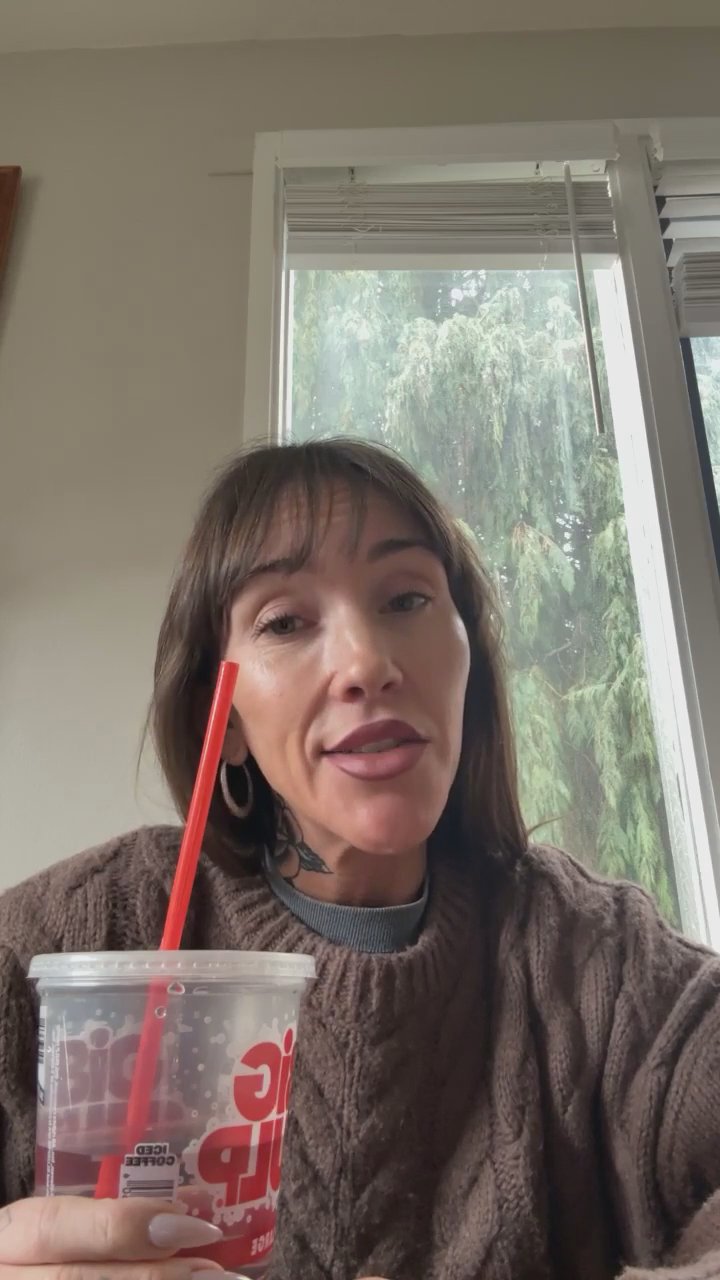
Hi, Ms. Shannon. Paul. How are you? And don't forget to stay hydrated. I've started using straws. This is a big gulp from a soda I got yesterday. But I normally drink out of like one of these. But I find I have a lot harder time staying hydrated with this than this because this is easy. I can just go. We're rocking. This is like a whole. I gotta stop. I gotta. Oh, no. This is contributing to my multitasking because I can't stop. But also I need to say hydrated. And this is really hydrated. Oh, man, so many conundrums over here.
So many conundrums. Personal pacing is not, you know, not going great personally for me, but we are working on it. A work in progress as always. Life here is. I cannot believe it is only and already. January. I'm gonna be in next week also, by the way. I'm still going to go live, but I will be in Mexico. So it'll be sunny and warm. Really some sunshine in my life. Also be working. It's not totally a work trip, but I will be working while I'm down there. But I'm very excited to get some sunshine.
It's. It's too cold here. I'm not a cold human being. I need some more of my life now. I'm just ranting, but this is. This is where we're at. So. All right, my loves, I adore you. I think you're fantastic. I'm proud of you and I think that the fact that you show up here to learn to be curious and just to engage is a huge win. So that is your big W for the day. Look at you. You already got one. And I will see you at same time, same place next week and make sure you check out posted yesterday for more tips on personal.
Okay, my loves, next time I see you, I'll be in the sun.