didn't post today's coffee chat on time, so y' all probably didn't even know. Let them theory: Let other people do what they want to do and letting them be themselves. The purpose of that is to release the control that you feel like you need to have over other people.
Dr. D. didn't post today's coffee chat on time, so y' all probably didn't even know. But I will be here every Tuesday. The only time that I will not log in is if there's an emergency.
Let them theory: Let other people do what they want to do and letting them be themselves. The purpose of that is to release the control that you feel like you need to have over other people. Does that always work? Because there are times when we are in toxic environments.
Mel Myers: There is this need to release control when we are, when we have too much control or we're trying to control other people. We are not abiding by boundaries. There's this toxic place we get into when we were holding on to half truths of people's theories without really reflecting.
The let them theory is helpful for some people that, that really do struggle to let go. But holding on to that idea of letting go and letting them, because I think that does create isolation. It creates distance and connection, distance in relationships. Let me know how that's showing up in your life.
Leslie Davis: I will plan some talks this month around reflection. It's been a whole year of coffee chats, y'all. I encourage you all to do some reflection. Don't forget to watch my TedX talk live on YouTube.
All right. Reflect on this let them theory. And if that's been showing up where you recognize, hey, this actually does work for me. Tell me about it. All right. Talk to you later.
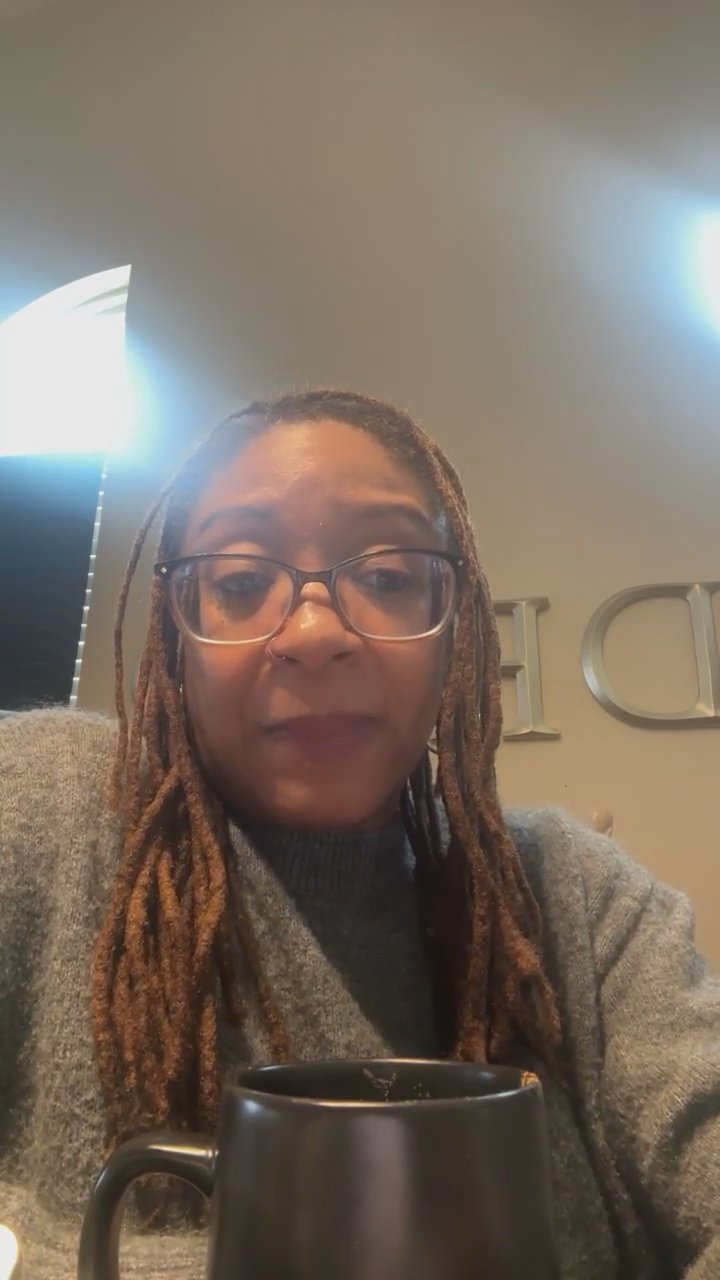
Hey, Cadre, it's me, Dr. D. How are y' all doing? I am getting myself together, not gonna lie. So I will be honest with y'. All. I had so many ideas of what I wanted to talk about today, and I'm in this space. I've been in the space for the last month or two where I just want to go with the flow. And there was something that came up in a conversation I just recently had about the let them theory with Mel Robbins, I think is her name. I'mma tell you this, I don't know much about it. I just hear about it all the time.
And I've also heard people start to debunk it and say that it doesn't always work or it doesn't work for everything. So we're going to get into that today. But I'm let a few of y' all come in and I apologize. I didn't even post today's coffee chat on time, so y' all probably didn't even know. But I will be here every Tuesday. Okay. The only time that I will not log in is if there's an emergency or that's probably it, because there's no other reason why I shouldn't be here. So if you're catching the replay, please forgive me for not giving you a heads up.
And thank you for listening. So let's talk about this let them theory. And again, I don't know much about it, but I. I kind of got the gist of it. And it's mostly about letting other people do what they want to do and letting them be themselves. Right. And the purpose of that is to release the control that you feel like you need to have over other people. And I think that makes sense. There are times when we do need to just let people be who they are and how we can get into the space of trying to manipulate people to be what we want them to be, or manipulate them into showing up the way that we need them to be in our lives.
Right. And that's not allowing autonomy or authenticity. Okay. And so this let them theory, releasing control is really what it's about. And I started thinking a little deeper about that. Does that always work? I don't think so. Because there are times when we are in toxic environments, toxic situations, and if we abide by this let them theory, then we are not holding true to our boundaries. And why do we need boundaries? Boundaries are needed to protect us and to protect others. Sometimes boundaries are needed to protect us from ourselves.
Okay. So if we look at this, let Them theory. And we're releasing control. Yes, it is important to release control in situations. But when you release the. I don't even know how to word it, so let me rephrase it. When we allow other people to just be themselves and if that person is toxic, that's not healthy. I'm just gonna call it out. That's not healthy. That's not safe. Sometimes I think about people who are in violent relationships. If we abide by this let them theory, that's putting the victims of violence in a very, very bad position, that puts people who are being emotionally abused in a very bad position.
And that destroys any type of boundary that is needed to get to a place of safety, mentally, emotionally, physically. Right. So we can't just always abide by new theories that come out. And I guess my ask today is for us to challenge some of the things that we hear that are being popularized with social media that are spreading like wildfire, that they sound good. Because it's easy to hold on to, it's easy to grab onto when you abide by a new theory or a new phrase that comes out. For example, when people start saying, I'm just going to protect my peace, well, you protecting your peace is also keeping you in place of isolation.
And whether or not you want that, being isolated is not healthy. Hello, Mel Myers. I'm talking about the let them theory. Let me know if you've heard of it. So I'm looking at the let them theory and how that does not always serve us the way that it needs to because it does not allow us to have boundaries. It does not encourage us to have boundaries. So let me know if that applies to you, if you've ever experienced that. But yes, there is this need to release control when we are, when we have too much control or we're trying to control other people.
We are not abiding by boundaries. We are crossing other people's boundaries because we need something or we need to feel something and we think that the other person might be getting in the way of us getting what we need. So we cross the boundary by trying to control. And I think that is, that's dangerous as well. So there's this toxic place and thank you all for who are joining in. There's this toxic place we get into when we were holding on to half truths of people's theories without really reflecting.
And that's what we're doing this month is reflecting. We're not reflecting on how does that really show up in our own lives. So I'll Give a personal example. So if I'll give a client example, not my clients, but me as a therapist. Okay. If I have a couple in session and they are going back and forth expressing themselves, expressing what they feel, expressing what they need, and it starts getting heated and it's loud and. And it's uncomfortable to be in. In that space with them. If I abide by this let them theory, or if I encourage the partner to abide by this let them theory, we're going to let people do what they want and let people say what they want to say.
And sometimes that can be damaging because the next thing that comes out of their mouth could be something that they will regret saying, and that can inflict damage and pain that can't be erased. And so we can't just hold on to these new theories and new ways of trying to be when we're trying to find peace in our lives, because they don't always work in all situations. So reflecting on this is looking at how can we use this. That is in a healthy way. Yes. Release control. When you feel like you're holding on to control so hard, that doesn't feel good either.
Right. And if you've done that, tell me how that feels. So I've done it. I've tried to maintain control, but it was because I felt out of control. I felt like situations were out of control. But having tight control feels restricting to me. It feels restricting to the other person, and it doesn't allow space for growth. But that's why we need boundaries. Right? We need to have boundaries to protect us and protect others. And sometimes boundaries need to be not as rigid. And I think that's the rigid part of us where we're trying to have control.
You got to check that, too. Okay, so I don't have much of where I'm going with this. I just thought this was something that just came up in a conversation. Thank you, Speak Wonder, for watching my TED Talk, but this is a conversation I just recently had, and I, I just, I'm really still stewing on this, y'. All. Like, I. I really want to dig into this more. If you know more about the let them theory, if it works for you, please let me know how that's showing up in your life. Just let them. Just let them.
It just doesn't even sound right to me. And, and no, no hate towards Mel Robbins for putting it out there. I think that is helpful for some people that, that really do struggle to let go. But we can't get into a place of letting Go. So, like, holding on to that idea of letting go and letting them, because I think that does create isolation. It creates distance and connection, distance in relationships. Just let them. Right in a sense, to me, that's like, let them stay over there in their corner.
That does not create connection. There it is. That's what I needed to get out. All right, y', all, I don't have much for you today, but I will plan some talks this month around reflection. I love the month of December. I love the transition that's happening. I don't know about y', all, but I'm in the Midwest and we got a lot of snow the last couple days and the roads are horrible. So I'm enjoying being inside and staying warm. We with my coffee. It's almost gone. But I love being able to take this time being intentional about looking back at maybe the experiences I've had, maybe the conversations I've had throughout the year.
And if you're anything like me, where you're just always on the go, you're always busy, I've been enjoying these Tuesdays with you all being able to slow down and have conversation. It's really uplifting. And so that's part of my reflection of what I'm going to be doing the next week, is looking back at some of the old lives that I've done. The old coffee chats, because we've talked about a lot this year. It's been a whole year of coffee chats, y', all. And I think I might have missed one, just one for the whole year, and so maybe two.
But I don't remember all the things we've talked about. And so I want to make sure that I'm intentional about reflecting on what was helpful or something that I can maybe take back in and use it for myself. Right. I share a lot here of my experiences and things that I'm noticing. I really try to speak from the heart and I want to continue doing that. So I encourage you all to do some reflection. And if you don't mind, in our Cadre sphere, if you want to make a post, if you have that ability, it would be really cool to see if you just posted some of your favorite coffee chats or, or other talks that other people have done and shout out your favorite Cadre contributor.
And I think that would mean a lot to us. So. And I thank you guys for being here in this space. Don't forget as Speak Wonder mentioned here, please go watch my TedX talk. It is live on YouTube. If you look up, just put my name in there. Leslie Davis. Ted. And then it should pop up at the top. I'm wearing a hot pink dress in the in the photo. So in. If you like it, please give it a thumbs up on YouTube. Feel free to leave a comment on there and keep the conversation going. And if you guys want to talk about some of that here, we can do that, too.
All right. So I hope you guys have a wonderful week. Reflect on this let them theory. And if that's been showing up where you recognize, hey, this actually does work for me. Tell me about it. I want to hear about it. Okay. All right. Talk to you later. Bye. It.