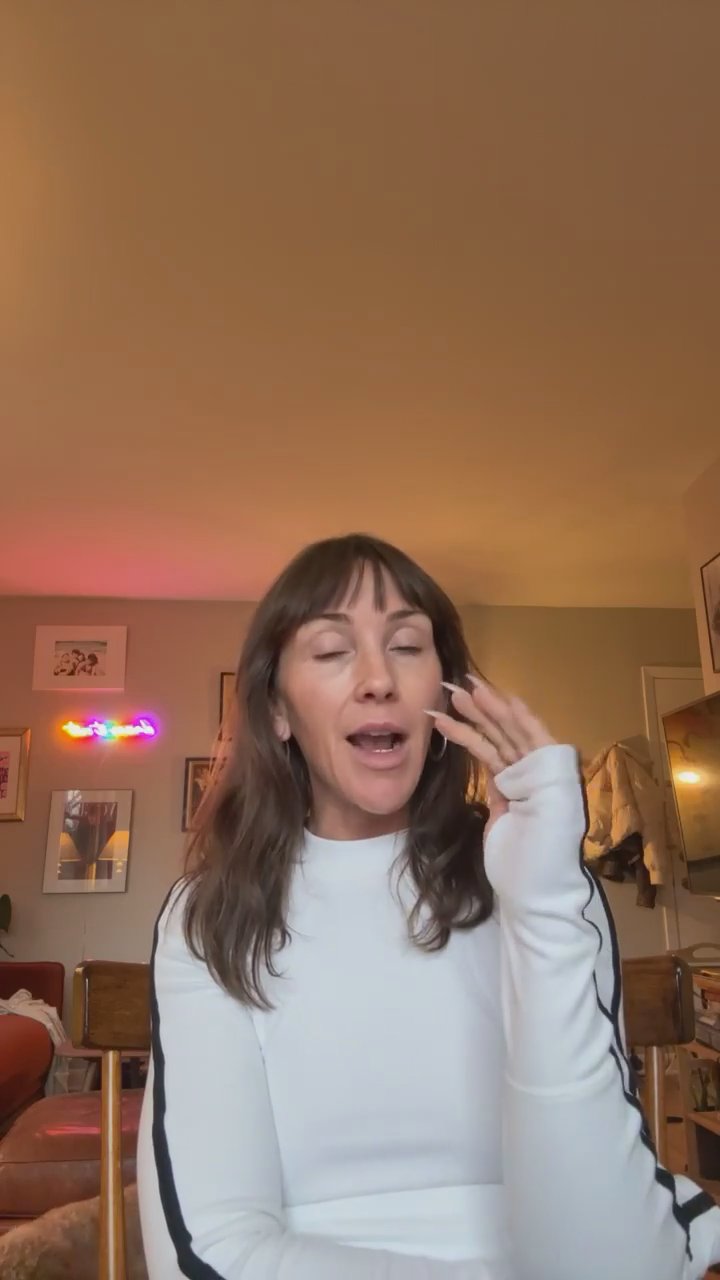
It is a gray, rainy day here in Seattle. He says his anxiety is higher and his depression feels more denser. Edward is trying to practice letting himself actually feel those things, which is hard. It was fairly new to be working while also raising kids and doing household chores.
Happy Thursday, Cadre crew. It is a gray, rainy day here in Seattle. We've been lucky and had some nice sunshine this week, though, so it's okay.
Edward: Since I've stopped drinking, I've noticed how much more emotional I am. He says his anxiety is higher and his depression feels more denser. Edward is trying to practice letting himself actually feel those things, which is hard.
And I'm just trying to take stock of, like, how these things impact me. I notice that when I'm on social media all day long, I feel like awful. When I'm multitasking, my anxiety is high. And when I don't do these things, I feels better. So those are some things that have been working for me lately.
I also am now 90 days sober, which is crazy to me. Makes sense how much multitasking was valued growing up in our generation. It was fairly new to be working while also raising kids and doing household chores.
All right, my loves. I am so glad that you're here. I hope that you are thriving and not just surviving. Next week is not Thanksgiving, so we don't have to worry about next week. So I will see you next week, same time.
Happy Thursday, Cadre crew. Hello. Hey. Giving few folks. Wow. Mouth words, folks. A few minutes to trickle in. It is a gray, rainy day here in Seattle. We've been lucky and had some nice sunshine this week, though, so it's okay. We will survive. Um, yeah. So I don't know how y' all are doing, but it's been a really weird week for me. Hi, Rach. I know I've talked about this a bit recently on my lives, but. Hi, Edward. I, like, since I've stopped drinking, I've noticed how much more emotional I am.
And it's interesting because I definitely thought that by not drinking my sobriety or not my sobriety, my anxiety and my depression would improve. And they haven't improved. They've just changed. Like, I've noticed that my anxiety is higher and my depression feels more. It's not as intense. It's just. It feels denser. I don't know if that makes any sense, but it basically, it just. It feels like I have. I just have, like, a more of, like, a baseline feeling of sadness, and it's just a different quality.
So I'm just trying to just notice that rather than try and analyze it or figure out why it is the way it is or fix it, I'm working really hard with my therapist right now to analyze less things and just allow them to be. But, yeah, Rachel says maybe because you aren't stuffing it down by drinking. And that's exactly it. Like, because I'm not using alcohol as a way to soothe my anxiety or reduce the thoughts in my head, obviously my anxiety is higher, and I'm also not using it to cope with sadness.
So I'm feeling sadness when it comes up. So it definitely makes sense that these things are, like, feeling that I'm feeling a lot more because I'm not suppressing it. I'm not avoiding it or pushing it away. And it also makes sense that it's not as intense, because when I was pushing things away or numbing or avoiding, then they would get. They would stack up, and then it would come out in these huge bursts. So it would feel really intense. So now it's just kind of, like, slowly trickling. But I've also noticed that after, like, really letting myself feel remote, I.
I experience a lot of levity. Like, I. I experience a lot of relief and lightness the following day. So I'm trying to remind myself that even though I don't want to feel these feelings, like, today, I can feel that I'm gonna cry or want to cry. And I do not want to. I really don't want to. But I have to remind myself that after I do, I will feel better and that that urge will be gone. And by pushing it away and pushing it away, I'm actually just making it worse, and it's gonna build up even bigger.
So trying to practice letting myself actually feel those things, which is really hard. Especially when we're accustomed to coping with things in a certain way, or we're accustomed to avoiding our feelings or accustomed to not leaning into our emotions, it can be really difficult to start practicing that because it doesn't feel familiar and doesn't feel comfortable. So that's something that I'm trying to exercise. Excuse me, which again, is hard. So my. I also am really trying, which is something I have done in the past, I'm pretty sure I've talked about here, trying really hard to A, practice single tasking, which I'll explain in a second, and B, get.
Get off my phone. So I'm really, really good at multitasking. And we've been taught from a very young age, or at least I was, that multitasking is a good skill to have. We are rewarded for being good multitaskers. And it's something that people, like, want you to put on a job resume or be able to do at work. And unfortunately, it's incredibly bad for our nervous systems to be multitasking all the time. And, uh, I have gotten to. Into a. I've gotten to a point where I have a really, really hard time in moments between activities, like when there's a.
A waiting period, because I'm so used to multitasking that I have a really, really hard time when there's nothing to do. So I'm always looking for ways to fill my time. So, for example, like, if I'm microwaving my lunch and the microwave is set for two minutes, I am looking for something to do in those two minutes to kill the time. Like, it is very difficult for my brain to just be like, I just have to wait for two minutes. Like, I will not do something. Like, two minutes is not that long. And for some reason I am so habituated to multitasking and being productive that it's.
That I just automatically kind of go into, I need to do something to fill this time to make sure that I'm not wasting time. And then the same. In that sort of same vein, I have a tendency of, like, doing multiple things at once. So if I'm walking, I'm also posting something on social media or Writing an email, or if I'm at the gym, I'm also doing work or checking my slack messages. It is very, very like habitual and easy for me to just be doing more than one thing at a time. And I know that that is increasing my anxiety and it's increasing my burnout.
So I've been focusing this week on doing one thing at a time. So if I'm on my laptop working on a project, I am not checking other tabs while one is loading. I'm not looking at my phone while one thing is is working. I'm not eating. And when I say not, I mean I'm trying eating while I'm also working. If I'm going for a walk with Milo, I'm not texting or doing stuff on my phone. If I need to do that, I will stop and sit or stop on the sidewalk and do that and then keep walking. And I've noticed that by doing that, my anxiety has reduced so much, like a tremendous amount.
I also have noticed that my, like I now like, like if I'm about to do some multitasking, like if I'm sitting at my laptop and I notice like that I. Oh, this is, sorry, this is a good example. Like if I'm watching tv, I'm on my phone all the time trying not to do that. So I've noticed that since I've tried been trying not to multitask, when I'm watching a show at night and I go to like pick up my phone, I have like pre anxiety. Like there's like this cue in my brain that's like, this is going to give you anxiety.
And it's like I don't even want to do it anymore. It's almost like I've created like a repelling repellent to multitasking, which is good. So I'm trying to stick with that. But I've noticed that in doing so, I am so much more present throughout the day, which means I'm really present when I'm not working and present with people. And my social life has felt a lot better. It's a lot easier for me to find things funny or silly because I'm not thinking about all these other things that are making me anxious.
I'm just right here. And by doing one thing at a time, I'm also showing myself that I actually have enough time in the day to do the things I want to do. I'm not running out of time, which reduces a lot of anxiety and stress that I get personally about running out of time. It's like a big source of stress for me and anxiety is that I'm running out of time. So by doing one thing at a time and showing myself that actually I do have time in the day to get these things done, then it reduces my overall stress about time.
So that's something I'm also practicing right now and just in general, like, trying to be off of my phone. Like, I am so hooked to social media all the time. And I've noticed in the last few days, like, I've been working on some other projects that aren't social media related, and my stress has been. My anxiety specifically, and my low mood have been way down. Like, I have felt a lot better and I'm. And a lot of it is just because I'm not mindlessly scrolling. So I'm focusing on that as well. And I'm just trying to take stock of, like, how these things impact me.
And again, like, not shame myself for, you know, how things make me feel or what I'm doing, but rather just acknowledge, like, okay, I notice. I notice that when I'm on social media all day long, I feel like crap. I notice that when I'm multitasking all day long, my anxiety is high. I notice that when I don't do these things, I feel better. Okay, So I have some information. Let's try and do something with that. So those are some things that have been working for me lately. I also am now 90 days sober, which is crazy to me.
That feels like nothing for some reason. Like, it doesn't feel like a lot and yet it feels like it's been a year. But, yeah, I. Yeah, I just wanted to share that too, because that feels like a big milestone. So I'm just gonna read this comment here. Makes sense how much multitasking was valued growing up in our generation. The standard for women had been to stay home, and it was fairly new to be working while also raising kids and doing household chores. In order for that to change, multitasking was seen as a must.
Yeah, definitely. That makes a lot of sense. Yeah, I'm exhausted just thinking about that. Oh, man. All right, my loves. Well, that is my update for the day. And I am so glad that you're here. I hope that you are thriving and not just surviving. And if you're surviving, I'm glad that you're surviving because it means that you're still here. I. Next week is not Thanksgiving, so we don't have to worry about next week. So I will see you next week, same time. Same place, same face. That's all I got.