A great question to ask your employees. What does success look like in your role? You can tell right away if they have good direction on goals/kras etc and will tell you a lot about the organization and operating systems or lack thereof. Listen and I’ll explain.
Luke Wendlandt here for tales of leadership again. Hope you all are doing well. Happy Thursday to you and yours. Hopefully your work week is going absolutely fantastic.
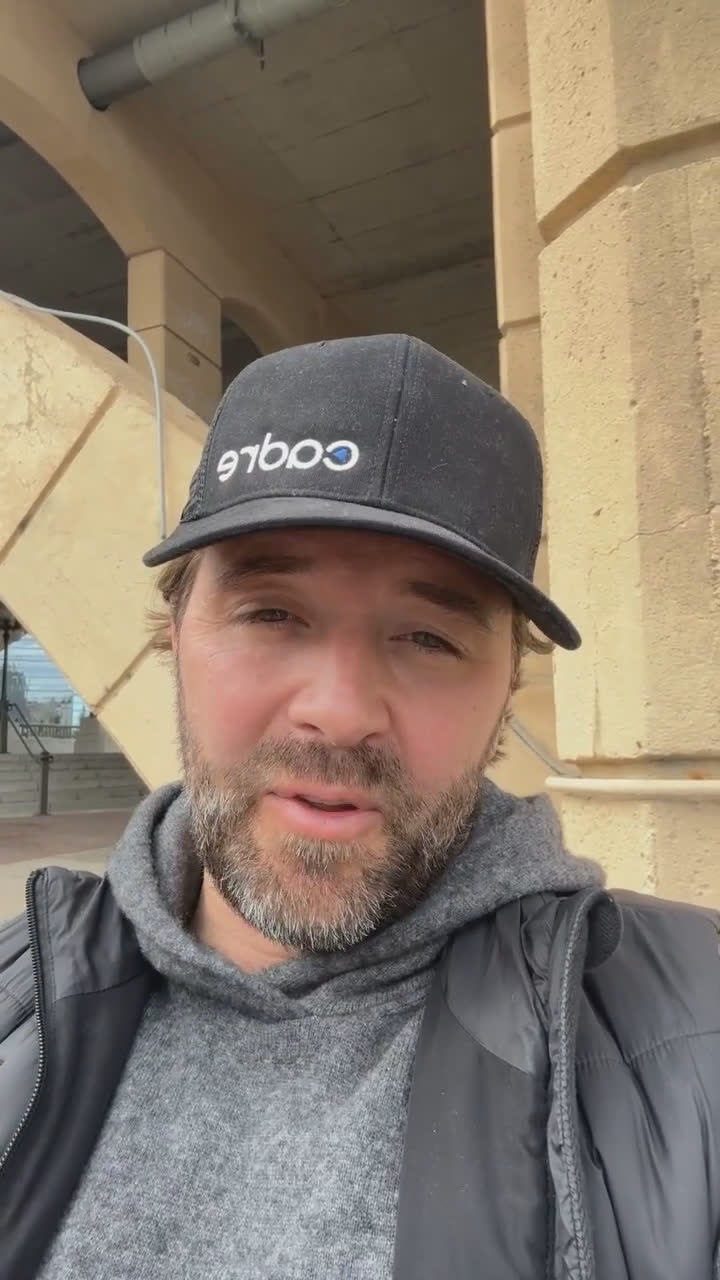
Luke Wendtland is taking on a walk through St. Paul. Happy Thursday to the whole entire Cadre sphere.
Tales of leadership. What does success look like in your role? Give me one second. This is in St. Paul, Minnesota. I wanted to share tales of leadership and what's on my mind today.
In leadership coaching, I always ask, what does success look like for you in your role at the end of the year? What ends up happening is organizations usually divide. If you're liked, you can stay at a company and hug that role for probably the rest of your life; if you're not liked, odds are you probably won't be there very long.
So there you go. That's my Tales of Leadership. Enjoy your day. I'm out for a walkabout. One more look of downtown. It's just such a beautiful downtown now. I look forward to next Tales of leadership next week.
That's what's going on. What's up, Cadre family? It's Luke Wendlandt here jumping in for tales of leadership again. My name is Luke Wendtland. I've been a Cadre since day one. I love this place. Hope you all are doing well. Happy Thursday to you and yours. Hopefully your work week is going absolutely fantastic. Mine is again, happy Thursday to the whole entire Cadre sphere. My name is again Luke Wendtland. So good to be here. Just taking on this beautiful walk here of St. Paul. Good old St. Paul.
There's the Cadre van. Got this little walk that I'm heading through today. It's gonna be a good one. Again, welcome. You all in? I'm gonna start here in about 15, 30 seconds, but good to be here, good to share. This will be a fun one today. It's called Tales of leadership. What does success look like in your role? Give me one second. Walking across another state. No, this is definitely not walking across another state. This is in St. Paul, Minnesota. It's one of my favorite places. Right over there is a little island across the river that breaks up to North St.
Paul, West St. Paul, downtown St. Paul. It's just a beautiful area, so I enjoy the spot. But I wanted to share tales of leadership and what's on my mind today. So how many people here have worked at an organization before? When somebody says something like, Sally's not doing their job, Johnny's not doing their job, Tommy is messing up, or Jennifer is missing, they just don't get it. How many people have worked at an organization that has those things happen? Me too. And what ends up happening is organizations usually divide.
And why do they divide is because I always call it the likability factor. If you're liked, you can stay at a company and hug that role for probably the rest of your life. And if you're not liked, odds are you probably won't be there very long. Right. Rachel says anyone who has ever had a job. Yeah, no doubt. Right. So we know what that's like. And then bear with me when I say this. There's also this concept that I think about a lot, which is like, if 100 organizations are operating the same sphere, right.
Whatever that is, the hundred companies are working there. I would say like 80 shouldn't even be there. 10 are usually targets, 8 to do most of the work, and 2 really, really know what they're doing. And let me explain what I mean by this at greater. So in my leadership coaching with, working with some amazing leaders, you Know, I always ask, I always say, like, what does success look like for you in your role at the end of the year? So if we're wrapping up, it's December 31, 2026. What does success look like for you?
And I can always tell with the leader that I'm talking to. Maybe it's a CEO, vp, you name it. And when I ask them that, I can always tell, like, one of three things. I'll get the first one, which is this. Oh, you know, we're going to create some value and shareholder and ebitda. And it's just word vomit. And it's, you know, we're going to do this, and we're going to do this, and this is what's next. And we got this, and these are happening in like, 15 minutes later. I'm like, oh, my God. Like, I can't.
I can't believe that. But that's okay. So then the next one is, I call it Fluff. The Fluff leader. And the Fluff leader tell you, you know, we're going to create an awesome work environment. We're going to have, you know, a phenomenal culture. We're going to treat our people really well, and we are going to make an impact. So, you know, that call those individuals the Fluff people and then just wait for it. Then you'll talk to the leader and you'll ask the leader and you'll say, tell me what success looks like December 31, 2026.
And I'm just going to use Sally, who owns a coffee shop. I don't know Sally, and she doesn't have a coffee shop. But Sally's going to say, we are going to serve 5,000 customers this year. We are going to have two new coffee locations that we open by the end of the year. 13 a pound. And I'm gonna say, she's got it. And then, watch out, watch out. This is where it gets crazy, because if you ask that leader, what ends up happening is the rest of the organization works off goals, the rest of the company will work off goals.
And the person that's working there, that is the barista and the person here and the person there. And all the individuals that are working know what the goals are. They know what the targets are, and they know why they're showing up to work. So I'll open the cat out of the bag for you all. So for example, at Cadre, you know, we have our big three goals for our organization. Number one, we are going to onboard a large insurer in the state of Minnesota checkbox like we are going to do that. We are going to roll that out.
We are going to make that happen. Number two, we are going to grow from X accounts to X accounts of individuals that we get the opportunity and the privilege to serve. And then last but not least is we are going to maintain fiscal responsibility for this organization. So those are our big three. Like we will do that. That's what success is going to look like December 31, 2026. I will then build all the other goals around for everybody else at the organization to match the mechanism of the big targets of the business.
So when you ask somebody at Cadre what does success look like for you at December 31, 2026, they should be able to tell you that. They should be able to not tell you the word vomit. They should not be able to tell you the fluff. They should be able to give you their big three five goals for each one of the roles at the organization. That's really, really important, like goal driven, et cetera. Because what will end up happening then? You ready for this? You don't get into the minutia of liking, loving all those other things.
Those are great. But what it really comes down to is are they doing their job well? Are they performing? Is this a key result area that somebody's hit? Is this a goal that somebody's accomplished rather than Sally's not doing her job, Tommy's not doing her job? What does that even mean? What does that even mean? So I encourage you to take a step back and ask somebody today, ask anybody today at your organization and ask them this question. What does success look like for your role? What does success look like for your role?
And what does success look like for this company? At December 31, 2026, you will know real quickly if your organization is organizationally sound or is operationally deficient. So there you go. That's my Tales of Leadership. Enjoy your day. Thank you so much. I'm out for a walkabout. Take care. One more look. One more look of downtown. It's just such a beautiful downtown now. It's a gorgeous downtown of St. Paul. Great spot. I look forward to next Tales of Leadership next week with you all. Peace.
Bye bye you all.