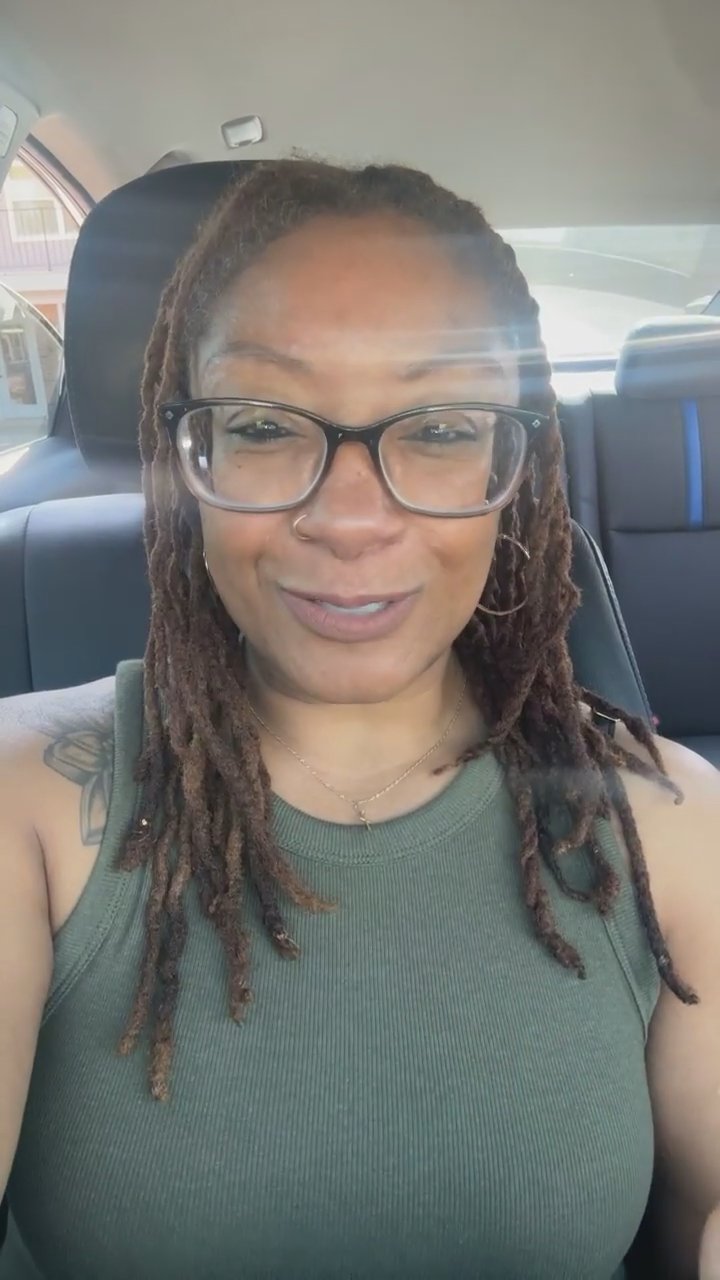
This month is Domestic Violence Awareness Month. Dr. Leslie Davis is a relationship therapist. She says domestic violence happened to her very early in her adult Life. The cost of silence, is isolation. No one really knows your pain, and so no one can support you.
This month is Domestic Violence Awareness Month. Dr. Leslie Davis is a relationship therapist. She says domestic violence happened to her very early in her adult Life. She wants to talk about the cost of our silence.
The cost of silence, is isolation. No one really knows your pain, and so no one can support you. Because I didn't say anything, I lost true connection. I showed up as a full mom without the fullness of who I could be.
Some of the costs of silence is that it keeps you trapped. Silence will keep you in a state of confusion. My silence of enduring intimate partner violence and becoming a survivor cost me the ability to help other people. I encourage you to break your silence, because you breaking your silence may save someone's life.
Hello, Cadre. It's me, Dr. D. And guess what? Today I do not have my coffee. I know, I know. But I do have my water. So I'm just drinking my water and minding my business today. So I hope you're minding your business too. But if you're here today, welcome. If it's your first time. Thank you for joining me. So I'm Dr. Leslie Davis. I am a licensed clinical professional counselor and, and I specialize as a relationship therapist. I'm located in Illinois, but I'm in the southern region. So I'm actually closer to St.
Louis, like right across the river, as we say around here. Hello, Ms. Brittany. Welcome. And this month is Domestic Violence Awareness Month. I know there's a lot of other things going on that we're bringing awareness to, but let's talk about some dv. And there's another term that's closely related, intimate partner violence. And so this day I want to talk about the cost of our silence. And I'm going to share something personal with you. I do not mind sharing my story, my testimony of my experience with domestic violence.
I will say I've always been surprised by how I don't fit the statistics of the person that would typically maybe be known to have intimate partner violence in their lives. So I grew up with a single mom. It was just me and her. I did not see her get abused. I didn't see her go through toxic relationships because I didn't allow her to date. You know how that is as a kid. You're like, you can't date anybody. It's just about me. You know, I was selfish in that way. But domestic violence happened to me very early in my adult Life.
I was 22 when it first happened and I've experienced it multiple times. So when I reflect on our topic for the day, the cost of our silence, I wanted to share something that, you know, I was reflecting on my own experience of why did I stay silent and what happened because I did. So I remember. So imagine Earth, early 20 year old version. Myself, my early 20s. I was, I wouldn't say I was a shy person. I was very observant, very quiet. I kind of, I won't say I stayed to myself, but I just like watching other people, if that makes sense.
And I remember when I was going through something so painful when I was being abused, I didn't say anything about it for several reasons. One reason is that I couldn't believe that it happened to me. I was in shock. Right? How did this happen to Me, I was serving as a. I was a caseworker in child welfare at the time. And so I was in a position where I was actually helping other moms who have lost their children because they were in toxic relationships, and there was abuse in the home. And here I am experiencing abuse as well.
And it was hard. It was. It was embarrassing. It was scary to think that what could happen to my child if I said something right, and my friends didn't know what was going on, my family didn't know what was going on. I protected the person that was abusing me. And so what was the cost of that? What was the cost of me staying silent? Well, first thing that comes to mind, the cost of silence, is no one really knows your pain, and so no one can support you. So you lose compassion, you lose the opportunity for empathy to be in your life, because no one knows what you're dealing with.
And there were moments when I was in so much pain that. You know, when you're in pain and you're being abused, whether it's emotional, physical, sexual, even financial abuse, you have a lot of thoughts that run through your mind. A lot of dark thoughts. A lot of thoughts of, maybe it'd be better if I wasn't here, or maybe thoughts of, I wish this would end and what can I do to make it end? And sometimes you think really, really dark thoughts that you can't take back. We don't always say them, we don't always act on them, but those thoughts still kind of live within us.
And so the cost of my silence was that I was dealing with dark thoughts, racing thoughts, fear, anger, embarrassment. I was dealing with these really dark emotions, and no one knew about it. No one was able to come to my side and say, hey, it's okay. Hey, I got you. Hey, you're not alone. Guess what? It happened to me, too, right? No one was able to say that because I didn't say anything. So I experienced all that pain alone. That's the cost of silence, is isolation. And funny thing. Well, it's not really funny, but it's.
The truth is, isolation is a tactic that abusers use to keep us in a state of abuse. So I was isolating myself because I was being abused, and I was isolating myself out of my own silence. That was my cost. I kept myself away from people that loved me, that would have stood up for me, that would have helped me if I said something. And because I didn't say anything, I lost true connection. I lost authentic connection because I was out there. Wearing a mask. I was out there acting like I was happy.
I was out there acting like my life was good. I won't say perfect, but people believe my life was good. And in some senses it was good. But no one knew what I was dealing with at home. No one knew how much I had to balance mentally, physically, even. And I won't say that I endured a lot of physical abuse. It was more emotional and a lot of manipulation and gaslighting and love bombing. All the things that I didn't even know that there were terms for at that time. But the cost was big. And the other cost was that it impacted my child.
Now, I don't know the impact on him just yet, but he was a baby at the time. But the impact on him that I do know is that I was not able to show up as the best mom that I could be because I stayed silent in my situation. I didn't show up in a way that I asked someone for help to maybe even take care of him for a little bit, because I didn't want to be vulnerable and tell people what was going on in my life. So I showed up as a mom without the fullness of who I could be as his mom, if that makes any sense.
So that was another cost. The cost was I didn't show up in my role as mother, as a. At my highest potential, and showing up as a mother I wanted to be okay. I think of other costs, too, that I've. I've witnessed with other people. And some of the costs of silence is that it keeps you trapped. Silence will keep you in a state of confusion. Silence keeps you in a state of loneliness. Silence keeps you in a state of dwelling with all the negative words that are spoken over you by your abuser. So if you've ever been called stupid, ugly, you're no good.
Nobody wants you. Nobody cares about you. Nobody cares but me. And having all of those thoughts replay through your mind like a broken record, that is the cost, is that you start to. You start to pay more attention to those thoughts, thoughts that are negative, that are untrue, and that becomes your truth. And you start to live out of that truth. And all that is a lie. It's a lie. So I want to encourage anyone that's listening to this one, if this has not happened to you, be grateful. And if it hasn't happened to you, and maybe you can think of someone that may have been through this experience, show them some empathy.
And sometimes people that are dealing with domestic violence or intimate partner violence, they don't know how to speak up. And so sometimes we have to look for the signs. If there's someone who's typically talkative and they start to quiet themselves, nudge them a little bit. Hey, you doing all right? What's going on? I notice you changed. I noticed you're not as bubbly as you used to be. I notice you're not paying attention to yourself as much as you used to. I notice you're a little more irritable or you're a little closed off, like we would normally hang out.
And you haven't been hanging out, so nudge them. But if this is your story, just know you're not alone. Because that is one lie that we. That we hold onto, is that we're alone in our experience. And that is not true. You're never alone. Okay? And I'm so grateful. Again, I will always preach this. That Cadre is a space that is created for safety, that's created for real conversation, that is created for just recognition that you're not alone. And I'm pretty sure there's someone listening to this right now that has been through this or you maybe experienced it for a short time, hopefully, but you got out.
And so if that has been your story, I encourage you to talk about. Took me a long time to talk about it. And I will end with this as the last cost of my silence. My silence of enduring intimate partner violence and becoming a survivor cost me the ability to help other people. It wasn't until maybe three years ago, if I'm being honest, three years ago is when I broke my silence about my experience and I told the world, right? And that was a very scary thing to do. But I jumped out there and I said, you know what?
Me too. And since I've done that, I have experienced freedom, freedom emotionally, freedom mentally, mentally. Freedom in my ability to connect with others who need to hear my story. So if you have a story, tell it. I encourage you to speak up, share your story, because you breaking your silence may save someone's life. All right, that's all I got. Speak. Wonder I see you in here, Ms. Nettie. I don't know what you look like, but, hey, drop in the chat if you can, where you're tuning in from. So, Nettie, I don't know where you're from.
If you missed it earlier, I am from the St. Louis area, but. But I'm in Illinois. But, yeah, if you got some nuggets from this today, I'm glad I did my job right. But again, I'm out here minding my business and drinking my water today. But I encourage you all to stay safe, to speak up, break your silence when you feel safe to do so, and just be open to helping someone today. All right? Be a light. I'll see y' all later. Bye. It.