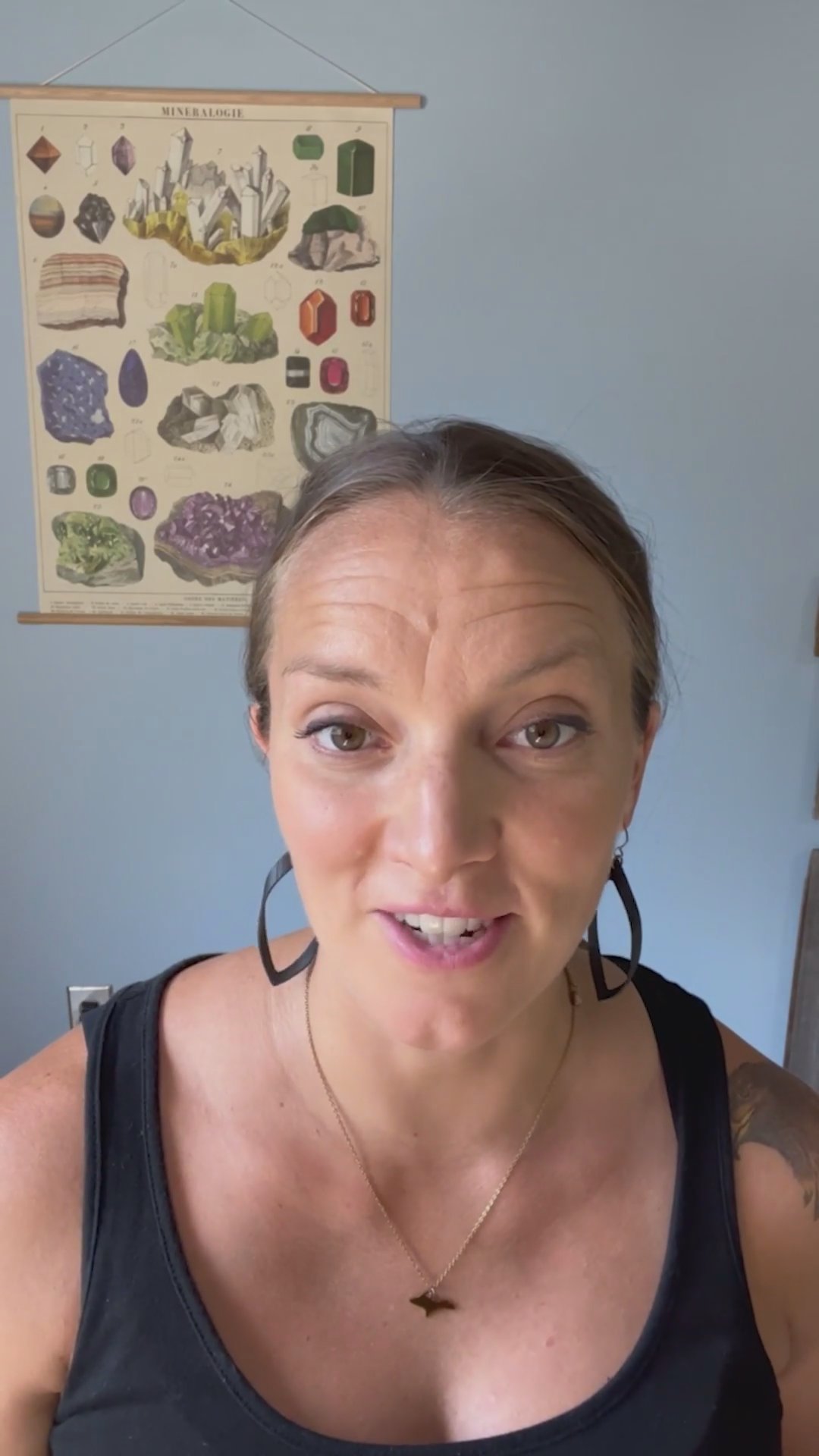
Danielle Jokonen introduces herself and explains what breath work is, emphasizing its role as a life force and constant support. This short segment orients viewers to the topic and purpose of the practice.
Danielle Jokonen introduces herself and explains what breath work is, emphasizing its role as a life force and constant support. This short segment orients viewers to the topic and purpose of the practice.
She describes where breath can travel—from nostrils to diaphragm—and teaches deep belly breathing while highlighting the vagus nerve between the shoulder blades. Viewers learn how lengthened, full breaths soothe panic, increase vitality, and connect you to your body.
Danielle leads a step-by-step box breathing exercise with inhale, hold, exhale, and hold counts, offering several cycles and cues to feel the breath physically. She prompts listeners to try the technique and explains how it helps ground you in the present moment.
The host summarizes how breathwork shifts you from fight-or-flight to rest-and-digest, increases life force, and helps you choose actions from a calm state. The video ends with encouragement to tune into the breath, an invitation for questions, and a friendly sign-off.
Hi there, my name is Danielle Jokonen and I'm talking about breath work today. What is breath work? You know, the power of your breath. Number one, it really creates a life force in your body. It is your best friend. It will always be there for you. Just got to tap into it, tune into it. And not only just like nostril breathing, a lot of times just breathing like we're just thinking nostrils. versus even letting that breath flow to the space between your eyebrows, to the back of your throat, to the bottoms of your rib cage, to your lowest part of your belly, into your diaphragm.
Deep belly breath. It also triggers the space between your shoulder blades, which is your vagus nerve, which helps you calm down. Think about if you're like having a panic attack or like call it hyperventilating, right? old school way of helping is breathing into a bag because it makes you breathe longer. So you have to fill up the bag, exhale, crunch the bag, right? Same type of thing. So you can even think about breathing in for the count of two. Exhaling out for the count of two. Lengthening your breath.
You can start there, but also really know the physical feel. Not only know. The difference of knowing and getting into your body, that's the biggest thing. Feeling, feeling your breath move into your body, moving through your nostrils, space between your eyebrows, back of your throat, to your lungs, into your belly, next thing out the belly, the lungs, back of the throat, space between the eyebrows, out the nose. You can also do some box breathing, like think of four sides, right? So you inhale for the count of four, three, two, one.
Hold four, three, two, one. Exhale four, three, two, one. Hold four, three, two, one. Inhale. Hold. Exhale. Hold. Inhale. Hold. Exhale. Hold. Inhale. Hold. Exhale. Hold the breath. Inhale. One more time. Hold. Exhale. Hold. And try that on. That'll first off help calm you down, get you present to the now moment. And then from that space, be able to choose what you want to do versus being in fight, fright, or freeze. You can get down, be in your body, calm down, and be rest and digest, and get really present to the now moment instead of being in the frantic space.
So yes, the breath is your best friend if you use it to get you into the now moment, to get you present, and really increase your life force, your vitality, and calm down the vagus nerve that stimulates stress. Okay? So, power of your breath. Tune into it, my friends. Questions? Again, my name is Danielle Jokanen. Let me know. Have a great day.