Finding Yourself in the Midst of Pain — “Safe to be me” isn’t just about a place, it’s a journey of discovering…even rediscovering…your truest self.
Rick Cram: Are you going through or have you had a time when you felt as though you're losing a sense of your true self. One way to be intentional when the struggle or pain is greater is to focus on identity. But you can find that you rediscover yourself and rediscover a stronger you.
You lost your sense of self when the radio station was bought out. Work related changes are very common triggers, especially for something major like that. What we'll talk about in a minute is taking small steps.
The idea of working through these kinds of issues, it's best done in tandem with, in concert with someone else when we're talking about it. Talk about those qualities about yourself that are maybe feeling suppressed, maybe feeling because of that unsafety to what is it that I want to bring forward to feeling safe with.
Rick Crram: We grow resilience when we have a chance to express and get feedback from someone, get encouragement from someone. He invites you to take heart, encouragement and resilience in action. It's the first and third Sunday of every month, where we'll encourage each other.
Gavin: Changes happen in small with small steps. What we can do is identify what they might be and then be our best. Courage is a combination of conviction and wisdom. Part of life is growing stronger, growing more resilient and practicing those three steps.
"I realized I'm stronger and I want to use what I've learned to help encourage and equip others to navigate whatever is challenging, " he says. Through these kinds of conversations that resilience grows and that we grow.
Allow me to again invite you to Take heart, Encouragement and resilience in action the first and third Sunday of every month at 3 o' clock via Zoom. It's a place where we can encourage each other. I wish you well.
Hello, my friend. Are you going through or have you had a time, had an experience and perhaps thinking back on recent weeks, days, months or even years, a time when you felt as though you're losing a sense of your true self or it happens in a different way, you don't maybe not lose a sense of yourself, but there's some new layers added on to your experience and your experience of yourself where you're not feeling safe and where you're. You're actually adding on something that you haven't had before and it doesn't feel right.
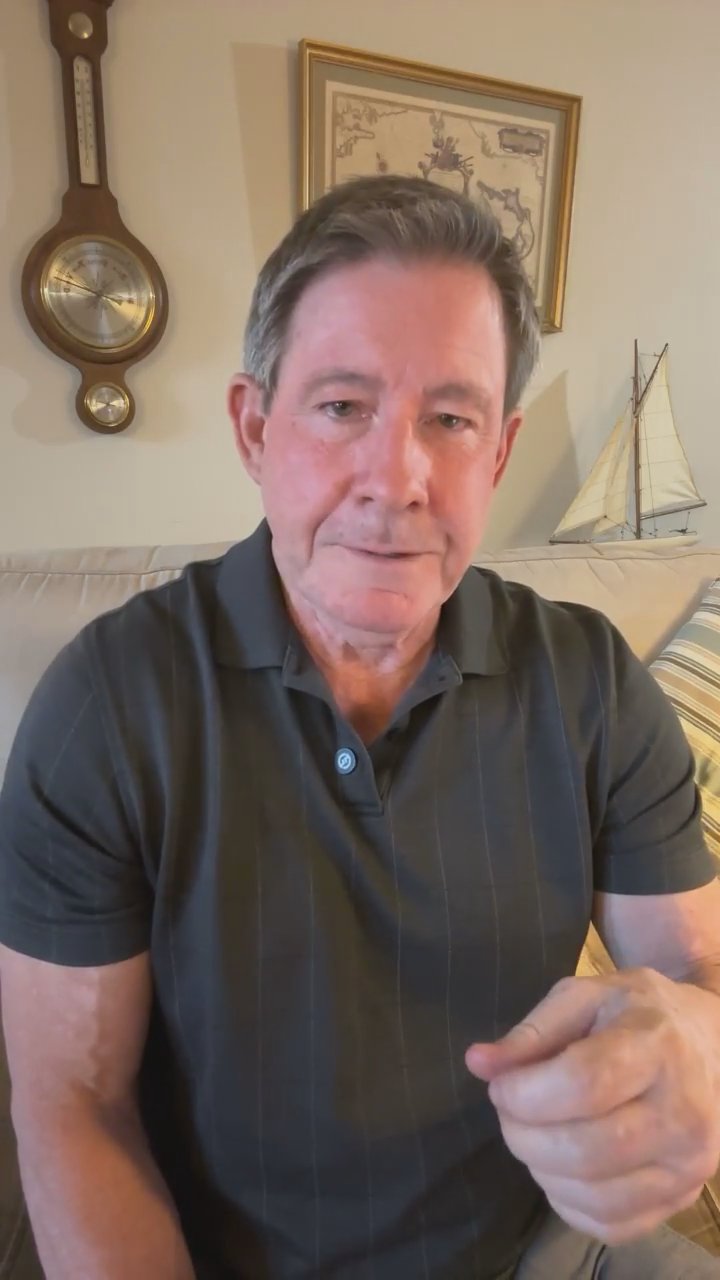
Hi, I'm Rick Cram and welcome to your Resilience coaching studio. I'm so glad you're here. Carrie and Nikki, so good to see you. It's good to be back. I've missed you all again. I had to go care for a couple of family members who keep having repeated health emergencies. And if, if I may, and this might be tmi, when I travel to be with family and help out, even if it's fairly inactive time, my, my pain magnifies greatly. So I got back on Friday night, spent the weekend just trying to recuperate. I'm still trying to do that.
And even this topic, when I experience an extraordinary increase in pain like I did, it shakes my sense of self in some ways. And so that's what we're going to talk about in terms of feeling safe and being, being you. And I found that just as you've heard me say, the level of pain, the level of pain needs to be matched by a level of intentionality. And one way to be intentional when the struggle or pain is greater is to focus on identity. Do identity work good identity, where you can actually perhaps experience a loss of identity, you can sometimes lose yourself.
But if you go through it right and by right, that's a blank page for us to talk about. But you can find that you rediscover yourself and rediscover a stronger you. Let me just say hello to those of you who are joining. Hello, Kathy. I'm so glad you're here. What are you going through now? Or have you gone through and perhaps share a word or two of a time when you didn't feel as though you had your full sense of self like you did before the challenge occurred, before the struggle or pain occurred, or was there something new that was added on?
For example, when I was going through surgeries 4, 5 and 6, I found in my conversations with my pain management counselor that I would refer to the knee. It wasn't my knee anymore. And There was evidence of my describing who I am as someone in pain, being in pain, the daily pain was becoming part of my identity. If you feel like sharing what might be. Thank you, Nikki. The idea of too much information I shared with Jen in her live, which I highly recommend is so insightful. She's so articulate in the idea of for her lives.
The let me make sure connection is here. She makes the point of small steps being so important and what we'll talk about in just a minute is taking small steps. She certainly referred to the tragic events in Minneapolis and how I'm just broken hearted. I don't have words and I'm with you all in spirit and I'm a holder of hope for you all, for everyone across the country who is reeling because of this. You lost your sense of self when the radio station was bought out. Work related changes are very common triggers, especially for something major like that.
I was with an advertising agency when it was bought out. And here is part of what drives that sense of self challenge. It's uncertainty. And when there's more and more uncertainty, including the uncertainty of who am I in this new environment and in this new situation, new politics involved and so forth, that's layer upon layer of more stressors. And if we think about what feeling unsafe does and perhaps that's even a good question to explore for a moment while we're together here. What do you experience when you don't feel safe?
If we read up on what it means to not feeling safe, it affects our thinking, it affects our emotions. It can actually even have a physical reaction, increased stress and the idea of so if and it's interesting you mentioned felt your voice, your identity was stolen. I shared with Jen at the. Towards the end of her sober, not somber for me the breakthrough that I had. I traded not feeling safe for feeling safe and sharing my journey about my pain journey and my journey of resilience is because I didn't have partially one of the key aspects.
I didn't have my voice, I didn't know exactly how to articulate it, which would include a combination of the authentic reality of the pain and what it's doing to me mentally and emotionally and virtually every aspect of my life to feeling safe. And it was to a great extent a combination of embracing my sense of purpose and my mission, which is extremely profound for me and saying I've got to adapt a new perspective and just do it and work through realizing bringing that trade to life, trading the lack of safety for feeling safe and going ahead and just Plowing into it, because on one hand, it was and is my purpose and my mission.
And aren't those the things we're supposed to run to? Aren't those the things we're supposed to pursue and say, all right, this is so challenging. I don't feel safe, but I know it's right, and so I'm just going to go do it? Is there something that you don't feel safe in doing, perhaps, because it's going to even challenge your sense of self? And what might that be? And what might you do to chase it, pursue it, just do it and experience the goodness of what comes from putting life and breath into what you feel you're called to do and is so important.
Feeling unsafe makes my world seem smaller. And this is. That's a piece of wisdom right there. Thank you, Kathy. The idea of working through these kinds of issues, it's best done in tandem with, in concert with someone else when we're talking about it. If we do this as solo work, we get into that smaller space, that inward, more retreated, scared, unsafe place. It's easier to break out of that and trade it for pursuing that safety when we're talking about it with others. And you might even entertain the idea, who might there be in your life?
Someone that you might talk to once or twice or on a regular basis and have a conversation about, If I'm not feeling safe with who I am for whatever reasons, let's talk about it. One of the things to talk about in the mix is both identifying. Here we are using the three steps of resilience to tune in. Why is it that I am feeling unsafe, not quite myself, or there's some new layer of identity that I'm experiencing that is so new and perhaps it's disruptive that I need to work through it, to tune in and talk about it, speak it out and put words to it, Kathy.
Put really good words to it, right? And then take a look at what's the meaning behind those words. And then to talk about. And these can be done in very small steps. Talk about those qualities about yourself that are maybe feeling suppressed, maybe feeling because of that unsafety to what is it that I want to bring forward to feeling safe with and in fact realizing when you're talking about, here's this quality that I know is it's true to me, it's good for me, and it is who I am talking about. It means you'll experience it more and that will create a sense of both calm and security when you are experiencing that part of yourself that perhaps has fallen into that pool, that Glenn of unsafety.
As we think about, as we step into the plan phase and do this with purpose, what are those small steps that come to your mind that you might do that will both reveal and openly share what you've found as you tune in, and then to think about what options are there that I can do? And maybe it's starting a new pattern of thought. I believe that it's in conversation that we grow resilience when we have a chance to express and get feedback from someone, get encouragement from someone, and that we actually experience a growth in resilience.
It's in that process of talking about it through the conversation we can come to realize and identify. All right, here's how I've seen in some ways a sense of loss. I've lost myself. But going through it very intentionally, very thoughtfully, very boldly is a process to rediscover yourself, even to the point where you're able to find I'm growing through this, or here's what I need to do to grow through this. Here's a perspective that perhaps isn't serving me very well. And how might I create some kind of a reframing of that perspective to then say, I'm going to adopt this new thought about myself and realize I am stronger than I thought?
If you haven't seen it yet, I'd hope you take a look at the video. I think I've posted it. I'm not sure if I. I did. Where we can ask that question of ourselves. And it is a question that comes from deep inside, perhaps when you least expect it. And that question sounds like when we realize just how strong you are because you're here. I know how strong you are. You're strong enough to be in community. I know how strong you are because I know you're. You're sharing and you're encouraging yourself and others.
Kathy, I'm reading here offer encouragement to someone. One example of taking a small step of self discovery. That is so true. So, so true. There are three ways to experience encouragement. One is to receive it. The other is to give it. And the other is to enjoy that flow back, if you will, that rebounding, the neuroplasticity that takes place from seeing how your encouragement lifts someone else up. In turn, it's going to lift you up. If I may, I'll take this chance to invite you to take heart, encouragement and resilience in action.
It starts this Sunday. It's the first and third Sunday of every month, where we're going to get together at 3 o' clock in the afternoon and encourage each other and experience those three dynamics of encouragement. It's free, it's on zoom. I hope you'll take a look at it. com I think if I haven't already, I will post a video I think I did earlier today in fact or yesterday about inviting you to take heart. It's a time to where we can share, encourage and strengthen each other. I hope you'll take a look at it and just let me know if you'd like to talk for a little bit to discuss what it might look for you to be a part of it.
I'll answer all of your questions and encourage you. So if we can identify after tuning in to this question about feeling unsafe, being me, being you, there are small steps that we can take and it's best that they are small steps. Changes happen in small with small steps, then what we can do in that plan step, identify what they might be and then be our best. And that is to apply them, practice them, take those small steps on a regular basis and celebrate taking those small steps. Goodness comes from celebrating, including an increased likelihood that you'll keep on doing it.
Let me just check the notes. Encouragement is so, so important. It really is in a way. This is a conversation about encouragement. There's of course the root word. Here I go. Gavin. The root word is courage. And courage is something that is required when we go through anything painful. Courage is essential when we are struggling with whatever it might be. Fill in the blank. And I found that, as I've often shared, courage is a combination of conviction and wisdom. Feeling so strongly and having the knowledge that the actions that you might take are the right ones, good ones, that combine the two.
That's what makes courage come to life. And we are all in our life experiences, challenged to be courageous through the kinds of challenges that we've experienced, challenges that we have yet to experience. And part of life is growing stronger, growing more resilient and practicing those three steps. Tune in, plan, be your best, making purposeful choices in that plan and then being your best, applying them, practicing. There's no perfection in life. There's no perfection in resilience. There's no perfection in finding ways to transform what you want to transform.
But it's those small steps that are meaningful and become like the building blocks of a foundation to grow on and build on. Curious to know if you have any questions. I'm so glad that you're here and I'm so glad that you're here. You've been sharing with me your thoughts and let me just see if there's anything else I want to share with you. I think the idea of, if I may, going back to that, my own story of through those three surgeries, I got through them and realized coming out of the third one, once I was both figuratively and literally back on my feet, I felt a calling to serve and help others and that realizing that it was an innate, an innate drive, it was an innate what motivation that was unique to me and new to me.
Unlike I've always liked helping others. But this was different. This was on a whole, whole new level and reflecting on it and it took some time reflecting on. I realized I'm stronger and I want to use what I've learned to help encourage and equip others to navigate whatever is challenging. We need each other during those times. I wouldn't have grown through the decades of pain if it weren't for wonderful people who were there for me. I'm growing through our times together. You're giving me the gift of being able to verbalize things that I haven't yet really verbalized.
In some cases, you're giving me even more content for the book. I should probably credit all of you credit Khandre for In Different Places for the book. But it's through these kinds of conversations that resilience grows and that we grow Any particular questions before I wrap this up? Allow me to again invite you to Take heart, Encouragement and resilience in action the first and third Sunday of every month at 3 o' clock via Zoom. It's free. It's a place where we can encourage each other. Experience encouragement as you'll read on the homepage of my website and then drill into the link with details about Take heart.
Come as you are. Leave encouraged. Linger for just another moment or two to see if there are any additional thoughts or questions. I want to say thank you so much for for being here. You're the best and and you are stronger than you know. Your best is greater than the pain. Thank you so much. I wish you well. I hope you have a good rest of the week. Take good care now.