Let’s explore freedom from institutional stigma. Ever felt judged at church, the doctor’s office, work, or even a support group? That’s likely institutional stigma. Let’s talk about it.
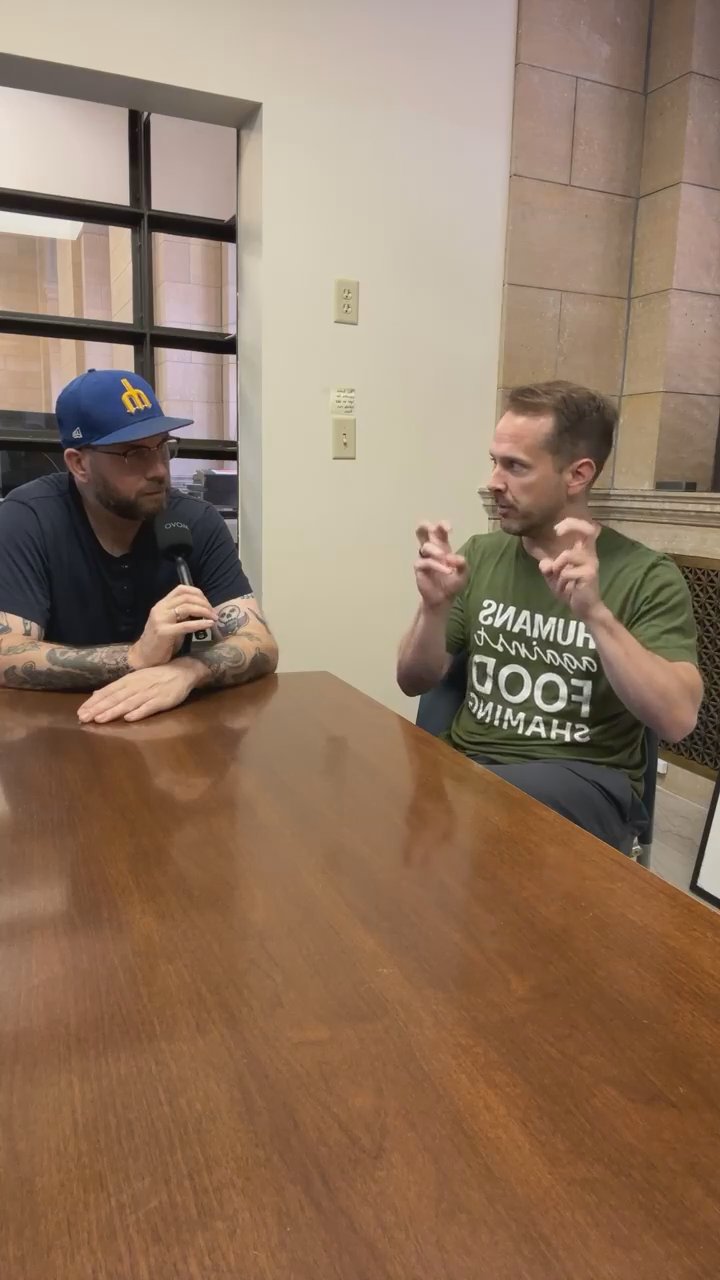
Pastor Seth Perry is hosting Talk Stigma at George Latimer library in downtown St. Paul. We're going to be talking about freedom from institutional stigma. Jules here and you know what, throw up questions, comments.
JC: Churches should be places where people should feel comfortable just being who they are. How does music help people let go of the things or acknowledge the things that they're holding on to? When did music in general really speak to your heart and allow you to feel free?
I was thinking about my older brother, also queer. Had the exact experience of being able to express himself. It's always fun to watch my brother step up to the piano and play. And I know that it's something that is so freeing for him.
Where does faith play a role in your freedom right now? The Western faith model is. You grow up in the church. And yet when we go, hey, we believe in stuff, and we're sitting next to each other. It brings us closer together.
Caden: How do you break free of the limitations that medical institutions provide people out there in the world? He says health and wellness is stigmatized in two ways by the people offering it to go. How do we bring people to good things? Cadre.
Seth: How do we receive the good things? It's when we see people being people. I put in the most work I've ever put in my life into the six episodes of the Our Stigma podcast. We want the rest of the world to practice what Cadre is practicing.
Emotions for me are something that I don't see compatible with most workplaces. What's something that you can say to people who are out there that are employed and that are struggling in their workplace? What would you say to them to find some freedom from the stigma at work?
Dan Griffin: We all exist in a specific world. Our workplaces are our mirrors. He says we should eat together at work and get to know each other outside of work. Griffin: Those little things on purpose help keep us going in the world.
I want to thank everyone for watching today. We went perfect right to about 3:24. So remember, talk stigma. I'll be coming back and look for some notices in the future about my next live stream. Perfect.
Hi everyone, My name is Pastor Seth Perry and this is Talk Stigma and I'm here with jc. Jc, say hello to everybody. Hey everybody. How are we doing? You get me two times today. I was just like, I was just doing this this morning. Yeah, it's good to be back in the cadres here. I'm glad to be here. We're actually at George Latimer library in downtown St. Paul and we're going to be talking about freedom from institutional stigma. And that is a topic that I've lived and in recovery, I live to shed. And yeah, we got Jules here and you know what, throw up questions, comments and I'll get to those.
JC starting today. You started at church, right? Yep. And so you were playing music. And one thing that has always challenged me as a pastor is cheating. Churches should be places where people should feel comfortable just being who they are. But traditionally there have been a lot of challenges around that. So then my question is as a musician first, then we'll go into as a human, but as a musician first, when you play music for people, how are you helping them be themselves, shed stigma and feel free?
Go ahead. Yeah, great question. So I mean, I've been a church musician since 1998 and before that I was, I was the altar boy. Like I've been in that space of being a supporter of worship. So I love your question of like, how does, how as a musician do we help people let go of the things or acknowledge the things that they're holding on to? Yeah, you know, an earlier chapter, I was, I was, I was in the youth directing space in church and I would always say, yeah, like some people do their belief structure, their, their connection to humans and, and larger worldly things in the divine by word or by the things that everybody else does.
And then there are people who don't. And some of those people are musicians. I mean, I think the people, when I was youth directing in the early 2000s, 25 years ago now, my musicians, my 15 year old guitarist and 16 year old bassist and 18 year old drummer, these were the kids who would proudly say, I don't know what I believe or I don't believe anything or the thing that I'm supposed to believe makes me angry. And these would be the people who would be holding space for the more traditional, cultural dominant, social dominant.
I'm going to speak the liturgy, I'm going to affirm the thing, I'm going to stand, I'm going to, I'm going to externally communicate when all of a sudden they're being supported by someone who's playing and feeling or playing a note and never saying a word and never looking up. That music allows people on that spectrum from who is in and who is out to hear and feel what they need to do to do it together. And when did like music in general really speak to your heart and allow you to kind of feel free?
Like when, when are some of the times in your life when that happened? When did it first start happening? Share with me that. Yeah, absolutely. So I. Growing up in a, in a pretty masculine, dominant alpha family and being the emotional kid, the, the, the, the queer kid, the non, the non communicative kid. My parents got me a piano when I was seven and I was like, bravo, parents. I tell them all the time, I'm like, that, that choice was really smart. So my piano was, was my best friend. Yeah. But the, the best thing that happened was after taking piano lessons for 18 months, I told my parents, I'm like, this is, this is not, like, this is not the way I need to be forming this relationship with, with music.
The structure, the anxiety and the panic that I lived with having to do it right and to do it in the construct in a way that maybe didn't make sense. I wasn't capable. So like, cool, stop taking lessons. Yeah. When all of a sudden I saw that music could be a way that I could express and again, not only like express, but like figure out the world in a way that made sense to me. It, it was, it was powerful. Yeah. And I'll tell you, like, I'm a pretty non traditional musician where I'll bring my keyboard into a corporate boardroom and sit in the corner as the executive coach or change management person, and I will play the energy of a board meeting.
Oh, for sure. And they'll be like, this is weird. I go, you don't even know I'm here. Yeah. And. And then all of a sudden like the CEO will be like, why are you playing? Like, like why, like why are you playing music that sounds that way? And I go, am I? And I'll ask the people in the room, I'm like, does this sound like the energy in the room right now? And they'll uncomfortably nod their head and they'll go, oh gosh, I didn't even know. And I go, yeah. Like, because if we don't get used to feeling, often the way we can hear feeling helps.
So yeah, from the earliest age, music has always been that shifter and in something that I understood to be able to connect with other people's understanding. I want to just throw it out there if anyone's watching right now. And I know there are a few people too. And I'll just say, hello. Let's say, oh, Dr. Shareese, hello. Hello. And Jules, good afternoon. And I just want you folks to throw out anything about when music has helped you feel free or maybe shedded, like, some stuff. Because for me, when you were talking, I was thinking about my older brother, also queer.
Had the exact experience of being able to express himself and to just see him go from his, you know, his lessons. Right. And then step outside of his lessons and then suddenly just play from the heart, which would be, you know, some music where he was improvising, maybe some bluesy, jazzy things. Things that he would just, you know, and the look on his face was different and. And it was just, you know, he played lessons because grandma and my mom and the expectations of, you know, the Royal Conservatory of Music in Canada wanted him to go through the grades and he excelled.
Of course. He. He had that mind for that. But there was a shift and. And I've. It's always fun to watch my brother step up to a piano and play because I know that it's something that is so freeing for him. And also fun to watch too. Right. Yeah. And so let's think about the institution of a church and for yourself, you know, right now, for yourself, where does faith play a role in your freedom right now? And it's a tough question, but. Yeah, no, but where you go with it. But, but, you know, I. There's not a lot of people who, you know, like you and I, who sit in houses of.
Of communicative belief and faith consist consistently for a long time outside of the construct of, you know, again, I'm the. I'm the. Yes, I'm married. But. But my quote, quote, family doesn't come to church together. We don't have human children. You know, the Western faith model is. Yeah. You grow up in the church. Yeah. You go away for a little bit until you get married. Then once you get married, you have kids, your kids do baptism, church, school. And it's all within the construct of family.
Even, you know, like the, The Lutheran story. It's like, how do we bring faith into the home? Yeah. And every day that I sit in the church, I am that with positive, with positivity, and I'm connected to. And I go, so am I supposed to be here? Like, I have not been a member of a church since I was a Polish Catholic kid at 18 because my family was at St. Hedwig's Northeast. I've never signed up to be a member because I go. I don't think memberships for me. Yeah. In the way that that church has done.
But my grounding in my faith is going. How do I amplify the voice of someone who's cultural normative in a lot of ways for people who don't feel like they can speak up? Yeah. You know, so my undergraduate work, I have a theology degree from right down the road at St. Thomas, where I studied belief from a. From a sociological context. So everybody innately believes in stuff. My freedom comes from the fact that if someone believes in Britney Spears and the Minnesota Twins or in Canada or in family or nature or God or the church or Catholicism or.
Or America or whatever, if we zoom out far enough, that is all the same energy being put into. This is something that I have faith in. You know, I look at it this way, and this is where I find my freedom. You know, again, when I was youth directing, I would go, okay, young people, this is. This is the lens that we look at the world with. And I'd make them look through this little box, and I go, this is our lens of the world. And then I would go, and this is the actual divine spirit energy that's existing.
Yeah. If we can liberate ourselves from going, this has to be everybody's truth to going, this is where all of our collective truths dance. You know, like, I'm a pluralist by nature. I believe in believing in stuff is really good, and there's lots of things to believe in. And what I believe in is innately going to be very different than what someone else believes in. And yet when we go, hey, we believe in stuff, and we're sitting next to each other. Yeah. It brings us closer together, even if the song we're hearing is different.
Yeah. So that's where I find an ever polarized, pluralistic world. That's where I find liberation from going, oh, this should bring us together. And yet it doesn't. Culturally. And all of a sudden we go, oh, but it actually does. If we zoom out farther and to your point, as a pastor and in my daily life and the biggest job that I have is to take this view of Christianity that I'll take your example and to make it this. Okay. Every single Sunday. Right. Which is to take a Bible that people think they know and make it something that is much bigger than anything they could ever imagine.
Right. And so, you know, that brings me to our next topic, really, which you know, on Cadre, all the contributors have their own viewpoint on how they give wellness or provide insight to people. And so a lot of people talk about health, and a lot of people are in some way related to health and wellness or even the medical field. But it's a challenging, challenging road to walk. And I'll just speak a little bit about my experience as someone who at age 17, started to have mental health issues. And then by age 24, then I was hospitalized for eight weeks in a psychiatric unit.
And then Until I was 29, I made regular trips to the psych ward. So plenty of stigma there related to the medical field, medical institutions. So for yourself, you know, knowing that you've been in and out of the Cadre sphere and you're here every morning and you, you, you just, you, you know, the people that are on this platform. So tell me, how do you break free of the limitations that medical institutions provide people out there in the world? Yeah. You know, and, and my, my connectivity to the health and wellness world is almost similar to, to, to, to the faith grounding is, you know, like I, I was the, quote, quote, fitness guy.
I was the, the meditation guy, I was the yoga guy, I was the how do we be well, guy in a, in like, very, very focusable time. But from the perspective of if this by nature is supposed to serve people, and most people feel on the outside of, you know, like, I'm wearing my humans against food shaming T shirts today. This is made by one of my dietitian friends. I'm not a dietitian, but I am adjacent to the dietetics field because I was a part of a team doing the first comprehensive research on food, body and fitness.
Shaming, Shaming, stigma. Two tools that we use to put people where we want them to be. Yeah. And the highlight of all the research that we did was simple sonic solutions to complex problems are the root of all. Fill in the blank. Shame, stigma, guilt, failure, regret. Like all the things that we don't actually want to feel as humans, but these are really good tools that are used to sell things. Yeah. If we want people to buy, like, what do we, what do we always say? Cadre? Like, we are a special group of people.
The special intention. That special intention is to help people see that there's many ways to be well, which means there isn't a right or wrong, there isn't a this is in, this is out, you know, for the two of us to be able to be, you know, sitting in a, in a public building. I love there's, there's a, There's a beautiful piano on the third floor of Minneapolis Central Library downtown where you can rent it for an hour for free. And you look at the people who rent that piano, you see a lot of people who are on the outside of society and they make beautiful music.
And I always think, I go, that's, that's the point. Yeah, health and wellness on all, on the Western and the Eastern and the highly medicalized and the highly, like, out in the streets of, like, how do we take care of ourselves? It is stigmatized in two ways by the people who are offering it to go. This is what it is. This is the structure, this is the answer. This is the binary. But. But also by the people who attempt to use it as a catalyst for growth and for well being by going, no, I tried this, it didn't work.
Or I went here and it was. And all of those things have innate, maybe a spark of goodness or positivity or intent of going, how do we bring people to good things? But at the end of the day, anything that sounds too good to be true or is oversimplified is normally taking out the discernment, the prudence, the, the ownership, the agency, the autonomy that people need to go, no, I'm doing what I'm doing because I know I am doing it and what I'm going to get out of it. Yeah. And when we put that back in, I think all of a sudden we see people going, as St.
Augustine would say, I incurve out to say, I curved in on myself when the world was showing me that I wasn't enough. And all of a sudden it's like, oh, now I can go ahead and be open and I can see the world and make choices. Beautiful. I'm gonna, I, I have a great response to that. And we're getting a lot of hearts and everything. And Luke says, good afternoon. I want to say good afternoon to you and everyone. C. and I, I just want to say one thing too, is that in terms of looking at, you know, the complex solutions.
Right. That's something you just mentioned. And I just think about how active you are on Cadre and in the Cadre sphere. So pick a moment, pick a time, pick an event, or just pick something that you've been able to see in Cadre, that is the complex solution in action and share that with us. Yeah. You know, I, it's, it's, it's, here's, here's, here's maybe a, A piece of evidence that, that I saw what Cadre is attempting to do, actually doing it. So, newer contributor Brittany. Hey, Brittany. Met Brittany in person in this past week.
Yeah. And, and Brittany mentioned as she was talking about her Cadre experience, like, it's really fun watching other contributors like, like sit in their cars and doing it now. I'm like, it's working. Yes. So often my live streams are me sit in my car because I pull over on the side of the road because I have to. So Sunday mornings I stop at a quick trip gas station parking lot and I do my live stream. And all of a sudden I can be the reason why we're contributors and not creators. We're not experts.
And all of a sudden people go, it's like, oh, the guy who has some worth that Cadre says has worth is, is kind of being normal. Or I've been praised for how good my hair's looked twice this week. And my response both times is like, yep, depression gives me some of my best haircuts where I'm like, I don't know if I can get out of bed this morning. And all of a sudden it's sitting there and people go, oh. Not only are we addressing the complexity or doing it with, with honesty and maybe a little bit of joy, I was talking about my oldest dog this morning who is, who is not doing well health wise.
And I had tears in my eyes and I didn't have to go, oops, sorry. Yeah. And I wouldn't do it anyways. But for me to go, I'm going to be real. Like, it's hot in this room. I'm sweating. I'm sure Seth is sweating. And we're being real here. Like now, again, I'm off the high shelf. Not medical professional person. But if we look at those little things in action, that is, that is what's increasing the solubility of the vitamins and minerals that Cadre is bringing to the world. Yeah, absolutely. How do we receive the good things?
It's when we see people being people. And again, like, like I think from my lens as a non medical professional, non wellness professional, there are things that we all have that are professional in nature, meaning of great value in how we often look at. I need to find the professional. It's like you need to find someone who has the thing that, that, that you want, need right now. And I think that's what we're doing here. Really. Well, I think that you've made some great points and to just expand on that a little bit, you Know, I put in the most work I've ever put in my life into the six episodes of the Our Stigma podcast.
A lot of work. It started on the funding side and then it was a completely independent project. It was tied right in with my vocation. It took a lot of work to get people to collaborate with me. And I love audio recording. That is a huge. Audio has always been a big love of mine since I was sat down in front of my first Mac in 1986 in my dad's office and able to record my voice and listen to it back. And it's just something that I absolutely love doing. But it really took a lot out of me. Right.
Every single YouTube video that I post takes a lot out of me. And when I go live on YouTube, it is completely different in the expectation and the process and what I'm doing. But for some reason, while I'm here, we. What I am is good enough for the people on the other end. Right. And I think that we need to remember that. Right. And, and, and that's something that not only we should practice here, but we should say we're practicing it here. We want the rest of the world to practice. I literally, I got an email from YouTube sometime the last 24 hours saying you're being taken down from having these advanced tools because you're not doing YouTube.
Right. I haven't looked at the email yet, but I'm like, yeah, I don't, I don't do. I don't do social media. Right. I'm not an AI person. I'm not a. What's the next bad person? Not that I don't see value in these things. It's that I don't care about them. Yeah. Meaning I'm not going to do the dance. Seth. I. How often, like, we live in a culture where there are now people who are influencers, which innately then would also mean that there are people who are not influencers. And I always say it's like people have influence.
Like, I'd never met a person who doesn't have influence. But if we, if we exist in the construct of the way we're supposed to do the things. And again, you and I are in a world where we're obviously sitting on a screen right now. Yeah. We have platforms and we know what the, the boundaries of the playing field are, and there are times we choose to play within them. But how many people are going, oh, these aren't made up things, but these are actual rules. These are like, if you don't stop at the stop sign, you're going to get a ticket.
Yeah. If you don't post at the right time on Instagram, you're going to. The Instagram police are going to come and get you. Yeah. Like we need to be loud, like you say, inviting people to see the opportunity they have to be who they are all of the time in an enoughness state, wherever they need to be. Yeah. Because that's what's on the inside. It's good on the outside because if we don't have that, it's really hard to have the things on the outside that we actually need come on inside. And I think that that's a good segue into our final topic, which is emotions for me are something that I don't see compatible with most workplaces.
Right. That somehow in models, even in myself here, as in the vocation of a church, as someone who, you know, I lead staff and, you know, I work with people all the time and I should be, you know, putting charity, love, all that, but, you know, I'm running a staff of a church and still there's some structures in there that don't allow for emotions or people aren't ready to be able to bear emotions and stuff like that. But then we'd look at a corporate workplace and see how the challenges around emotions and being ourselves.
There seems to be a work self and yourself when you get home, which may be good for some people, but there is a cost for that. So the stigma in the workplace, what's something that you can say to people who are out there that have positions of employment, that are employed and that are struggling in their workplace? What would you say to them to find some freedom from the stigma at work? Yeah. So full circle, perfect way to wrap things up today. So I always use a term that sounds kind of big and high shellfish, but I'll unpack it quick.
Cultural linguistic interpretation. What is it? We all exist in a specific world. That's the culture, we communicate in a specific way, that's the linguistic in order to share a specific thing, message, emotion. So often in our workplaces we go, ah, this is just how it is at the work. And I have to do this and I have to do this and I have to do this. All of those things may be absolutely true. But when you look at in the context of going, well, why do we have to communicate that way? Are there external shake, stakeholders are there, clients are there?
Like, you know what? We're working on changing this, but right now we're also dealing with a Lot of mistrust or a lot of this and a lot of this. And it doesn't make it, it doesn't make the sunshine, the rainbow show up. But when you go, oh yeah, our workplaces, just like anything else, are our mirrors, are sponges of the world in which they've existed. And so often when you're existing in a business where you're trying to survive, make enough money, grow, reach the audience, fulfill your stakeholders expectations, it often turns you into a different version of yourself and a different version of, of the way you see the people around you, often remembering that and then going, gosh, isn't it weird that, that we have to show up and act this way all the time?
Like I know we have to, but also like, wow, we should, we should go, you know, grab a, grab a burger afterwards and, and, and be who we are. Like, I'd love to get to know you outside of work. Those little things on purpose help keep us going in the world and create this systematic change that we need over time. And that's one thing that I picked up on Friday night. I was at a, at an event at the State Theater and one person in the Q and A session thanked the presenter and said, you were the person that said on your podcast that we should eat together at work.
Right. Share the same meal. And the people who are at odds seem to be disarmed when we eat together. Right. And that's exactly what you're, what you're saying too. And that's something that you know, know, I think that we should all think about. We should all. And a week where a bunch of people in Cadre got together too. And for a moment it's just like, hey, Dan Griffin, Louisiana based, was in town, has some Minnesota roots. And all of a sudden other people had the chance to go, oh, I get to see you in a different way.
Not through a screen or in a different way, in a different space on different, I mean, how many CEOs now, rather than doing their, their interviews, sitting across the table, it's like, oh, let's go for a hike. And we seem, it's just, yeah, but what does it do? It shows you when the synapse of the brain goes, I have to react to something outside of the workspace, but to the rock on the road or to the, oh, we're having noodles and all of a sudden I'm slurping a noodle. Yeah. You see the human in a different context, which is why we're here today for the first time in person, even though we've had numerous encounters online, so I think that's a great way to end.
I want to thank everyone for watching today. We went perfect right to about 3:24. So remember, talk stigma. I'll be coming back and look for some notices in the future about my next live stream. Perfect.