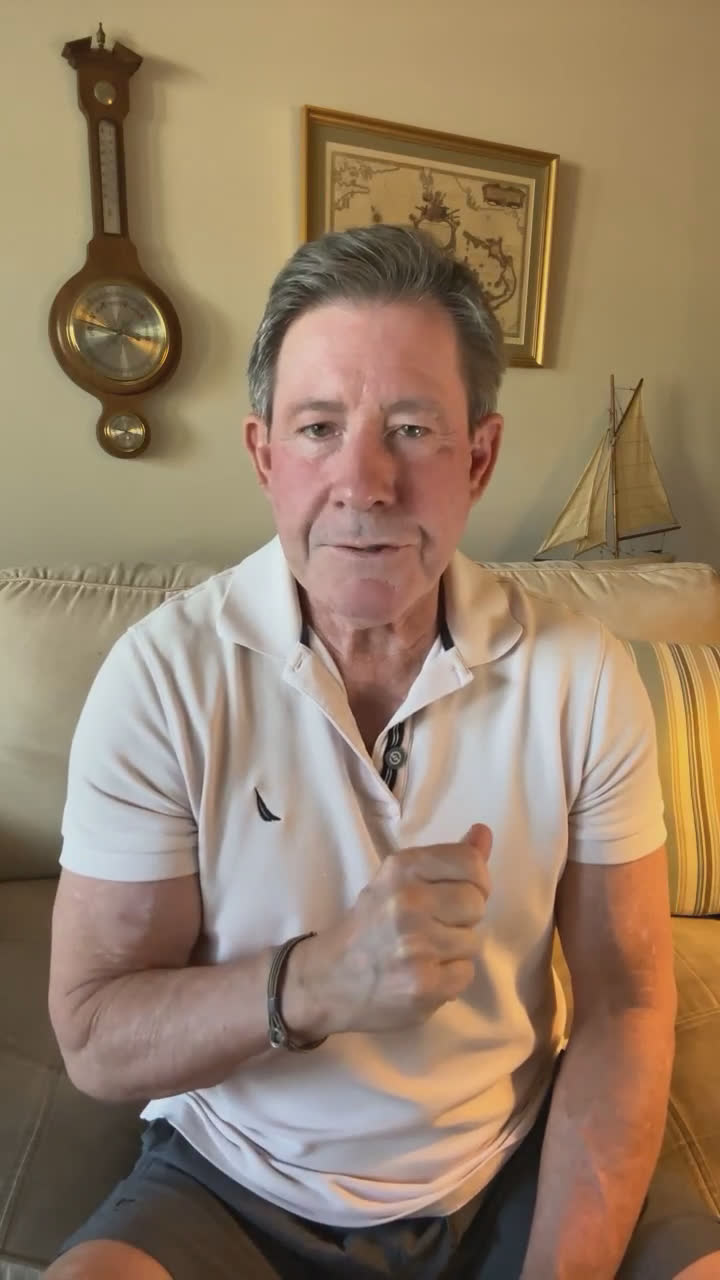
Plan To Be Your Best …As You Navigate Pain. Your best is greater than the pain.
Rick Cram welcomes you to his Resilience coaching studio. We will talk about love, resilience and freedom and connections. When we think about love it can be complicated, can't it?
How would you like to have a conversation about resilience, freedom and love? I'm going to describe three different scenarios and I'd like you to let me know if you've experienced any of these something like it. And what feeling one word or what phrase comes to mind as you listen to each of these three scenarios?
Rick Cram is a resilience coach. He developed Plan Be youe Best as you navigate pain. The plan is designed to help transform a journey of pain into a journeys of resilience. When you apply your best, you're unstoppable, Cram says.
There are three key areas to look at in terms of where resilience starts and grows. One is in part, genetics. Your youthful experiences are very formative to what kind of resilience you end up having. The more we go through challenges in life and go through them in a purposeful way, the better. These are the eight domains of thriving.
Rick Steves: What are the qualities of what you see in other people when you have positive conversations? He asks: Do you give yourself enough grace? Steves says there's always room for improvement.
The plan to be your best approach is all about finding your unique resilience. The more you spend time using the three steps of resilience and get to know those eight different domains of thriving, that you'll find new sources of energy that does grow your resilience.
There are several, maybe six different love languages. If you know your love language and you're a person in pain, your love languages have magnified. Pain happens, but that doesn't define me. Only I can be the author of my story.
Affirmation and gifts. My pain management plan is to encourage others to share what I've learned about resilience. The more you do to be in service to others, the more it's serving you. And we delve into that in that sir domain of thriving.
This year I have identified the things that I need to do to exercise my resilience and thrive with this painful situation. One is to strengthen my wisdom and also strengthen my conviction. I believe that courage is a combination of conviction and wisdom. The idea of strengthening through service, strengthening through encouragement, all of these non medical aspects of navigating pain.
Sympathy is feeling sorry for someone. Empathy is understanding and sharing someone's feelings and thoughts. From a coaching perspective, from a caregiver's perspective, I can still apply what I'd do well. Plan to be your best as you navigate pain.
Rick Cram: In this accept domain of thriving, we see how it's worthwhile to take a fresh look at sort of a 360 degree or 30,000 foot perspective on understanding ourselves, understanding our expectations. And I'll in the weeks to follow enter in more facets from the different eight domains of thriving.
The idea of a few other qualities of love and the kind of love that does fill our sails. When I love others, I'm being deliberate and purposeful in doing it in a positive way. Breath for me is a powerful key part of my working through pain.
When you breathe in, how do you view that? I view it as if we are breathing in life. Taking time, taking in life and spiritual sustenance. The more we think about what it means to be assertive it strengthens our ability to take that third step of resilience.
When there's stability, that's in a way a quality that is inviting us to stand and be stable, confident and trusting in the connectedness of our relationship. Stability is helpful, not as a criticism, but just as an acknowledgment and a reason to extend grace.
Being yourself, being as only you can be. That's one of the things that you are mysteriously and wonderfully made. In the practicing trying to be our best that we find that our best is greater than the pain. I've got some news I'll be sharing with you that you might be interested in for a program for the fall.
And have you found that the more you're out there on Cadre and in the world, the more that you're being authentic? I hope you have a wonderful week and I look forward to seeing you next Tuesday night. Take good care now.
It seems to me that if we're going to talk about freedom in connections and resilience, if we connect those dots, I believe we eventually have to have a conversation about and no conversation would be complete if it didn't include some talking about love. Hi, I'm Rick Cram and welcome to your Resilience coaching studio. I'm glad you're here and we're going to get to talking about love, resilience and freedom and connections. Certainly when we think about love, it can be complicated, can't it? Let me just welcome every one of you as you're joining.
Brianna, great to see you speak wondering Good evening to you too. How would you like to have a conversation about resilience, freedom and love? I'm going to describe three different scenarios and I'd like you to let me know if you've experienced any one of these something like it. And what feeling one word or what phrase comes to mind as you listen to each of these three scenarios? So glad you're here. The first scenario is this person's in pain and has a connection to someone, tries to talk to that someone, someone very very close and that other person doesn't.
Not only doesn't know what to say, says nothing, virtually says nothing. Imagine being that person in pain. Can you relate to that experience at all? Let me know if you can. Or what one word might describe the feeling that that person in pain might have. The second scenario is this person in pain talks to someone they have a connection with and they're very close. Person shares some very private thoughts and feelings about what they're experiencing and it happens to be surrounding the subject of a profound loss and the other person ends up getting up and simply walking away.
Can't participate in such a conversation. Have you ever experienced something like that? And what one or two words might you suggest that would be? It would make sense for what that person might feel. Yes, Overlook hopelessness. Talk about taking hope out of someone's sails. And so much of what we're going to be talking about are the different things that we can do when we connect with someone, experience freedom in it and the kind of love that does fill that hopelessness void. Undervalued. Absolutely.
I will share with you these are two true stories. It turns out that the other people, one who got up and walked away, the one other who didn't know what to say and said nothing, were also in pain. Isn't there some room for grace in that equation? Here's the third scenario. Person in pain talking to someone else Also, who knows pain very well, and they have the most dynamic, the most rich conversation every time they get together. They're completely open with each other, they're completely present for each other.
They're so immersed in the conversation and sharing and interested in what the other has to say that they want to learn from each other. And it is extraordinary. It's the best conversation both of them have had in too long. Have you ever had a yes. Unsafe safety is so important. If we're going to be free in any connection, any relationship, there's got to be safety there. So, yes, also in pain. And I'm a holder of hope for you. I probably say it until I sound like a broken record, but I truly am for a number of reasons and some of it we'll get into as we tune into this using the three step I just lost a connection.
But hopefully that brings me back. Any particular example where you could relate to that third scenario where you have a really dynamic conversation with someone else who gets you, who listens to you, who shares what they're experiencing with a lot of trust because they feel safe and you feel safe in that relationship. Also a true story in resilience. Relationships and connection are fundamental to actually not just supporting someone's resilience, but helping them grow it. In fact, whether they're friends, partners, family members, even colleagues, the more two people help to support each other and nurture each other's growth, the more they feel a sense of their resilience thriving and they grow and enjoy that relationship more and enjoy life more.
Tough tasks become easier. Challenges are faced with more optimism. So let's talk about the kind of love that fills your sails. If you're still with me after we lost the connection, I'm sure I'm still being recorded here. I hope you'll come back and watch this or give me a little shout out just to let me know that you're there. The idea of and I'm going to press as I'm still relatively new to Cadre, I'm going to press debug and see if anything happens with that because I'd love for this conversation to keep on going.
I'm going to outline a few parts of this using the three steps of resilience so you can keep coming back to this if you ever want a refresher on it. I'm going to offer a few prompts on how to think about the way resilience grows and can support your sense of freedom in your connections, whether they're friendships, loving relationships, family Members, I see your note there. A deep, meaningful conversation with someone who I had thought was uncaring. How refreshing that must have been for you and how encouraging it is.
Isn't it wonderful when people surprise us? And I'm so glad that you had that. One of the reasons why, as I mentioned before, that I'm a holder of hope for you with any kind of pain that you're experiencing, whether it's grief, mental stress, emotional pain, or physical pain like I have, which means you're all of the above. There's a mental journey to it. There's an emotional journey. There can be a spiritual journey involved with it as well. And if we're connecting for the first time, I'll just briefly say, I'm Rick Cram.
I am a resilience coach. When I developed Plan Be youe Best as you navigate pain, designed to help transform a journey of pain into a journey of resilience. It's based in part on my being a caregiver, a communications professional, as well as someone who's lived decades with pain. And since the seventh surgery on my left knee, I deal with acute chronic pain every day. So I get it. I also get that you can be hopeful for your resilience for a few reasons. One, you have these innate abilities to actually do what we're just doing right here, to talking about these ideas, different strategies, different skills that we can use, and be deliberate, be purposeful in the way that we approach whatever is challenging to us.
And that ability is something that's innate in us. We're blessed to have these incredible minds that are flexible. There is this neuroplasticity. We can take the new cells that our brains are growing and form them in ways to help support. Are being stronger, are finding ways to thrive. Also, I believe that, as you've heard me say before, your best is greater than the pain. And when you apply your best, you're unstoppable. Let me just catch up on the notes here. Thank you so much for this. Brilliance is born out of pain and disconnect.
So true. And resilience emerges from discomfort. There are three ways to think about because I'm going to affirm what you just shared there. And thank you so much for that. There are three key areas to look at in terms of where resilience starts and grows and can be built on. One is in part, genetics. Your youthful experiences, your family experiences, your childhood experiences. And as a youth, those are very formative to what kind of resilience you end up having and can build on. For the rest of your life.
Secondly, challenges. The more we go through challenges in life and go through them in a purposeful way, a deliberate way, where we do take on and look at ways to heal what we grieve, to process it in positive and constructive ways that will contribute greatly to growing your resilience. The third is this what we're doing right here, where we are comparing notes, encouraging each other, exploring and using that neuroplasticity to build our resilience. So what we're doing here is so good, some of it can be work, even hard work, but it's so good and I'm here to encourage you.
So more about resilience and love. And if we take a look at those three steps of resilience, we're going to now tap into something that I haven't really talked much about before. And those are the eight domains of thriving as part of the plan to be your best method. And I'll tap into two in particular. One is the encourage domain, where when we spend a little bit of time in that deliberately, we'll look for elements of wisdom, things that we can work with to strengthen our resilience and process what we're experiencing and to help achieve that sense of freedom in the connections that we have.
But let's tune in. We've talked about the different ways that we can respond to having those conversations that don't go so well, having those conversations that do go well can be so fulfilling and so energizing. What are the qualities of what you see in other people when you have those positive conversations that do fill you up, they fill your sales? What qualities come to mind in that person when you're sharing with them, when they're sharing with you? If it's love, if we can apply love to this, if they're listening and they're showing up with respect, that's the word I want to hone on for just a moment.
They are being respectful of what you are saying, what you're experiencing. And they're even bringing to that to the relationship with you, the respect that you will listen and reciprocate, the care. That's one facet of love. Another is trust. Trust in the relationship that where it's going so well. If we think about those two scenarios where one person walked away and felt abandoned, the other person didn't know what to say and actually said nothing in the course of whether it's the toughest parts of the painful experience or even something positive, that person, those two people are also in pain and that pain, whatever sources of pain they're experiencing is preventing them from exercising.
Love. Two other qualities, kindness and patience. Two things that I think we all need more of. Call it grace. And let me ask you this. Do you give yourself enough grace? How would you rate yourself on a scale of 1 to 10, the degree to which you give yourself grace? 10 would be, I give. I'm so graceful with myself. I. I just. I couldn't get any better at it. Or one might be, I need to start giving myself some grace. They listen. To listen and not to respond. That is so good. That's. That's a quality captured in describing what active listening is all about, isn't it?
It's almost as if they are so present that I'm referring to that dynamic, positive relationship. It's something that helps build trust. They're showing up for each other. And I'm going to reread that again just to make sure that I understand. They listen to, listening to, not respond. Almost every time that I meet with a group, whether it's seven or eight or over 50, and talk about this dynamic, when someone's listening, someone always ends up acknowledging, you know, Rick, when I'm listening, I'm really thinking more about how I'm going to respond than I am to what the person is saying.
I think that's fairly common, but it's perhaps uncommon. When someone is listening to you or to me and you can just tell they are honing in on and maybe even hanging on every word, their presence is so, so obvious. And that, that is. That builds trust. And it also. There's another quality I'd like to suggest that's in the mix here. And it's a way. And it's coming from that encouraged domain of thriving. If we think about what encouragement does, if the encouragement is truly a reflection, if you will, of love, it's inviting.
It pulls you in. It's not pushing in any particular way. It is inviting. Let me take a look at. And I'm so appreciative of. So seek wonder. 5. So the truth is, isn't it always true we might even be more in the way of giving grace to others than to ourselves? And there's always room for improvement. And so I would relate to that. I've spent the last several days, I must say, I'll be honest with you, the last couple of weeks were very painful. My baseline pain was probably about three to four times the normal, which means the blasts of pain that I get are 9 or 10 and very frequent.
I think I'M close to being back to baseline and I have a hard time walking. This is no solace for me. But just to say one of the things that I noticed about myself was that I wasn't giving myself enough grace. There were things in my own resilience toolkit that I had forgotten about. I was so distracted by the pain and being in the pit. As I started coming out of the pit over the weekend, I started realizing I need to do this more, I need to do that more when I need that resilience to really work.
I wasn't using certain aspects of my own three steps of resilience. I was in certain ways. And it did eventually bring me out of the pit to a point where part of what I was looking forward to was being with you this evening and having this conversation about resilience, about connections and about one of my favorite topics. Love no, thank you for asking. I'm not experiencing pain right now. The most of I'd say, and I consider myself fortunate in this way. I'm in constant pain only a few times a month, and it's usually for less than an hour or two.
Sometimes it might be for 15 or 20 minutes or I experience. Are these because it's seeing that my doctors again, especially my pain management doctor, trying to talk about, trying to find a solution to this. He thinks what happened in the seventh surgery was one of the two main nerves going through the quad into the knee joint was damaged. So what I experience are flashes of pain over time, 20 different or more pain sensations, all of them acute. And so I consider myself while I try to enjoy, if you will, I try to recognize.
Let me put it this way, I really appreciate the question and thank you for letting me share this with you. I try to appreciate when I'm pretty comfortable. And the tough part of it for me is the stress that comes from having since 2019, have this. Since that surgery, there's this underlying stress that makes it very difficult for me to relax. And so one of the things I've been working on for the past few days are new relaxation techniques because it's tough. It's tough to go to sleep at night. It's tough to take a break and relax.
There's a pool here in the condominium complex where I'm at. And I must say, I go there and I try to relax, but it's not easy. This is a time when it's good for me to say there's no perfection in pain management. There's no perfection in our resilience. But it's in the practicing over and over again where we're being resilient, we're pursuing, maybe chasing resilience, that we find that our best is greater than the pain. So it's a process. It's a process. Thank you so much. It calms me to be here with you.
Are you in pain? Any one of you that's with me now, or if you're watching the recording of this, are you in pain? Share with me the nature of what it is, whether it's a number on the scale of 1 to 10 or the nature of the pain itself, if it's physical, emotional, or if it's stress or something else. Is it a pain regarding self confidence? Is it a pain regarding a relationship? And I know how hard that can be. Just to let you know a little bit more about myself, I am divorced after being married for 30 years.
I'd say there was an increasing amount of pain in that relationship and there was a lot of pain afterwards. Extreme. And it stays with me. I know how tough divorce is. I know pain in numerous ways. Different physical injuries through the years, especially before the knee injury. When I was a senior in high school, we lost our firstborn son. He died the day he was born. So I know what it's like to grieve something like that. I also know that and have a full respect for how we don't experience in the very same pain exactly the same way.
That's one of the reasons why I also say it's important to understand that you've got your own unique resilience. I've got mine. What I do in some shape or form might be helpful for you, but it's your own unique resilience that is just as resilient or is just as unique as the way you experience what is painful. And it's that uniqueness, though, that I find is another reason for being hopeful. Well, I'm a holder of hope for you. The plan to be your best approach is all about finding your unique resilience, setting yourself on a path to grow that perpetually.
I wish there was a switch that any of us could turn on and all of a sudden be stronger. But I can tell you this, that the more you spend time using the three steps of resilience and get to know those eight different domains of thriving, that you'll find new sources of energy that does grow your resilience. And you can keep going back to these different domains. The one that I was referring to is the encourage domain. Another one is the bold domain. The B in best plan to be your best. The B in best stands for bold.
And that's the fifth domain of the eight. And it's all about being assertive. It's about taking action. If we do nothing, we're going to stay stuck, won't we? But if we can take action. Thank you so much. I appreciate that. Sometime I'll share with you a poem that I wrote in the weeks following after losing Warren and something that I actually found in a file just a couple of years ago. I hadn't seen it in over 10 years. And to read it, it's called. It has to do with tides riding the waves of change.
And I'll share it with you in our next time together. And let me also read this. I would think there is anticipatory stress, as you know, that the pain will return. That's it exactly. In fact, that's a different way of describing it. And that means a lot to me as a communications professional. I can nerd out on words and certain ways of describing things. So it is that I didn't. I'm anticipating that. So let me bring. Bring this because you just opened up a door of something I wanted to talk about.
Thank you so much for that. In relationships, when we're connecting with other people, we have a few things going on. We've got needs, we've got fears. Some of us here have mentioned the idea about being feeling safe in a relationship. And are you familiar with the. What's called the different love languages? There are several, maybe six different love languages. I've read parts of the book, but here's how I look at. If you know your love language and you're a person in pain, your love languages have magnified, they've multiplied.
The needs are greater in different aspects of your life. I found it helpful to think about. Yeah. Yes. Yeah. We've got so much in common. I like that word nerd. What I am intentional about, deliberate about, and what I have purpose for is how I respond to shots of pain. This time. Sometimes I say, and you've heard me say it before, pain happens in the moment, but so does resilience. Pain happens, but that doesn't define me. I keep flexing that purposeful, intentional mandate to define who I am and to tell my story.
Only I can be the author of my story. Each of us can only be our own authors of our own stories. Affirmation and gifts. That's wonderful. I love different affirmations. What affirmations do you use? One of the ones that I'VE been using and helped me get out of the pit last week was that simply this. Even when I was in tremendous pain, I'm saying to myself this is all a part of my amazing life story. And I really do believe that there's an objectivity to that affirmation. There is a way of stepping, winning back that focus, sparking something positive in the storm of painful thoughts and painful feelings in response to the physical pain.
So acts of service that is so important and in fact, in a way what we're doing here, both of us, all of us together, we are participating in acts of service. Do you find that as rewarding as I do? It's part of my pain management strategy. My pain management plan is to encourage others to share what I've learned about resilience. And in that sharing, just as we've seen before, I keep thinking about that wonderful conversation we had a couple weeks ago where it was there's abundance of encouragement going on.
We were all encouraging each other and therefore we were experiencing and uplifted because of the encouragement. I hope you did too. And I hope and I obviously I know from what you just wrote there that the more you do to be in service to others, the more it's serving you. The S in best stands for serve. That's one of the other domains of thriving. And within there we take a look at exactly that concept of how can we serve others and what good does it do for others? What good the in the reciprocity of being loving do for us in the moment especially a lot of people look to find their source of purpose, their sense of purpose in life, especially when they're navigating pain.
And that's, that's not only worthy, it's part of a byproduct of going through the plan to be your best method to help people find their purpose. And we delve into that in that sir domain of thriving. You appreciate the non medical strategies for pain management so much so so many tools available and in fact in this journey where I keep having conversations with doctors that say I'm sorry, I can't help you or I wouldn't do that. Had went back to my orthopedic surgeon a couple of weeks ago to specifically ask him about a knee fusion where they basically take the joint out and use rods and bolts to fuse the femur to the tibia, leaving the person with a locked straight leg.
And he said you'll still have the pain. I've talked to a doctor about an amputation and I might go back and have one more conversation with him. I'm rather attached to my, my leg. But I've also learned actually this year, as I might have shared with you, that I have identified the things that I need to do to exercise my resilience and thrive with this painful situation. If I don't ever find relief, one of the things that is involved is finding new ways of caring for myself with affirmations. I'm almost always adding to my resilience toolkit or my journal.
New entries of getting greater insight to do Two things in particular, and I might have talked about this before, one is to strengthen my wisdom and also strengthen my conviction. Those two work together. I believe that courage is a combination of conviction and wisdom. And so in this journey that I'm on, and I want to share as much as I can with you in each of our times together, the idea of strengthening through service, strengthening through encouragement, all of these non medical aspects of navigating pain, really it's all up here.
Well, it's here too. It's for me, it's a mental exercise, it's an emotional exercise, it's a spiritual exercise and it's a social exercise. One of the things that I thrive on are several key friends that I know that I can talk to and have those rich, wonderful conversations that fills me up. And in the course of having those conversations with them, I see that I'm encouraging them. Wisdom, conviction and courage. Yes. Can we talk about empathy for a minute? Two words come up often. You might have seen this recently.
What's the definition of sympathy? Empathy. What I'm going to do is describe the definitions and how from a coach's perspective, from a caring friend's perspective, that we can actually look at both of those and still see wonderful opportunity for us to use the both the sympathy, the empathy, compassion in our skills of coaching and encouraging as a caregiver to help others. Let's start with Sympathy is feeling sorry for someone. Someone recently said saw me with a blast of pain. I'm so sorry I was expressing sympathy.
Empathy is understanding and sharing someone's feelings and thoughts. Empathy is what someone can do when they've experienced pain such as we have experienced heartache, experienced the stress levels that we know, but from either one of those, from a sympathetic standpoint or from experiencing being able to be empathetic with someone, we can still show up for someone and encourage them and give them care and even coach them in a way that is such as what we were talking about earlier. Encouragement.
The best encouragement is inviting and one of my phrases that I love to use is that resilience grows in conversation. Whether it's you're hearing my voice and I'm reading your words, we are having a conversation and we're experiencing resilience. So even though there are some differences between sympathy and empathy from a coaching perspective, from a caregiver's perspective, I can still, from either one of those, apply what I'd do well and care for someone and coach them with the right gentle touch, with the right listening skills, with the right questions to ask, with the right kinds of exercises, with a methodology.
In my case, it's called plan to be your best as you navigate pain. There are other methodologies as well, and different therapies. So let me just catch up on this. So thank you so much. Speak Wonder. I look forward to the time when I meet you. I look forward to meeting all of you. Thank you for showing up. I'm going to keep showing up for you as well. I'm going to just glance at a few notes that I have and think about where I might take this There is another domain. The A in plan stands for accept.
It's not just being accepting as in the grieving stage of the situation. It's a combination of accepting that it's worthwhile to take a look at what are the perspectives that we bring to what might be painful, and asking ourselves, is it worth revisiting what that perspective is and is that the best perspective for us? When I'm working with people in pain, virtually every time we get into a conversation about perspectives, we find that when we review them, think about sometimes the choice of words and sometimes the change that's found in being your best is really small.
It might be a single word that changes a perspective. And that other new perspective is part of a step forward towards greater resilience. A step forward to finding in those times when you need it most, a new thought or a new feeling, something new to act on. Another part of that acceptance domain gets into looking at within relationships. When we're connected to someone else, say we're seeking to find that freedom. It's healthy and helpful to understand what are our expectations of someone else and what are our own expectations.
Sometimes it looks like maybe there's some performance involved. Am I in this moment or in this relationship where I feel like I need to perform in some way to appease or please? I'm very much a people pleaser. I've often thought of myself especially growing up, so much like a chameleon. But in this accept domain of thriving. We see how it's worthwhile to take a fresh look at sort of a 360 degree or 30,000 foot perspective on understanding ourselves, understanding our expectations. I'm going to I've gotten to the point where I need to use my my glasses.
This was surprising and unexpected what he told me. Oh let me just read this if I may. I have four published four books on grief and resilience. Not wanting to self promote but good. No, you should pat yourself on the back. I'm working on plan to be your best the book and it's not easy actually you're encouraging me by sharing this with me but I didn't want to mention your cousin's browsers, my books which are image driven to help manage his chronic pain. That is fantastic. And actually this is I had a conversation with someone just the other day, a new networking group, great people and one person is making music with a certain website I haven't heard about before and sent me a link to some of the music that he's creating and he's using that as a means to help other people with their pain, lift them up, share encouragement and love to others.
And the and we had a conversation about the different ways people receive media. Whether it's a written word or it's image or music related. We have different ways of learning and responding to different kinds of communication. That is wonderful. Is there a way where I can I'll if I may seek you out or if you want to share here, what is your website where I could take a look and see the wonderful work that you've done? Speakwinder that's fantastic. Let me just share if I may as well. com Cadre you'll see resources including a free worksheet, the three steps of resilience worksheet that you can download and use devices, you can make copies of it, you can print it out.
There are so many different ways as you're seeing hopefully you're seeing the different ways to use the three steps of resilience. And I'll in the weeks to follow enter in more facets from the different eight domains of thriving. Amazon has me a very good A Breath of Joy Simply Summer. Wonderful. I'm going to do that. Thank you so much. I love that title Breath of Wonder. There's so much when we've talked about breathing in the past and that's wonderful. So I'm smiling both right here and right here.
Thank you so much. The idea of a few other qualities of love and the kind of love that does fill our sails, the kind of love that helps us experience that freedom. It's responsive, it's real, it's authentic, it's generous, and it's positive. When I think about if I'm reading something about love or seeing love being played out, I'm always looking for that positive quality. Is it love? When I love others, I'm being deliberate and purposeful in doing it in a positive way, ways that they can experience the positivity behind my love as well.
So breath of joy from yoga practice. Oh, very interesting. That makes perfect sense. We are inspired, aren't we, by different things, in different ways of what we experience. Breath for me is a powerful key part of my working through pain, bouncing back from a shot of pain, trying to find ways of relaxing. And I think we might have talked about this matching or combining with our breath. Sometimes words that we're thinking about or even speaking them. I'm curious to know, as a word fellow word nerd, when you breathe in, how do you view that?
I view it as if we are breathing in life. And by life I mean it's life giving not just to me physically, but to my mind, to my heart, my spirit. What do you think of how do you view your breath? Thank you for encouraging me to list your book title. Absolutely. I believe in effect, the more we share, in effect, that's part of that bold domain of thriving, being assertive, going ahead and ow. Assertiveness is right here, whereas aggressive is over here and at the other end is passive. If we're passive.
And actually, even though if you look at the etymology of the word, which I think dates back to the 1500s, how about that for being a word nerd? It means to suffer, to hold back to the point of suffering, to. Aggressive was actually a word created roughly within a few decades of the word passive. And it literally meant to start a fight. But in the middle there is assertiveness. Assertive means to be respectful. It means I'm going to, as I've shared with you before, I won't hone in, dwell on this, but you're assertive at saying, I've got something to say.
And you did with these books. You're assertive by saying, I've got something as respectful. I want to share with you the titles of these books. And so you take action. The more we think about the different ways, what it means to be assertive it strengthens our ability to take that third step of resilience. Be our best and follow through. Take action. Being purposeful about what you choose in that plan step. Let me check to see two things, if I may. You're being so generous with all of this. Thank you so much.
Taking time, taking in life and spiritual sustenance. Oh, I love that. You've got a wonderful vocabulary and I love the word. And I haven't read the word or heard the word sustenance in a long time, but there. There's a lot to that, isn't it? Sustenance is as if it's the source of life. It's food for life. It's fuel for. For this. And isn't this A key part of our journeys is energy. Breath gives us energy. Breath is a way to control the flow of energy. And we need energy. Thinking about how to create energy, how to preserve energy, how to spend energies for especially people in pain is very important to think through all those different concepts because in effect, we are experiencing energy in everything that we do.
Breathing in. So true. Breathing in. Absolutely. So let me just see if there's anything more I want to share with you in terms of the aspects of. Are there certain qualities of love that I haven't mentioned that perhaps you've thought of? I'll think of. I'll share one more, maybe two. Stability. When something. When there's stability. And it supports the trust factor, doesn't it? If there's stability, that's in a way a quality that is inviting us to stand and be stable, confident and trusting in the connectedness of our relationship.
Stability is helpful, I believe it's fair to say, not as a criticism, but just as an acknowledgment and a reason to extend grace. Someone who can't necessarily be connected and there for us with encouragement in a way of serving. There is a lack of stability. There is some other form of pain that they're experiencing that is inhibiting their ability to. And it's fair to say it's a matter of extending grace. They simply can't. It's not something to suggest as a criticism, but it's a way to be objective about it.
So we can think in terms of. It might not meet our expectations, but we can understand it and extend in our own way some graceful love, perhaps, like forgiveness for ourselves. It's for ourselves. Oh, very good. com I will email you. That's easy to remember. So you're the best. You're the best. I thank you all so much for being here. I'm going to wrap this up unless there's anything else that you want to mention. And let's make sure that we're connected on Cadre. And outside of Cadre, I've got some news I'll be sharing with you that you might be interested in for a program for the fall.
And actually it'd be great. I'd go live on YouTube and Facebook at least once a week. Right now, twice a week. Let's talk about you joining me sometime if you're at all amenable to that. But I want to thank you, even if you've been watching this recording here, and thank you for going the distance with us, going all through all this time. And I hope that there's been some both new thoughts for you, some exercises, some questions, some concepts, even if it's a certain word that has fed you and helped you think in terms of both.
How you can seek out the freedom in all of your connections, stand on a rock of confidence, a rock of love. Being yourself, being as only you can be. That's one of the things that you are mysteriously and wonderfully made. And it's part of the definition of what it means to be your best, your greatest positive strengths in action as only you can do them, that they're good for yourself and good for others. And I'll repeat one more thought that I shared earlier. The idea that when we practice resilience because there's no perfection in it, there's no perfection in relationships, we're not perfect.
But it's in the practicing trying to be our best that we find that our best is greater than the pain. I'll. Oh, very good. Yes. In fact, I need to learn more about that and I like the way you put that here. Chaser of it. Mysteriously and wonderfully made. Yes, you are, just as is our connections here. And I'm so glad that we have connected. And have you found, maybe this is my one last question. Have you found that the more you're out there on Cadre and in the world, in any aspect of your professional life or personal life, the more that you're being authentic, another quality of love that the more you're connecting with wonderful people and it's adding a fantastic richness to your life and to your purpose, your mission in life?
I found that to be true. The reason I ask that is because that's what I'm experiencing when I made a change a couple of years ago to focus on plan to be your best as you navigate pain with a mission. Truly a purpose to equip and encourage individuals, groups and you to plan to be your best as you navigate pain. I seen blessing after blessing, including knowing you. So yes, many layers of richness. Thank you. Speak wonder. Have yourself a great night. Thank you all. It's Tuesday night, 22nd. I hope you have a wonderful week and I look forward to seeing you on Cadre as well as to seeing you next Tuesday night.
Take good care now.