Plan To Be Your Best …As You Navigate Pain. Your best is greater than the pain.
Rick Cram: Is there a place where you can go where you feel whole? Do you feel at home and yet at home? What we're going to talk about now are ways to actually build that bridge and cross over it.
Can you relate to knowing what it's like to not feel as though you can be yourself after all? 33% of our productivity can actually be inhibited because of our comparing ourselves to others. But the good news is that by working on it as we are, you can experience a higher quality of life.
As we tune in, there's this question from the pages of Plan to be your best as you navigate pain. What do you need to acclaim? The more you actually plan, the more you're able to add things to your own personal resilience toolkit.
What fills your sails if you think of it that way, what lifts you up? What makes you feel good? Some of the things that I do to regain my focus, to rebound and be resilient from shots of pain in my left knee include thinking about who I am.
The T in best stands for triumph. It represents one of the eight domains of thriving. To recognize and celebrate the good things that we do. The idea of celebrating those triumphs starts to create new positive patterns.
Rickcram: Surgery number seven on my left knee has left it in a state of trauma. He shares with you what resilience looks like, how to build resilience. The three steps are tune in, plan and be our best.
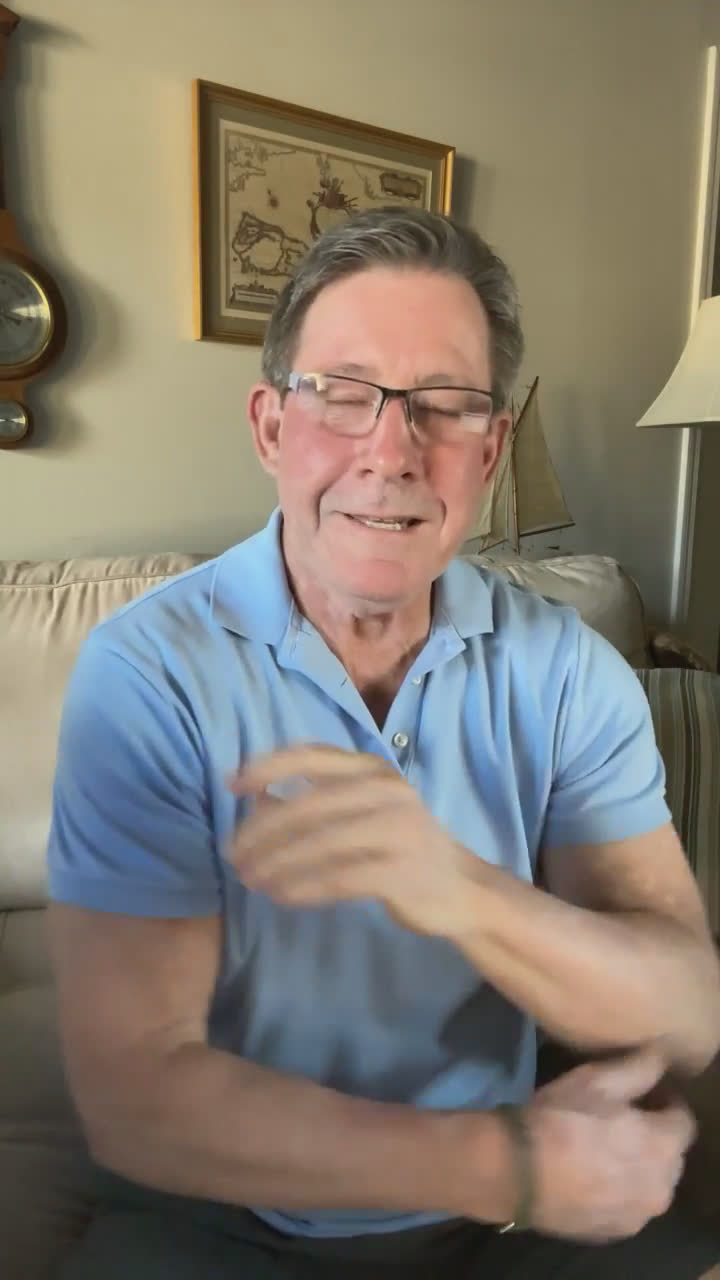
Foreign your Brazilian's coaching studio. I'm Rick Cram. It's so good to be with you. I always look forward to this. I look forward to asking questions and hearing and reading your answers. Thank you so much for joining me. First question is this. Is there a place where you can go where you feel whole? It's your place where you feel like this is where I belong. This is where I feel like myself. Is there a place you go? Well, for me, as you might have seen in that post, included a photograph I took a few years ago of the Bourne Bridge which connects what is actually the largest man made island, Cape Cod to the rest of Massachusetts.
There's the Sagamore Bridge and the Bourne Bridge built back in the 1930s I believe. And, and I, I'm. I'm a cancer. But there is that place. Is it? Do you have a place like that where you feel at. At home and yet at home? Have you ever gone back to be? You know, Nikki, you and I talked about this. I was thinking about it after we talked about it. I'll go visit my 93 year old mom and there's a part of me that is like stepping back to when I was a teenager and I feel all out of source. Can you relate to that?
So is there a place where you go to feel whole in yourself? Likewise, is there a place where you go where you feel like I have a hard time being the real me? And there's so much angst in that. It's like I gotta just shake this off. Like we have this need, don't we? This powerful need to be who we are. After all, we are so unique. No one else is like you. That Oscar Wilde quote, be yourself. Everyone else is taken. I love that. What we're going to talk about now here and using the three steps of resilience are ways to actually build that bridge and cross over it.
And hopefully what you'll do is experience in the minutes ahead what it's like to center Nanki. I love that analogy, that symbolism of an anchor when we're anchored, there is a security in that it's not going to move. It's like we are a rock in that anchor. But to experience with just a few questions as we tune into this. Can you relate to knowing what it's like to not feel as though you can be yourself after all? I believe the statistic is something like 43% increase in depression because of the use of social media where so much of it is, where we do have this natural normal human response to look at others and wonder what the comparison is.
So as we seek to spend some time freeing ourselves, seeking freedom from that pull, that magnet of comparing ourselves to others, let's enjoy that freedom right now. Let me ask you something as we tune into this. What do you need in that pain of not feeling as though you can be yourself after all? Another statistic is that about 33% of our productivity can actually be inhibited because of our comparing ourselves to others. It can keep us back from achieving our or personal goals or even professional goals.
But the good news is that by working on it as we are and perhaps coming back to this video, these prompts, coming back to it over and over again, practice it and enjoy the goodness that comes from this, that you can actually experience a higher quality of life and enjoying that freedom from feeling that trap of comparing ourselves to others. On a scale of 1 to 10, how would you describe where you're at right now in terms of feeling, a sense of the negativity of not having that freedom from comparison?
What number comes to mind? So here's a question I'd like to ask you as part of the tuning in step of the three steps of resilience, which are, again, tune in, plan and be your best. As we tune in, there's this question from the pages of Plan to be your best as you navigate pain. What do you need to acclaim? And I use that word very intentionally. If someone is acclaimed, they're celebrated. There's something that they've done that's good, that's wonderful, and it's getting public recognition. But if we use it for ourselves, and I invite you to use it for yourself, answer the question and perhaps write one or two words that might describe for you.
What do you need to acclaim? What is it about you that is worth recognizing, that is worth celebrating? Maybe no one's going to hear your public acclaim in celebrating and honoring this goodness about you. Just as we've talked in the past about that question that is combined, matched up with this what do you need to shed? It's also worthwhile to ask, what do you need to acclaim? When we are feeling and thinking thinking thoughts, there's that chance for me to say, all right, this is a new moment, this is a new thought.
The idea of taking and thinking through those different aspects of ourselves and celebrating them is a positive flexing of that intentionality muscle. What we do, especially in small groups, is take time. We discuss this question. Everyone pairs up one on one, talking about it for usually three to five minutes, sharing with each Other what they acclaim and then we open it up as a full group discussion and there's there are with all of these questions wonderful things happen. Actually two key things people start to experience individually the benefits of these questions.
In this case, seeking to have that freedom of the comparison and experiencing the benefits of feeling that whole I'm right where I'm supposed to be, I know who I am and I'm going to celebrate that. The other thing that happens is this wonderful sense of connection that what I often hear sometimes the word is this galvanizes we are stronger together. For example, there is this one company that a healthcare company in New York. I did a two day plan to be your best workshop for them. They hadn't been together top 50 managers of this national healthcare company.
They hadn't been together in six years. They had lost connection with each other. They weren't working as teams as well. So at the end of it, one of the most wonderful things I heard was that this really worked for us and most of all it galvanized us. And that meant it was caused a sea change for them in terms of their ability to team up and be more productive. And on the same page going forward to face some very profound challenges that happens also individually, small groups in caring for each other, whether the pain point might be divorce and all that comes along with that, or if it's chronic pain such as I experience, there's this wonderful thing that happens, I'll phrase it this way, that the people who plan together this way grow together.
So I hope that what you're experiencing is going to be you'll be more connected to each other through this. By the way, if you'd ever like to connect one on one, just the two of us talk, I have it's all free available at my website where you can tap into my schedule and set up a resilience planning call. No obligation. I'll tell you more about not just plan to be your best, certain aspects of it that might be very practical, helpful things that you can do and apply in your life. com Cadre and you'll find there a downloadable free worksheet with the three steps of resilience where you can go through and use them on your own to tune in to plan and be your best.
And in the course of using it over and over again, the more you actually plan, the more you're able to add things to your own personal resilience toolkit. So another question is this and let me just think about which one I'm going to do. What fills your sales? As you probably notice, I use sailing imagery. I had a company called Full Sail Strategic Communications. I grew up learning to sail at a very young age and I love everything nautical. I love the idea that when your sails are full, you can navigate where you want to go.
And to a great extent, that's what seeking to be on a path where you're in an ongoing way, a perpetual way, working on your own unique resilience that does give you the ability to refill your sales over and over again, especially when you need a boast to be able to persevere through challenges and to thrive through even through the pain. So that's why I loved Nikki's nautical analogies for our conversation. I hope you'll. You'll see. And the idea of that question, though, what fills your sails if you think of it that way, what lifts you up?
What makes you feel good, makes you feel like I'm being myself, I'm being my best. So in effect, I'll say that that question while we ask ourselves in the tune in step, what do you need to acclaim when we move into the plans step to start to think of what can we do to actually get to that point where now I know what steps I can take to actually be resilient. And what I'm feeling is though I'm not feeling free to be myself. You know, some go to things that you can exercise in the moment. You can plan ahead for those times when you know you might might be with some people or in a certain setting where you might tend to know that it's often in that situation I don't really feel myself.
But when you think about what does fill your sails, you can write down what those one, two or three things might be, maybe five or six things, and plan ahead and anticipate in a preventive way when you need to tap into that, you've got it right there. Some of the things that I do to regain my focus, to rebound and be resilient from shots of pain in my left knee include thinking about how who I am and the journey I am on. In one way, very real way, a blast of pain takes me away from myself. I lose myself in some way.
But being resilient means I'm regaining myself and being myself with thoughts like affirmations, things that I acclaim, like this is all a part of my amazing life story or I'm not wasting the pain, I'm using it to encourage you to Give you the tools that I found, the lessons that I've learned. I'm not wasting the pain, nor what I've learned about resilience. And being able to share that with you means that's who I am, and it's part of my pain management. It's good for my head, it's good for my heart.
It's good for my soul. What are those things that fill your sales in effect? We're talking about purpose here, aren't we? I found that the more I have my purpose identified and the more I take steps in pursuit of bringing my purpose out, living, living it out, putting life and breath into it, then I am being myself. And there is this sort of this confidence. It's like standing. It's being that anchor, and I'm standing on a rock in those moments. And the more I do it, two things happen. One, I feel good about it.
I have the reason to celebrate it. The T in best represents one of the eight domains of thriving. The T in best stands for triumph. Neurologically, emotionally, and spiritually. It's worthwhile. It's very beneficial. There's a reason for this. To recognize and celebrate the good things that we do. This is one of the reasons why that question, what do you need to acclaim plays a part in being your best? The idea of celebrating those triumphs starts to create new positive patterns, which makes it easier to repeat over and over again.
But it's that in that triumph, neurons that fire together, wire together, leaves a pattern, neurological pattern. And so it helps when you're in those moments, when you're feeling like you can't be yourself. You're not feeling that sense of wholeness that I'm right where I belong and I'm being who I am. You've got to go to set of, of I'm being distracted here by my wonderful knee here. And sometimes, in fact, if I may share, I haven't described my knee as wonderful in maybe ever. And I'm glad I did that.
In a way, there is a tremendous amount of pain. For those of you who were connecting for the first time, Surgery number seven on my left knee has left it in a state of trauma. It's been almost six years since that surgery, and I get dozens of blasts of acute pain every day, and there's no solution in sight. I'm talking to a new round of doctors about possibilities that I never thought I would have to have a conversation about. But we'll see how things play out. But the. That caring for my knee, that comment that you're a wonderful knee is I say it genuinely.
I refer to the knee, all 13 scars, even the pain, as a gift. I can say it's a gift because it's gotten me to this place where I'm able to share with you what I've learned about what resilience looks like, how to build resilience, how to identify the ways that I can be uniquely resilient, how you can be uniquely resilient. And that's worth recognizing and to the point of that triumph domain of thriving to celebrating it. There's a lot of goodness that comes out of that. There's a lot of. A lot of suffering in that.
And by suffering, I mean on one hand, I feel the pain, I suffer, I experience it the hard part. But the other definition of suffer is to allow. I'm allowing it because that helps me go with the flow instead of fighting it. I know what it's like to fight. We can fight that sense of not feeling free, to being ourselves. There's a battle that gets waged in our thoughts and our emotions, but if we suffer it in that term, allow it. But with the confidence that I know there are things I can do to win back, to cross over that bridge and get in my case, to Cape Cod.
Since we lost connection earlier and I just keep on going. I'm not sure if. If we're on together, but at least this is being captured on recording and I'll be. I'll keep coming back to it. I'd love for you to share with me your comments since I. I'm not seeing any now. I'll come back to this and I'll look for any comments in the future that you add to the recording that I will address. I will do videos that speak to your questions, speak to the points that you share, generously share. And I'll thank you time and time again for watching this video and putting this together so that it gives us a chance to express this which is so important to talk about it, to work together, to do this together, walk this walk together, because these are very real, very human, very normal challenges that we, we all face.
But the good news, as we've been talking about here, and hopefully just as I have a plan for it that you're putting your plan together, I'll wrap this up this way that the three steps tune in, plan and be our best. The more time and in a way, we've been spending most of our time here in that plan step, thinking through what are the things that we can do and why might we do anything to address this, to seek that freedom, to cross that bridge. And it's in that planning that we can find the most amount of calming, the most amount of saying, you know, there are things that I can do, there are things that I can control as I navigate this.
And then that last step is to follow through and be your best. One at a time. Choose those thoughts, choose those emotions, pursue them, work on them and be your best. Carry them out. This has been for this Tuesday evening, your Resilience coaching studio. Thank you so much for being here. com Cadre you'll find the free downloadable worksheet for the three steps of resilience. It's a fillable PDF that you can use on your devices. Make copies as you wish, use them time and time again and build your unique resilience toolkit.
You can also find time. Let's talk for 20 or 30 minutes and have a completely complimentary resilience planning call. Meanwhile, I look forward to seeing you again on Cadre, being together as we do this journey. And allow me to remind you, as I often do, that your best is greater than the pain. Good night. Now.