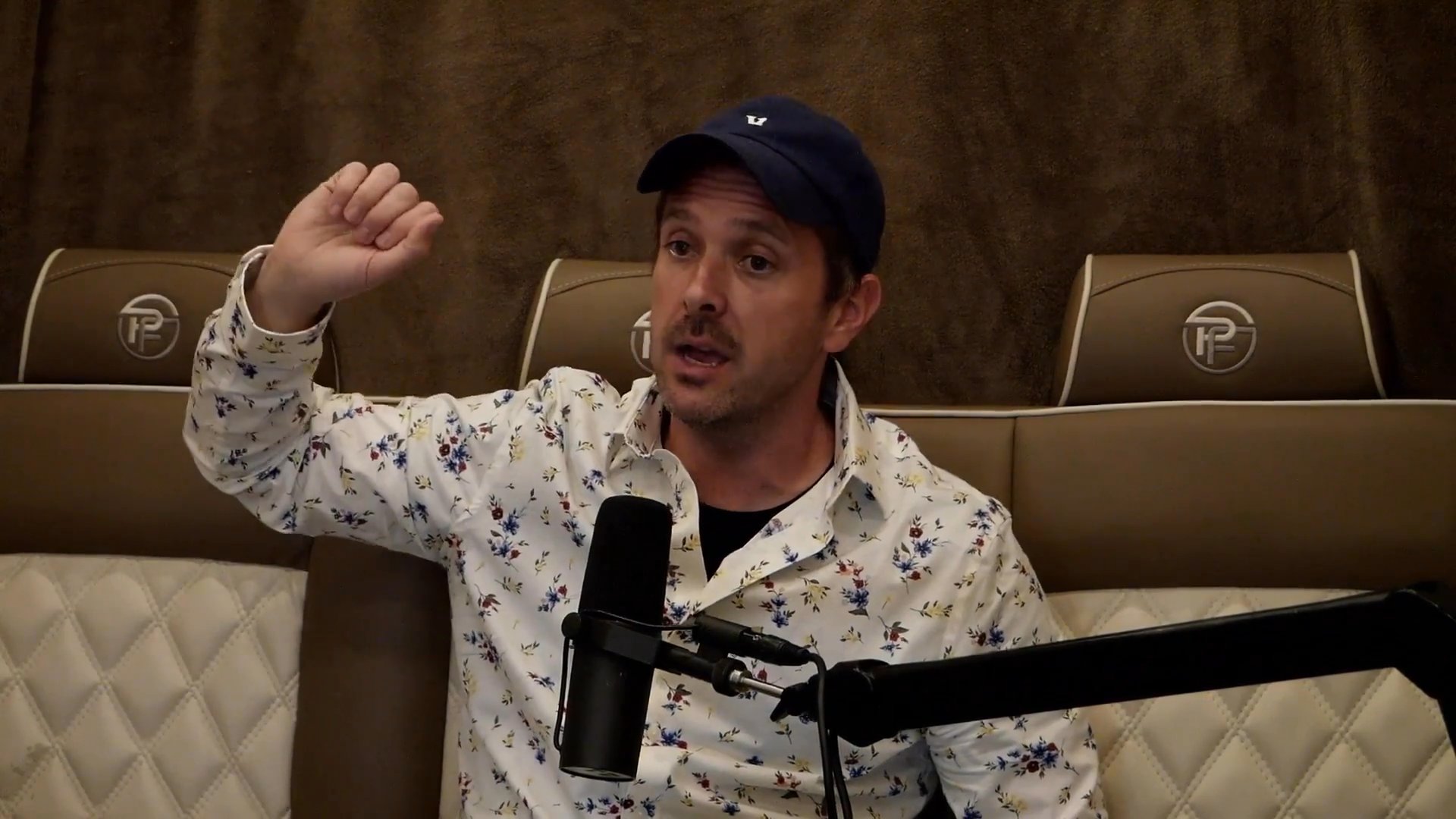
Join us for episode 5 of the Mental Wealth Podcast, featuring JC Lippold. This power packed conversation is one you won't want to miss. Sharing his experience from coaching to leading the launch of several Core Power Yoga studios and now joining alongside Cadre to create a space where there are many ways to be well.
The Mental wealth podcast. I'm here with somebody I deeply admire, respect, I think the absolute world of you, jc. And we had this opportunity a little over two years ago, almost to the date here, that we met in this specific parking lot. We'll talk about how we met, and you might even find out about J.C. you don't know today.
JC Lipwald: My wife saw you on Twin Cities Live two years ago. From there, the rest is history. I can't tell you how amazing it is, jc, to get to know you over the last two years. You're such an amazing soul.
As a sixth grader, JC started playing tennis. At 19, he became a high school tennis coach of Duluth East High School. Unbelievably, the journey that you shared with JC has probably been the most impactful of his entire life.
The likability factor with each other, is it a make or break on a team? Some people feel like we have to like one another in order for the team to flow. Is there the capacity to not like each other and still respect one another and still make it work?
In 2013, you joined forces with corporate Core Core Power Yoga. Now you're joining forces with Cadre. Tell us what excites you and what you like to be a part of. What obstacle that we need to make sure that we get out of our own way.
Cadre is creating space that was accessible. People still walk into CORAR yoga studios on their first day and they go, this space change is changing my life. Water is such a simple basic element that it's really hard to try to make it into something that's not.
There's many ways to be well. How many health wellness brands go? Our Target audience is 40 year old white men. Why? Because humans have money and humans have needs. If I was a business owner that can take every single person's money and provide every single people something of value, that's a really good way to do business.
But there's a concept that you discussed that I. don't think I've ever been able to truly get out of my head. Could you just explain that a little bit deeper? Because I just. took so much from it.
We spend about 46% of our time unpacking the past, 46% planning the future. Why do we do it? Because it allows us to be incredibly critical. Spend as much darn time as you possibly can in the moment that you're in.
So what are we doing in the Cadre sphere? We're normalizing a lot of stuff. Why do we put really good Things on high shelves? If we take those things off the high shelf, when you give people access to them, guess what? A lot of the things that actually hinder our lives get a lot better.
We live in a culture of influencers and all of a sudden influencers are bad. Now we need to break them down. We need to humanize them. Is social media good or bad? It's a tool. It's available.
Research shows correlation between eating ultra processed foods and negative health implications. Simple sounding solutions to complex problems are the root of all shame. If you live in a world that tells you you are bad, guess how your health will start going.
Jc: Can we talk about enoughness? Em: I'm struggling right now that I am never doing enough. JC: Enoughness most often doesn't feel like it. It's the practice of affirming that in this moment you have some capacity to do something.
So enoughness talks about, you know, the four calibrating arms. Young people are a lot better at being curious. Old people need to have answers. The fourth calibrating arm is. Is I am enough. How do you exist in that 4% of space?
There's no other species on the planet who lives this way. I hope everybody has JC in their life. Somebody that can, you can meet with, ground them with. Seven days a week on Cadre, every morning at between 7 and 8.
J.C. has been dealing with Ms. since he was in his 20s. He says he has felt so shameful about himself, but J.C.'s response put him at ease. He thanks the man for allowing him to get to that place.
I wanna feel, I wanna let it all in. Wanna laugh until I wanna cry. Cause it's a big world for a big hearted big girl. Keep on running till I run it dry. The Mental wealth podcast. I'm here with somebody I deeply admire, respect, I think the absolute world of you, jc, and also with you, sir. And we had this opportunity a little over two years ago, almost to the date here, that we met in this specific parking lot. So sometimes when we have our guests on, well, I always ask them where they want to meet.
And this is very, very important spot for me. C. you don't know today, so. So I am with the amazing JC Lipwald. C. thanks for having me in the van. It's, it's great. It's the natural sounds of the rain and all of it's happening right now. But I'm going to share with everybody real quick the story of how we connected. It was about a little over two years ago that my wife saw you on Twin Cities Live. You were on TV talking about something, I believe, with wellness. I don't know exactly the topic, but when I got home from work, or I don't even think I got home from work, I think it was a text message from my wife.
C. lipple. She sent me everything. She goes, you need him on Cadre. And so sent a message connected with you. And I believe your message was something along the lines of like, sure, let's do it, or let's get together in person. I can't remember how exactly the words were, but. But from there, the rest is history. And I can't tell you how amazing it is, jc, to get to know you over the last two years. You're such an amazing soul. And also with your brother, I mean, it's fun when you have people who go, I think I see another page of my story writing itself.
And a lot of people won't externalize that thought. So it's nice when you have an Emily to go, luke, do this. And you going, okay, I trust. And you send the message. And five seconds later it's like, great. Let's, let's, let's see where things go. Yeah. So talking about some things from when we were young to growing into adulthood to all the things, but one common denominator that we have is tennis. You coach tennis. Can you tell me a little bit about that journey, what you learned before moving on to your corporate roles and being a, you call it kitchen maker or house maker.
Yeah, I'd love to know all about it, but yeah, so I was the hyper emotional, nonverbal, non athletic kid who needed to figure out a sport to play so I could be what culture was saying I was supposed to be. And that's like, boys play sports. Boys are masculine, boys are competitive. And tennis is the great sport because you're by yourself, but you're also close enough to other people to, to consider what relationships look like. So as a sixth grader, I started playing tennis. Um, my brother was the great tennis player.
He was the best on the team or the best in the family. Yeah, yeah, well, I mean, I was like, like, like he's the, he's the alpha, the alpha child and I'm the, the beta child. I'm the, I'm the, the, the loud feeler, the externalizer. But where, you know, my brother was, you know, the great athlete, you know, I was the one who was looking at the team as, as, okay, how do I, how do I influence one another? Um, but again, like, like those chapters shape our, our lives, right? By the time I got to high school, my brother had won the hardest worker award the three years before he graduated.
And then I won it the next three years. But it was interesting. My brother won the award and the coach, you know, said this to me jokingly. He's like, and the award for picks up the most tennis balls goes to JC Because I was the one who worked really hard, not at, at accomplishing being a successful winning tennis player, but I was the one who worked really hard to be the teammates, to be the, the helper, to be the assistor. You know, again, like, again the coach said, you know, I was on varsity for four years not because I was good enough as a tennis player, but because I worked harder than the other nine, nine guys.
So if the guy who wasn't good at tennis was working harder than the guys who were good at tennis, then that would make them feel uncomfortable, so I would make everybody else better. So he was also the one who then offered, who hired me as a tennis coach as an 18 year old once I graduate high school. So, so yeah, I mean, I look, I, I don't look at chapters of my life as. And then I started doing something different. I mean, I've been coaching tennis since I was 15. I was coaching the middle school girls team as a, as a sophomore in high school.
And I was like, oh, this is Where I can be a part of the thing that I care about in a way that's, that's impactful. Which is why, you know, with all the different hats I wear, I often talk about myself as being, being a homemaker, being, you know, a caregiver, whether that be in a corporate space, a nonprofit space, an artistic space, you know, entrepreneurial space, civic space, it's the same. I do the same thing. It's, it's. How do I provide people the things that they may need, which is perspective, space, affirmation for the white guy that I am to get out of the way, but to acknowledge that I'm given space with my privilege that I can then go, hey, you just gave me the space world.
I'm gonna step out of it, but I'm going to protect it for the people actually need to be in it and deserve to be in it. So, yeah, it's, it's, it's fun because even though I haven't coached tennis since I moved to Boston in 2013, I still have, um, my, my, my, my, my tennis players. Um, and also I still, you know, I wear the coach hat all of the time and I've worn it for 28 years now. So. Unbelievable. The, the, the tennis journey that you shared, the how lives are parallel between us, it's just insane.
JC so when I was a ninth grade sophomore, I too helped with the middle school, middle school boys, helped supported. At 19, I became a high school coach of Duluth East High School. And those I would say being prepared to support other individuals, specifically kids at that age, has probably been one of the most impactful journeys of my entire life in the last 25 years. Did you have that same feeling when you were doing it? How many years did you do it for? I mean, I coached 30, 31 seasons of, of, of of tennis between middle school high school girls and high school boys.
31 seasons. Yeah. Which again, and I stopped coaching when I was 2013, like 30, 33. So from 18 to 33, it was non stop being in facilitation of, of people of all ages throughout collegiate level as well, through this apparatus of tennis and your transition of coaching to today and all of your different roles of consulting or leading alive and kicking, you name it. What's one takeaway that just has grown with all of it? Yeah, I mean, like, like we often look at teams. I mean, teams exist in a spectrum of independent or interdependent.
So like independent teams are, are tennis teams, wrestling teams, track teams, where each person is doing their own thing. And if they fail, it's not because of anybody else, because they're doing their own thing. And then the points get added up. If it's a team entity, to go, how, how does this work together versus interdependent teams which are like helicopter rescue team. It's like the person hanging down in the gurney can't be successful if the pilot isn't really good at piloting. So tennis teams are highly independent.
I mean, I say this to my athletes all the time. Like even today, even though I don't quote, quote, work with athletes anymore, but it directly transfers. I go, like, look at, look at your team. How many people do you actually like versus do you actually really not like. But you're glad they're your teammates because you go, oh, this shows me a, my capacity to work with people that I don't enjoy as human beings, but also I enjoy the fact that we can create something really cool together. And again, think about, think about when you're in high school and you end up in high school choir.
I sat between the, you know, the highly flamboyant, know, gay tenor and the hockey goalie tenor, and they, in late 90s, they would not get along. And one of those would very much usurp the power of the other one. And one very much had privilege and the other one did not. But when we would make music together, you hear the sound of the coral and it's like, oh, that's beautiful. It's like, yes. But also, don't lose the fact that those two people do not have the same opportunity, the same privilege, nor do they like each other and can very much hurt each other's existences.
Can we talk about that, like, factor? I feel sometimes that organizations, I've been leading companies now for, call it, over a decade. Right. And you've been participating in the growth and the development of lead down to core yoga and everything else that we'll talk about here. But the likability factor with each other, is it a make or break on a team? Like, like, because I think some people always feel like we have to like one another in order for the team to flow. Or is there the capacity to not like each other, still respect one another and still make it work?
Yeah, I mean, but, but, but, but, but again, and, and it's never that simple. Because even like, like or dislike, it's like, no, everything is a spectrum, binaries. And I, and this isn't an opinion, you know, all, like, we could look at anything and go, there are very, very, very few things And I don't know if I can name any where it's like, it is right or wrong. It is left or right. It is good or bad. It is like or dislike. It's no like. I don't know anybody who actually really likes one another.
They may go the net positive is more like than dislike. But no like, I don't, I don't know any team where people actually like one another. They form relationships and they have experiences together where, where you go, wow, we understand why we're inputting ourselves into the system to accomplish the shared goal. But again, like, like my tennis teams are perfect examples. Like you take tennis players who by nature do not work well with one another. It's the reason why they play tennis and not a team sport.
And all of a sudden they're placed on the team not because they do personality assessments and they, they form the best friendships of while we're the same or we appreciate one another. Just a place where we'd say we like one another, but they go, I love that you're on my team because you're helping me accomplish the goal. And then you form relationships of that person really annoys me. Or that person believes things very different than me. That person may actually be hurting my ability to have a livelihood based on their beliefs and their structure and how they live their lives.
And yet in this microcosm, in this, in this example, within this opportunity of being teammates, we can accomplish one and accomplish something with one another, and we end up appreciating that. Now, again, does that mean we're going to want to hug or go on a road trip together or stay in touch? Not necessarily. Or maybe absolutely not. But at the end of the day, that's, that's the beautiful thing about forming teams. But it requires clear roles, responsibilities. It requires honesty, requires expectations.
It requires people to realize that it's not their way or the highway which for a long time that was the cultural normative. It's like, here's, here's the person who has power and here's how you need to fit into the system. We look at HR directors. It's the reason why chros are, are now the most important person in a company. Because CEOs and CEOs and, and advisory boards and, and investors are going to please fix our company because people aren't blindly listening and following systems that don't serve them or don't support them or don't provide sustainable pathways for them.
People are going, this isn't a healthy place for me to be. This isn't a happy place anymore. So, I mean, again, so it's. And it's like, if this is the system you're creating, I get it, I got it. I appreciate you, and I'm gonna go somewhere else. Honoring the fact that you need to create something that people want to be a part of and that they can be a part of as opposed to I can exist within this space is a different game, but it's the game that we're playing now, and it's the game of a complex culture and reality where people are not created the same in their DNA and within the worlds that are set up for them.
Speaking of going somewhere else, in 2013, I believe you joined forces with corporate Core Core Power Yoga. Core Power Yoga. And now you're joining forces. Well, you've joined force for the last two years with Cadre. Tell me a little bit about the infancy stage of startup of what you see Core Power did well, the growth of the organization. Cadre, what excites you and what you like to be a part of and what obstacle that we need to make sure that we get out of our own way. Yeah, I mean, so I would love to know your perspective on that one.
Yeah, so like, like when, when, when I enter the yoga world, which now is, you know, a few hundred studios still corporately owned. They were, they were well past their pubescent stage. I mean, they were six states, 40, 50 studios. But on the day of the Boston Marathon bombing, the COO at the time called me up. I was driving down 6:10 in Brooklyn Park. It's like, hey, do you want to move to Boston and open up our Boston studios? And I was very fresh with the company, you know, where again, in a performative culture, who gets, who gets opportunities, who gets promotions?
Who gets like, who gets the thing, first of all? Well, and funny enough, in, in most cultures, it's, it's people who look like us, but in health wellness fitness culture, it's actually not us. Because health wellness fitness is 18 to 45, female, upper socioeconomic status, bachelor's degree in some liberal arts, normally married to, you know, a man of their same, you know, of their same race, yada, yada. So again, I, I'm on the outside, but I am straight passing gay guy. So I'm actually accepted in, in that world.
But normally within performative culture, who gets promoted? People who've been in an organization for 10 years, people who have experience, people who have the certifications, people who have the. And I had none of those things. So I asked Carrie. I was like, why? Like, hey, let, let me think about this. But, like, why, like, why would you put a very volatile market? Because Boston doesn't like big box, you know, corporate entities. Like, why would you. Why would you have someone like me? And. And she, she used the word that often gets most attached to me.
That's connector. I was like, okay, yeah, that makes sense. Because, you know, Carrie knew that I would go to Boston, I would be the mom and pop face of the brand, because, I mean, I was never going to leave Minnesota. And I came back one year later to reground myself into being a Minnesota, even though I lived out of a suitcase for the next few years. Because I'm like, no, I don't want to live somewhere else. But, I mean, it took me five seconds to go, okay, yeah, I'll go do this. Because I cared about the brand.
I cared about how core power at the time was creating, you know, community catalyst thing within this quote, quote, yoga offering that was accessible, demystified, and consistent. You know, again, like, that's like those, those are really sexy words to me. Accessible, not approachable, not. People can get closer to it. It's like, no, they can pick it up and turn into whatever they want to. Most people in our culture don't have access. Access is something that's given. It's not something that people have.
Consistent. It's like, guess what? People who have privilege can say here is what this thing is in the movement, fitness world. So the reason why CorePower was created, Trevor Tice, the founder, and he got crucified for this. Trevor said when he was recovering from an injury and traveling as a businessman, as an entrepreneur, he's like, I would go from city to city, get off the plane, and where yoga was part of my rehab, I would walk into a yoga student. I had no idea what they were going to sell me because yoga was whatever.
The person who opened the studio said, this is what it is. My voice is what's important. You know, honor your voice. It's like, no, but if you're selling something to someone else and they're the ones giving you the money, you better be able to say very quickly what you're, what you're giving and what you're selling, because that's, that's that. That comfort, that autonomy, that agency is, is what they deserve. So Trevor said, I'm going to open this. What he got crucified for. I'm going to. I'm going to create the Starbucks of yoga.
And people like, how dare you take Something that is so high and so special and so not western and turn into Starbucks. What he meant was when people are mourning, when people are celebrating, when people run into a long lost friend, when people need to have a meeting, when people, what do they do? Oh, let's just meet Starbucks. Because they know no matter where they are on the planet that they're going to be able to find the idea of Starbucks. A place where there's going to be a table, where there's going to be a plug in the wall, where there's going to be space that.
So what Trevor wanted to create is when people are mourning, celebrating, connecting with that, you're going to be able to find a core power. When I opened up, I opened up. I had fingerprints on 33 studios in three years, all in 13 different markets. And the reason why Trevor. So after I opened up the first couple Boston studios, Trevor said, hey, what do you want to do? Like you can stay in Boston, you can go to open Virginia Market or, or. And this is what he wanted me to do. You can every six months go to a new market and figure out how core power needs to exist in that cultural, linguistic.
Cultural people exist in a certain way. Linguistic people communicate about how they exist in a certain way to, to share with other people who are not a part of the thing yet how they can be a part of it. So when I opened up Boston, it was different than when I opened up Dallas, than when I opened up Lana. Then when I opened up Da D d d d Because the world in which we were coming into already existed for us to walk in and go, we're the new cool thing and you need to, to like us because we're the thing that you're supposed to like.
Okay. And from an entrepreneurial mindset, what do we often do? We present the world with a problem and we tell them that if they don't solve the problem that their world is going to end. And then we provide three to five very simple steps and how we can solve their problem. And, and every entrepreneur, it's the playbook to SaaS. That's, that's, that's as a software, it's gotta be a problem first or otherwise don't build it. Yeah. And, and in reality, all of the things within this story have set up the six things that I talk about every single day of my life.
Cause at the end of the day, when I finally burned out in the. Oh, so, so okay, I'll, I'll finish Trevor story. So Trevor's like, hey, or you could go be the Johnny Appleseed of core power for a few years and literally write the playbook on what cultural grounded, entrepreneurial business looks like. Like, how do you. Our product is not a brick and mortar. Our product is not the thing that we do in a, in a studio. The product is how do we see people? When I opened up the Dallas studios, the first studio in Dallas was right across the highway from Southern Methodist University.
And on the first day, 6am class Monday morning, a young person walked in who was a SMU student and they walked in the door, he started crying and I was like, ah, what? Hey, welcome. Happy first like, what's going on? And she's like, I moved from Chicago two years ago to come to school here and I haven't been home to Chicago since. And walking in here makes me feel like I'm home for the first time in two years. Now again, that's big box, corporate, icky, westernized, shame induced fitness that made this person feel at home.
Because again, how often do we go, ah, that thing became bad, or that thing doesn't have magic for me anymore. And we go, therefore there's no more magic. It's like the magic didn't exist in the place. The magic existed in your understanding of what the space was giving you for that person. It was a magical space. People still walk into CORAR yoga studios on their first day and they, they go, this space change is changing my life. I walked into a core power on a Monday. I signed up for teach training four days later on a Friday, the, the gentleman I sat down with, one of my great friends said, you're gonna manage one of these places one day?
I go, yeah, I am. Because I understood what they were doing. They're creating space that was accessible. I could walk in on day one and I didn't have to be there for 10 years in order to be good. Because anytime I would go to a new market to open up new studios and I'd be hiring teachers. How would teachers walk in? I've been teaching the yoga for a million years and I have these certifications and I have my own this and my own that. And I go, cool, you're probably not going to do very well here because what are they doing?
They're going, I am the one who has. And people come to me because they need what I have. And I go, this is what we do. We sit down here and we go, you probably have everything that you need. We're going to reflect to you those things and we're going to encourage you to consider those things and be curious about those things and play with those things and be okay with not understanding those things. And guess what? That product became very successful. So much of the space of caring for people says you are broken.
We have what you need to fix it. And then what do we do? We as consumers chase those things. We chase those things and we feel like awful people because the world is telling us to feel awful because that will get us as the entrepreneur, as the business owner, their money for the, a couple of months until they try to find the next thing because we didn't fix their lives. If people are actually complete, if people have curiosities and honesties and intuitions and, and, and presence in the moment that they're in, that's, that's where power is.
So, you know, again, when we sat down talk about Cadre, I mean, the first thing I said he was like, yeah, Luke, I, I get it. I, I get what you're creating an access point for people to have conversations about their well being and where they're at. And I go and Luke, I've been doing this. So have many other people out in what I call the wilderness for a really long time. The only thing that you're doing that's unique is you're creating a, a place where people can access that. And this is when I pick up my water bottle and I go like, like, like, like Cadre.
Cadre is, is a vessel. It's the, like, people didn't drink water 50 years ago and we didn't. We tried to shame them, we tried to make water sexy. We tried to say, hey, if you do this, then all of a sudden you'll grow wings and be a millionaire. But again, water is such a simple basic element that it's really hard to try to make it into something that it's not. Again, we still do. You could go to the store and buy the water with a ph this or from a stream this. And it's all, it's marketed very well and you spend $5 for it.
And guess what? That water is Water. Get that. I was, I was literally on TV two days ago talking about things you can do for a few minutes in the morning. Not and not simple meaning like, and they're magical. But simple things to start your day, especially in the summer when it's hot and days are long. And one of the things I said was, hey, set a bottle of water next to your bed when you go to bed and wake up, drink the water, then start your day. And then I Referenced how my hometown of Brooklyn Center, Minnesota has the best tap water.
I got a scathing email to my website from a gentleman telling me about drinking tap water is going to give you prostate cancer and make you go bald and you need to check out the 12 dirty fruits that you're not supposed to eat. And here's the thing. And make America healthy again. And. And existing in a very binary space. Yes. And again, I'm not saying I'm here and you're there. It's like, no, I'm like, if you're saying anything that sounds every. All never I go, have fun living in that world. Because what you're really saying is that little voices.
I wish the world was simple and there was a easy way to know what was right and what was wrong. And then you look at the squirrel trying to run across the street and in that moment they go, how do I survive? Right now, we are no different than the squirrel. We're no different than any other being, than the tree who deals with the storm, who breaks in half, but then a root grows. Yeah. Like, we are no different than any of those things, except we have tools that can write a story that, that, that, that there's something that's simple.
So the water bottle, right? We attempted to make water simple so people would. Would drink more of it, and they didn't. But then all of a sudden, we created a reusable water bottle and we created an access point. We created a way for people to. To have the thing that is innately good for them. And now you go to any Starbucks, any Cor. Power, any grocery store, any. Any place, and people have water bottles. Why? Because either they bought them themselves or because every brand. If you're an entrepreneur out there and you're trying to figure out what chotchki to put your name on to give away.
Don't do a T shirt, don't do a hat. Do a water bottle because people will use it. People will not wear a T shirt every day. People will not use the. The thing every. But they will have their 17 reusable water bottles that sit in the back seat of their Mazda and they'll go, I need a water bottle. Go fill up, because I'm going to go on a walk. With so and so forth, we create an access point for water. Cadre is creating an access point for people to have mental health support, to have communities, to have conversations.
But the unique thing about what Cadre is doing is it's not saying. And here are the three things that will solve all of your problems Because Cadre is being courageous enough to say that those things don't exist. Yeah. And in fact it's actually counterintuitive to the mission. Right. Which you've told me you love. Like that there's many ways to be well. Yeah. And, and, and, and, and that's it. At the end of the day, you know, uh, this morning my hair was messy and the lighting was dark on my live stream.
Why? Because I didn't do my hair and I was too lazy to go stand up and turn the overlight head on. So I just had this light and guess what? That provides permission for people to go, oh, I don't have to have all of my stuff together in order to be well. I don't have to get out of bed at the same time every day. I don't have to never miss a Monday. I don't have to be 1% better. I don't have to never do 75 hard. I don't have to in order to be considered on my own side or to be well or to be doing it the right way.
Because guess what? If you are in the mental health wellness space and you have rules that very much back to my chapter of working in the health wellness space which I now look at me working on the human, like in the human industry. How many health wellness brands go? Our Target audience is 40 year old white men who are been in a C suite for 10 years and we're going to help them get ripped. I go, cool, so you only want money from 40 year old white guys who've been in the C suite for 10 years plus, huh?
Let's see. What about the grocery store? What about Target? What about Walmart? What about Amazon? Like what's their target audience? Humans. Why? Because humans have money and humans have needs. So we're gonna sell the thing to everybody. You look at the gym, who's the gym marketed to? Well, is it the curves 55 plus women? Is it the, the, you know, the new hip boutique fitness studio with the, with the founder who wears booty shorts and a bra top to show. It's like this is what, what you're paying for.
This is what you're going to turn into. Guess what? Yeah. You're not going to serve very many people and you're probably not going to be around for very long. Is this the hardest workout in the world and it's going to make you want to die? Cool. You're going to be serving the 1% of people who have been told that that, that is what makes them enough. And also they have the genetics to go and be able to do your workout. I'd rather go ahead and be in the space. If I was a business owner that can take every single person's money and provide every single person something of value.
That's a really good way to do business, I think. But what do I know? Phenomenal way to do business. I love it. Jc, you're on Cadre seven days a week. Yeah. You've been on Cadre. You have Cadre today. You have the Family Ties. You have Enoughness. You talk about a lot of different things in the mornings, and I love it. And I just. I can't thank you enough for being a part of it. But there's a concept that you discussed that I. I don't think I've ever been able to truly get out of my head. And it was about 18 months ago, and you're talking about this idea and concept of living in our past life and living in our future, and only few of us actually live now.
And I think you used, like, the 2%. Yeah. And can you just talk a little bit about that mentality and what it could mean for a. And somebody in the audience, somebody listening of, like, living in the present, like, because I am, like. I think that's where anxiety stems from for a lot of people, is looking forward, looking back, and not now. Yeah. Could you just explain that a little bit deeper? Because I just. I took so much from it. Yeah. Okay. So if you're on the platform, if you're not yet, jump into it on Sundays.
I talk about the idea of thin space. Thin space is a concept born of a practice that Franciscan monks use where they attempt to place themselves in between light times and dark times, mornings and nights, seasons, the loud and the quiet. They try to nuzzle into the space in between stuff, you know, And I'm not a big math person, but I use kind of JC math three or four different times. And this is one of those times. Humanity, and this is kind of born of our nervous system. So there's. There's reasons why we do this outside of how culture shifts us.
You know, we spend about 46 of our time unpacking the past. Why? Because unpacking the past is good. Learning from our mistakes is good. All that. All that sport is, all that athletics is, is doing something, considering how we did, considering what we can change to do better and then doing it better the next time. That's what sport is. So, yeah, spending on a lot of time unpacking the past. Really smart idea. I think we spend about 46% of our lives doing that. We spend about 46% of our time planning the future, visioning 1, 3, 5, 7, 10 year plans.
Mis. Like, like all these things. It's like, it's like, where are we going? How are we going to get there? We do visioning and missioning, like all these things and we spend about 46% of our time planning for the future. That's great. If we don't, if we don't have ideas where we're going. I'll use another sport analogy. No team has ever won without thinking that they were going to win first. Like, there's no team that has ever been like, oh, well, maybe, maybe we'll just see what happens. We just won the World Series.
Nope, it's like, we're going to win the World Series and here's how we're going to do it. C. matthin says we spend about. And normally I say 48. So then, but, but again, like, like, you get the point. We spend a lot of our time in both those chunks, which leaves 4 to 8% of our time actually existing in the moment we're in now. Which rational thinkers would say, well, we only have power and influence in one moment, that is right now. Why would we ever spend a majority, a blatant majority of our time in two moments where we don't actually have any power?
It literally makes no sense, does it? You know, I share things like this often and people go, it's like, JC what you're saying is really counterintuitive. And I go, no, it's not. It's absolutely, it's, it's incredibly intuitive. It's countercultural, but it's not counterintuitive. But why do we do it? Because unpacking the past allows us to be incredibly critical. And if we're not critical, we're irresponsible. Spending time in the future allows us to be highly aspirational and be like, here's where we're going.
And if you sign up for, for our app in 30 days and you're going to look like this and you're going to think this and all your problems are going to go away, you'll be better, you're going to be better. And again, that may be true. We may learn things from the past. So yeah, learn from the past, plan for the future, but spend as much darn time as you possibly can in the moment that you're in. Because otherwise you're blind. Otherwise you are deaf and dumb to the things that are going on right now that are actually maybe guiding you where you're supposed to be going.
You know, I'm a connector. Like, I'm like, like right now I'm very much in the space that I'm in. You know, I do a lot of different things in my life and people go, JC, how do you do all these different things? And I go, I think about it and I go, Because I'm never really doing anything outside of the thing that I'm doing. So can I. Like, I'm not thinking about what I have to do next. I'm not currently unpacking how yesterday went. I'm sitting where I am right now because I have never been very good at doing the opposite.
Why? Because I live with non situational panic. Why? Because I'm hyper anxious. Why? Because the moment that I'm in pulls me in and I don't know how to not be in it. Now again, I just spoke about my mental health issues and my panic and anxiety. I go, those are. We can sell them as issues or we could sell them as part of our human journey. And go, yeah, guess what? My biggest asset has been the fact that I've lived with non situational panic for 43 years. I'm constantly like one moment away from the big bad boogeyman that's in the corner coming and getting me.
Can I get it to go away? I haven't been able to yet. Can I befriend it? Can I acknowledge it? Can I move forward with it? Yeah, that's what I've done. Is that a good idea? I don't know. I seem to be living a pretty, okay, versatile, responsive life that has experiences that I think are worth having. So what are we doing in the Cadre sphere? We're normalizing a lot of stuff, which again, is now the really popular cool thing to be doing in the world. You hear more and more people about being real and being, you know, like, like, like Brene Brown invented vulnerability.
And it's like, actually, no, Brene Brown is the person that you want to claim has invented vulnerability. So then she's the oddball. She's the person on the high mountain. She's the person who has the thing that nobody else has. Now, again, I love Renee Brown, but why do we put these people on mountaintops? Why do I often talk about, you know, taking things off the high shelf? Why do we put really good Things on high shelves. Because if they're on high shelves, we can sell them, we can own them.
If we don't, if we don't feel enough, we can say, well that's not for me because I'm not good enough. Or that's too woo. And I don't adhere to woo. It's like if we take those things off the high shelf, when you give people access to them, guess what? A lot of the things that actually hinder our lives get a lot better. Pretty quick. Yeah, real quick. Circling back to Brene Brown, there's also an individual, Abby Wamb's partner. Partner. Is that a Mel, is that a Mel Robbins or not? Not, not Mel Robbins, but another one.
Yeah, she wrote Untamed. I can't believe I'm think Glenn and Glennon Doyle. Yeah, right. And so we talk about being brave, we talk about being vulnerable, we talk about all the things. But where has, where have they went in the last 18 to 24 months? Because it's cool to do that when things are going well. Y. But now I'm back in an eating disorder. Yeah. Now I'm back through addiction. Now I went through a divorce. Now I've had these things, but now it's hard for me to show up and still be that person which I struggle with.
And again, and to think that you are a less of a person if you're getting divorced, you're going through an eating disorder, so and so forth. You're not. Not at all. You know, at the end of the day, I mean, I've been called Minnesota's Glennon Doyle. I've been called Minnesota's Ted Lasso. I've been called. And what people are saying is I appreciate the ideas that you're sharing. And I go, great. And also I appreciate the ideas you're sharing. What you're attempting to do is to move me away from being normal.
It's the reason why it's like we live in a culture of influencers and all of a sudden influencers are bad. It's like everybody is influence. So if you're saying influencers are bad, you're saying everybody's bad. What you're also saying is you have attached certain people to have power and other people to not have power. That, that is, that may make you comfortable, but it's also highly detrimental to the thing you're attempting to do. Because guess what, what happens over time? We place the Glennon's and the Mels and the Bernays and the Simons and the, and the Jesse's and the, and all of these people up here until we go, no.
Now we need to break them down. We need to humanize them. And we go. Anybody who is. Is raised above their humanity, sooner or later they either fall down on their own accord or we pull them back down. Guess what? I think Brene and Mel and Glennon and Jesse and all them are being like, how do I, how do I make a living? How do I share the things I care about? How do I, how do I do the thing that I feel like I'm supposed to be doing in the world? And I guarantee you, they have the voice in their head going, oh, my gosh, now I'm being turned into a celebrity.
Now I'm, Now I'm being. My. One of my, One of my colleagues in the meditation world is Oprah's meditation guy who goes on the big tours with Oprah. Is, is, is, is, is he better than me? Is he doing it the right way and I'm doing it the wrong way? Is he selling out and I am not. It's like, no, that's, that's, that, that's the full answer. The full answer is, is he. He's. He's doing what he's doing and taking the opportunities that are being presented there. And I'm doing the same thing. I love when you say that.
Nope. Full answer. Because it is like, are influencers good or bad? What's the right answer exactly? Is social media good or bad? It's, it's, it's both. It's a tool. It's a tool. It's available. And then all of a sudden, Cadre doesn't exist if social media doesn't exist. Yep. Using the concepts and the principles of social media to be able to live into our mission. Yep. It's who we are. And, and to the standpoint, like, like, we often go, it's like, what is the. You know. So I worked on the first comprehensive research ever done in food, body and fitness shaming.
And I'll sit in front of rooms of people, and they go, ah, you wanna know what's creating shame? Social media. And then I go, okay, everybody in the room. How many of you lived before social media existed? Normally, about 80% of people raise their hands. I go, okay, how many of you felt just as awful about yourselves before social media as you do now? How many people raise their hands? Almost all of them. Every single one of them. And most of them say, I felt worse back then than I do now. There's, There are stats saying, you know, like that, that, that, that mental health issues are increasing for people.
And I go, okay, what are you comparing those statistics to? Chapters and histories of chapters of our history where we didn't have data and we didn't try. Guess what? When I was a kid, I felt I, I would rather be a kid today. Where there is normalized conversations, where there's resources, where there's access points, where there's things that I could do today that I could not do as a little gay boy back in the 80s when I'm like, I am awful and I am bad. And here's how I can show it to you. Because this voice, because of that voice.
And what did I do? I sat by myself wondering and wandering through my own head. You know, we did a teen mental health summit event with Cadre and all the kids on the, all the teenagers on the panel pretty much said, hey all y' all old people. And by old people, they were speaking about people who are older than them. They're like, to you, social media is bad because it is a countercultural thing for you. For us, it is actually the best thing in the world. And it's also really bad in these situations.
Um, yada yada, yada, yada, yada yada. Back to the research I did on, on food, body and fitness shaming. I'll sit in presentations where, where people will on stage be like, there is, there is research showing correlation between eating ultra processed foods and these negative health implications. And I will be the voice to raise my hand. I go, thank you for sharing that there is correlations between eating ultra processed foods and, and people's bad health. Is there, have you found any causation between the two things?
In other words, correlation. People eat ultra processed foods have these things that happen versus causation. Because people eat ultra processed foods, we can show how the consumption is creating these biological differences. You think there's research showing causation between ultra processed foods and, and negative health implications? No. No, there is not. There is not going to say that there is not. Yeah. And they go, because why? Because we want to tell people that if they simply do X and Y and Z, then they will be good.
And what I always love saying is feeling like s*** is bad for your health. If you live in a world that tells you you are bad, guess how your health is going to start going. Guess how your mind's going to start going. Yeah, you're going to start buying into it. Why does, why does the, the tall, fit, handsome boy in fifth grade become the star Quarterback. Why does the opposite of what I just said not become the star quarterback? Why does the star quarterback often then get into their mid-20s and 30s and go, I don't know who I am.
I don't know what my worth is? Because they were told that their worth was something that they no longer have. I used to youth direct two different congregations at the same time. One in, in the, in the first, second, or in the fourth, fifth ring suburbs, high affluence, where my kids, literally this happened on the same day, had conversation about eating disorder, mucky shame, ickiness. And then I went to my congregation in south, south urban area where one of my kids got shot and killed. And I was speaking to the other kids whose trauma was, was more impactful, negatively impactful on their health, the eating disorder, suburban kids or the, or the, or the immigrant kids whose friend got shot and killed whose trauma was, was more negatively impactful?
Actually neither, because they were both existing with the bad stuff in their lives that was really bad stuff in their lives. Who ends up coming, coming out of that better? Now we can go and say like, well, who has more resources? Yeah, they're often the ones who, who come up better. But again, what, what resources? Well, often people who live in highly trauma situations have more integrated positive family life sometimes because they don't have anything else. So they honor those things. People in maybe higher affluence have more external resources and, and ways to go ahead and get help and deal with the things and take time off and so and so forth.
Who's in a better situation? That's the wrong question. Everybody has stuff. If we. The headline from all the shame research is this simple sounding solutions to complex problems is the root of all shame. Eat this. Can you say that one more time? Yeah. Simple sounding solutions to complex problems are the root of all shame. So it's like, hey, eat this, don't eat this. Hey, eat less and move more. And all of a sudden you'll do this. Hey, do this for 75 days and your life will be changed. Hey, buy this.
Buy this journal and use it for a month and all of a sudden your life will be changed. Hey, buy Cadre and 30 days from now your life will be changed forever. Better. And nothing will ever be wrong again. If Kadra ever starts saying something like that. Well, yeah, well, and you won't be here. Exactly. Yeah, but, but, but again, and that's the fun game we get to play because it's easy to go to the place of this or that. You know, I have A friend who is a 1% better everyday thinker. And I am a be where you are and work from that space thinker.
We are near and dears. Because I'm not saying that getting better is bad and, and he is not saying that acknowledging your current strength sets are bad. And we check ourselves on these things now. Again, I'm a lot more belligerent and blatant on my what enoughness means than a lot of the get better all the time culture says. Because a lot of people really do believe that if you just do this thing that it will change your life and you'll make a ton of money and you'll be great. Life will be amazing.
And then what do those people end up doing? They disappear once that not happens and they come out again. They go, and I'm starting again and I'm starting again and I'm starting again. That hamster wheel isn't, isn't a happy place to be. Jc, can we talk about enoughness? Yeah. So Em, my wife Em has been an educator for 21 years and you know this, she's been teaching for a while and it was this last week she's has summer vacations off, which means summer vacations off means running kids everywhere and anywhere, all the time, flying around, but yet she's very privileged to be able have summers off.
No doubt about it. With that being said, she woke up last week like I said and said, I need to talk to jc. I think I told you this, said I need to talk to jc. I'm struggling right now that I am never doing enough. Like, can I. When I rest and I take a minute to like lay in bed, I take 10 minutes, I'm thinking, guilty, I'm guilty because I should be doing more. I should be cleaning the house, I should be getting the house done, I should be making more food. I should be matching my, my husband's level of intensity with work, even though she's not working and he's going to be resentful.
And it just went this hamster wheel. And I said, you know, I'm interviewing jc, I'm going to ask him this question. So what would you say to my wife, which I have a feeling there's a lot of other people in the world right now that you can, you can take the situation, you can tweak and change it. How would you respond to that? Yeah, So I mean, because I'm not a, I'm not like, I always joke, like I, for some reason people insinuate that I'm a Nice, flowery, inspiring person. And I go, what am I saying that's making people think that?
And I say it kind of jokingly, but. But my first answer is this, that enoughness most often doesn't feel like it. Enoughness doesn't lead you to a place where you go, ah, now I know that I am enough and, and life is better. I go, no, enoughness leads you to isolation, but because you live in a world that wants you to believe that you're not enough. So if you exist in that mindset, you're going to be alone, you're going to be constantly questioned, and enoughness is not aspirational. Enoughness doesn't bring you to a place of.
Yeah, it brings you to a place of, okay, so, but, but, but what is enoughness? Because words. Words are vessels, right? Words don't mean anything until. And again, like the Barbie movie came out, everyone's like, jc, look, they're talking about enoughness. I go, no, they're not. They're talking about being enough. Which again, like, what I mean when I say enoughness is. It's the practice of affirming that in this moment you have some, some capacity to do something right? You, in this moment, can do something with, with what you currently have, where, what is the world?
Say, once you gain this skill set or gain this energy or gain this knowledge, then you will be capable of. So enoughness is. Is. There's four calibrating arms, but it works to answer two questions or it's a relationship. Two questions. First, you ask the question, am I capable? Am I worthy? Am I worthy? Am I capable? And if the answer is no, you need to change the aperture. Meaning, like right now, could I do 1,000 push ups? The answer is no. Oh, but JC, you're enough. It's like, thank you, but no, I could not do 1000 push ups.
So what do I need to do? I need to change the aperture. I need to make the aperture so smaller until the answer is yes, I am capable, I am worthy. And then once the answer is yes to that question, then you go, okay, so now what becomes possible? Because a lot of people, if we think about the 48% of time we think we spend planning out the future, how many, how many organizations end up taking their mission vision, top three priorities into completion? A majority of the time, very few. Very few. Very.
So why do we spend time doing that? Why do we spend time. Number one, it looks good for our investors. And number two, because we live in a culture where we go, all right, step one, is to just say all the things that are going to happen. And again, it's nuance. It's not like, well, but that's, but, but those things are net positive. I go, yes, they are, but they're also a part of a system that's, that's bigger than that. Because at the end of the day, guess what? Being a public education teacher in 2025, you are not going to accomplish all the things that you would want to accomplish.
You are not going to touch all the people you want and need to touch. You are not going to be able to get to the end of the day and go, yeah, I feel really good about everything. You're not, you're not going to. It's the reason I, I was supposed to be a teacher. I was supposed to, I was voted most likely to work at Champlin park in the class of 20. In, in the class of 2000. Now, again, I did coach tennis there. So I, I did fill it, but I was going to be the teacher. And I'm like, I don't have the skin nor the vocation to sit in a classroom every day and to look at, at people and go, yeah, I, I, the world is going to be harder for you than it was for, for, for, for me and, and, and yada, yada, yada.
But what can we do in the enoughness game? We can go, okay, can I accomplish all the things in my to do list today? Nope. Am I wor. Am I capable? Am I worthy? Nope, I'm not. So then the question needs to be smaller. Am I capable and worthy of doing these three things? Yep. Okay, do them and what becomes possible. So enoughness talks about, you know, the four calibrating arms are my words are enough. That's your honesty. So there's tools, tips, tactics, tacticals and practicals to work on. How do you make sure that the, that the information that's leaving your body.
So we input a lot of things. How does your output accurately represent that? Second thing is, my feelings are enough. That's your intuition. How do you, your intuition is the part of your being and body that says, ooh, do that. That makes sense and will feel good. Like, that's the voice we should listen to all of the time. We're like, no, you can't eat this. You can't. You need to do this. You need to, like, every morning you need to wake up and go do the thing. But what if your body's saying that you're really tired, you need sleep, you can't listen to that voice, it's like, actually, you're supposed to listen to that voice.
No pain, no gain. Actually, no pain. Is your body saying, stop doing that thing. Just do it. Actually, the just may not be a just act for that person, even though it is for you. So do it if you want to. Dot, dot, dot, on purpose. The third arm is, is your thoughts are enough. That's your curiosity. Young people are a lot better at being curious. And old people, because old people need to have answers. And again, I'm using young and old not as there's a line, but within the way we see ourselves. Are we old meaning we're supposed to have all of the information or that we're past the point of being able to do or grow or change?
Or are we young and we're in the stage of not knowing yet and not being equipped with. And not in a space where we're supposed to take chances because we're supposed to be steady and grounded first. The fourth calibrating arm is. Is I am enough. That's your presence. How do you exist in that 4% of space? Because, yeah, at the end of the day, so often we think, I need to hear the thing that's going to make me feel good about myself. Enoughness, I don't think makes you feel good about yourself, but it does place the power within your hands of going, you know what?
The world is pretty heavy. I'm not feeling 1000% right now, but I do know that I can do X. I know that I can be Y. I know that I can accomplish yada, yada, yada. And notice that I'm not saying only or just because that's the first calibrating arm. It's like, hey, it's okay to take a break. Really? Is it okay to take a break? Because you never say it's okay to work harder. You never say it's okay to do more. You only say it's okay to do less, which really means it's not okay. We're gonna tap the head of the person who's taking a break.
Em, it's okay to. It's okay to sleep in today. And it's okay not to accomplish things today, really? Because you never say, em, it's okay to do all the things and to change the world and to save. Save America's youth and. And also raise your own family and also put up with Luke and also yada, yada. You never say it's okay to do those things. Why? Because that's the expectation. What's not the expectation to take care of yourself and to be honest and, and to do all the things that are innately. Back to the squirrel running across the street.
The squirrel doesn't practice dodging cars. The deer doesn't look for the hunter. And in the off season, go, I'm gonna go to the, the boutique. Don't get shot by the hunter. Gym and work on not getting shot by the hunter. The fish doesn't practice not getting caught on the hook. What do these animals do? They live in the moment that they're in and they have nervous systems where when it's fight flight time, what do they do? They have a nervous system. When it's rest digest time, what do they do?
They rest digest. What do humans do? They think that, that sitting in an ice pool for five minutes is better than for four minutes because yesterday I could did four and tomorrow you're gonna be able to do five. But hey, if you can only do three today, that's okay. There's no other species on the planet who lives this way. There's no other species on the planet that's trying to sell these ideas to other people or other, other woodland creatures. So yeah, enoughness is, is a really great liberating tool because you get to the place where you go, yeah, you know what?
I am supposed to sleep right now. Yeah, I'm not, I'm not supposed to not miss this Monday. I'm supposed to miss this Monday. Well, I can't wait to talk to em about this on our. If, if the weather holds and on our walk or talk or whatever that might be. Thank you for sharing. Yeah. I just want to say I hope everybody has JC in their life. Somebody that can, you can meet with, ground them with. But not only that, but like, you know, jc, you and I don't always believe the same things and we come from, you know, different paths and walks and all of it but man, oh life, I respect you and I want you to know that and I think the absolute world of you jc.
But if, if you don't have a JC in your life, find one. But you can also have JC in your life. Seven days a week on Cadre, every morning at between 7 and 8. Let's call it central. Yeah. With your, your lives. What were the seven again? Just want to make sure. Mondays are about bold followership. Tuesdays the outward facing click. How do we develop communities about things that we care about? Wednesdays is that big bucket of mental health. So as a non mental health practitioner I offer perspective of a human living in adjacency.
Thursdays, Family Ties. So in the caregiving space, but from a space of how do we tie that to pop culture and tying it into 80s and 90s sitcoms. Fridays we talk about grief and loss. Saturdays, thin Saturdays, enoughness 101. And Sundays is that thin space which we spoke about earlier on. And I, I have to share, jc and I know you probably don't necessarily want me to share this, but I'm going to because that you're gonna have to receive it. My father in law has Ms. My father in law has been dealing with Ms.
He was diagnosed in late 20s, early 30s. He's been living now for 40 some odd years. He's in a nursing home. He doesn't move very much. But when we started, I want to say it was like month four, month five, and you had asked me politely to donate your check to the Ms. Foundation. And I just feel it's so important to tell the world that story. Why is. And I know you're just saying it's what I do. It is what you do. It's who you are. But I just want people to know your character jc, that don't get to be as close as you and I.
That's one story. I have many, many more to go that I could go on for a whole nother podcast about. But I also want to share like moments that I have felt so shameful about myself. You've allowed me to like not feel that. And another example, mornings, Thursdays, Thursday mornings, we meet. I'll never forget one time I woke up and it was like 7:25 and I slept through the alarm and I immediately woke up and I'm like, oh my God, I can't believe this. What happened? I just can't believe it happened.
And your response was, it's okay. Like, it's okay. And so again, I just hope everybody has that JC in their life that allows them to get to that place. It doesn't mean I didn't feel bad. Yeah. Doesn't mean it wasn't guilty. Doesn't mean it. But the response put me at an ease of not feeling like shame, not feeling like more s***. So again, jc, we've been through a journey of two years of the business we've been through. But personally, I just can't thank you enough for entering my life, man. I just love you so.
Thank you. My favorite quote is, Edith Wharton's light is shared in two ways. From the candle, from the mirror. So it's like, like there's times where the candle are times with a mirror. So again, when I go and Luke, and also with you, and all the things right back, that's not deflection, it's reflection. Right. It's like we. If we ever think another person is the person who is doing it right, that's a really easy way for us not to consider what we're doing and the power that we have in doing it.
So. See everything you just shared. I could share all the stories. Right? I'm back. C. thank you for being here, bud. Thanks. It's been a pleasure. You ain't seen nothing. I won't apologize for taking up so space? Not going to find it. I belong at a place because I'm big.