Welcome to Season 2, Episode 1 of the Mental Wealth Podcast 🎙️ We’re opening this season with energy, purpose, and a conversation that redefines how mental health shows up in the world. Our guest, Gayle Smaller Jr., is doing something bold—using fashion as a vehicle to break down barriers around mental health support and spark conversations that actually reach people where they are. This episode dives into the intersection of culture, creativity, and care. We also spotlight an upcoming moment you won’t want to miss: The Man Down Project Fashion Show on May 30th—an experience designed to challenge stigma, elevate voices, and bring mental health into spaces it’s often left out of. This isn’t just a conversation—it’s a movement stitched together with intention.
All right, so we are here. This is season two, episode one of the Mental Wealth Podcast. Again, my name is Luke Wentlet, I'm the host of the show. We've been doing this for about two years now. We are so excited to have you here. So, Gail Smaller Jr. is our guest. I can't wait to hear all about the things that you're doing, including but not limited to Man Down and the Man Down Project. I can't wait to hear about your intentionality behind mental health. Where this came from, what excites you, what gets you up to learn more these days about the projects that you're working on.
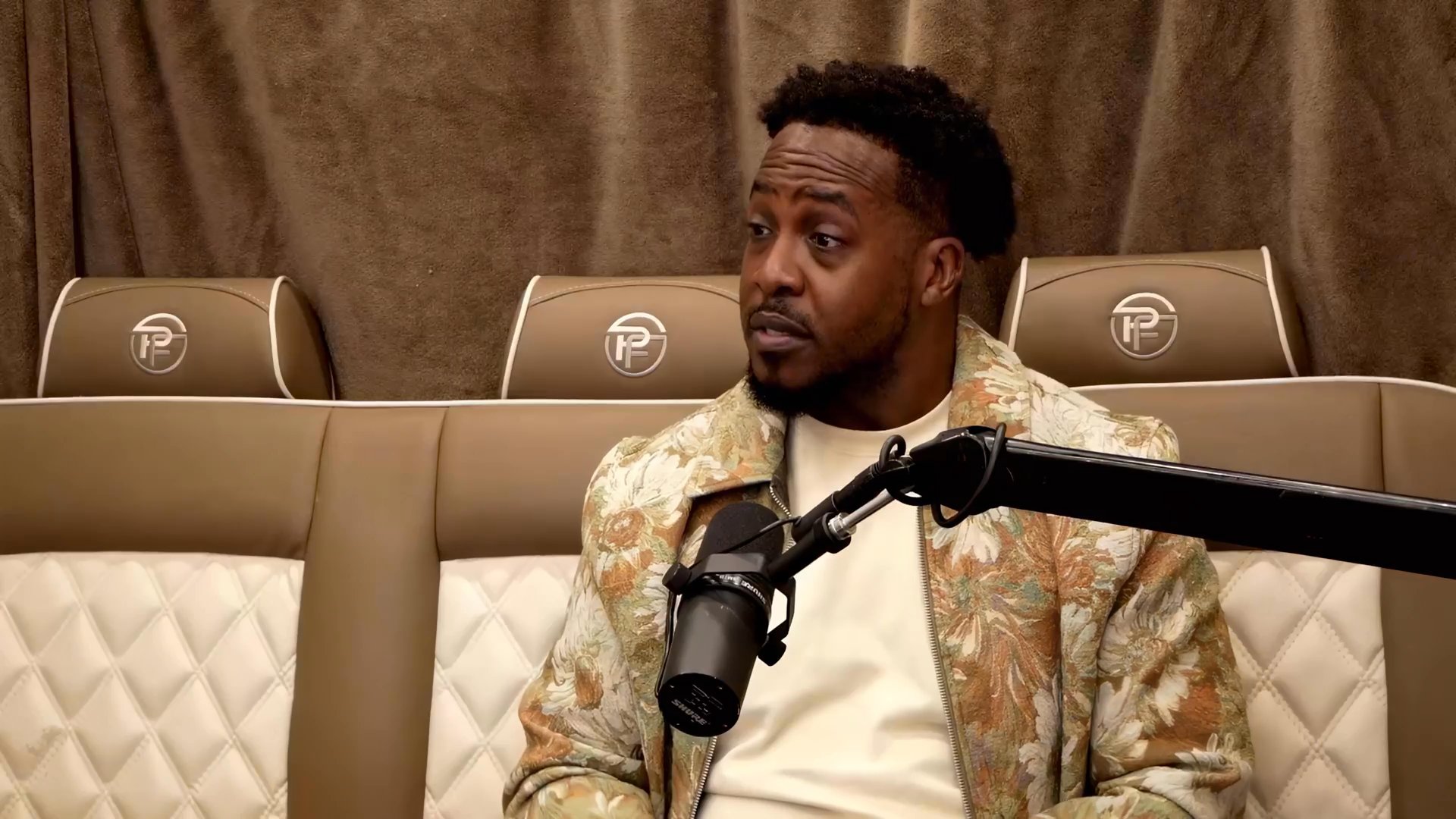
So, thank you so much for joining me. I love that. Thank you for having me. I look forward to us talking about all the things. Let's do it. All the things. Let's start with that beautiful jacket. I know in this outfit, speaking of fashion, it's beautiful. Thank you. Thank you. I am very intentional about my club. I can tell. That's the least I can. When we met, I was like, "This guy gets it." So, I'm amazing. I appreciate it. I receive that very much. Well, thank you. Okay. So, we're going to jump in and we're going to start by Born Race, Minnesota.
Yes. This is your backyard. This is home. Literally, I was born in North Minneapolis. I'm proud to say I'm a North Cider, right? Yeah. I mean, it's a thing where I come from at least, you know, in how my background and growing up in the North Side really speaks to the way that I show up in the world and why I show up in the world the way that I do, like inclusivity, equity, like all of that is really important to me because I grew up just in an area where people that look like me were not treated, like they matter.
And one thing to keep in mind, like I grew up in Hutchinson, Minnesota. I'm 75 miles west of here. When I thought of Minneapolis North growing up, it was the Pollers. And it was Clidell and me and Jabbar Washington and those amazing basketball teams that continued to win championship after championship. That's what I knew of Minneapolis North growing up until participating here in the community and learning more in the diverse, enrich culture that we have in our backyard here of Minneapolis. Not too many people are aware of it.
Can you elaborate a little bit more on the projects that you're working on? Absolutely. Yes. So specifically what I've been working on lately is developing the nonprofit organization called The Mandown Project. The Mandown Project is all rooted in us having conversations in order to dest igmatize what men's mental health means, looks like how we navigate it, how we talk about it, right? And that all started with Mandown. And Mandown is a fashion experience, a fashion show, a fashion, whatever you want to call it, in which we are using fashion and closing in this love for entertainment and excitement as a vehicle to have these necessary conversations and introductions to the fact that men are struggling mentally and that we need to be able to get the resources directly in front of, right?
Because of the stigma that comes with mental health, the stigma that comes with this idea that men have emotions outside of rage, you know, and really pushing that conversation forward in order to encourage men like me, like you, our brothers, the people that we love and care about to get the help and support that they need in whatever way that that looks like, as long as they know they're doing the work to be better. That's right. Tell me where this started. Like where did this hypothesis come?
Where did this moment come? They're like, the world needs this and I mean, today, just around the same page audience, this is going to have what 500 people that are going to show up to this event, but where was the incubation period? What happened? That's fair. Well, during the early part of, we're in 2026 right now, so there have been 20 23. I was doing this kind of cohort based leadership development program in which we had to do a capsule project and that they enjoyed a lot of the capsule. You love a capsule, right?
It always encourages you to think deeply about something. That's right. And during that process, they were encouraging us to think about something that mattered to us in order to make the project that much significantly relevant to our lives. And at the same time, I had just started doing therapy and really, you know, pe eling back the layers to my own trauma and healing and, you know, really digging into that journey. And something that clicked for me was thankful to my therapist, knowing and realizing how much I learned to be self-regulated, right, and why I learned that.
And what clicked for me through those conversations with that many men did not learn to be self-regulate. Because we're dependent in some way or another on the people that are around us , just like they are dependent on us, like for emotional processing, for emotional healing, whatever that is, or the lack thereof. And through that, I began really thinking actually about my siblings and my nephews, right? Because I have a handful of nephews and I have a handful of younger brothers and really thinking about the world.
You're the oldest. I'm the oldest. I'm the oldest of all of my siblings and that in itself adds layers, right? And so continuing to think about the world that they were walking into, and if they had the tools to take care of their mental health. And I didn't feel that the world that they did was set up to provide them these tools. It's not that the tools didn't exist, it's just that the world was not set up to give them the tools that they needed to be well, right? And I also understood the connection to our mental wellness and the rest of the world, right?
We're experiencing some extreme patriarchy and whatever that looks like and means to different people. And I feel like part of that is connected to our need for mental health support , our need to process our emotions, our feelings, our trauma, whatever it is that we have experience in order to think about what our output is to the world. You know, because at the end of the day, I'm a human being that believes that everything we do should be from a place of care, everything, right? We make mistakes, we mess up, and how do we still fix that within a place in a community of care?
You know? And so really thinking about my brothers and my nephews, I was like, how can I encourage them to do mental health support without feeling like I'm pushing them into therapy? Because also, as a Black man in a community, therapy is not always our first choice, right? Because of the history and trauma with that, while I found plenty of support and help in therapy, I also recognize that sometimes there are barriers to that for people. And so, thank you, and can you give me a little bit more there when you said, you know, what would be the differentiator of why not therapy?
Like it helped me understand to say like, we just, we look at that differently. This is a different vantage. You said the history of like, help me, help me just understand that. Yeah, I think that, and this is often not talked about either, right? There are layers to healthcare in general to people of color and how they navigate the space, because healthcare has generally not been catered to the differences in the lived experiences of people of different background. Right. Most healthcare is rooted, studied, and structured from a very specific community standpoint or idea, right?
And to be bluntly honest, that it's usually rooted in whiteness or the white experience. For sure, or in mental health therapy, I imagine that for a while in probably 60, 70s, 80s until things have changed, like that was probably a white woman or a white man providing therapeutic intervention. Yes. And I think that there is something to say when you have a culturally responsive therapist who's aware of how the world is also impacting your mental health. Understand right? Because it's true. All the clinical terms are important and all that's real and honest.
And there's also how the world receives us and how we experience the work and how that impacts our journey, our mental health, right? And I think that a lot of people of color, not all, but a lot of people of color have either experienced their own trauma in a therapeutic space or have understood that people in their lives have experienced, et cetera, right? But I also recognize that a lot of people of color don't have access to understand that there's more than that there are therapists who are actually working to provide culturally conscious care, right?
And what that means and what that looks like. And so through man down, part of my goal is to be able to get these types of resources directly in front of community as opposed to thinking, "Oh, you should go do this and pushing the people to go find the resources. How do we bring them to them? How do we introduce them to them? How do we show them that there are opportunities for them to get the help and support and that there are genuinely people who care and want to help them?" Yeah. That's right.
Thank you for sharing that. And so in regards to fashion itself, fashion is a part of you and your identity and your work and what you're doing, imagine, and then bleeding into mental health. What are you seeing in regards to fashion and mental health and where these two worlds collide? That's a very interesting conversation, specifically because I feel like here in Minneapolis, I'm colliding with it. I don't know if they were colliding specifically here more or more. And part of that is because when I saw how I see fashion right now in the way that I'm using it, it's a vehicle for us to have a conversation because it's a captive audience.
People are going to go to a fashion. If they like fashion, if they like entertainment, if they like big productions, they're going to attend a fashion show. And so my idea is we have this captive audience of 200, 300, 400 to 500 people. How do we talk to them about something real? Something that matters and make it engaging, exciting and not sad, jury or boring? That's right. Because mental health, when people talk about it, it can sometimes be really sad and really daunting, right? Because people are like talking about trauma and like, well, let's have moments of joy because we all deserve and should have joy and we all experience joy and then talk about mental health, right?
Because mental health is also not just the sad thing. You know, mental health support is thinking about what makes us happy, what brings us joy, what puts a smile on my face, how do I want to be loved and receive love, right? That is also part of the journey, an important part of the conversation that I think we often don't have because it's deemed as kind of this very sad space. It's like, well, I still see a therapist and I feel like I take really good care of this. And how long have you been seeing a therapist?
Over a year. Over a year. You go biweekly once a month. What is like your routine look? It transitioned. It first started, it was once a week and then we transitioned to biweekly. And then we went to once a month and then we went to as needed. And in this, in this approach, what are you starting to uncover about yourself? You know, that's the beautiful thing and why I have enjoyed therapy so much because it's given me language to understand things about myself that I already do, but I didn't know how to articulate it.
But for example, self-regulation, I had no idea what that meant in terms of like a mental health space. I just never thought about it. And talking to my therapist, she helped me understand that the way that I process my emotions is connected to the way that I've always had to process my emotional trial. And that it's actually a skill that I developed very early and that it's a great skill to have because many people need help processing how they feel about something and why they feel that. And through conversation with my therapist, she often talks about the fact that I articulate how I feel very, very well and why I feel that way.
And she connected the dots to the things I've experienced in my childhood and learning to self-regulate and take care of myself. Do you feel like you're a deep person in your relationships? Yes. Okay. So to my benefit and my detriment. I was just going to ask that because what I found, I feel like I also have that level of depth. Yes. When I have my conversations with friends, family, you name it, and it feels sometimes like I'm almost too much of depth. Do you have those moments too? All the time.
You do. All the time. And part of it used to make me really self-conscious and stop me from talking in spaces, right? I often deem myself an introvert or an amnavert, right? Because I learned to really enjoy my own company. I love my own company. I love that. I love that. And I think part of it is also rooted in the question that you're asking, right ? It's that I realize that I see things in a very deep way, everything, right? I've even told a friend recently, I think everything is that deep. If you realize it's not that deep, I'm like, well, it is if you really want to explore it.
Why we made the choice to even say something in that moment is that deep, but then when I start going that way, people are like, oh, well, I don't want to go that deep anymore and it, it both again to my benefit, to my detriment because I love exploring. I love learning. I love wisdom. And I feel like we as humans are capable of infinite amount wisdom. Yes. And at the same time, I'm like, how do I keep having these types of conversations with people? Because this is what stimulates me. This is what motivates me.
This is what I feel like is going to push us to change the world. I agree. You know, but then so many people don't want to have those, those, that level of depth conversation. So when we think about success of this big event that you're going to be having soon, and you wake up the day after, and you think to yourself like, that was a win, what would winning look like for that for you? One person coming up to me before the event is over, when it's over and just feeling like they're going to go check on a man in their life, make sure that they feel loved.
That to me is all I need. That's all I need because that's what it really is about. It's we need to destigmatize the conversation. And so so many people don't have it. They don't talk to them in their lives. They don't check on them. They don't ask in the men. The men don't do the work either, right? And if one person says to me, Gail, I'm going to go call my brother, my nephew, my son, my cousin, my best friend, and just ask him if he's okay, or if he needs anything, that to me feels like a win.
I love that. That's all I need. All I need. No. Fashion itself. Yeah. Tell me what you're doing in this space. Oh, yeah. So I am producing the complete show. You love it. So you're owning it all. Own it all. So I have a team, thankfully. We built the team behind us, which they've been amazing, like shout them out. I couldn't do this at the level that we've grown to do it without it. It would be too much of a lift, which, again, this also relates to my mental health journey, right? It's like, part of me used to just be like, I'm going to do it.
I'm going to own it. I'm going to do it all. It's just a little bit, no OCD, but a little control-free, okay? I'm also a Capricorn. So I figured I'll relate. But, yeah, so ranging from finding the venue, recruiting sponsors, finding local design. So all of our designers in the show are all local creatives, and so finding and recruiting those designers, all of our models are many at most the same school, the Twin Cities area, or not even the Twin Cities area, the Minnesota area. So we've had designers come from further out, but still from the state, and it 's amazing like, again, like we were talking about a little earlier, I love Minnesota, and I love showcasing what we can do in the beauty and talent that's here.
And so it gives me a lot of joy to go find new designers, or designers that I 've seen in other spaces and be like, hey, do you want to get a menswear-inspired collection for me and that? Yeah. You know, that it's so cool. And also having the conversation with them about their mental health, because that's part of the journey and part of the process, is not only you being inspired to create something beautiful, but also how are you navigating and talking to yourself, or the people you care about about your mental health during this journey in this process.
That's right. Right? Because part of it is to make mental health very relevant to everyone in a continued larger scale, because thankfully we're talking about it in the world, and people are starting to pay that much more attention. So let's keep pushing that conversation. Yeah. Before we had this all set up, I was starting to do some research in regards to social individuals who are on social media as influencers, which I have a feeling ble eds a little bit into the artist world, the fashion world, because those individuals who are influencers probably also have to get their products out, their services out, their brands, you name it.
People look at the data, so four out of five individuals who are influencers in our world today are burning out. 67% have said that they're either depressed or anxious, at least one plus times in last year. 33% of those individuals run medications today for anxiety or depression. And it has the space as a three times high risk for suicide than other spaces. So if we are blending, influencing with art, the reality is the space needs to have this conversation. It needs to have this conversation. Were you a little shocked by the data that I just, or did you know some of that ?
So I didn't know it. I never heard that data, but I'm not shocked. I'm not shocked at all because I feel like it's a direct reflection of the impact of social media, or if I'm a negative standpoint, right? There's this, specifically when I think about influencers, there's this need because of the work that they're doing to constantly output into the ether that is the, get it to the algorithm, that is the internet, right? And it has to fit whatever the niche is, it has to be on brand, whatever. And I think that sometimes there is a loss of who they are, their soul, their genuineness to, in order to fit the brand or the content of it, the phenomenon.
I've had conversations with friends of mine who are aspiring influencers to, and it's reminding them, it's like, your content doesn't feel genuine. It doesn't feel like who you are, and that's also reflective in the lack of audience that you do. Right? Because the people aren't connecting, because you're not being yourself. You're not being real, and it's stressing you out more and probably a heavier way to carry to be basically someone else, that's for the internet. But then when these people who you've never met before meet you, who are you?
You know? Do you feel like you can be yourself on social, online versus in person? Like would you say you morph or switch, or would you say, like, I am who I am, and I'm going to show up 90, 95% of the time of just being myself? I am who I am. But that's also been a journey. That's a journey. You know? And it's less about social media for me and more about my professional life outside of fashion. So I work in higher education as well. I do diversity, equity, inclusion work. And that journey, when I was getting my master's degree, I had an assistantship at a job at the university I was working at was attending school.
And it's the first time I think I was experiencing impostor syndrome. Because I didn't understand why when I would go home, I felt like a different person than when I was at work. And I felt like the two worlds weren't blending for me. There was a lot of cold switching, a lot of me just having to perform in both spaces. And that it got really, really difficult for me. But I broke down crying to my supervisor because it was after a conversation where thankfully I had a supervisor with a lot of shared identities as me.
And after a meeting, I was getting feedback about how I looked at people when they said certain things. And what my response was, well, I want them to know that I think the things that are crazy or wild or, you know, out of the box. I want them to know that because I feel like being transparent is key to us moving forward collectively. But that wasn't being received as well. But don't do that. Correct. In professional spaces. And so I was having cognitive dissonance on how I was also showing up.
I'm crying with my supervisor just like really breaking down because it was really difficult. And then I want to say a week later, I made a conscious decision that I no longer apologize for being myself in these professional settings, but that also when I went home , it was okay that I was this professional individual. And so how did I was really working to merge the two, but what happened and what happened really was me feeling that much more myself in my entire life because I felt like I was no longer leaving a part of myself out when I walked it differently.
And so that journey and that understanding helps me a lot when I think about who I am online and social media in real life, and really ensuring that they always match that I am who I am. There was an individual that came on board for cadre, he's their chief artificial intelligence officer in his name's Mike. And I will never forget we were about a month in to his role previously was that optimum embossed and scientific for 12 years. I said, Luke, this is the first time that I ever feel like I can be myself.
And I was like, Mike, how does that make you feel and he just like welled up with tears and he's like, it feels amazing, but it also makes me sad that I couldn't be me . So it's back to like that imposter syndrome that you had. So I'm so glad you can be yourself. You can show up and be the person you want to be in the world, which I just can 't imagine being that way of having to represent somebody else and back to your point of like how the influencing is or isn't going when it's not working well for you because you're trying to show up and not be you trying to show up and not be you, you know, like often I think the influencers that do really well honestly are many times the ones who are showing that genuine identity in themselves in whatever it is that they're putting on to the world.
Yes. Like there's there's a connection and it's it's energetic, it's spiritual and it's just authentic, you know, and then I think people can notice when the influencers are trying to influence. Right. That's the difference. I agree. Okay. m. m. Yes. I am and I'm somebody who's interested in coming to the events. Yes. I'm interested in coming to the show. Tell me what it's going to look like from arrival at 430 through the duration of the night. Just walk me through kind of like hour by hour of what the event's going to love that.
Thank you. Yeah. So doors open at five o'clock. Okay. There will be a very clean, crisp, check and experience, right? You'll give the person your name, you'll get your wristbands depending on your age, your ticket, like if you got a VIP ticket or whatever, you'll get your dream ticket based again on what ticket price you got and then you'll be invited into the space. Okay. So when you first walk into the space, there will be a bunch of tables set up for you engage with and these tables will feature six or seven local nonprofit organizations that are doing mental health support in various different ways for you to engage with and again, getting those resources directly in front of you as opposed to you going to have to find them, you can sign up for a therapist right there if you want.
Wow. Right. So there are various different activations that you're able to engage with, including God, right? Absolutely. Okay. And including that, you also, there'll be some light bites and things that you can grab and snack on. There'll be a full bar that features even an alcoholic. Yes. Very excited for that. And so you'll be able to just mix and mingle in the space network, meet some people, compliment other people's outfits, show off your outfit and just have fun. And then around six o'clock, we will invite people to take their seats and then at around six, 10, we will start the show.
We'll have a welcome from, so we partnership with one of our partners this season to really talk about the ways that they are engaging in community wellness and support. You'll hear from cadre as well in the ways that they are doing community wellness and support in the ways that you can activate and engage them and then you'll hear from me. And I will be in seeing the show, introducing each of the designers to come and share a little bit about their mental health journey and their inspiration for their collections.
You will see 10, so legitimately, you legitimately get many micro stories of individuals over and over again, coming to share about their own mental health and about the product or service they've created and built. And wow, this is amazing. And it's going to be, it's high energy, good music, there's going to be a DJ when you walk in, music will be playing from the start to the finish. We'll have a barber there if you need like a touch up and interested in just engaging with that service. So there's so many different things, wow, in ways that people can come and engage and have a good time and enjoy a really cool fashion.
Our video of production on, are you hearing this? Are you going to go? Of course, she says she's going to be there too. I know you are invited. Hello. Please. It's going to be a good one time, like one thing that I love about the Mandown shows is that it really does feel like community. Like the people are there for the right reasons, they're there to have a good time, they're there to share positive energy and just recognize that we all are a part of helping all of the men in our lives and be better without feeling like a burden or pressure, right?
Because I also recognize and I want to hone this and say this, I allow that women are often carrying the burden of men and that is the opposite of what we're trying to do. We're trying to push and promote men to do the work for themselves. Okay, so we have 20 some days until the event. 20 some days. When individuals hear this, it'll probably be probably about 20 days on the dot . Anything that we can do to help support you in the community. Anything that we can help you do to make this even a better event.
Yes. Follow the Mandown project. Follow at Mandown_fashion. That's also where you can find the ticket link to come in tickets if you're interested in attending the show. We'd love to have any and everyone there. If you feel like you've experienced anything related to mental health, if you know men or boys in your life who are navigating things, bring them up to the show and see any ages. Yeah, it's pretty open. Like we we idea the door for the bar and things like that. So it's like it's open. We don't we don't stop anywhere.
Because at the end of the day, the show is about mental health. Everyone experiences it and the sooner that we're able to support young men, the better they'll be as adults. And so it's seeing the connection, seeing the through lines and yeah, just showing up. I think the biggest way you all can support me is this, putting this out there, continuing like being at the show and supporting and talking to the guests and just being there and continuing to promote how important getting Mandown in the various ways that you could do that.
So I just want to tell you, Gail, this is incredible. We always talk about mental health and meeting people where they are. And usually it doesn't it's a cliche that people scream from the mountaintops are going to meet people where they're at. We're going to meet them where they're at. The reality is more often than not, we have a brick and mortar business or we have some telehealth service. So you're actually driving individuals together in community and saying, we're here for you right now. We actually will meet you where you are.
You had indicated earlier, if you're looking for a therapist, you could sign up right then and there. You're looking for other services that might be like it, you're doing it. And so I just want to say from myself, from Anna, from the entire team at cadre , from the community, from Minneapolis, like way to go, way to really do what you say you 're going to do and make an impact in our world. And we all are going to be better for it. I really appreciate it. So thank you for doing this and any last thoughts that we need to get out there for our world.
It's on your brain. Take care of yourselves. And when I say that, I really mean it. I think often you hear a final note, people are like, take care, but I really mean like do what you need to do to take care of yourself. If you need to take a mental health day, if you need to go on a hike, if you need to go on a vacation, if you need to go get some vitamin D because the sun's shining, do that. Stop making excuses why your mental health comes second or last. Because if we take care of ourselves, we're going to show up better in the world and be able to do all the things we want to do that much better.
I used to preach this to my students when I was when I was an undergrad advisor and all of it's like you had to take care of yourself to take care of all the rest of things that you need to take care of. So do it. Thank you. Gail, thank you so much for being on today. You're an amazing soul. We really appreciate it. I have to get a picture with you before all of a sudden done. Thank you. Thank you. I appreciate it.