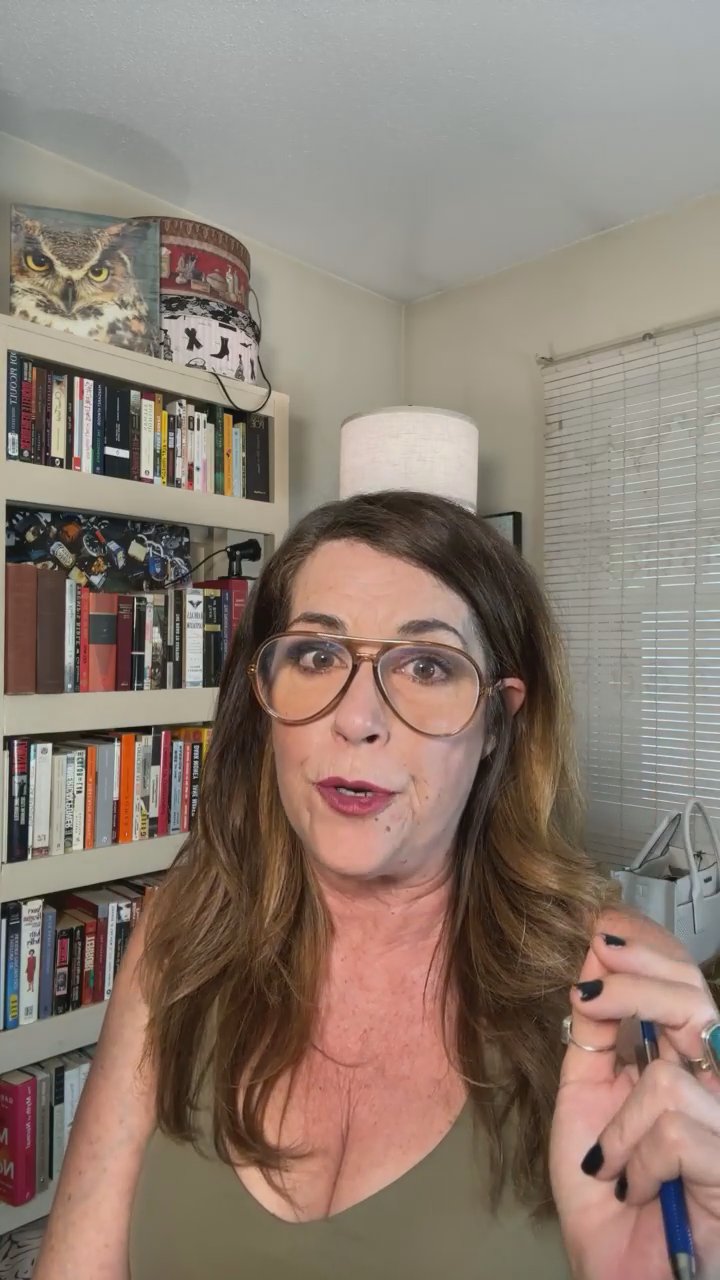
The comedian didn't have to do anything for Father's Day this year. Rumination is not considered a mental illness on its own. It is highly linked to people that are suffering with anxiety, depression and ocd. Rumination is one of the key ingredients in CPTSD too.
"Father's Day for me has always been real mixed emotions, " says Jules. The comedian didn't have to do anything for Father's Day this year. Rumination is going to be our word tonight.
Rumination is not considered a mental illness on its own. It is highly linked to people that are suffering with anxiety, depression and ocd. Rumination is one of the key ingredients in CPTSD too. Warning coming up.
I feel my stepdad was more of a father to me than my dad. My child is closer to my former husband than his biological father by far. But the ruminating got me, so. And I did not take care of myself.
Tiffany: I was famous for adopting other people's dads. Adopted other dads. A girl's gotta do what a girl's got to do, my friend. You guys can have it exclusive here on Cadre if you're interested.
Rumination is basically engaging in repetitive, negative thought process loops continually without an end. Here are some strategies that they've suggested. Try identifying Themes, Themes that you ruminate on. Hopefully distract your mind with a physical action.
Jules: I often ruminate about whether I looked dumb. A lot of my rumination comes from not understanding my neurodivergence when I was younger. She says rumination is a coping strategy.
You can't intellectualize an emotional problem. Think about emotions, it doesn't discharge the emotion itself. Set a timer. Schedule time to worry. This is a lot for all of us right now.
Hello. Hello. Oh, I'm a minute late. Dang it, a minute late. Comedy centered tardy. I'm tardy for the party. Anybody remember Sassan? Oh my God. Real Housewives? The world used to be so simple. Anyway, happy Sunday. Happy Father's Day for those who celebrate. I don't know how much turnout I'm gonna get. I don't know if everybody's busy barbecuing in the backyard with dad today or grandpa or stepdads or whatever. Hey, Jules. Oh my God. Welcome in, doll. I haven't seen you in forever. I'm glad you could come in.
Missed you. You. I love your. I love your engagement. So thank you. I'm dripping my Diet Coke skinning all over me. I got the condensation anyway, but I haven't really started anything yet. But yeah, hopefully everybody had a. Had a good day. It. Father's Day is a weird one for me. Hey, Speak Wonder. Come on in. Woo. We're gonna have a party tonight. I wasn't sure if anybody was gonna come. Right. Father's Day for me has always been real mixed emotions. I do not, I'm not gonna talk about this very much, but my father and I are pretty much no contact and have been for better part of a decade.
Very, very little. Hey, welcome from Northwest. Is it P. Pena? I don't know if I'm saying that anywhere close to being right. I'm so bad at knowing how things are pronounced. But yeah, so I, you know, the step. And then I have a stepfather and I shared a couple weeks ago. My stepfather has passed on now and so. And we had his service this week and you know, so it's. I know that it's kind of like Mother's Day. There's, there's expectations, there's a lot of stuff around it mixed. For you to speak Wonder.
You agree with me about Father's Day? Yeah. I mean, sometimes we didn't have the father that you want to go and hang out with. Right. Sometimes you don't get that dad. And so what do you do? Right. Anyway, so I didn't have. I didn't have to do anything for Father's Day this year. There wasn't really a. A deal around it. Oh, Pennsylvania. Oh, very nice. I bet that's lovely. But yeah, but rumination is going to be our word tonight. Rumination. I have been ruminating the heck out of myself and you know, in the discussion around neurodivergence, I've heard this word rumination before and I'm like, well, like I I know what rumination it means, right?
You know when you're thinking, when you're, you're, you're chewing on something over and over and over again, the same thought, right? But I'm like, why does this keep coming up in diagnoses? Yeah, rumination. Why does it keep coming up in like these descriptors and stuff? And so I went and did a little research on rumination. And rumination is not considered a mental illness on its own. However, it is highly linked to people that are suffering with anxiety, depression and ocd. And that kind of makes sense if you think about it.
And if you're not, if you don't know what OCD is, that's upset. What is it again? No, I'm gonna say it. Obsessional. What is it? Someone in the chat will know. God dang it. Anyway, ocd, Dang it. I'm. I can't look things up on my phone because I'm on it, but. Obsessive compulsive disorder. There we go. Geez, Tiff, wake up. So people that, you know, there was a guy who used to be. He was, he was one of the very first hosts on Nickelodeon and he was very open about the fact that he had ocd and he was like, that was when they would slime people and do all that kind of stuff.
And it really like tripped him out. So. But rumination is something where it can become a problem for people. And they didn't say it in their, in my online stuff, but I, I've got to think that rumination is one of the key ingredients in CPTSD too, because. And ptsd. Because part of PTSD is there's, there's ptsd. The more straight up version is when something horrific happens that like kind of nobody could predict, right? It's just like, bam. Like a, you know, like, you know, like when are In Minneapolis, the 35W bridge collapsed and you know, it was just.
And there was survivors of it and they had PTSD from that experience. Right? But cptsd, Complex Post Traumatic Stress disorder is more of like a low grade. It's, it's death by a thousand cuts. It's trauma. It's long term trauma. You usually see people with CPTSD that have maybe been in like a work camp or they were incarcerated or you know, any of that kind of stuff, or grew up in a narcissistic family or a cult or something like that, right? Where it's, it's this, it's, it's complex and it's not just One incident.
It's. It's. It's a whole way someone has existed. Right. But. And I'm gonna trigger. Warning coming up. I'm gonna talk about what happened briefly to our lawmakers yesterday in Minnesota, if you were not aware, but there was. So if anybody needs to. Doesn't want to hear about this, I understand, because I don't want to trigger anybody. Right. But there was an attack on our lawmakers, and people were executed. And I have been organizing people to go to rallies and marches for the last. I mean, well, probably for the last 10 years.
I've been pretty active and stuff like that. And I had already put it out that we were all going to the rally in the St. Paul Capitol. I had people and that news. We woke up and we learned that news in the morning, and everybody was, you know, devastated and heartbroken and mad. I mean, I was furious, right? And I started ruminating and I started. The CPTSD started really kicking in, and my paranoia started really kicking in. And I kept getting text messages from people over and over again like, be safe.
Like, be safe. Like, watch out. And then people are giving a lot of contradictory information of what to do if there's a problem. Right. And I am trained. I've talked about it, but I. You know, my degrees in law enforcement, so I trained as a law enforcement agent, although never worked as one for a variety of reasons. But it. It. And so the rumination is what I'm trying to get at. I started finding. I found myself already down in a future trip where I'm like, in my mind, I'm playing out what's going to happen if I'm in an armed conflict at the Capitol.
Like, I'm. I'm, you know, like. And. And I'm like, how long have I been thinking this way, that this is where I ended up. It wasn't until I kind of got to that signpost where I was like, whoa, whoa, whoa, whoa, whoa, whoa, whoa, whoa. You're ruminating. You're. Whatever room you're getting stuff. Oh, Jules. Oh, okay. Jules is talking about Father's Day. I lost my dad 13 years ago and my stepdad 8 years ago. I feel my stepdad was more of a father to me than my dad. Yeah, my stepfather was kind of more of a father to me.
My father. My stepfather and I also did not have a close relationship, although it was closer than, I guess, the one with my dad. But that was because I wanted to have a relationship with my mom. But, yeah, it's sometimes those step parents Are. I know, with my child. My child is closer to my former husband than his biological father by far. I mean, they're besties. They're very close. That's. That's. That's his father, you know, has been. But, you know, my ex and I got together when, you know, my kiddo was one, so that's really who he was raised by.
But. But yeah, the ruminating got me, so. And I did not take care of myself. I got myself completely out of my routine yesterday. Like, I didn't do a meeting in the morning. I didn't, like, make my smoothie that has my protein and my vitamins. I didn't take my vitamins. I was like, slamming co and chain smoking cigarettes and drinking pounding coffee and, you know, and I really didn't kind of come down from it until today. So I want to kind of talk a little bit about what can we do for finding ourselves in these spirals.
Right. Okay, I'm going to catch up on the chat. I have been blessed to have a stand in the gap. Dads, men who came alongside me as a father figure. Yeah, I was famous for adopting other people's dads. Like, if I thought someone, like a friend of mine at school, if I thought her dad was cool, like, I would. I would definitely try to, like, hang in the garage and like, get some dad time from someone else's dad. For sure. For sure. For sure. Right? I. Yeah, I totally did that. I had this one friend, her.
Her dad was a Vietnam veteran and he lost his leg in service and we stepped on a landmine, right? And he lost it from the kneecap down. And so he had a. They were like, you're not gonna be able to ride a motorcycle anymore. And so he was like, I'm totally gonna drive motorcycle. So he just put a sidecar on it. I was like, oh, smart. Because now you're balanced and now you don't need the two legs. Right. He used to take a swim in and stuff. And then he'd take off his artificial leg and, like, let us play with it.
Anyway, I thought it was cool. Speak wonder. I did that too. Adopted other dads. Yeah. So you gotta. A girl's gotta do what a girl's got to do, my friend. In fact, my. The girl lived next door to me, Nicole, when I was in, like, junior high. This is right after my parents divorce. And my father and I are just. I mean, it was, you know. Yeah. Bad. But I used to go over and hang out with Harry, and Harry was a drywaller. By trade. And he had. He was not. He's not a tall guy. He's still. He's still.
He's still with us. He's still kicking. He's probably only like 52 or 5 3, but he's got the biggest hands you've ever seen. They're like just meat hooks. Right? And. And he always ate candy all the time. He had a bowl of candy right next to his recliner. He would come home from doing drywall all day, and he would eat candy, you know, but he gave me the. He gave me great advice. He told me if I ever. If I. If you. He said was maybe 13, I think, but he's like, Tiffany, you know, if you want to keep your husband happy in the future, always serve him his eggs on buttered toast.
You'll have a perfect marriage. I don't know. But if I like it, I. Eventually, I will make a Megs on butter toast. And. And they do seem to appreciate it. I. It's a. It's a hack. You guys can have it exclusive here on Cadre if you're interested. All right, so let's go rumination. Rumination. So the defect, the definition of it, is basically engaging in repetitive, negative thought process loops continually without an end. Right. Without it completing. How many times have I gone to bed and I'm thinking about.
Like, I've always have terrible time sleeping on Sunday nights because I'm thinking about the work week and what I got to do and da, da, da, feet hitting the ground. But it really does it. It gets stuck on. And I'm like, shut up already. At like 4 in the morning, I'm screaming at my own brain, like, knock it off. You know, and the thing is, you know, but the rumination is. Excuse me. It's often it focuses on the past or the future. You're either future tripping or you're looking backwards going, how did I get here?
What did I do for this to all happen? Right? So. And often, like, I was explaining about me, like, having this fantasy takedown situation. I don't know. I thought I was gonna have to. I don't know. But if. You often do not realize you're ruminating until you're so far down the rabbit hole that your thought got to something really crazy. And then you're like, huh? Where. Where did that thought come from? Like, it's just on in the back of your head. And so I was like, okay, yeah, that definitely kind of sounds like me.
So here are some strategies that they've suggested. Try identifying Themes, Themes that you ruminate on. Excuse me, regularly. I think we can all have one. I mean there. I'm sure there's some people that don't. But finances, right? Finances you can ruminate on with. No, no end. He's talking. So you want to identify themes and even just journal them down. Like I'm noticing, I, like I'm thinking a lot about a relationship in the past or I'm thinking a lot about not having the relationship I want in the future.
Whatever those themes are, if you start kind of a little list and start identifying them, that's what they' suggesting. Now I haven't done it yet myself, so I'm, I'm telling you to do something I haven't actually tried yet, but I think I'm going to because it's kind of like I, I've gotten away from it. But I, I haven't had as many vivid dreams lately. But I used to have crazy, lucid, vivid color dreams. They always say, oh, you only dream in black and white. Not always. And I used to journal them, you know, afterwards to try to make sense out of them.
So I think I'm gonna try that when I. With these, with my thought loops. But rumination though isn't problem solving, right? You can, Problem solving would be okay, we see a problem, but now I'm gonna take action. It would, the solving a problem would say, well, our finances really suck, but we can get a second job. We can get a part time job or something to fill in the gaps for a while, right? Because once you start thinking of solutions and action, then the rumination kind of it's. It hopefully peters out for you.
Hopefully distract your mind with a physical action, right? If you notice that you're ruminating about the news and you're getting worked up, change a muscle, change an emotion, change of feeling, you know, just honest. It sounds dumb. I have a, I took belly dancing classes years ago. It was really fun. And I still have the skirt and sometimes now when I'm really mad, I just go around and I would never do this. Like it's so dumb what we don't do. But like I would never do this when I was like married or there'd be people around because I would think that people would think I was weird.
But I dance around in that thing super loud, shake it so loud and try to get all my anger out in my hips. I'm like Shakira, Shakira in my living room. I don't look like her doing it. But, but that physical just like, ah, sometimes you just gotta scream or do something or punch a pillow. I don't know. But, like, do something, right? Like, like, like a physical thing. Now, they also recommend, like, grounding and meditation stuff, too. I'm like, yeah, but sometimes, sometimes, sometimes punching a pillow a few times really works well, too.
At least for me. Like, I'm so mad. The. Also, too. Don't take your own bait, right? Don't take your own bait on. On things that you ruinate, right? Like, I cut myself off sometimes, just like I try to, you know, cutting yourself off from drinking, cutting yourself off of thinking about stuff. Because I'll be like, well, you know, when it started in eighth grade, and it's like, okay, all right, we don't need to add eighth grade onto today's docket list of. Of issues, right? You know? Okay, what are we saying in the chat here?
Oh, relationships. Yeah, that sounds fun to me. Yeah, punching pillows is fun. That ax sewing thing is fun. Also, I'm not an advocate for, you know, like, any kind of, you know, violence or anything like that, but I love going. You know, I don't own any firearms myself, but I love renting one and going to the range. It's. It's fun, it's cool. And, you know, when you're doing that, you're not really thinking about anything else either. The other thing that I find that really helps me with rumination, and this might sound silly, but is bowling.
When I'm bowling, because I don't really like a lot of, like, super physical sports or any of that kind of stuff. Pickleball is almost even a little too intense for me. But for some reason, bowling, like, I don't really care what my score is, but there's something about. And you've got to slow down, you got to breathe and you got to walk, and you got to remember your paces and your steps, and you got to do it the same way each time. So it's like I just start thinking about only that, you know? Jules, you're saying cardio kickboxing, right?
It's. Whatever it is for you. I did kickboxing when it was new. Do you remember, Tai Boo? Do you remember the Taebo days? There was a guy, an instructor, and it was called Taebo. And it was. It was kickboxing. And you could buy it. I bought it on, like, VHS or dvd. It was around the. It was around the millennium, and threw my backup really bad, like, to the point that my husband had to carry me upstairs. And I was, like, screaming the whole Time pretty much like it. Like, I. The chiropractor was like, wow.
And then that was the last time I kickboxed. Yes. Yeah. Taibo, I know, right? I was getting results. That wasn't the problem. We just. I don't know, maybe I wasn't stretching enough anyway, so. Yeah, but that rumination, right? So worrying about the future, worrying about the past, if we're doing it in a compulsive way, we also want to ask ourselves, well, if we're doing it, we must be getting something out of it. Or if we're doing it, it must be a pattern. That got Billy Blanks. That's right. That was the guy's name, the Ty Bow guy.
That's right. Billy Blanks. And then there was that crazy lady with the hair, the spiky hair. She was a nut. She was fun. Anyway, I didn't do her workout videos, but she was funny. But the. But this rumination, right, some of the. The arguments are that the reason why you're ruminating is because these are low. This is a coping strategy, right? Like many things, you're. You're trying to be very thoughtful in your approach. And. And I feel like, at least for me, I'm not speaking for others. And this isn't something I read from someone else, just my take on it.
I have, with my neurodivergence, spent so much time trying to figure out what's going on, right? And trying to figure out other people, because I sometimes have a hard time with social cues, and I don't. Sometimes I just don't get the. I understand the words. I'm just not, you know, I don't know. I'm not making a lot of sense here, but I often ruminate about whether I looked dumb. I often ruminate about, did people understand me? Did that make sense? Like, there's a lot of times when I get done doing this live stream on Cadre, and I'm like, I don't even remember if any of that made sense.
I don't even know if I had any points. I don't. And so I think a lot of my rumination comes from. From not understanding my neurodivergence when I was younger. So I inadvertently was way too truthful. I don't filter much. I just respond with what I actually think the answer is. And. And I don't buffer much. I buffer a lot more now I've learned how to more, you know, but when I was younger, I didn't really have it, and I would constantly pay the price for That I would constantly step in it and I wouldn't realize it until I'd see someone's face and they'd be like, I can't believe you said that.
I'm like, oh, well, I thought you wanted me to tell the truth. You know, I. I'm not good at. I wasn't. Especially when I was younger, I wasn't good at noticing when someone's asking you a question that isn't a question, it's an. It's them soliciting a compliment. Right. Like, I would miss those all the time. You know, like, you know, like, do these jeans make my b*** look big? I'd be like, well, I mean, a little. The other pants were better. And they'll be like, oh, I hate you. It's like, oh, my God.
What? Like you asked. The stitching's different on that pair of jeans. I'm not saying your b*** is big or small. Anyway, so I would ruminate a lot, a lot, a lot about what other people thought of me. Whether I was making sense, whether people thought I was weird, whether people thought I was strange and all that kind of stuff. And so. And I think it was initially an attempt to just not make those mistakes again socially. So I would go through it all with a fine tooth comb. But, you know, I've really got to do a better job of trying to identify these intrusive, negative thoughts earlier.
I am going to work on trying to identify some of the themes. I've already thought of at least five of them, but. Yeah, so. And I. I need to do that because honestly, with. With everything that's going on in the country, there's so much just happening all at once and misinformation and chaos and passionate feelings all over the place and. And angry voices and lots to react to. You know, I've been really having a hard time keeping my CPTSD in check. And the rumination, even though these guys aren't talking about rumination and cptsd.
Oh, yeah, it's there. It's super there, I think. And the other thing, too is you can't intellectualize an emotional problem. You know, that's another thing that is a complaint I have about Western ideas, I would guess is kind of the way I'll put it in the idea that you can think your way out of any problem that being an intellectual solves. You know, that you. You can solve things that way. Well, that will work if it is a mathematical problem or an engineering problem, but if it's an emotional problem, thinking about emotions, it doesn't really discharge the emotion itself.
And if anything else, it can kind of help that negative emotion just kind of settle over you for a period of time. Right. You can't think your way out of having a crummy childhood. You can't think your way out of the fact that, you know, let's say, you know, someone's watching this, the replay, and they just lost their job. Like you can't. You thinking won't make the job come back. And so. Yeah, anyway, okay, so intellectualizing everything, preferring facts to feelings. I think this is what gets us stuck in our own rumination, at least for myself also, you know, talking about like CPTSD in and around.
If you were raised in or around someone who has like a very high conflict or high agency person with narcissist narcissistic personality disorder, NPD or some other type of disorder where they were not able to, to emotionally regulate themselves or they were not able to properly mirror to you empathy and compassion. It's. It just being raised by someone like that is its own version of cptsd because you're very confused as to how to be loved, how to get love, and how to show up in a way that isn't constantly upsetting someone.
And I think that's when I started, that's really when I started the ruminating. It was like, how do I, how do I keep getting in trouble? The more I pray, the more I plan to not get in trouble. It still happens. Why does it keep happening like, you know, and I didn't realize and bring a full circle to why I don't talk to my dad anymore. It's a moving goal post with him. If you do this, then he'll just move the goal post farther. There is no end. He wants you to do all he wants. He wants, he wants complete, you know, he wants complete submission for me.
He wants me to do all of his emotional regulation for him. He also wants to co opt my personality and say, oh look, look what a wonderful dad I am. Oh my, my daughter does all this volunteer work. Well, you know, we're a family that does volunteer work. Like they want to get in there and take credit for anything that's yours, anything that you carved out for yourself. They want to also borrow that credibility when it's convenient for them. And yeah, so that's, I think, where a lot of my tendencies and traits of doing that started.
Yeah. Okay, let me catch up. Speak wonder. Intellectualizing doesn't remove the suck from a bad feeling or situation. It's absolutely 100% now. I mean, you also don't want to ignore your problems either, but the rumination is. It's. It's almost obsessive. And you really. Maybe one of the things I thought was interesting that this person, this psychiatrist that wrote the article was saying that many people don't even realize how much they're ruminating until they're asked if they ruminated. And I'm really.
And so one of the suggestions they gave, too, like, for kind of recovering from it. Oh, I have so many note cards. Where did I write it? It. You should set a timer. That's it. Schedule worrying time. Schedule time to worry. Just not 3am he was like, set a timer. Set a timer. I'm gonna sit here and worry about Gaza for 15 minutes, and then I'm gonna. And then I'm gonna move on. But. So, yeah, so I think I'm gonna try that next week. I'm gonna see if I can come up. In fact, I'll keep these note cards near here so I can come back and update you guys.
I'll see what themes I. What my rumination themes are if anybody else wants to work on theirs as well. But hope that helps. I know this is. This is a lot for all of us right now, and none of us know how any of this is gonna turn out, but I'll just say this. You know, navigating change. I say it every week. It's super, super hard, but it's really, really worth it. And, you know, you guys aren't alone. Stay centered. And, yeah, we'll see you next week. Have a great one. Bye, Jules. Bye. Speak wonder.