There are major protests happening right now in Los Angeles, California, and they're protesting the mass deportations. Here's a short list of things to look for if you're in a process of decoupling with someone. Entering toxic relationships and leaving toxic relationships.
Tiffany Norton: Happy Sunday. There are major protests happening right now in Los Angeles, California, and they're protesting the mass deportations. What I do talk about a lot on Comedy Centered is group dynamics.
When you break up with a narcissist, what happens there? My father does suffer from narcissistic personality disorder. Here's a short list of things to look for if you're in a process of decoupling with someone.
Entering toxic relationships and leaving toxic relationships. Then losing my mind. Is there anybody in your immediate, immediate family circle that reminds you of these type of relationships? What we're watching right now is two people with narcissistic personality disorder. We're gonna see a lot of these play out.
Like the vacuum. Hoover was a brand name of a vacuum. Well, they're probably still around, but they try to hoover you back into a relationship with them now. But then that charm from the very beginning comes back.
What do you look for into getting into friendships or relationships as an adult workplace or networking co. People who gossip, stay away from gossipers. Biggest red flag, biggest red flag.
One of the things about gossip is that it is a test of loyalty. If a person likes to gossip, they will test on you whether you will receive it or not. Didn't always make me popular with certain people, but people learn really quick.
There are two types of narcissistic personality disorder. A grandiose narcissist is the one that you're probably the most familiar with. The COVID narcissist. is a little more like passive aggressive. If you're dealing with a covert narcissist, it's going to be about devaluation.
When you reject them and you reject this personality that they have carefully crafted and present to the world, it brings up in them that fear and that abandonment. It touches the reason why the false self started getting constructed in the first place. What if we called it a personal reality disorder?
When someone tells you their truth and you get the willies. Listen to yourself. Trust yourself. If these are some of your things, it doesn't make you a bad person either. These are all coping strategies. And I believe things can be unlearned if you want to.
Staying in past toxic relationships and leaving them. There is no shortcut for time after leaving. I feel more comfortable in relationships where my feelings aren't heard and honored. We can never control what people say about us. All we can do is conduct ourselves in such a way that when people hear that, that they don't believe them.
Oh my God. Well, this has been a great one. Thank you so much everybody. Stay centered. You know, navigating change is super, super hard, but it is worth it. Have a great week.
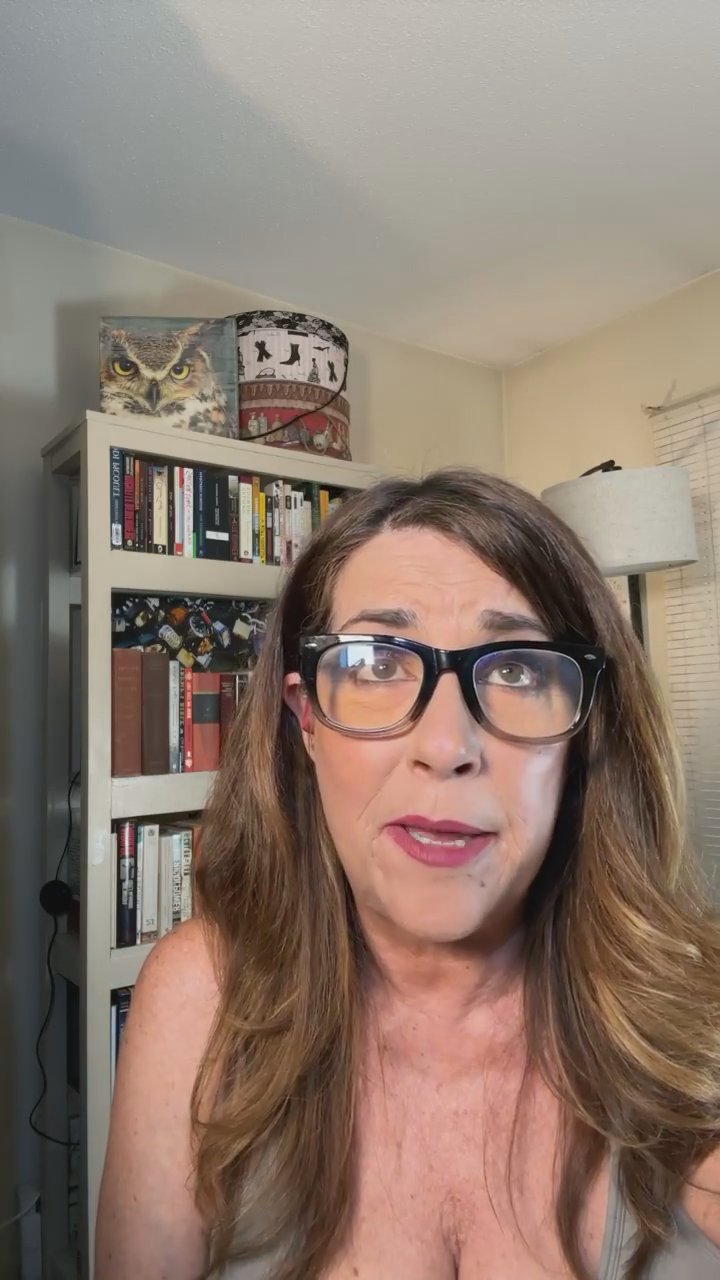
Welcome, welcome, everyone. It is Sunday. Tiffany Norton here and Comedy Centered. What up? As people are rolling in. Happy Sunday. I guess I pulled myself away from the news. If you're watching this later on in the replay or any of that kind of stuff, there are major protests happening right now in Los Angeles, California, and they're protesting the mass deportations that are going on. And my, my heart is going out to everybody there. Hey, welcome on in. Oh, hey, come on in, everybody. Just getting started on Comedy Centered.
And. Yeah. And I wasn't sure what I wanted to talk about specifically tonight. That's usually kind of how it happens. And then something will kind of click or pop in my head the day of. And I stumbled across, like a lot of the topics on Comedy Centered. A lot of them I find online. Because everything I bring to you guys, I'm, I'm usually it's because on some level it's rung a bell for me and I think others might be interested in it as well. And, but talking about, and I don't talk a great deal about politics.
If you're new to Comedy Centered, however, what I do talk about a lot is group dynamics. I talk a lot about neurodivergence. I talk a lot about therapy, recovery from drugs and alcohol and things like that. And also I talk a lot about narcissistic personality disorder and engaging with high conflict, high agency, family members, friends, people you may know, co workers, stuff like that, or possibly, you know, maybe the commander in chief of your country. Anyway, so, so one of the big news stories this week was that, and again, this is going to take a psychological turn quick.
So don't, don't dump out just quite yet. But Elon Musk and Donald Trump are no longer besties. It was a large story. The breakup was quite public, as many celebrity breakups are. And, but it, the reason why I bring it up is, is because one of the things that gets discussed a lot, especially in the circles I run with, with gals and that, you know, people swap and dating stories and that. It got me thinking of, though, when you break up with a narcissist, when you get rejected by a narcissist or you reject a narcissist, what happens there?
Well, generally, you know, it's kind of an unpleasant situation. Right. Hey, welcome on in. So I went down a little bit of a rabbit hole. And this is something that I've had many, I've, I've dealt with many times. One of the, I was raised in. Now, of course, I'm not going to speak about people that can't speak for themselves. But it is my personal opinion, undiagnosed, and I'm not a psychiatrist or anything, that my father does suffer from narcissistic personality disorder. That's, that's, that's my take.
Okay. And I have had a pattern throughout my life of finding myself interested or attracted to men that are also emotionally unavailable in a similar fashion, like, right. To my dad, you know, and then, you know, that came up in old group therapy and count or a couple's therapy. Anyway. But I've been in nurse. I've been in relationships many times with people. No, I'm not saying that everybody. We all can have narcissistic traits. We can all have bad days. Like, I'm a narcissist if, if I'm hungry or if I'm in a bad mood.
Right. Like, I mean, it's not a personality. It's just a moment, right? But when you're rejecting someone who is a narcissist, oftentimes you don't really. If they're the. Of the COVID variety, you don't necessarily fully know that you were dating a narcissist until you break up with them. That's when you find out. That's when you kind of find out what they were holding back. Right. That they were withholding in that. And so I thought it'd be fun just to talk about some of the strategies and some of the things that generally happen when a narcissist is rejected or there's some kind of a decoupling.
The narcissist is breaking up with you too. These things can happen as well. Right? But, and, and the thing about narcissists and, and, and high agency, and I don't like to just say that term all the time, but oftentimes people are very, very charming. And especially like in a dating or a romance situation early on, these. Very charming. They seem like flawless. They seem like they could do anything, like kind of larger than life. And they're so interested in you. And they're asking about what you're doing all the time.
And they're listening to Contact and you're like, wow, I can't believe this powerful person is interested in me. Right? And so it was all very alluring at the beginning, right? It's like a drug. You want more, more, more, more. I want more of you. How much more can I have? Right? And the. And then it. Once they kind of know that they have you, they start leaning back, they start leaning away. So that you have to come closer. Right? The power, the power they pull in. Right. So here's a short lift list of things to look for if you're in a process of decoupling with someone.
And it could be a work relationship too. Plenty of narcissists at work as well, right. Does not have to be a romantic relationship. Could be family members as well. But shifting blame to you when you create a narcissistic injury. And a narcissistic injury can happen to anybody. Right? Like it's just like it's, it's, it's a wound, man. It's a, it's. Your ego feels rejected, you feel rejected. That's a narcissistic injury. But what's different when it happens to a narcissist is that in a, in a, like, in a general kind of a way, if someone break up, breaks up with you, a pretty common experience is to be like, oh, wow, what did I do?
What's wrong with me? Why did they reject me? Right. That's not, that's not something that goes through the narcissist mind. They don't. It has to be your fault. It's now your fault. Because they, because, because if you reject them, then there's something wrong with their imagined ideal of themselves. Right. Especially if you are engaged with the grandiose variety of narcissists. Right. You may, may encounter a anger and all that kind of stuff, but you might not get any anger at all. You might just get blame shifting.
Yeah. Oh, let me catch up on the chat. Oh, okay. Entering toxic relationships and leaving toxic relationships. Enter back to toxic relationships. Then losing my mind. Right, right, right. Why do we. But you know, again I'd ask you, is there anybody in your immediate, immediate family circle that reminds you of these type of relationships? Was there, Were you, did you grow up in a situation where there weren't a lot of emotionally available people for you to tell your feelings to? Because that's certainly the family I grew up in.
We didn't talk about nothing. All I heard about was like bodily functions. I'm hungry, I'm tired, I have to go to the bathroom. Like that. That was it. That was, that was all the feelings we had. Right. But they will never take blame. They will not take blame. They will not take ownership. And they will definitely. Especially if there's low hanging fruit and something that, that's really easy for them to blame it on you for. Oh, they'll use it all day long. And if there's not, if you're a pretty Perfect person, and it's hard to cut you up.
They'll find some. They'll find some anyway, or they'll make it up. Devaluation. Now, this is why I bring it up. And I was bringing it up into the context of Elon and Donald Trump decoupling, right? The. The texts that have gone back, the Twitters or whatever the acts or whatever it's called now, right? Devaluation is when they're like, I. I never really liked you. I never really needed you, and I didn't need your advice that much. Well, there was a fair amount of those types of little jabs coming out right at each other.
Because what we're watching right now is two people with narcissistic personality disorder. In my humble personal opinion, not a clinician, but they've. They've each created a narcissistic injury in the other one. And so we're gonna see a lot of these play out. So, okay, I've got a list of seven, but. All right, number one, shifting blame to you. Number two, devaluation. Never liked you anyway. Never needed you. You know what? That wasn't even my favorite. You know, you're not even my favorite scientist or whatever.
I don't know. Revenge. Definitely gonna see a little bit of that, right? We've already. We've already heard that, you know, there's been threats of lawsuits, investigations. Anyway, threatening. The. The lies will begin. If this is someone who's close to you and they know a lot about you, the lies might not be. Let's say, you. Let's say you've gone. No contact. Let's say you've gotten away from them in a physical sense, but in a social sense, they still always have feelers, right? They still have in their cell phone, like your aunt's phone number or like your sister or stuff like that.
So what will often happen is they will try to go around you and triangulate someone else new in that knows you. And you may have said, if you. You might have pulled a knife on the guy and said, get. If you don't, if you come back here one more time, I swear to God, I don't know what I'm going to do, but you need to leave me alone. And you just go nuts on them, so they leave you alone. Now you've played into their hand because now they're going to go possibly to one of those other people and go, she's losing it.
She came at me with a knife, right? And then they can spend it, spin it any way they Want, Right. So they want you. Any reaction is a win. Win. When you're in the process of a rejection with a narcissist, you taking them back is a win. You also losing your absolute mind on them is a win. The only way the narcissist doesn't win is if you just also act like you don't care. Go, oh, well, all right. Undermining you or the other. The flip side of undermining you especially. And I think you'll. You'll see this a lot of times in close romantic relationships, even friendships and stuff like that.
Political groups, social isolation. If. If people are getting the sense that you're rejecting the leader, you're rejecting the idea or the group or whatever, or the. The person who's high agency, right. They might start trying to isolate you socially. They're like, you know, they'll say how that works a lot of times, at least I. How it's played out in relationships I've had is where all of a sudden the person you're seeing is like, I don't like it when you go out and so with so and so. I don't like it when you spend time with.
With Cindy or Steffi or whoever it is. You always, you know, you're real negative when you come back, and I don't like them. And I don't want you doing that. Right. That's one aspect of it. The other thing where they can kind of maybe try to get their revenge a little bit is if they see that you're real mad and that you're not going to take it anymore, they will oftentimes try to. And I thought this was cute. I found this Hoover you. I'd never heard this before. It's adorable. Like the vacuum. Hoover was a brand name of a vacuum.
Depending on your age, you might not know that. Right. Well, they're probably still around, but they try to hoover you back into a relationship with them now, they come back. Now they'll never say exactly, sorry, but they'll say things like, I love you, and it's gonna be different. Or, you know, whatever. It. It won't be. But then that charm from the very beginning comes back. And then you're like, that's when the door opens up again. Okay, let me catch up. What do you look for into getting into friendships or relationships as an adult workplace or networking co.
Great question. And, you know, not a question I probably would have asked myself even five years ago. Like, you know, the people I worked with, you just kind of had to, you know, I didn't feel like there were choices in the matter or whatever. But during co, I got to work from home and I really like it. I liked it a lot more than I thought. And so it's interesting though, I started a new job and it's a job where it's hybrid, right? You go in, you know, and I went to a networking thing with my new co workers and that was the first one.
And boy, and also too old Tiffany would have been at the event. Well, I was sitting there with my diet Coke. So now I'm seeing, I, I got a lot of information from that and I could tell that there's certain ones of my co workers because of that experience that I will ne definitely never tell a secret to because they couldn't wait to gossip as soon as we're out of the office and in a social environment. Right. So the number one thing I guess I'm looking for in a, in a friendship, in a person and just someone who's a conversation, how quick do they jump to negative and also too like how big of an interrupter they are.
If someone interrupts you a lot, that doesn't necessarily have anything to do with narcissistic personality disorder. But I don't like you, you know, let people talk. Also that might just be me being a jerk because I'm a stand up comic. It's like, hey, it's my mic, I'm talking here. Okay? But yeah, but people who gossip, stay away from gossipers. Biggest red flag, biggest red flag. If you guys, if there's always that person who likes to step aside and go, oh my God, like this really, this party is really great, but did you see your dress?
You stay away, you keep yourself safe. Those are, you know, because they're, because the thing is, that's the thing. And I wasn't going to talk about it, but one of the things about gossip though is gossiping is a test. Remember that? It's a test. It's a test of loyalty. It's also a test of are you the type of person who also likes to gossip? And because if a person likes to gossip, they will test on you whether you will receive it or not. Right? And so I used to, when I managed a franchise, a real estate franchise, I had a lot of real estate agents, right?
And they're great, they're salespeople, right? But they're, you know, they're, you know, they're passionate and you know, people would get into fights and then they would come and they would come into my office and they would say, so and so did this, or so and so took my spot. Or so and so didn't follow the rules or whatever. And I would always react to like, wow, that sounds really important. Hang on, let me. Let me grab my phone. I'm gonna call them right now. Let me get them in here. Let me. Let me call them right now and get them in the.
Get them in the office. We better solve this. And they're like, what? Wait a minute now. I didn't want you to say anything. I'm like, oh, you didn't want me to say anything? Oh, so you don't want the problem resolved? Oh, so did you just come into my office to gossip? She probably could. Do you know, you should probably do some sales calls instead. Didn't always necessarily make me popular with certain people, but people learn really quick. Don't gossip to her. I don't want to hear it. I don't. Anyway.
Number four. Nature. Oh. Oh. The nature of the person you're. You're dealing with too. And I touched on it earlier. The. It also depends. And if you're familiar. Sorry, if you're not. Little touchstone. Generally speaking, narcissistic personality disorder is a diagnosed thing, right? And we have this book, the dsm, that's got kind of all of the. For all the psychological stuff, right? And the way the DSM lays it out is that there are, like, nine behaviors that someone would have, and if you have even like five or six of them, you can qualify being in the range of having this npd.
I don't. I don't. I don't know how much I buy into that. But they also identify that there are two types. And this. This I do ascribe to grandiose. A grandiose narcissist is the one that you're probably the most familiar with, right? It's the person who just think, awesome. They're the best. They brag about themselves a lot. They talk about money a lot. They talk about how expensive things are a lot. And what things cost. They're just kind of. Kind of superficial. You know, that's your grandiose.
When you are rejecting or going through a rejection, even if they've rejected you either way, with the grandiose, you're going to get a more aggressive style. Verbally, can be physically. So it's good to. If you believe that maybe this is playing into whatever situation you are in, and you really do think that you may be, you know, financially, emotionally, like, romantically involved with somebody who is a Grandiose narcissist. And you maybe want to leave that situation. I caution you. These are not people that you play with.
These are not people that you threaten unless you're you. You don't even ever threaten them. If you. If you. And I'll help it, you just leave. You. You don't say a word. You get everything ready and you just go. They come home, you're gone. Like, short of that, it's never. If you even threaten, like, I'm gonna get a divorce or I'm gonna tell or I'm gonna call the cops or I'm gonna do any of that kind of stuff. You're just. You're just. You're gonna get so much more, and it's gonna be so much worse.
Tell them nothing. Give them no information. They love information. They want information on everybody. That's what they love. Gossip. Gossip is information. So now the very. I don't think it's any less common. I don't think there's more grandiose narcissists than this type. The COVID narcissist. I think there's just as many. But covert narcissism is a little more like passive aggressive. It's not going to be as overtly aggressive. Right. A covert narcissist will likely not lose their temper. They will as quickly or to the same degree.
They will not likely engage in a physical altercation. No, no. It is a very. For the COVID narcissist, it is a very cold breakup. It is. They go back to number two, which is devaluation. If you're dealing with a covert. They're definitely. It's going to be about devaluating you. It's. I never liked them that much. Doesn't bother me. Who. Who are you? I don't know you. Anyway, now, where this stems from, to our reactions to what you're doing when you're. When you're rejecting them in their minds, what you're touching is something that they've worked incredibly hard to shield from themselves and the world, but including themselves.
And there is deep seated, you know, insecurity. And when you reject them and you reject this personality that they have carefully crafted and present to the world. And when you say I reject that, it brings up in them that fear and that abandonment. And it touches the reason why the false self started getting constructed in the first place. It was to protect itself. You know, no one intends to raise someone who's narcissistic. A kid doesn't want to grow up that way either. Narcissism like any other kind of a compulsion, is an attempt to solve a problem.
It's attempt to keep yourself safe. If how I see covert narcissism often is in corporate America. Corporate America and it's the overachievers and it's the people that work 50, 60, 70 hours a week and they are doing it because they have to be the best. And if they don't work the hardest, they have to, you know, they have to show that they can do more. They, they are so attached, their identity is so attached to work and, and social status and all that kind of stuff. Also, if you're going to run into a narcissist, you will often find them also too in any kind of a position of power.
It doesn't have to be corporate America. Ton of them running around in non profits, tons, ton of them running around. Because covert narcissists also really like, they like being in charge and they like everybody telling them they're great. And so oftentimes they, they like to volunteer a lot. These are the people that will be leaders of, of a lot of non profit groups and they'll flex a lot of power in them as well. And no one can really criticize them because they work so hard and they're always just so dedicated and they're doing everything for everybody, you know, but all of it is just to overcome childhood insecurity.
You know, they're really not trying to do it. They're not trying to. This is who they are. We, someone said that we, we think of it often as. I wrote that down instead of. We call it like a personality disorder. But I, and I agree with this assessment. What if we called it a personal reality disorder? Because that's what's being affected, the personal reality. And the personal reality for a narcissist, it's sad for them, it's not fun for them. I mean, you know, they see everything as black and white.
I'm good or bad. It's right or wrong. You win or lose. There's no gray area. There's no room for a narcissist to say to themselves, well, you know what? You did your best, you tried, you came in sixth. Oh well, you'll get them. You'll, you'll do better next time, you'll work harder. No, you know, that's the, you know, you lost. Anything other than first place is a loss. And any kind of a loss triggers the narcissistic injury which created the need for the child to develop the false self, the self projection.
You Know, and started this thing in the first place. So they get incredibly angry because it's basically like you opened up their deepest, darkest wound and expose it to them. And. And they don't appreciate that, you know? And they want it. They want to shut that down. Okay. They will. Let's see. I already have. Oh, yeah. Oh, yeah. Let's not forget about this one or these two. When rejecting a narcissist or if you feel like. You kind of feel like you're being ghosted by the narcissist and you're like, do they have someone else on this side?
Answer, yes, they do. That's the answer. Often a narcissist begins. They. They kind of see that. Like, it's like they're not getting their. Their good vibes from you anymore. You seem needy lately. You're not as fun as you used to be. They will start looking for the next Mrs. Or Mr. Right or Wrong. Right? So. And then that's so terrible, too. Like, you reject them. You say, like, how many times have you hear this? Right? You break up with someone and then, like, they didn't want to get married. They never wanted to marry you.
They said, nope, never get married. I'll never put a ring on it. Never, never, never. And then you bump into him on the street six months later, and they're married and his new wife's pregnant or something like that, Right? Like, it all depends. But the replacement, they're. They're always scouting out a replacement. I know. Sucks. But that's because they can't be alone. And they also can't be in a relationship where they're not constantly being mirrored back the way that they want to. They can't.
Because when you hold a mirror up to a narcissist and you force them to look at their own behavior, they will either run away from that mirror or smash that mirror. They ain't looking. And you can't make people you. Is not our job. When we're working on our own recovery and when we're working on our own stuff, it is not our job to tell other people their truths. But when someone tells you their truth and you get the willies. Listen to yourself. Trust yourself. You know, that might not be the person for you I had.
What else did I have? Because I'm like, oh, gosh, we're almost out of time. The time always goes so fast. Zero time trying to understand. Yeah. Don't expect them to try to. Yeah. And that's. And that is also the thing as well, too. That all of our egos. You know, we all have wounds and like a wound that doesn't heal right, and if it just gets covered right, it kind of festers under the skin and it doesn't really. It doesn't really go away. Right. That's why I hope at least talking about some of, like, my personal experiences kind of, and like getting some of this stuff out, you know, I hope that other people will at least feel like, hey, I'm not totally alone on this one, but.
But if you maybe are listening and someone has said you're a narcissist, and you're like, well, what do I do with that? I don't feel like I'm a narcissist. Remember that One of the things that often happens in a narcissistic relationship and unhealthy relationships as well, the things that we find so icky and awful in ourselves, we don't even want to own them in ourselves. And because we don't want to own ourselves, it's tricky how the mind. We can always see it in someone else. I can always see when you're doing something wrong, but, you know, like, we can't always see it back.
Right. So if you were going through a situation like this and the. You, you broke up with someone and they're. And then they pivoted back and they're like, it's really your fault. You're the narcissist. And da, da, da, da. You know, I mean, if it rings like, I don't know, maybe I am narcissistic, great. Come back, let's talk about it. You know what I mean? There's nothing wrong with you. If, if these are some of your things, it doesn't make you a bad person either or any less worthy of discussing, you know, because these are all coping strategies.
These are all coping mechanisms. And I believe things can be unlearned if you want to. But I'll also say this too. If someone does that and they're like, you're the narcissist, it's really you. And just remember, blame shifting. You know, it's. It's. That's. That's one of the hallmark categories of it. Yeah. When do you find balance after leaving? How would you find balance for me is it's staying in past toxic relationships and leaving them. Yeah. I. I will say this. There is no shortcut for time.
There's no shortcut for time after leaving. I still. I have a boy that I dated when I was 25, and he was awful for me. Still think about him. You know, don't call him anymore. Right. You know, not Facebook friends anymore. But as far as advice, there's a lot of books that I could recommend. One I have read excerpts from many times on this particular show is Children of the self Absorbed. I like that one a lot. That one focuses more on families and family dynamics, but toxic past relationships with dating relationships.
I will just urge you to explore that. I feel like dating is often the symptom, but the, the problem is older, who we pick in adulthood, you know, that, that those narratives kind of started in childhood, at least adolescence. Right. You know, my father was constantly emotionally unavailable, so was my mother. And so that's why I like, I like men that don't really talk and then they're super stoic, but then they won't talk and then it freaks me out and then I try harder and then I think, well, they're bored, they don't like me.
And then I like, start tap dancing and doing all the codependent people pleasing stuff. And then I feel exhausted, so. We can never control what people say about us. We can never control what people say about us behind our backs. All we can do, though, is conduct ourselves in such a way that when people hear that, that they don't believe them. You know, and routing back the origin story of if there's a type of person that you're used to dating, if there's a type that you keep going, going back to, I would ask you to maybe just explore the idea of is there someone in my early childhood, immediate family, family, friends, blah, blah, that, that.
Is there a significant relationship that this is mirroring? Was I brought up in a household where my feelings weren't hurt or honored? And so I, I feel actually more comfortable in relationships where my feelings aren't heard and honored. I don't know. At least for me. Yeah, I mean, I can route it right back. I mean, I dated a guy for a couple years that even cleared his throat. Like my father. Like, exactly like my father. And I don't know why I didn't just run then. Friendship with guys in my community.
Yeah. Excuse me. Yeah, friendship. Friendships one too, you know, as you get older, too. Like as I've gotten older, especially after I stopped drinking, when I stopped drinking, I realized that like a lot of my adult friends are not adults. They're not, not, not six beers in and you know, like. And so I've had to sever some of those relationships too. And when I say sever, that sounds harsh. I don't mean, like I'm not gonna talk to him or like, you know, screaming screw you guys and you know, let's go.
Like, you know, it's like some big fight. No, but, but like I can't hang, you know. You know and, and the more people drink, the more they, the more they think they're right about absolutely every subject. And it gets annoying. It gets really annoying too. Especially when they're out of their depth. Yeah. Anyway. Oh my God. Well, this has been a great one. Thank you so much everybody. Oh, thank you for all the reactions in chat. I super appreciate it and anybody catching in the replay, thank you, thank you, thank you again everybody.
Stay centered. You know, navigating change is super, super hard, but it is worth it and yeah, have a great week. Okay, take care. Have a great. It.