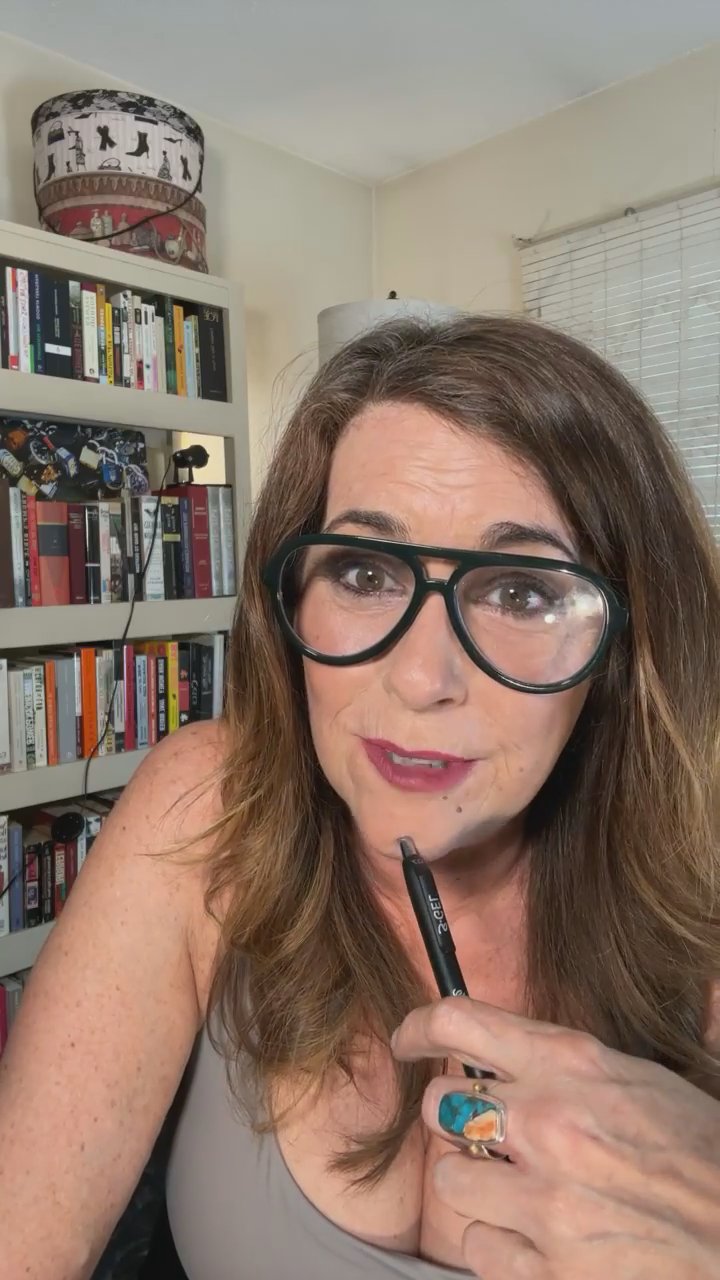
If you're tuning in live on the Cadre app or checking it out in the replay Monday morning, either way. When you've got someone in your life who is very regiment, very controlled. But then you throw into the mix that there's a new marriage and one of the chill.
Tiffany Norton: Just getting started on Comedy Central. Just gonna bring you into something personal this week that I want to talk about. If you're tuning in live on the Cadre app or checking it out in the replay Monday morning, either way.
My stepfather passed this week and it's got me thinking about stuff. I am late diagnosis neurodivergence, attention deficit disorder and cptsd. This is my first experience with losing someone in the family who was like a parent. But I'm noticing that my grief in and around this one is a bit different.
When you've got someone in your life who is very regiment, very controlled. But then you throw into the mix that there's a new marriage and one of the chill. Both of the children that you're of, the woman you're about to marry are neurodivergent. It's very difficult for the marriage to survive those types of situations.
When I got my neurodivergence diagnosis two years ago. There's an unpacking of the past. And it's messy. Maybe the reason why I'm not having such a reaction to it is because I'm just kind of at peace with it.
A doctor introduced a term I hadn't heard before called cold empathy. Cold empathy is different than non empathy or lack of empathy or hyper empathy. The purpose is to extract information. Empathy moves on a sliding scale.
In grief and dying and people passing on and whatever, you never really get the reboot. These are all fantasies, at least for me, that, that I cooked up in childhood. I felt this way in my last work relationship. It was hard to move on.
Amara: What do you do when you suspect a toxic work relationship? She says document everything you do for the person at your work. This sends the message that people are keeping score. Amara: You can break up with them in a weekend.
Comedian says his favorite actor of all the actors, living or dead, is Jack Black. He says his first date didn't work out because he didn't want to keep explaining himself. His answer for his favorite question: fishing expedition.
All right. Well, I hope you guys enjoyed that. If there's anything that's ever going on in your guys's life, any topics we touch on that you would like me to circle back to, I'll listen to that too. Have a great week.
Hello, the house. It is Sunday. It is comedy centered. It is. I, Tiffany Norton. How are you? Hope you guys are having or have already enjoyed a good weekend, depending on when you're hearing this. If you're tuning in live on the Cadre app or checking it out in the replay Monday morning, either way, just gonna bring you into something personal this week that I want to talk about. Hey, welcome on in, guys. Come on in. Emily, Mafi, everybody. Hey. Just getting started on Comedy Central. I'm going to talk about something that I don't think I've ever really talked about on Comedy Centered before, and that is grief.
Yeah. Like, I know there's a lot of people that are grief experts. I know there's a lot of people on the Cadre app that discuss this more than I do. But the reason why I'm bringing it up is my. My stepfather passed this week and it's got me thinking about stuff. Now. Let me just say this. First of all, I'm fine. And I don't, you know, I don't mean it like it doesn't matter. I just mean it like I'm fine. My stepfather was 99 years old. He made it to his 99th birthday. 99 days and 99 years and 3 days.
He made it. But I will say I. My parents are both still alive, so this is my first experience with losing someone in the family who was, you know, like a parent. But I'm also noticing that my grief in and around this one is a bit different. And I. And at first I was kind of attributing it to the idea that maybe it's because, I don't know, he's a step parent, you know. Yeah, that's right. Mafi. Mafi. I hope I'm saying that right. Let me know if I'm way off. Yeah, that was quite the lifetime. Right.
And I. And I've really had to try to, over the years, put that in perspective. My mother is 17 years younger than my stepdad. Right. So she's in her 80s. But he came into my life on the heels of my parents divorce. And so he's been my stepparent for basically 40 years. Yeah, long time. And I guess I thought I'd feel more at his passing than I currently am. But also, he and I did have a very. He and I got along okay. We had a contentious relationship for sure at times. However, for those of you that are new to comedy centered, what I'm usually talking about is neurodivergence and the fact that I am late Diagnosis neurodivergence, attention deficit disorder and cptsd.
Now my brother is also neurodivergent and, and you know, in the 80s he was born in 79, but in the 80s they didn't really diagnose a lot of this stuff. But it was even clear, my brother's younger than I am, that he definitely was, he was, he was a lot different than all the other kids. That was very plain, very clear. Right. And although I was able to mask, that's a term we use a lot when we're talking about neurodivergence. Right. And if you haven't heard that term before, masking or putting on a mask is kind of like what it sounds when you are worried about fitting in.
You don't really know exactly what's going on yet. So you kind of put on this social mask of oh, everything's fine or oh, I didn't know that or whatever. Right. You're kind of play acting. But my brother was never has never has never been able to mask. You do not meet a phony version of my brother. You meet my brother, you always meet my brother. But the thing is about neurodivergent kids, a lot of times we suffered a lot of trauma with the non diagnosis just because neurodivergence depending on and it is a spectrum.
But neurodivergence looks a lot like being disrespectful. It looks a lot like being disobedient. It looks a lot like the things that older parents and older generations didn't, didn't care for in, in children's behavior. And I've said my stepfather was 99. He's not even the same generation as my mother. My mother was a baby boomer. He is of the, he's from the, the last generation or the silent generation because he was born in 26. When he was born, he was born the same year as the Queen of England.
So when she passed away, I called him and he was like, oh yeah, I remember when it was the other guy, he was old enough to remember when it was her father that was the King of England. Right. So I was for whatever reason able to mask enough. I tried to always frame it in the sense of this guy is coming in as a step parent. He's a lot older, he's very old school. But also too, it was not long into my parents marriage that my brother, the relationship between my dad and my brother or my stepdad and my brother came to a head.
He couldn't get him to behave. My brother Couldn't get himself to behave because a. We now know he's schizophrenic and, you know, on the spectrum and all the things. Right. We didn't know that then. And so my brother went to go live with my father permanently, and there was still shared custody of me as a kid. So I went back and forth to both houses, but my brother only stayed with my father. So my brother learned, like, if you don't mask, and I learned if you don't mask, you get sent away, you get rejected.
And I don't think I ever sat down and thought of it in those terms or in that way. But we pick up on stuff. You know, you notice that there used to be another person at the table with you at this house. Right. And so it's kind of a tricky subject. And also too, you know, there was another kind of a demarcation when, when they began the relationship. I was. It was like I was 12 or 13 or whatever. But they got married when I was 15, and when they got married, they waited until I was at my dad's house in a way, and everybody was out.
And they went out of town and they got married and didn't tell anybody. They didn't invite any of their kids. He had three kids, my mom had two. None of us got invited. It was like their marriage and then, you know, the rest of it. And, you know, now that I'm in my 50s and I've gone through a divorce and I have a child that, you know, it used to seem very simple to me that they were wrong, that they should have invited all of us, that they should have done this or they should have done that. And maybe.
But I'm the one who has to figure out what my real feelings are about. About this development. Because, you know, and it's. And so I, So I did the thing that you do in this day and age. I Googled, like, grief, like lacking grief, like a lack of grief. And, you know, the AI gave me some. Gave me some advice. But when you've got someone in your life who is very regiment, very controlled, and, and they do this for. For a reason, because it's worked very well for them throughout their whole life. Right.
But then you throw into the mix that there's a new marriage and one of the chill. Well, both of the children that you're of, the woman you're about to marry are neurodivergent. You don't know that. But. But the youngest one is very severe. And it's been told to me I haven't had this experience, but my friends who have autistic children, it's very difficult for the marriage to survive those types of situations. There's a lot of stress and a lot of pressure, and I cannot speak to it, and I will not speak to it because it is not my area.
Right. But sometimes when you, when someone passes someone you've known for a really long time and I, you know, I also consider too, like, well, he's, you know, he's 99. Maybe I'm not. Maybe I'm not feeling a lot of grief towards it because of that, or maybe it's just because, you know, we weren't as close, you know, and he was closer to my mom. I kind of always was. And that. And that's okay, you know, but he displayed. And one of the things, I guess what I want to kind of talk about is empathy.
If I tried to talk about this situation, if this had happened six months ago, three months ago, I would have had a very different presentation. Tonight. I have been doing a lot of work on sorting out and reorganizing what I'm going to take with and what I'm going to let go of my past. I got my neurodivergence diagnosis two years ago. Two, three, two. And at first it's. If you've never been diagnosed before and now someone gives you this label, it can be really disorienting because there's you. You.
You grieve the parent you wish you had. You grieve knowing the diagnosis maybe came sooner so that you could get the proper treatment or, you know, or what have you. Maybe you. I idealized there was this other path that could have been taken, but because of the neurodivergence not being diagnosed, it's not available all these things. And it seems like from. In my research that's. That's pretty. Pretty on par for most people's experience, is that there's an unpacking of the past. And it's messy. Just like unpacking, you know, you're pulling out boxes and you think you know, what's in the whole box.
And all of a sudden you get back down to the bottom of something. You're like, where did this come from? I don't even remember having this anymore. Right. It's a similar metaphor. And so I think maybe more so, at least in this moment, at least today, maybe the reason why I'm not having such a reaction to it is because I'm. I'm just kind of at peace with it. And also too. Yes. 99 years old, right. I mean, we knew, you know, like, it's, you know, it was, it was, it was. It's. You're never prepared.
It's always sudden. But also too, you know, he was. He was getting care, and it was, it was, it was going that way. Right. But what I plan to talk about also and touch on was empathy. Just the concept of. Of empathy. It was. I'm not sure who said it, and I think it's pretty gross that someone would say it, but whatever. But there was a statement floating around that someone. I believe it was a politician. It said something along the lines of, you, you're committing the sin of empathy. And of course, I can't interview that person or ask what they meant by that statement, but, boy, if empathy is a sin, I'm a sinner.
I'm the biggest sinner you're gonna ever meet. Because you know what? You're not gonna talk me out of empathy. You're not. I'm gonna try. And that's part of the neurodivergence. I'm gonna try to understand you. I'm gonna try. I might give up at some point, but I am going to try because I always wanted someone to understand me, and I wanted people to try to understand me too. And I think it's the least we can kind of do, right? But, like, I was doing like you, like you do. I was scrolling through my phone and this is when I was starting thinking about this empathy.
There was this doctor who was a psychologist, and I don't remember the name, I'm sorry. But he introduced a term I hadn't heard before called cold empathy. Cold empathy. And cold empathy, he distinguishes from empathy in this way. If I see you crying, if I see someone crying, I believe I'm empathetic. I know I am. But I see someone crying, I think to myself, they're sad, they're crying. I wonder if they need help. I wonder if I should ask if they're okay. Right? Empathy, cold empathy is something that is a tool that is used by people.
Empathy, kind of like most psychological factors and biological factors, it moves on a sliding scale. Some people are super over the top empathetic, like. Like they will cry if any animals die or any plants die or anybody's hurt. Like they are distraught by anything like that. The empathy is so real. Little kids are like that. Their hearts are so big, right? And then you can have people that have very little. It doesn't mean they have none necessarily, but they have very little. Just as someone might have a lot, right?
And terms get bantered around quite a bit. Narcissist, dsm, npd, blah blah, blah. Like I get it, right? But in the just simplest context, what I'm talking about is we all know people that are not super empathetic. If something bad happens to you, that's not the person you would necessarily turn to because they'd be like, well, serves your right, right? Cold empathy, though, is different than non empathy or lack of empathy or hyper empathy. Cold empathy is seeing that someone is sad, equating that with that person being vulnerable, and then calculating to themselves how they can benefit from that.
They can actually see the emotions. And we often describe or think of empathy as the ability to see or under. You know what I mean? Like to, to, to see someone else's emotions or feel someone else, else's emotions. It's very difficult to tell the difference. If someone's just listening to your story, listening to your vulnerability, listening to your share what you're talking about, are they doing it because they sincerely want to help or are they noticing that you're vulnerable and this is a good time to get information?
Maybe, you know, maybe you'll feel willing to like go out on a date with them or do something that maybe you wouldn't necessarily, or stay later at the bar or whatever that is, right? So cold empathy has a purpose. The purpose is to extract information. And so if you are dealing with a person or you suspect you may be that exhibits this type of stuff. Like they, they, they focus on you just so much eye contact, like they're, they notice everything. They're watching all the kind of stuff. That's one thing they, you know, they want a lot of information, they want to study you and that, you know, it can feel a lot like love when someone's so interested in you and studying you and they want to know where you are all the time and what you're doing all the time.
Like, oh wow, they really, really like me. And it can be, it absolutely can be, but it can also, you know, be this kind of a, kind of a deal and tying it back. I know it's kind of a leap to my stepfather, but when I was doing this cold empathy search, it's a little bit why it came around. One of the things that he says in this video is that he, he argues strongly against if you believe that someone has narcissistic personality behavior. Not saying everybody who behaves narcissistically. I'm a narcissist.
Hungry. Get out of My way, it's team me. You know what I mean? Like, I mean, you know, like, clinical, like, not just like, you're having a bad day. Right. Oh, crap. No, I forgot where I was going with that. But the. Dang it, now I forgot my point. But, oh, yeah, he said, do not offer them advice. Don't reject their advice. If they offer it to you, just go, huh, huh, huh. Okay, that's. Oh, okay. Like that. Don't reject their advice. That will antagonize them because they will feel that, you know, you think you're smarter than them and you don't need their advice.
And then they get all like, well, I guess I won't give you my advice. Right. But they also never, they say, do not offer to help them. And, and do not give them your advice either, because then that will send the message to them that they're in need of assistance, which they aren't, and that they asked for your help, and they certainly didn't, and they certainly don't need your advice. Right. And so when he was making that analogy, I was like, huh, yeah, that's, that's, that's also my stuff. Tattoo.
Yeah. Yeah. And, you know, as a lot of people say, he was of a different generation. Yeah. He was up two generations ago from me, you know, so I, I, I'll give it with that. But in we never. In grief and dying and people passing on and whatever, you never really get the reboot. You know, you never really get to sign off, probably the way they do in movies. Right. And often you're not gonna get the deathbed confession, the I was so wrong. I should have been nicer, I should have been kinder, all that kind of stuff.
These are all fantasies, at least for me, that, that I cooked up in childhood. You know, if you've ever seen the movie around Christmas time, A Christmas Story, Ralphie gets in trouble and he has this fantasy, this dream that, you know, he'd get poisoned by the soap his mom makes him eat for saying bad words. And then he'd be blind, and then they'd all really feel bad. Then they'd all, then they'd all feel terrible. And, you know, that's where some of these things kind of operate from because, like I said, that relationship began when I was in, you know, junior high and adolescence and that's so.
Okay, I'm gonna catch up on the chat there. Oh, you're right. Oh, thanks, Mafy. I felt this way in my last work relationship. It was hard to move on. Yeah. Yeah. Speaking of Work relationships too. I, this is something else. And I probably should do another video just on specifically work. When you've got a toxic work relationship like this that maybe you suspect. But there's this guy and there's a cool. I think it's called Diary of a CEO, I think is the name of the channel on Tick Tock or wherever you get your stuff.
Tick tock or YouTube, but Diary of a CEO, I think it is. And they have this guy on there and big wig, right? And he was talking very frankly about the fact that on more than one occasion he has had a sociopath working for him or he's had to work alongside one, or they've actually. Or he's actually had to report to one. And this, the guy was CEO, right. So we kind of figured out how to navigate around him. And I think it's brilliant. What he said you do is okay, so I'm sorry, Amara. What you do is every time the person at your work, you do anything for them, the minor is thing, the tiniest thing, anything you say, any conversation you have, even as simple as you, you're in a meeting and, and you hand them a bottle of water, you hand them a Diet Coke.
Here you go, here's a Diet Coke. You, Afterwards, you send them an email. Hey, glad, I'm glad I was able to get that Diet Coke for you. I will see you in the meeting at the second. Or I will. Or, or follow up on whatever that meeting point is. His, his, his strategy essentially is this. You want to convey the message to the person that you think is maybe a rival to you, maybe has some, some darkness to it. Maybe this is not a friendly work relationship. Everything. Every time you talk to them, there's an email about it and you send it to them.
You send them an email because that sends the message. Whenever I interact with this person or whenever I talk about something with this person, it's getting documented. They don't like that. They like studying others. They are very uncomfortable when you start studying them. Very uncomfortable. And it's a very professional way to flip it because if they want to go to your boss, it's like, I, I was just being communicative. I, I, what are they gonna say? I said I wanted to get him. I said I was glad I could get him that Diet Coke and I'd see him next Tuesday.
But document everything you do for them. Also too. This sends the message that because people are truly narcissistic, people that are truly self absorbed, which is even a better word, they keep Score. These are the scorekeepers, these are the people that tally. I did something for you, now you do something for me. And they keep a list in their minds, right? They've got a little book, they write you down in your, in their mind and they're looking for a day to collect on that should they want to, should they have need of it, right?
But when you start assuming that posture, they start be getting uncomfortable that you might do the same thing. Wait a minute, are they keeping score? Are they checking like I do? I better watch this person. You know what? That person, I want to stay away from that person. I have a feeling I'm not going to get my needs met from them the way I want to. I get the feeling I'm not going to be able to influence them the way I want to, you know, and so that's just a little. I thought that was a great idea.
I like that trick because documentation, documentation, we've all heard it cya, cover your a**. But this way it's a super professional way to do it. You're being really polite and also there's a paper trail now if they ever go and complain about you, it's like, I don't know why they're upset with me. All I do is send them super nice emails. They're. They're crazy. I hope that helps. I know you said that you had to move on from that work relationship so hopefully it does not happen again to you, but yeah, and work relationships, that's the bear of it because it's the relationship you can't get out of like that a lot of times.
And if you do, the employer will be fine, but you'll be screwed. You'll be screwed if you do that to yourself. You know, like, you know, if a boyfriend really makes you mad or your girlfriend, just that's the last straw. You can, you can break up with them in the, in a weekend. You can get your stuff out of there. At least most of it work, it's hard to detangle from. So yeah, my heart goes out to anybody who is dealing with that. I've had lots of. I, but I, but I'm a stand up comedian. I've been doing stand up comedy and radio for almost two decades.
I couldn't even tell you how many narcissists I've met. All of them. No, I haven't met all of them. I've met a lot. I've met a lot. But you know what part of that's okay too because you know, what are we supposed to do not have any ego. What are we not supposed to do? Think we're great? Come on, you know we are. We all are. It's not a competition. It really isn't. But in a capitalistic society, and especially in a corporate environment, boy, you know, the like, let's all get along team, let's go, everybody's a team player, blah, blah, blah.
Sure it is. Sure it is. That's what we all say. That's what, that's what you say in the conference call. That's what we. Yeah, in reality. Nah, nah, not in today's society. Everybody, everybody's in competition with everybody. And I hate to like make it that, you know, non pointed and just very sharp, but like, it's real. And you have to protect yourself. And you also have to remember if you find yourself in a situation where, you know, like, I went on a first date a couple weeks ago and I kind of felt like I was getting pumped too much for information.
It was, it was a lot of questions about me and where are you and what have you done? And this and that and the other thing. And I, and I was like, you know, I don't know anything about this person. I, I know me and I feel like I'm getting pumped for info. Right. So I started putting the, the question cannon. I was firing it back at him and I noticed that there was always a deflection in the answer. Oh, well, I just moved to Arden Hills. I heard you. You, you said you just moved. What's that like?
Oh, you said you have kids. I do. You said you have a kid too. How do you like that? You know, it was always pushed back and, and put it back onto me and I was like, you know, this feels like a, a fishing expedition. If you ever feel like maybe you're on a first date and the person you're talking to is an undercover cop. Could be someone who watches too many crime podcasts, or it could be somebody who is definitely trying to get some, some intel on you. I don't know. But yeah, it didn't, didn't, didn't, didn't work out.
Didn't work out. I didn't want to, I didn't want to have to keep explaining myself for the rest of the relationship anyway. Also too. And I mean, maybe I'm gonna isolate some fans here, but I'm just gonna go out and say it. His answer for his favorite actor, Jack Black. I mean, okay, but favorite actor of all the actors, living or dead, Jack Black. Anyway, he's funny, you know, as a comic, I got to give it to him that way. But anyway. All right. Well, I hope you guys enjoyed that. It was a little bit on the conversation talk.
But hey, if there's anything that's ever going on in your guys's life, any topics we touch on that you would like me to circle back to, things you would like me to elaborate on or things you just don't want me to talk about anymore, I'll listen to that too. But I'd love to hear from you in the forum or in the comments below and follow me on the, on the Cadre Sphere, the Cadre app. And also if you, if you catch this, you know, in the replay. All right, you guys have a good night. Take care. And as always, stay centered.
Navigating change is super hard. It's worth it. You're worth it. Have a great week. It.