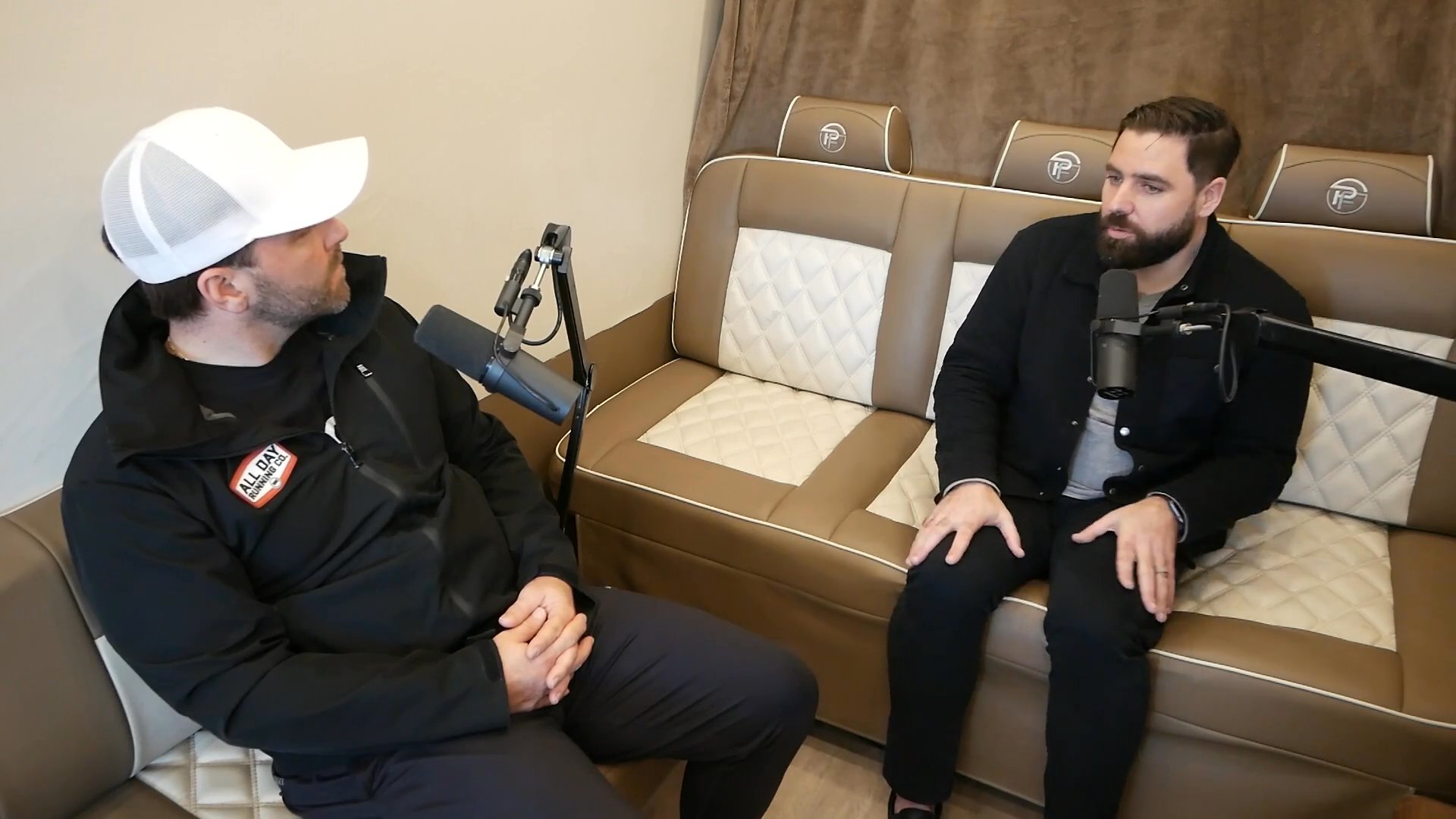
In this episode of Mental Wealth, we sit down with nationally acclaimed intervention professional Mark Hennessy as he shares his powerful journey of recovery. Mark opens up about his personal struggles, the pivotal moments that led to change, and how he now helps others break free from addiction. Join us for an honest and inspiring conversation about healing, resilience, and the impact of professional intervention.
Luke Wetland talks with one of his best friends, Mark Hennessy. Mark is a nationally recognized interventionist. He has been through a lot through his own recovery journey. What was it like playing for Mike Randolph in Duluth growing up?
Mark Hennessy grew up in Northern Minnesota as an average guy. His identity was the hockey player. His goal was to go to the state high school hockey tournament. He struggled with mental health issues and drug and alcohol addiction.
Mark Hennessy started partying after his senior year of high school. His confidence had been beat to an all time low. His parents pushed him to do a mental health assessment and a substance use assessment. Eventually, he enrolled in Saint Scholastic School.
Inauthenticity didn't escape the fact that, like, deep down, I knew I wasn't all the things I was projecting in the world. That carried through into relationships, and I carried through everything. Every once in a while, the real me shows up.
Late 20s, man. I had, you know, long term relationships were easy for me. Like every time I go in the bathroom, I'm snorting a pill. The only escape I had for kind of the guilt and shame I, I carried was using.
When did you kind of know, like, enough wasn't? Like, I knew enough was enough in my early 20s. But I still kind of used and kept going through that path. When was the intervention? What did it look like for you?
I became an everyday meth user kind of on accident. I was on a seven Month bender of every day, hiding it from my family. When I finally stepped back and got perspective, I found myself. Off the hamster wheel. I got to find a place where I could die.
"I really only had one choice, and that was to give this a shot this time where I was not gonna make it, " he says. The 30 day program gave him time and space from his last use. He says he learned in treatment that he will be an addict forever.
"I had great people around me. First off, I had a great sponsor. I had great friends who were all in the herd of recovery " Are you still close with those guys today? "Yeah "
Mark Hennessy: My admiration for you, Mark, is the space and the work that you're in now. He says his interest in behavioral health was born out of his own struggle. Sometimes it's just good to be seen, he says.
Mark: I work in crisis navigation intervention, family case management. He says his biggest job is to step into a chaotic moment for a family. Mark: It's the most rewarding thing I've ever done in my life.
Mark: I'm probably most proud of my family. I love, like I've, I've never in my life loved a job more or a role more than dad. I'm having a conversation with my kid about the effects of screen time on his brain. My goal is to give myself to them.
Mental health is just like physical health. If you go to the gym and you work on your physical health, it improves. Your mental health is the same way, man. Find your community man.
Well, I just want to end with Mark. Thanks for doing this and I look forward to growing like old with you. I have a feeling we'll have a lot of the audience doing it with us too someday. Thank you for having me buddy.
Foreign. We are live. Hi, my name is Luke Wetland. I'm the host of Mental Wealth. This is season one, episode two. I'm here with one of my best friends, Mark Hennessy. We've reconnected over the last call it two years and got to really know each other really well and went deep with each other through sauna, cold plunge, through life, through conversations, through business, you name it. Mark is a nationally recognized interventionist. He has been through a lot through his own recovery journey, which he'll be talking about today.
He is a dedicated, loyal husband and a wonderful father. And I love you a lot. I can't wait to talk to you today. But you weren't always that guy. You weren't always that guy. As somebody who had also had a knee surgery, you recently had your ACL done. Which one? That's right. I have my, I have my right one done. You had your right one done. And this brings us back to hockey in Duluth growing up. Yeah. What was it like playing for Randolph? Okay. Randolph was probably one of the toughest coaches that I ever played for.
Like a lot of things in life, I, I didn't appreciate what I had when I had it. I was not someone who, who recognized what I needed all the time. But Randolph was the type of coach that he got out of you what you didn't know you had. And so Mike Randolph, you know, is arguably one of the most storied high school coaches in the state of Minnesota. I think he's sent the most amount of Division 1 athletes out of Duluth east for hockey and otherwise. But playing from, I imagine there must have been a little bit of like this for a lot of players.
Is that true? Yeah. Yeah. I mean, I think he just won that, that he became the most winningest high school coach in Minnesota State high school hockey history, and, you know, is a relatively controversial guy. I can tell you, having played for him, it wasn't about who you were. It was always about how you played. It was always about how you performed. And I think for a lot of people, you grow up in a program, you play for the program, you pay your dues, you expect. There's an expectation that you're just going to be there.
And Randolph was like, no, like, you either earn it or you don't. You either play or you don't. And that mentality was fresh. That gave, I mean, guys like me, I, I he know my family was middle class. My family was. My parents didn't drink and go out with other parents. We weren't on the in Crowd So for a guy like me, it was like my dad always told me, whenever you get where you're going, I need you to know that you're the one who got you there. And Randolph, whether I liked him or not, gave me the opportunity to get there.
Got it. What, how would, how would you, what would you say about yourself as a 17, 18 year old kid growing up northern Minnesota? What was, what was your personality? What were you like? Were you, did you have social anxiety? Did you have some mental health things going on? Was that when you started to dabble with drugs and alcohol? What did that look like for you? Yeah, I mean, the hockey culture in northern Minnesota is, you know, it's something else. So for to answer all those questions in one, like, I, I had anxiety, I had a fear.
But ultimately I learned from observation that if I played well, people were happy with me. If I performed well and I pleased people, I didn't really have much trouble in life. And when I didn't play well or I, I didn't perform, it seemed like the microscope came out. Like, what's wrong with you? Is there something going on? What's happening in your life? And so forth. For a guy like me, it was never about finding out who I am, never about having my sense of agency. It was always about, I just, I just gotta do.
Like, I, I feel like I looked around the, the world and I was like, what's gonna make you happy? Okay, that's what I'll do, you know, and that, that's from what classes I took to girls I dated to whatever it was, it was just what makes you ha. What makes you world happy. It was never this internal conversation about, like, you know, who I am and what drives me and what motivates me and, and I feel like in a culture of Northern Minnesota, it was like I had one goal. It was to go to the state high school hockey tournament, go as far as I can, and life is going to work itself out.
Did those things happen? So I, I've shared this a bunch, but it was the last game. We won third place my senior year, state tournament, you know, Excel Energy center packed house electric crowd 20,000. Yeah, I mean, seniors. It's an emotional moment, right? And we're crying. One of my teammates, Tyler Landon, tl, he came up to me, gave me this big hug and he goes onto the next chapter, man. And in that moment, I was just floored. Like, I, my heart like skipped for a second because I was like, dude, I have planned nothing.
I planned nothing beyond this point. My goal was to play for Duluthies, go to the state tournament. And at that time, my senior year, I had no team lined up for next year. I had no college lined up for next year. I had done nothing, man. My sole focus was to get to that point. Was your kind of wrapped up in that, too, entirely? I mean, at that point, I was, you know, I was. I excelled at. I excelled at hockey. I was an average guy. I didn't try at school, but I was average. And my identity was, you know, Mark Hennessy, the hockey player.
And, you know, it was almost like overnight it changed. Yeah, changed. And I went off to, you know, I went to camps and I started playing with, you know, kids at a higher caliber than me. And it was like, dude, I'm not a. And everybody's good there. Yeah, I'm not at the top, like, just being. Just showing up. My talent is only going to get me so far, and my work ethic, that. That can. That can get me there. But, like, these guys are all good. It's. It's interesting that you talked about that story with tl, Your buddy TL I just.
We just wrapped up. I was a tennis player back in the day. You know that. Yeah, but we just. We just wrapped up State tournament. I was a sophomore, and I was playing with a senior at the state championship, right. We ended up losing, and it was just us two on the bus back home. And I'll never forget, he was a senior, I was a sophomore, and all of a sudden, we're halfway home, and he just started crying. I'm like, what's up, man? Steve, what's going on? He's like, that's the last tennis match I'll ever play in high school.
And. And it just. It, like, it hit him then. But me as a sophomore, as a 16 year old, like, I went through that identity path, and I heard it, like, I saw it, right? And probably your previous years as a sophomore, junior at Duluthies, like, you probably didn't have that moment or have that senior or have somebody, like, be vulnerable and open and real and raw with you. But it changed my whole path to realize, like, this isn't the end of the road for me. Like, I have to figure out what I'm doing next.
Am I playing college? Am I going off to school? What am I going to do? So I'm very grateful that we lost and it went through that path, and I'm so grateful that he showed up that way. And I've talked to him about this so many times. I'M like you, you changed my identity path without you even knowing it. Yeah. Otherwise I would be exactly where you were, graduating that moment, going, what's next? But so speaking of what's next, after school, where did you go from there? Right, so graduated, graduated off Duluth East.
Then what's next? Yeah, graduated from Duluthies, and I bounced around, went to a junior A team, dropped down to a junior B team, dropped down to a junior C team, kind of bouncing my way back from, from Texas, all the way back to Duluth, Minnesota, which is where I was from. And it was probably a year and a half after I graduated. I mean, by this time, you know, I was fourth, I was third, fourth line player, not excited about it. Everywhere I went and my sole purpose became like, oh, I, I can party, I can party.
I learned that, like, right after my senior year. Identity lost. I started partying. Felt good. Felt good. Saw all my friends who decided to go to college. I, I, I'd come home at Thanksgiving break, Christmas break, and it was like, they're telling me about how they're being intellectually challenged, and I'm like, I sat around either on a bus or at my billet house and we chewed tobacco, played video games, went to the gym. Like, I'm, I was living this very neolithic lifestyle. I just like, I just, I mean, there was no intellectual challenge for me.
It was just like, work hard, play hard, that's it. And then I showed up back in Northern Minnesota. You know, my confidence had been beat to an all time low. My identity as a hockey player had been kind of stripped at that point because I was just, you know, I was traded around, I was moved around. It was like, I'm, I'm, I'm just a, a puzzle piece at this point. My dad showed up at the junior team I was playing and, and I had really, I'd started to dabble in some pills at this point, you know, some pain medication, stuff like that.
And my dad showed up. I got in a fight in the game on one of the, I smallest player, probably smallest player on my team. And I get in a fight during the game, totally lose my cool. See my dad after, and he's just looking at me and I'm like, skinny and I'm, I'm, I'm not myself. And he was like, you're coming home. Like, I'm not gonna fund this anymore. I'm not gonna put this on. You're, you're coming back home. And so I came back home. And that was like my, my family's first Crack at like an intervention kind of.
I mean, really, they just like, they pushed me. They're like, you need to go do a mental health assessment and a substance use assessment and you really need to get after this. Was this like mid-20s? Yeah. Right. So I totally breezed over the day before I left for my first junior camp, I got a dwi, right? And I, I, I, I pulled into the holiday station at the bottom of the hill in dut there. Cop pulled me over, license plate light out. He pulls up to the car. I was like, I'm Mark Hennessy. He's like, I don't care.
I was like, oh, my God. And I thought he was gonna just park my car, drive me home. And I, I had him that close, you know, talking him in circles. And he called my parents in front of me and he was like, yeah, I'm giving Mark at dwi. So I showed up to my first junior team with an inability to drive. I had to ride with everybody. And the most embarrassing moment was when my parents came down and everyone was calling me by my nickname. And my dad goes, is your nickname Dewey? Because they, because I had a dwi.
So they started calling me Dewey. And my dad was, I've never seen him so embarrassed. I thought it was funny. I was like, yeah, that's what we do. We party hard, we get caught sometimes, whatever. And so that started it, man. Like, my drinking and my consequences really started to pile up all through juniors. And so I rolled back about 20 years old, back to Duluth, and I enrolled in school at Saint Scholastica and kind of started to buckle down, lied my way through a Rule 25 assessment and, you know, had some LADC tell me that, you know, I've got a real, real well rounded perspective on substance use and I'm sound like a social drinker.
And, you know, I didn't tell her about all the weed I was smoking. I didn't tell her about the pills. It was just like, I drink on the weekends, you know. I was just going to ask you think you're pretty good at bullshitting back? Oh, it, well, yeah, man. I mean, again, my goal wasn't to be like, authenticity was out the window because at, at the point I came back, it was like my whole purpose in life was to try to figure out what you wanted from me and provide that for, like, it wasn't about me being authentic and like having this intrinsic sense of self.
It was like, can I get you to like me? And whatever I have to do or say to make that happen. I'LL do it, even if it totally compromises my core beliefs. And so lying was like, that's a part of the deal. So if I thought that you wanted me to not have a problem with, I certainly wasn't going to admit anything. You didn't know. Right. So if you didn't know about pills or you didn't know about the weed, it was like, I'm not. I'm not doing that. Not going to tell you. And so I buckled down. Like, in that case, I was like.
I battened down the hatches a little bit. I retreated back to the more social things where it was like, okay, everybody in college is drinking. And so I enrolled at Saint Scholastica, attempted to go back on the hockey team there, and that wasn't a great fit. Now it just wasn't gonna work. And so I focused on school. School. School come easy for you? Yeah. Yeah. I mean, it wasn't an. Wasn't an effort for me to do that, to get good grades or. You know, the hardest part was showing up, to be totally honest with you, because I just.
I just want to go have fun. Like, if I showed up, I had to perform. I had to figure out what the teacher wanted. I had to figure out what the person in charge wanted so I could make them smile and make them like me and do the stuff. And it was like, I'd rather go party, you know, I'm naturally good at that. Takes no brain power, and it's what I do. And so really, it was like I. I hid. I hid these whole portions of myself, you know, no one knew. Right. Some friends had an idea. I really started to struggle, I would say my second year of college at St.
Scholastica, I started to struggle. You know, Weed. I had started selling weed in the dorms, and I was drinking like. Like a lunatic, you know, way too much. And I was embarrassed because we'd go to UMD games, and I was watching guys that I had come up playing with, and they're out on the ice. Then you know, you're better than them. I mean, at the time, yes, I was like, oh, my God, I'm better than that. Like, I remember kicking his a**. But, like, the reality of the situation is I knew, like. Like, the inauthenticity didn't escape the fact that, like, deep down, I knew I wasn't all the things I was projecting in the world, right?
And I carried that with me all the time. People are like, what's all the guilt and shame for? It's like, dude, I. I I. I lied about who I was, and I knew it didn't matter if I tricked people into believing it. Like, I had to carry that guilt. I had to carry that shame of knowing that I. Every time I lied, I was telling myself, like, who you really are isn't good enough to impress this person or for them to like you, so you better change. And that was just like. That was ingrained in me so hard, and I don't know where it came from.
I don't know. Like, there's not a fault finding in that. It's just at some point I picked that up as, like, the way I operated. I, um. And that carried through into relationships, and I carried through everything. And. And when I really started to struggle, I went to a party at the dorms. Some kid had given me some Adderall. And you know, at this point, you know, weed, alcohol, it was tough. There was an incident with a bunch of friends where we went to a cabin and I had, like. Was the most drunk person there.
And I remember leaving there, going like, I'm. I'm never gonna do that again. And it was like clockwork. The next weekend, this kid, like, gave me some Adderall at a party. And I didn't get, like. I drank as much as I wanted and I didn't get drunk. And I was like, this is. This is perfect. I'll never. You're going days, like, right? Yes. Friday, Saturday, Sunday, type of thing that lean into Monday, Tuesday. Well, at the time it was like, we do weekend warrior stuff, right? But then Adderall again.
Adderall hit the scene. I think I started snorting Adderall like the first time I went to a doctor. A week later, convinced the doctor to give me an Adderall prescription, and away I went. And I was snorting Adderall pretty much all the way through my 20s, you know, and there was. There was consequences in all of that, man, like from job. Job loss. Oh, yeah. Like, would you consider yourself kind of like a nomad with jobs, just kind of job hopping or. What did that look like for you too, then? Dude, I had like a two year cycle.
I. Like, my shelf life was about two years because then they would catch up to it. Yeah, I mean, the real me, like, I would tell these people whatever I had to tell them to get them to like me and hire me. Like, I could get as many jobs as I wanted. And then undoubtedly the real me shows up. Every once in a while, the real me arrives and people are like, who is this? Like, because you said you were this, this, this type of guy and this is who just showed up at the door and it was like, this guy's full of crap, you know, and on the other side of that coin, here's me showing up honest and authentic for the first time ever to these people and getting rejected.
So I'm going, told you so. Yeah, you don't want the real me never looking at how toxic that whole process is of lying and then arrive, you know. So during that time, did you have a long term relationship with, with a woman? What was it like with your, you know, family, etc during that time for you? Like late 20s? Excuse me? No problem. Let's see. Late 20s, man. I had, you know, long term relationships were easy for me. I've always kind of been more of a long term relationship guy. I wasn't, I wasn't like a serial date or.
Yeah, I didn't, I didn't want to have temporary stuff. Like I, I wanted people that, you know, I think for me the idea was like, someday I'm gonna find someone I can go deep with that will know the real me and love the real me and accept the real me. And so I had, I had a girl that I had dated on and off through high school who I later ended up marrying. And then there was another long term relationship for about three or four years in the middle there. And that poor girl, like, you know, she basically witnessed early stage alcoholism, drug addiction, and you know, again, no one ever, I, I never shared that, right?
I never was like, hey, let's date. And by the way, I have this, this is drug addiction, right? Like every time I go in the bathroom, I'm snorting a pill. Like, didn't matter. Even if I had to go to the bathroom, I was still gonna snort a pill. Like, if I had a spare moment, I was gonna level up, so to speak. So when undoubtedly, you know, something would happen and they'd find out, right? Like the puzzle pieces would come together and they'd be like, oh my God, this guy's full of crap. I wasn't, you know, I wasn't an angry guy.
I wasn't abusive, man. I was just this emotionally broken guy who had no real sense of identity, right? I still was like, I'm a failed hockey. That's it. Failed hockey player. I have no clue what I'm going to be successful at ever again. And really the only escape I had for kind of the guilt and shame I, I carried was, you know, using, man. And then I would get in trouble. I get a dwi or I'd get caught with wheat. You know, I'd get. There'd be a consequence that would cause me to not be able to do.
Like, if I got dwi, I couldn't drink for a while or smoke weed, but I could. I had a prescription for Adderall, so I could do Adderall and that, you know, really, all of a sudden, my. My equilibrium was like, you know, I was. I was drinking at night so I could sleep, and then I'd wake up and do Adderall and smoke wee. Then when you take my. Take my ability to. To medicate now, I'm just. You're. You know, I'm just snorting Adderall and I'm gone all day and maybe two days, three days, and then my mind atrophies and my body, you know, all of a sudden, like, I'm not sleeping right.
I'm doing damage to my brain. I'm not fueling my body properly. I'm not drinking water properly. It's just, like, typical addict stuff. I'm not taking care of my basic human needs. The only thing I'm serving is this addiction. Like, I'm just feeding the beast, and rightfully so. I'd go take a p*** test and it'd be fine because I have a prescription for it, and my doctor never checked on me. Doctor never was like, hey, man, you've. You've refilled your prescription 10 days early the last year. Something going on.
It just was me going. And it's not their fault. Um, again, I was great at maneuvering around. I lost it in an airport or I lost it here. Someone took it or, you know, I always had a great excuse and I always sold it. So, yeah, I mean, it was. I was just getting by, man. And when did you kind of know, like, enough wasn't. That's relative. Right? Like, I knew. I knew enough was enough in my early 20s. Yeah. I knew enough was enough in my mid-20s. I knew enough was Enough in my 30s. Yeah. But I still kind of used and kept going through that path.
But when did you know, like, this was something or there was a. Yeah. And, you know, again, we talked in your introduction of, like, the interventionist, like, when. When was the intervention? What did. What did it look like for you? Of, like, this is when change happened. Yeah. So first glimpse, you know, gal I had dated on and off through high school, we got married. During our engagement, I had a really, really epic fail. Our engagement photos. She had to get me out of jail on a Sunday for a DWI that I got, and she had to get me out of jail for pictures.
So I mean, I just remember. So that was your second dui? Yeah. So second dwi. Not a really good situation for me. And I knew like, okay, this is not good. I need to find a way to not have these consequences happen again. But never in my mind was it like, you know, for a normal person, when drinking or drugging, drinking or let's say recreational drug use becomes an issue, a normal person is like, I shouldn't, shouldn't do that. I'm just not going to do that. Right. For me, it was like, how can I not get caught?
I just got to not get caught again. I got to get smarter about it. And so, you know, we had already sent out invites. We had already done this stuff. Our, our marriage was just this, you know, we, we had decided at that point, like, we're gonna do this. I remember we were arguing like crazy beforehand. We're like, we're gonna, we're just gonna go, we're just gonna get married. We've already invited people. It's gonna be too hard to save face. And, and we did. And in the first. And then when I had court for that dwi, they really, like, kind of threw it at me.
There were some other instances that came up, you know, with, with drug use in the interim, and they were like, you're going to be on felony probation for three years. And so for three years, I didn't drink. I used drugs. I mean, I, I stayed abstinent out of the fear of consequence. Could you still use Adderall at that point? I couldn't. Right, because, because the, the, the, the, the, the cat was out of the bag, right? Like, everybody, everybody knew that, like, I was abusing my Adderall. Everybody knew everything.
And for me, it was like I wanted to get clean. I knew I needed to get clean, but I was so afraid of getting in the bath, you know, I was like, I'm just not going to do that. And so three years of abstinence went by. And then I remember like clockwork. It was the day I got off probation. My now ex wife was like, you know, and we didn't know what an alcoholic was. We didn't. So this isn't like a knock on her, but I remember she was like, don't you think if you just don't do drugs, like, you can have a drink?
And drinking was kind of a cultural going to the bar, hanging out there way of life. And I remember my first drink we went out and came back home, and I remember cheering like nothing happened. And that started. What I would say was, you know, I had three years of total abstinence, no program of action, no nothing. And all of a sudden, I had one drink. You know, the allergic reaction, the obsession of the mind. And all of a sudden, it was like I was finding excuses to drink, how I drank, changing up the amounts and the time.
You know, at one point, I was a wine connoisseur, I was a craft beer drinker. You know, I was doing whatever I could to pacify. And then, without a doubt, I couldn't control the amount I took, and I couldn't control when I stopped. And so it was just a matter of time until it was like people were complaining about how much I drank and how long I drank and how drunk I was. And so I started sneaking some drugs in there to try to. You know, I wanted to party, but I didn't want to stop. Stopping wasn't an option.
And so that was really the beginning of the end, man. I started some drugs, landed in northern Minnesota with a really bad drug habit again, two every two years. Changing jobs still, you know, because at some point, everybody was doing it wrong. And as my sponsor now would tell me, like, they've been successfully doing it wrong ever since I left. But, you know, at the time, I was like, this place is. They're going under. They're doing it so bad. The only difference was I left and I. I wound up in Northern Minnesota.
Adderall wasn't an option, and a guy that I worked with, he. He had offered me some meth. Does that just hurt to even kind of like, just say the words? Hurts on a multitude of levels, man. That guy, his name's Benji. I'll get to him, man. He. He's. He's dead now. Yeah. He became my. My buddy. You know, we were using buddies. He was also bro. You know, lost people find lost people, man. And we became brothers like that, man. And he followed me from work crew to work crew. You know, I was working my way up in construction again, lying, hiding my drug addiction.
And the real this is it situation for me was, you know, I became an everyday meth user kind of on accident. And I had written out this plan to basically titrate myself. You know, I was so high one weekend, I just wrote out, like, I can't do this. You know, I'm gonna lose my teeth. I'm gonna lose all. Like, I can't be this right. And I was on, like, a seven Month bender of every day, hiding it from my family. Everybody could see the mental breakdown, the physical breakdown, but I was just like, in.
In your. Your wife at the time knew this was happening or. No clue. No clue. So good at hiding it. Gaslighting. It sounds awful to say. I wasn't like, oh, I'm gonna gas. I'm gonna gaslight this part. Like, the natural human response when you're a slave to your addiction is like, you dude. It in addiction is like this live beast. Like once you let it out of the cage, you lose control of it. And it will do anything to protect itself. It is its own parasitic organism that just like it grows and adapts.
And it was like anybody who came close was like, oh, I. I found a way to get them out of the way, right? And I found a way to isolate and pocket people. And I couldn't see it in the moment, but when I. When I finally stepped back and got perspective, it was just like this horrific picture of like, I. I did all that. And so I found myself. I was so upset with life. I had made a few. I was suffering from some suicidal ideation again. I was going up for four days. I was not eating for two days. I was not very little sleep, right?
So mentally, you know, the game wasn't lost, but it was not great. And so I woke, I. I fell asleep. I had accidentally left my drugs out, which was not a, like, big occurrence. And my ex wife now was running around looking. I mean, she was. She was trying to figure out what was going on. It was a pretty desperate situation in our house. And she found the drugs. She came outside and she was like. Came barged down, woke me up. And she was like, what? I mean, it was just this moment of total chaos.
And she's like this. What is this? And I remember my. My only reaction was like, what is that? Who says that? You know, like, it's not mine. I don't know how it got in all my stuff, but the jig was up, man. And again those puzzle pieces filled in. And for her it was like, okay, I see what's going on. To her credit, she was like, get out. Never come back. Called your parents. Called my parents. I remember screaming in the driveway, thinking of my friend Benji, who was. He was an IV addict. I was not remember screaming, there's guys that shoot this stuff.
I'm. I'm not even that bad. Not that bad. Later it was pointed out to me by, you know, mentor and friend Patrick. He said, so you were just screaming to let it get worse. And I mean, I had a. I had a place I was going to take my life. I had a spot. I mean, it was. It was to the point where I just, like, I couldn't. When I found that note about how I was going to titrate, that was it for me. It was about a month after I wrote it, and I had done nothing. And I realized, like, I couldn't quit even if I wanted to.
I am. I'm stuck and I don't know how to get unstuck. And the only way, like, I just need to get off. I need to get out of here. Need to get off the. Off the hamster wheel. And I didn't know how. And so for me, it was like, this has got to be it. I got to find a place. You know, not to be graphic, but it was a place where I could die and it wouldn't be messy and no one would find me. And maybe I remember googling, like, if your body sits long enough, do drugs leave your system. Because I didn't want people to know that I was a drug addict again, you know, so there I was, you know, my parents took me.
I wasn't allowed in my house. And I called the only person I knew that had gotten sober. And I asked him what to do, and he had no reason to pick up the phone, no reason to answer, and told me about this place down here in Wayzata, Minnesota. It's like, if you're serious, do it. I don't know if I was serious about, like, getting sober, but I was serious about, like, not dying, you know, And I knew it was only a matter of time, you know, before I lost it. So I showed it, you know, I. My parents were like, we don't know, you know, So I.
I sat at our cabin for a couple days and detoxed. And then they admitted me into treatment. It was a 30 day program. And that was kind of it. I had people come into my life at that point that were like, hey, man, you need to. I guess the best way to put it, you need to shut up and listen, you know, and learn. Yeah, listen and learn. And I love to say, like, man, it was go to this 30 day treatment center, because that's what did it, right? But, like, that gave me time and space from my last use, and it gave me access to a community where I could.
I could see that maybe it would work. Like, if it worked for some of these people, like, maybe it could work for me. And, like, all I needed in that moment was Like a maybe I needed a maybe it would work for me. Became crystal clear to me early on that, you know, my possessions were not mine anymore. My. My marriage was not going to be coming back around. And, you know, it just. It became crystal clear to me that I was, you know, that I. I really only had one choice, and that was to give this a shot this time where I was not gonna make it.
And so that's. Yeah, I mean, like, that's how. That was the beginning of the end for me. Knock on wood. That. That was. That's the end. What I've learned about this and what I didn't know before is, like, I'm not. I think I said earlier, like, I didn't want everybody to know that I was an addict again. And it was like, oh. I learned in treatment, like, dude, I'm. I'm. That's never gonna go away. Like, I am forever. I'm forever going to be an at. Like, that's gonna live in me, and I have to treat what I have right.
But the acknowledgment. Step one for me was acknowledging that I wasn't using about my life circumstance. Man, I'd love to say that I was only getting high when my marriage wasn't good or when my relationships were broken or when hockey wasn't a thing or when I didn't, like, whatever, but the reality was, dude, I got. I got high on sunny days, I got high on rainy days. I got high while life was good. When I was flush with cash, when I was broke, I was getting high because I wanted to get high. I was get.
I was trying to get up, down, left, right, anywhere but alone with myself. And that was, like, a huge revelation for me that, like, oh, my. I don't outgrow it. I'm not gonna, like, mature out of this thing, so I better figure out, like, what. How do I treat it? How do I treat what I got? And that was just. That was like, the. The turning point for me. So it became this. Follow some instructions, you know, lay it out, you know, in the rooms. We say, like, rarely have we seen a person fail who's thoroughly followed our path, right?
And I was. And I remember a guy stopped me really early on, and he's like, can you just do that? We say it at the start of every meeting, right? And it's like this reassurance that if I. If I just stay where my hands and feet are and stay on the path. Like, I think the hard part is life happens, right? Like. Like, life happens and you know, you, you know my, my history. I've also worked in the space and we've had a thousand plus individuals through our programs now over the years, years. And it's easier said than done to follow the path, stay on the path.
I take this back. It's, it's easier when life is easy, but then when it gets hard because right now you're six months in, you're one, one year in, you're down the path of 18 months and a conflict at work, stress within another teammate, dealing with marital issue. That's when you know, I always hear the case of the. And then I have went back to. Did you have those moments in your six months, year that you can just recall like yesterday, like I was close? Yeah. Did you ever have that? Yeah, man. I, I, I had a, I had a lot of those moments, man.
I'm, I'm not a perfect person by any means. I made so many. If doing it perfectly was the, the doorway you had to pass through, then I would not be here. But it's like I, I just did, you know, I had great people around me. First off, I had a great sponsor. I had a great recovery house that I was living in. I had great friends who were all in the herd of recovery and they were like, we were doing it and we're, I mean we still do it, we, we're still doing the deal all the time like. And it, I'll never forget, I was, I was, man, you're, you're in sober living.
Let me just paint the picture of what sober living looks like. Because I was a guy, owned my house on a lake, northern Minnesota. Had a boat, had a truck, had a welding shop in my garage. I had a pole barn with a bar and a tv. Like I had stuff, man. And I didn't just have a little. We, we had 120ft of lake frontage right across from the bar. We were partying, doing sound as every weekend and all of a sudden there I am in treatment. Then I've got only one choice is to go to a sober house. I get there and they're like, you can have this bed in the corner of this shared bedroom, right?
So I got this little five by five space. It's a five by five. And I remember I left the house day one to go meet my sponsor down at Stogies on Grand. He'd be like, let's go have a cigar. And I met him there and I was just like, I deserve better than this. You know what I mean? And like, they. They say when you get well, the first thing to grow back is your ego, right? And for me, it was like, I deserve better than, you know. And he's like, do you. I mean, you pawned it all to pay for the party, so it's gone.
And, you know, I think if you take care of that 5 by 5 space and you make it the best 5 by 5 space there is, God will bless you with a 10 by 10 and a 15 by 15, a 20 by 20 and 30 by 30. You'll be back in the house on the lake in no time, and you're living with 15 other guys, you know, that are, you know, it's not. It's not a camp for overachievers. You know what I mean? It's. It's like, you know, the camp for the emotionally disturbed and dejected. But we're all going through it together. We all have family issues that we're going through.
We all have people outside who can't quite understand what happened, but we can. Like in the house, we could. And that became this thing. Are you still close with those guys today? Yeah. Yeah, man. I mean, I got my. My four guys, and it's because of the way they move their feet, man. I see. You know, I know they're doing the deal because I see him at meetings. I. I know they're doing the deal because I bump into guys who are like, oh, I'm sponsored by so and so, or I know they're doing the deal because the conversations we have, you know, they speak my language.
And so it's great. I mean, my best friend Christian, I mean, I remember I was trying to figure out, like, what's this. What's this recovery stuff all about? Because at the start of my recovery journey, it was like, I need to make my life better. My life has to get better. They say, you know, an alcoholic choir sounds. Me, me, me, me, me, me, me, you know, and so there I was doing that, and I was struggling really bad, man. Every. Every couple times I'd reach out to my ex wife. It was like, you're so, you know, whatever.
Not. Not great conversation. And Christian got a call from a treatment center down in Oatana for us to come speak. And he had a date with his girlfriend at the time. He was trying to get, like, back together with his girlfriend. And I never forget, he was. He goes, yeah, we'll be there. And he's like, you need to come do this. He called his girl and he's like, I'm not. I Can't come. I've got. Got to go carry the message, you know. And I'm like, what is, what is with this guy? And he just looked at me and he's like, this is what we do know.
And we drove the hour and a half down to Oatana. We went in and I was like 35, 36 days or was like 45 days sober. And we, we just shared our story in this treatment in this co ed treatment center called Boer. And one kid came up to me after the meeting and was like, dude, I needed to hear what you said today, man. I needed that. And I'm never going to forget the way I felt because I. I've been really high before and it. It didn't hold a candle to that. It did not hold a candle to, to knowing that like all of that hurt, all of that pain, all of that BS was now somehow going to be useful.
And it has it like that point pivoted. My whole life, like my, my whole purpose became it's okay to be me. Like, I'm. It's okay. I don't have to be. I mean, I carry shame and guilt, but I don't have to be ashamed. I don't like, I don't have to like, walk or I don't have to kick rocks with my head down anymore. Like, it's okay to have struggled and it's okay to currently struggle and it's like, it's all okay. The hero's journey looks different for everybody, man. Yeah, you know, some people, it could just be, you know, learning through dyslexia.
Some other individuals could be through, you know, in our case, alcohol, substances, you name it. Some could be through marital affairs, whatever that looks like. But when you're low, you're low. And when you come out, to me, this is like where it's like you can share the change with somebody else. And I think that's where you're, you know, you're at. My admiration for you, Mark, is the space and the work that you're in now and what you're doing and how you're doing it, man. I just, I think it's amazing.
Well, I mean, I, I love it even just the way that, that I got to reconnect with. With you. I was at, you know, I was at that golf tournament, right? And. And there's. There's Luke as you know what I mean? Like, Luke gets up and you're just like. Your personality is just like this radiant beam and you're just talking about the behavioral Health field. And again, I'm. I'm still growing up a little bit. For the first time, I'm becoming emotionally stable, and. And I watch you give this incredible speech in front of, like, 120 people.
No problem. And then we're getting into our carts, and you're like, mark Hennessy, Duluth east guy. And I'm like, how do I know you and remember Longview tennis courts, remember this stuff? And I'm just like, you know, you just took time to see me in that moment, and it was like, man, sometimes it's just good to be seen. And really, I mean, that was kind of the start of my interest in behavioral health and helping people navigate that whole system really was born out of, like, my. My own struggle, my family's struggle, and watching other.
Like, watching other people in the whole recovery community relapse and go back and relapse and go back and having them just not know where to find the resources. It's complicated. And the words that are used during those moments of severe frustration, emotion, there's nothing anybody can do to ever have that go away. Yeah, But. But to have knowledge about what it could mean. Right. So as you. For an interventionist, working with the families, talking to the families, tell me a little bit about, like, let's use a story that you've had to help support somebody and, like, trying to coach them through the experience of what this looks like.
Because I have a feeling things probably would be very different for you if there was a Mark involved with your family, your ex, etc. To be able to kind of communicate what this is going to look like, what the journey is going to look like. Talk to us a little bit. Mark. Excuse me, Mark. About what that looks like today. Yeah, I mean, it's. It looks different, man. I mean, what I found. Yeah, the intervention field, right? Like, crisis navigation intervention, family case management. It's this. It's kind of this open space of, like, you know, each person is very individual.
Right. And it's. It's an art form, you know, and my mentor let me ride shotgun and watch him, you know, and then I became certified and I became nationally recognized for it. And it was like this, you know, this process where it was like, I want to do it. I want to. I want to help families, but I want to make sure that I. I think you and I were talking, and I said, I just want to make sure that I do it right. And I'm not just like a good guy doing good things for people, but that I'm actually offering Them a real service and, and then I got to sit second chair with some other interventionists and I got to watch some other interventionists and then I got to work alongside and then I got to lead.
And it was this over a four year period process of me just be, you know, not, I don't even want to say becoming because I'm still like in awe of people's art form and how they do this. And like the greatest piece I get to do is like, I honor my mentor and all the people that I, that I've worked with because when I go see a family, you know, my, my biggest job in that is like, I have to listen, I have to like set my pride aside, I have to set my ego aside and I have to show up and, and I have to like meet these people where they're at and hear what is your struggle, what is happening, what's going on.
And I get to step into this super chaotic moment for a family. And a lot of times I'm telling them like, we're going to have this conversation. And I've got five individuals telling me that they've each had this conversation before. And the big powerful moment is like, have you all had this conversation at once ever? And they're like, no way. I'm like, neither have my family because I was an expert, man. I, I had conversation, I had arguments in silos. I could win individual battles. But you know, if they unite, if the coalition united against me, like, there's no way I could have stopped it.
But individually I could gaslight and manipulate and I could, I could be just convincing enough to get what I wanted and keep them away or keep them at bay. And again, we're fighting an addiction. It's not this person. And I think that's the other thing I get to bring into families is like, I'm a person who's in long term recovery. I suffered under my addiction for years. I let that addiction run my life. And like I said, we're fighting this thing that is protecting itself and it's causing your, like your loved one is sick and, and they're hurting and they need help.
And families sometimes are like, I don't care. They've done X, Y, like they, they aren't separating, they're not able to. But God's given this gift to me of being able to step in and say like, hey, here's, here's, here's what happened in my life. You know, here's here. I want to cast a little bit of vision about what this could look like for your loved one and where they're really at and help a family kind of touch my story a little bit. And it's again, it's not like God gave me a gift. It's like, no, man.
I truly think, by the grace of God, I'm alive because I was able to find people who help me, and I get to help people find the help I found. And then as I've. It's a beautiful full circle moment. It's. I mean, it. It's the most rewarding thing I've ever done in my life. And I didn't think I was going to do it full time. I mean, I. My real sober job was working for a church. Right. And then I did Sunday sauna sessions with you, right. And talked about what it would look like, talked about what I might want to do, talked about how to make that happen.
And, you know, in the last year, really, my. My. My intervention career and my career at the church just started to collide. And then I aligned myself with, you know, this group of guys out of Colorado that, I mean, they're like, each individual is incredible in their own right. Like, each has this unique skill and talent. And anytime I get to work with any of them, I'm just like. I just. I loved it. I absolutely loved it. And I looked forward to, like, each one. And. And then, yeah. And the end of the year, we.
We decided to make me a part of the team and I started doing it full time. And so I've got a family case management load, which I had never done before. I had strictly done interventions and about 30 days worth of work with families. And then I was, you know, I didn't have the bandwidth to do that because I was doing interventions, being a dad and. And all of that. And so it just became this. This thing where, like, my. My wife now, she basically, it was like, you. I'm never seen you come alive, like, when you're working with a family, so you have to figure out a way to do it.
And it's like, I've never had support like that. Never in my life did I have someone say, like, man, throw our stability in the wind and do this thing, you know? But, you know, my wife now is. She's. She's like that all the time, you know? It's beautiful, man. Yeah. I'm. I'm so proud of you, Mark. I'm so proud of the person. But my question to you is, what are you most proud of, Mark, for today? Oh, man, I think I'm probably most proud of my family. Yeah, My mom and dad, my brother, my sister, like we've got a great relationship.
But my wife, she knows that I love her just like unabashedly. That I am, that I adore her. I think she does at least. And my kid, I hear you talk about why at all the time. Yeah, I mean I love, like I, I've, I've never in my life loved a job more or a role more than dad. And it's not because I'm great at it, because it is, it's just, it's the most challenging thing I've ever. Like, I am constantly challenged of like, can I, can I face, you know, like my, my deep seated selfishness so that I can just allow this, this little person to be who he is?
Can I step back and guide in a loving way and let him grow in the way that he wants to and just be there for him and then. Yeah, that I, I just, I don't know how to describe it other than like that is. He is my guy, he's my, you know, and I, and I love him to death and, and then my wife and I just consistently supporting each other. That's, that's, you know, that's been the greatest gift. I think of all this is like I learned how to love myself and in turn like I became able to truly give myself to other people in a way that I didn't know possible.
And it's like that's, that's been my family, you know, And I'm not per, I'm not saying like I'm world class dad, but like my goal isn't to be world class dad. My goal is to like give myself to them. My goal is to serve them. Just, just imagine this picture your 22 year old self picking up the phone, calling a friend and asking about, you know, hey Luke, I'm just wondering about screen time and what do you think for the development of my son? Like just imagine the mark that you've grown and turned to be man.
Yeah, like that you're so worried about your family and your kids and the development of your child that that's where your mind's at today is screen time. What's the appropriate amount? What do you guys do? What does that look like for you? That wasn't a part of my, you know what I mean? The, the me at 22, the me at, the me at 33 was. I would figure it out. I'll figure it out myself. I'll implement it myself. But I'm so great. I mean, my. My relationship, because that's real, man. Like, when I call you on a Saturday and I'm like, luke, question man, and vice versa, because it's like, versa.
I don't want to do small talk, man. You want to know what's going on in my life? I'm having a. A conversation with my kid about the effects of screen time on his brain so that I don't have to tell him what to do, but so that we can make a decision together on what's best for him. I love my dad, man, but my dad grew up in that. In that world of, like, I remember him, like, fighting the battle with me and being like, you're gonna do it? Because I said so. It baffled me, man, because it was like, well, can I just understand it?
And so I want my kid, like, I want him to understand it. I want him to ask questions. I want him to be free to be curious. What's. What's different is, you know, if you look at, like, 60s, 80s, we were asked why? And of course the answer was because I said so. Right? And today the difference is, you know, when our kids ask why, they expect actually an answer. And not only do they expect an answer, they expect knowledge behind it or science or some level of, like, why is because our world has the most amount of resources available at our fingertips, and we can find whatever we want, however we want, why ever we want, which also has to check ourselves.
Like, are we knowledgeable about the things we should be knowledgeable and informed about? Especially when it comes to the things that you just talked about. Like, I'm most proud of my family. I'm most proud of. I'm most proud of. So spending that little extra time to make sure that, you know, whether it's intimacy, whether it's those things like love, whether it's money, finances, you name it. To be able to communicate with your wife and have knowledge behind it, or your child and have knowledge about it.
Again, Mark, you're the guy. You're the guy that's grown to be that person that makes sure that you're well rounded enough to not only have your rock star moment, not only have your rock star moment of doing what you get to do as an interventionist, but also get those rockstar moments in daily life, which is amazing, brother. It is, man. I mean, it's. Yeah, it's been. I just can't tell you how much of a gift it's been for just. I mean, even in this conversation I was telling you about A spot, you know, a place I had picked out.
It was on the North Shore, man, and it was like the place where I was going to check out, the place where I wasn't going to be here anymore. Because at some point in my life, none of this was even, like, Was not possible. It wasn't in the picture. I couldn't see it. I just had this existence that wasn't going to work anymore. And I want it out. And so to know that, like, that's the beauty of us, man. That's the beauty of human beings. Our mind and our body wants to stabilize, it wants to regulate, it wants to heal.
Like, we heal ourselves. And you got to work on it, man. Like, there's this. There's this idea. And I work with people now in mental health crisis, and they're like, I have anxiety, I have depression, I have all these things. And, and, and yes, man, there's chronic, there's acute, there's this whole spectrum of it. But it's health. Just like your physical health, man, if you go to the gym and you work on your physical health, it improves. Like, it gets better. Your mental health is the same way, man.
Like, so what are you. What's, what's the gym look like for your mental health? Because if you've never gone to the gym, yeah, your mental health is probably struggling a little bit. You know what I mean? So, like, what do crunches in your bedroom look like, you know, because that's where a lot of people start is like, I'm going to do body weight workouts. Right. So what does that look like in your mind? What does that look like for your mental. And so it, it, it is this gift of being like, man, my.
I know where I was. I know how I. I know where I am now. Still no clue how I got here. I could probably tell the story, but again, I don't know how it happened, man, because if I put it on paper, it shouldn't have worked out, you know, but it did. And I'm. And I'm just, like, in awe of the fact that I get to do this. I'm in awe of the fact that, like, I'm in the. I'm in the Cadre van and I'm giving and I'm having a chat with my boy Luke. I'm in awe of the fact that we've got a sound that we drag out to the lake and we invite, like, what do we have?
Like 30 people one day in the middle of winter, jumping in the lake, coming out. Because it's something that helped us and we just wanted to share it with people because like that, that that kind of life has some, some substance you know some, some substance it can sustain. Being alive alone is lonely. It is, it is man. And you know the corny phrase of like the the opposite of addiction is community or connection and it's like it is, it is. So find your community man. Find your connection. Well, I just want to end with Mark.
Thanks for doing this and I just want to tell you I look forward, look forward to growing like old with you and figuring out a lot and learning a lot more about each other and doing a lot of Sound of Cold Plunges and I have a feeling we'll have a lot of the audience doing it with us too someday so thanks for being here brother. I appreciate you. I love you a lot man. I love you too. Thank you for having me buddy. Thank you.