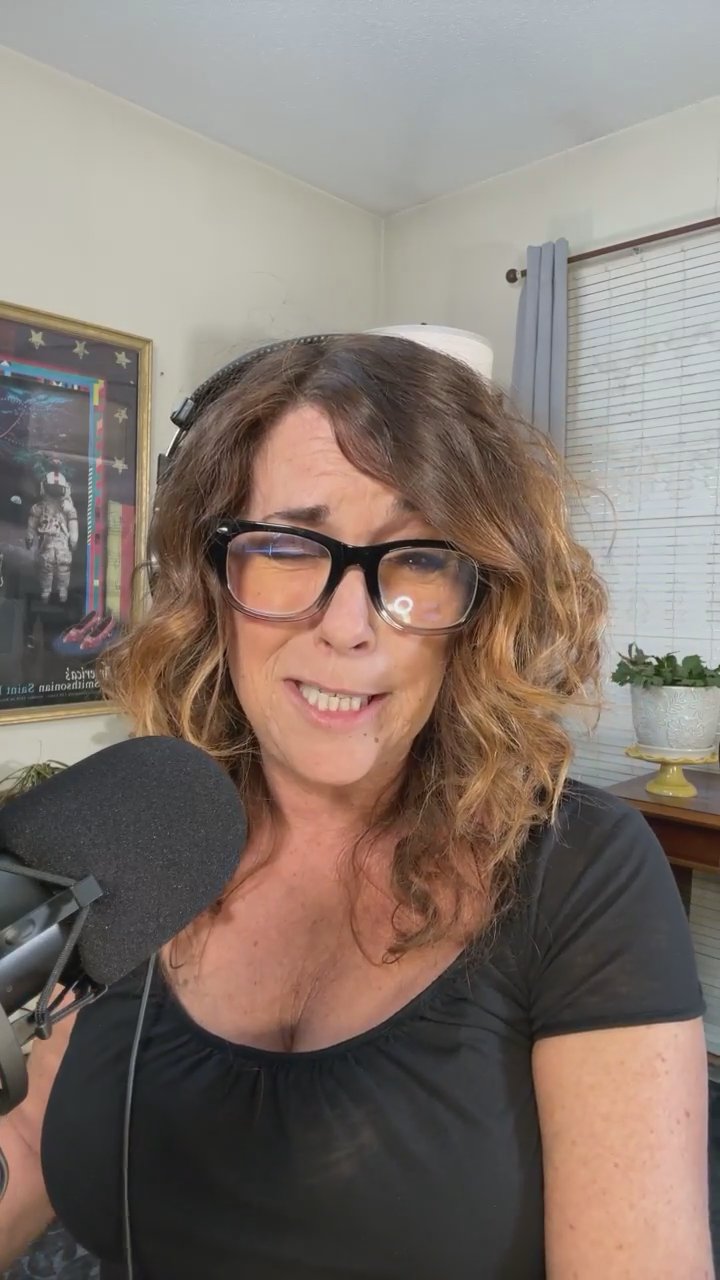
Tiffany Norton will host Comedy Centered for the next half an hour. Norton says she is starting to get the allergies popping up. Tiffany Norton is a comedian and late diagnosis with attention deficit and cptsd.
Tiffany Norton will host Comedy Centered for the next half an hour. Norton says she is starting to get the allergies popping up. Norton: My cans are messing up my hair.
Tiffany Norton is a comedian and late diagnosis with attention deficit and cptsd. Comedy Centered is her attempt to talk about some of these things that are impacting her and her recovery. Today is definitely going to be a personal story day.
In my family, estrangement happens frequently and it's not really discussed. A lot of times you don't even really know why you're being cut off from a conversation. It's always been something that's kind of been there and kind of bothered me. We're going to discuss in and around families.
The topic of parental alienation came up in a group therapy meeting. The woman said her husband was constantly criticizing her to the children. This can happen for a couple of reasons. Sometimes we bring in a third person and that's a triangle.
"Two of the biggest triggers on the world are my, my brother and my dad. And so the thing that's really hitting hard for me right now, too, is that I've passed this on to my kid " She says she avoids these conversations, and that's what she's doing.
I'm noticing in my own, in my. own kid too that I see the avoidance. It speaks to a larger issue that we have just particularly in our country in America. How do we get past it? It's something that takes work.
You know, if you're estranged from someone, maybe just consider why. Just because someone's always been a jerk doesn't mean they'll always continue to be a jerk. We have to approach our future with hope.
Next Sunday, I have a comedy show and it's gonna kind of conflict time wise. I'll need to be in the car while the. While the show is going on. I hope you guys can all stay centered, take care of yourselves and each other, and have a good one.
There, I got it. I think I got it. Hey. Hello. Hello, everybody. Welcome to Comedy Centered. My hair looks goofy. Oh, my God. I put my. In radio. We call these cans, and my cans are messing up my hair. I'm showing my other cans, too. I don't need to be doing that. Hi, how are you? How is everybody tonight? Welcome to Comedy Centered. It is Sunday. It is I, Tiffany Norton. I am your host for the next half an hour, roughly, excuse me, give or take. I have been, I, I don't know if anybody else is starting to get the allergies popping up.
Hey, Robert, welcome in. But if I have to clear my throat a couple times or whatever. I was sneezing all, all this morning I woke up and I'm like, ah, spring, here we go, sneezing. Lovely. Anyway, so, like a lot of weeks, I, you know, there's things that I kind of always have my ears up all week for something to discuss on the show. And this week, again, this has been circling around. So I've shared before and I'll share for anybody who's watching the replay or who's new to Comedy Centered. My name again is Tiffany Norton.
I'm a stamp comedian and late diagnosis with attention deficit and cptsd. Okay. And so Comedy Centered is my attempt to just kind of talk about some of these things that are impacting me and my recovery. Stuff I think is interesting. But also we, you know, I try to inject some humor and some personal stories. And today is definitely going to be a personal story day. So what we're going to talk about today is estrangement. Yeah, it's not a fun one. Right? Estrangement. It could be familial estrangement, maybe estrangement from a, you know, I mean, you can, you can have all kinds of estranged relationships.
Right. You can have a business estrangement. But for the purposes of this conversation, we're going to discuss in and around families and right off the bat, this is why I'm bringing this up as a topic. So in my particular family, estrangement happens frequently and it's not really discussed. And a lot of times you don't even really know why you're being cut off from a conversation. I'm not sure how common that is with people. It's always been something that's kind of been there and kind of bothered me, but it's not something I, I don't know.
It's like a lot of things that I, I hate using, like, overused terms, but in, in some of the, like, Psychology and recovery spaces, they say, turning rocks, right? You see a rock, you notice something you haven't noticed before, you pick it up, you analyze it, and you go, huh, Do I need to study this further? Is this just a rock? And I can put it back down, right? So I'm listening to. I'm in another group therapy meeting for women, and it's a zoom call. And for whatever reason, the topic kept coming up in this particular environment about women who were estranged from their children, women who had an estrangement currently and were not speaking to their children.
And there was a woman in particular, and she said it was okay for me to share the story, but she and her husband, she, she got married. She was not a United States citizen when they got married. She was Canadian, moved to the United States and was here as the wife legally, but not a full fledged, you know, citizen. Okay? That's important to the story. Now this is eight, 10 years ago. So they are married, they have several children. The marriage is on the rocks. She basically says, I'm done. She didn't have an exit plan.
And because of that fact and because she wasn't actually officially a resident, she lost custody of the children to the husband. Okay. And that has remained kind of the case. The children are now in their 20s, but, you know, he, he had them from middle school on. And what she was talking about and what, you know, she seemed to have a pretty good handle on it because it's been a while, but there was a real pain in her voice because she was talking about the parental alienation, you know, like the rejection, being estranged from the child and then parental alienation.
Now this can happen for a couple of reasons. There's, there's reasons why we separate from our, our family maybe permanently, maybe temporary. You know, maybe they don't make you feel safe. Maybe it's, it's too controversial or, or the person is too high conflict or something like that. Right. It's just not possible to, to be in there like that with them. But in this particular woman's situation, what had happened was at least this was what she felt had happened because the man that she had married, she, she felt, was quite controlling because he was able to have custody of the children and initially didn't even want the, the, the custody of all three.
He, in her words, turned them against her. He was constantly criticizing her to the children. And in her mind, this, this drove, drove a deep, deep wedge. Now, I have seen this happen in my family, and it cuts both ways. It's not the man Always doing, you know, bad by the woman. I'm not trying to say that. Right. But it feeds back into things we've talked about in the past, specifically Bowen's theories of family dynamics and triangulation. And when I'm listening to this gal share, that's where my mind was going.
That and to revisit triangles real quick, triangle. Basically a dyad is a two person relationship. And dyads aren't particularly stable, just two people, because if there's tension between the two people, there's nowhere to really go. And so often in our, in our, our groups and our families, we don't even realize that we bring in a third person and that's a triangle. Okay. And triangles are good. Triangles happen all the time. You got a, you know, a husband and a wife that are trying to work it out.
They decide to go to a marriage counselor because they're fighting all the. That's a good example of, that's a good person to bring in. That's, that's good triangulation. But what she was talking about was that basically it had been the husband and the wife and then they had the children, the husband and the wife broke up and the wife got boxed out. And now it's just the husband and the kids. So again, this is something that has happened in my life and, and I've seen it now from the other side. So I'll explain.
My parents divorced when I was. Well, they started the process when I was 12. It took about a year. And my father was very upset about the, about the divorce. Not because he was terribly, like, attached to the relationship. I don't think it was just more that it, it made him feel foolish and it upset him. So it was very contentious and there was a lot of legal battles and in fact, my brother's seven years younger than I am. They were even still going to court while my brother was in high school.
This is, it went on for a very, very, very long time. And so when I would go to one house, you would be praised for criticizing the parent of the other house. Does that make sense? It's kind of weird, but it would happen. Like if I was at my dad's, if I said, oh, well, mom did a dumb thing. Oh really? Tell me more. Like popcorn. Right. And same with my mom. Like always love to hear stories about how things went terrible at my father's house and how foolish he was. Right. And so this creates a lot of bad stuff in your head.
First of all, I'm learning as a child and my Brother was, you know, programmed into it as well, that a positive way to get affirmation is to say negative things about your parent, your other parent that you love and then you go to the other house and it's the reverse. Right. And so I always kind of felt like a double agent like in my own family. And so I'm realizing now so much of that stuff is still affecting me on a day to day basis that I haven't really looked at. And so I've shared before too, my brother.
Part of the reason why I do comedy centered, part of the reason why I've, I've been studying and so interested in psychology for the last 30 years is because of my little brother. He is, he has some pretty severe mental diagnosis that, you know, requires a lot, a lot of medication and a lot of, a lot of treatment. It's, it's pretty serious. So I, I've always wanted to understand that, but. And he suffers from schizophrenia, ptsd, some other, there's, there's quite a list anyway, but with estrangement.
I've always wanted to be the buffer. When I was a kid, I was the buffer for my brother because we would go back and forth between these two households where we had to kind of compete, right, and you know, figure it out. It was very different at each house. And. But as I got older and my brother got older, my brother settled into one pattern, into one camp, and that is that my father is right and mom is the one who's wrong. So my dad has fully triangulated my brother away from my mom pretty much at this point.
And you know, when he's doing well and he's on his medication, you know, he, he's fine, he's, he's very, he's very smart, he's very funny. But when he's not doing well, he's not on his medication, he lashes out and he lashes out at me and he lashes out at my mother and he starts re. Reciting and repeating things that have been said to him by my dad, which are really hurtful and they're very, they're very ugly and they, and they're mean. And you know, I know that that is his disease and I know that that's him trying to get attention and trying to, trying to.
There's too much tension more than likely in the dyad between my dad, brother right now in the house. And so they're trying to get me to come in. But the reason why this is kind of. So I'd heard this share earlier this week Right. And so then I'm talking to my mom on the phone, and she knows that my dad and my brother and I, like, if we have to talk to each other, we will, but it's. It's very difficult. I'm, I, I'll leave it at that. But my mom and I were talking and my father is in the hospital, and he.
It's. He's okay. It's his legs and it's. It's some other stuff, but he's, you know, he's in his 80s. And, and yeah. And so now, because my brother has fully aligned himself with my dad's side of things. Right. Like, that's the idea. I'm sorry. My computer just did something. I want to get involved. I want to help. I want to charge in. I want to do the things that you normally do. I'm the oldest child. I, I do, but it's difficult. It's difficult to. When. Kind of like when we talked. We've talked about this before, but, you know, sometimes you just know someone's snakes and you see them and you have to decide, okay, I see your snakes, but I'm gonna play because that's what's needed.
Right. And so. But this thing with my dad. So anyway, he was. He's been in the hospital for like a week, and no one told me, and that's okay, but my dad didn't call me himself to say this, so my brother called my mother, who is kind of estranged from. To have her tell me of what, you know, what was happening, and then called back to say, don't tell me. And so the thing that's really hitting hard for me right now, too, is that I've. I've passed this on to my kid. You know, we talk a lot about avoidance in recovery.
And one of the things, what my dad did was crappy. Trying to program, you know, his children against his ex wife. Right. My mom kind of did the same thing. And it's hard not to have hard hurt feelings after a divorce. Right? Absolutely. I'm sure my ex has, Has. Has shared some words about me behind, you know, whatever. What are you gonna do about that? Right? But avoiding these conversations, and that's what I'm doing. I'm avoiding them. It's not very mature, and I know that. And I want to be more mature about it.
I want to be able to do the things that they tell you to do, like just put the past aside. Let's just live for now. Let's just, you know, take it at face value. Let's just start from here and go forward, all those kinds of things. And so, because I don't know what to do and I don't really know what the best way is to help, but also in the same, in helping also keep my own boundaries and my own sobriety safe. Because two of the biggest triggers on the world, in the world are my, my brother and my dad.
For me drinking, they're, there's something sometimes about the buttons that only family can push. That and you know, other people are not responsible for my triggers. You know, they're not responsible for anybody's triggers. Right. This is all stuff that we have to do. But I also have to know that I have snakes and I know what my snakes are and I know what they like. And so I, I'm feeling guilty. I'm feeling really guilty. I'm feeling guilty. And then I'm feeling like, well, why should I feel guilty though?
Because quite honestly, you know, I mean, I'm not explaining it well necessarily, but you know, the reason why my father and I don't speak, that's, it's, there's significant reasons behind it. And you know, and, and also too, there's just an unwillingness to acknowledge that any of it happened. And when you're dealing with someone who's a high conflict personality or someone who has narcissistic personality disorder, you're never going to get what you want. They're never going to say they were sorry.
They're never going to say oh, I saw the light unless they go through years and years and years and years of therapy and they want to get there, they have to want to get there. And so there's this book that's been going around and I haven't read it yet, but everybody's talking about it and it's called Let them. And the theory of let them is when, you know, like, we have to, we can only control what we can control. Right, Right. We have to let them. We have to let people do what they're going to do.
If they're going to say stuff about you, let them. If they're going to, you know, if they're going to turn their back on you, let them. Right. So there's that. But then also too like family loyalty. Well, what do you do with, you know, you're supposed to be. I was raised, you know, pretty religious. You know, they really love that honor thy mother and that thy father deal. Right. And yeah, you know, it. I don't know. I don't know. I don't wanna I, I don't want to run away from my problems anymore.
That's what made me turn to alcohol, you know, so when's a healthy time? When's you know, like, you know, do I. Because my father has not called me directly and asked for my help. So that's, so that's one thing. You know, I don't necessarily need to insert myself in this situation right there. But I don't know if anybody's listening to this. I know I'm a little rambly right, but it, it's hard when I'm talking about family subjects, when I'm talking about real stuff. Cuz I'm, I, I want to honor everybody's experience.
I'm not trying to sit here and say that I'm so great and other people have treated me poorly and blah blah, blah like this, these are my perceptions, this is how I received a lot of these, a lot of these things. And that might not have been their intention at all, but some things are, you know, boundaries were set, they were non negotiable on my part. I was clear about it. There were more, you know, they were violated multiple times. And so I don't know, maybe some people in the replay can hit me up.
Maybe someone's got some advice for me because I certainly, I don't know. But I'm noticing in my own, in my own kid too that I see the avoidance and, and I think that that's something that isn't just like my family or like using alcohol or neurodiver, any of the topics that we talk about. I think it speaks to a larger issue that we have just particularly in our country in America. I think maybe it's other places too. I guess I've only lived here that we just don't want to talk about anything anymore, you know, and also too there's a lot of, I mean on one hand, you know, you tell somebody, hey, I'm estranged from my family, I can't talk to them on one hand like, well good for you.
You know, that's got to be really hard. Like, you know, good that you stood up for yourself. But also too, you know, do we ask, well, did they, did you have a good reason to estrange from them? You know, were you only listening to one person? Did you only get one side of the story and that's why you cut them off, you know, bringing it back to the, the full circle. And so I feel fairly confident that I'm not just getting my information from one side. I'm fairly confident that I'm, that, you know, I understand the problem and I assess it, you know, properly.
But, but how do you get past it? How do I get past it? Because I'm not going to change them. And the desire to want people to be different than they are is very, very human and very, very hard to fight. We have invisible contracts that we drop with people. We, we, we decide you should be this way and you should act this way and you should, you know, da, da, da, da, you know, and so it's almost impossible to get like my kid on the phone. It's almost impossible to get my kid to come to family events because why, you know, I, in my, in my family, I mean, a lot of times it ends up in a, some kind of a fight.
Everybody gets mad. People start yelling or getting upset or arguing about politics or being snarky. And so I get it. I don't know, I'm trying to find, I'm trying to, I'm trying to, I don't know. It's supposed to be comedy centered, so I'm trying to be centered about it. I'm trying to not be so rigid. And that was one of the things that hit me about it too, when I was reading it, because I was reading up on Bowen again in the Family Dynamics. And they're like, yeah, you know, just estranging yourself from people can be good in the temporary.
But unless it's like super, super dangerous for you to be around that particular person, you, you might just be kind of being a jerk. You might just be kind of stunted adolescence and you're not really owning the fact that, you know, maybe they did the best they could or, or whatever. Right. But it's not very mature. And that just that, that actually, that, that upset me. I was like, what? I'm not mature? I'm super mature? Maybe not, but. Yeah, but it's, it's, it's something that takes work. It's something that takes work.
And I know that we have a lot of that and a lot of these problems are new ish to humanity in a way because for the most part, since the 1950s in this country, people live without family members. Well, that used to never be the case. You, it was. Most homes were multi generational. You had grandma there and mom and dad, and then you had the kids. And so people are living all by themselves. People are becoming more isolated than they ever have. And it's so easy to avoid anything. You don't really want, don't want to go to the grocery store.
Call somebody, you know, don't want to write your script or something, Just have AI do it, you know. So how do we do it in a safe way? How do we do it in a healthy way? Well, I mean, I'm just answering my own question, but, you know, it's kind of like any, like, any problem, you know, you start in little. Little doses, like exposure therapy. Maybe you talk to them on the phone for five minutes first and see how that goes. Phones are always good because you can exit if it. If it goes south quick or, you know, the conversation goes.
Goes out of whack. But, yeah, it'll be interesting. Easter's coming up. We'll see. God, it feels like every five minutes there's a holiday and we have to like. It's like, okay, well, what will Easter bring? You know, what mental preparation do I have to do for Easter? I thought it used to just be that I had to go to church a bunch and, you know, Ash Wednesday and that, but I don't know. But I mean, if we all just label each other and if we all just tune each other out and if we all just treat each other like, you know, fast fashion or something is a disposable commodity that.
Well, I don't. I don't like this person. So I'll just cast it aside. I mean, you can, you know, But I don't know nothing. I. Nothing. I have no. I have no strong parables here, apparently. No big wise words of wisdom. I don't know. I think I've said that three times. So that's it, I guess, for tonight. You know, if you're estranged from someone, maybe just consider why. You know, maybe you have to be. Maybe they're not safe to be around. You know, maybe they were unsafe and maybe it's not as bad now.
But, you know, what are the things that we are avoiding? Because we can do hard stuff. We can always do hard stuff, and we always have to have. You know, we have to approach our future with hope. Hope and optimism that things can get better, you know, And. And just because someone's always been a jerk doesn't mean they'll always continue to be a jerk. Right? Like, if you would have asked me three years ago, everybody said, Tiffany will always drink. Well, Tiffany doesn't always drink now, so it can't happen.
But it's. It's on us to own it and to pick up that rock when you trip on it and look at it and go, huh, does this apply? Or can I just throw this rock back on the ground. Forget about it. All right. Well, speaking of which, in fact. Oh, I should let you guys know next Sunday. I believe if I cannot go at a different time, I'm gonna have to not have comedy centered. Next Sunday, I have a comedy show and it's gonna kind of. Kind of conflict time wise. I'll need to be in the car while. While the. While the show is going on, so I could barely keep a hold of the topic when I'm sitting still in my own house.
So no one wants to see me try to do a zoom while I'm driving. That would be. It would just probably be me honking a lot or something. I don't know. Anyway, all right, you guys have a great week and more than likely will not see you next Sunday. But Sunday after that, you got me. And I hope you guys can all stay centered, take care of yourselves and each other, and have a good one.