start wearing cargo pants everywhere or something. Shannon is of Irish Catholic descent. She will not be drinking with anybody today or this weekend. Here are some fun facts about the consequences of over drinking on St. Patrick's Day.
I broke my screen protector. It was funny. I was turning on the camera and I had foolishly right. I should just. start wearing cargo pants everywhere or something. Hopefully I don't drop my phone while we're live streaming.
Shannon is of Irish Catholic descent. She will not be drinking with anybody today or this weekend. Here are some fun facts about the consequences of over drinking on St. Patrick's Day.
On average, in America on St. Patrick's Day, 4.2 drinks is the average amount. Binge drinking costs our country one. Billion dollars per year in lost workplace productivity, health care, criminal justice.
Average American spends $42 celebrating St. Patrick's Day. 40% of Irish male college students admitted to binge drinking on occasion, where it's 52% in America. What do you do when your culture is enmeshed with alcohol?
How do you know if the hangover is more than just a normal hangover? Maybe your body and your body never tells you, right? Acute alcohol withdrawal looks different in women than men can. It looks different between genders, too.
There's three stages of acute alcohol withdrawal. Headaches, anxiety, tremors, handshakes. Mood changes. Gastrointestinal problems. The more severe your symptoms are, the more likely that you can medically detox.
Tiffany was also suffering medical symptoms of what she would find out a year later was a necessary medical hysterectomy. In reality it's the alcohol raising your actual blood and body or your body temperature. See again, great time to point out not a doctor.
The three stages of withdrawal, if you have alcohol misuse or overuse, you have a habit of it. Moderate, moderate stage withdrawal, increased blood pressure, confusion and the hyperthermia, the heat. Severe stage two or severe, you can begin to experience visual and, or auditory hallucinations and seizures.
At St. Patrick's Day, I do not necessarily like hard alcohol. That's mostly because I overuse hard alcohol way too much in college. Why do these, why does it affect us the way that it does?
When someone abruptly stops drinking alcohol, that is when it becomes medically dangerous. Alcohol is the only drug that I'm aware of that can kill you during the detox process. Do not do that alone. There are a lot of fantastic resources online.
Tiffany Norton: Sometimes we just have to stop pretending like everything's a party. She says she's lost a lot of friends to drugs and alcohol. Norton: There is support for anybody who wants it. Enjoy St. Patrick's Day.
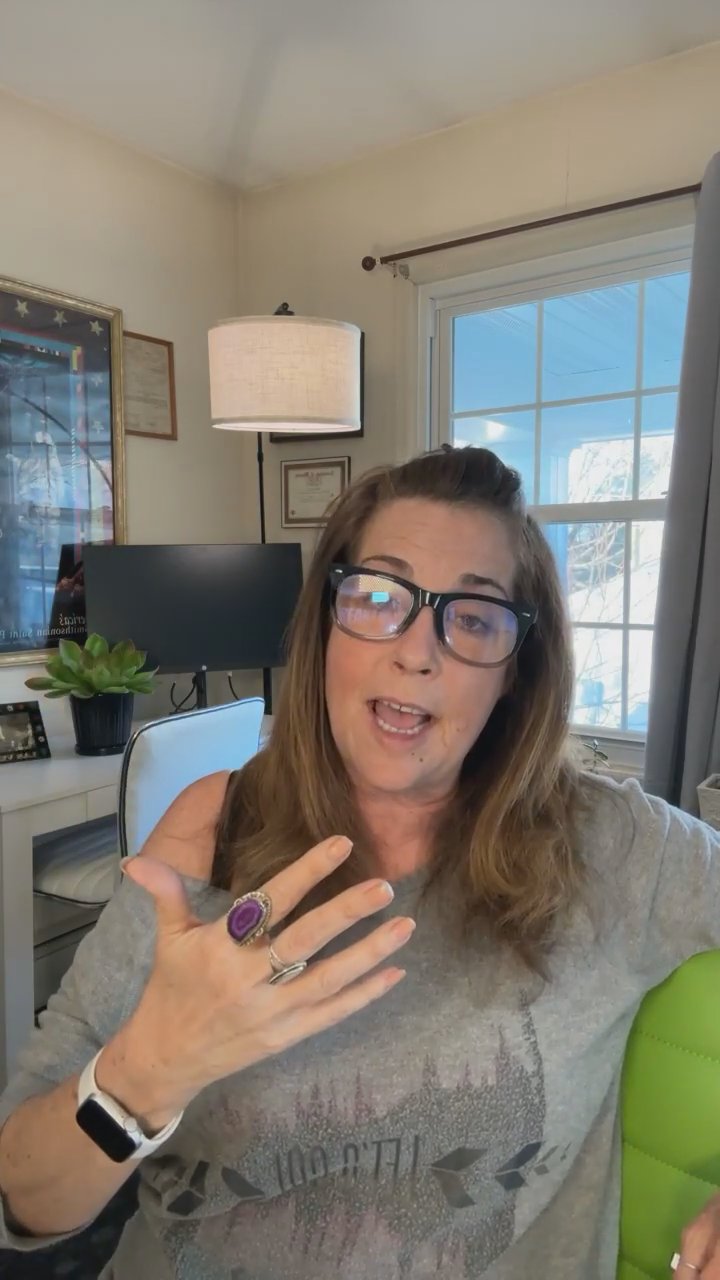
Well, hello, everyone. It is 6:00 on Sunday. It's comedy centered. What's up? How are the party people? I had to do a little. I broke my screen protector. It was funny. I was turning on the camera and I had foolishly right. I should just. I think I'm just gonna start wearing cargo pants everywhere or something. I need more pockets. But yesterday I didn't have pockets and I thought, oh, put my phone in my mouth. And then it started to slip and my tooth kind of got in and I kind of put a little deal in there, right?
And so I had the screen on and I'm like, well, I'll get a new one. It's no big deal. When I turned the camera on, there was like this bizarre light thing that was happening. It was actually kind of cool. I can replicate it, but it was like going across my face, this weird line like that anyway, so I was like, well, rip it off. So hopefully I don't drop my phone while we're, while we're live streaming. I don't have insurance on my phone anyway. All right. Happy St. Patrick's Day weekend. I am of Irish Catholic descent.
I will not be drinking with anybody today or this weekend. But I figured attendance might be kind of low on this one. So I thought, you know what I'll do on St. Patrick's Day? Just really upset all of my ancestors and, you know what? Be that Irish woman who's. Who's a buzz kill. A literal buzzkill. On St. Patrick's Day weekend, I have a bunch of fun facts that I pulled together about the consequences of over drinking. Hey, cheerful topic, right? Here's the thing. Real. This is coming from a real place.
St Patrick's Day has always traditionally been one of my favorite, favorite, favorite holidays. And I still love the holiday, right? I love the excitement my grandparents had about it. I loved the fact that there was no real responsibilities in and around it other than like, you just had to go to church, right? And it's all in conjunction with lens leading up to Easter. I was raised Catholic, so for me, there was a lot of joy in this particular stretch of the season. I thought that was a, a fun part, right?
But my family being like many families, and honestly the people in my family, I never saw anybody like super overuse alcohol or drink to, you know, an exorbitant amount, however, over, you know. But St. Patrick's Day is generally one of those celebrations where everybody's like, well, I'm definitely going to have a couple, right? It's St. Patrick's Day. We're Irish. We kind of have. Yeah, right. Hey, Shannon. Welcome in. So I was just. I know maybe this isn't the best time to do it, but I'm basically being a buzzkill about St.
Patrick's Day right now anyway. But I thought it was interesting a couple statistics about St. Patrick's Day. St. Patrick's Day is obviously New Year's Eve is the biggest alcohol holiday that we have in the United States. St. Patrick's Day is pretty high one, though, on average, in America on St. Patrick's Day. And they. And they said on St. Patrick's Day, so I'm assuming they mean the day of. 2 drinks is the average amount. Now, as we recall, men are supposed to have two at the most, and women are supposed to have one, but whatever, right?
Beer is the most popular choice on St. Patrick's Day. 70% of people consume beer as opposed to other beverages. 36% of men who reported binge drinking on St. Patrick's Day. Binge drinking costs our country one. What is it? Oh, I'm sorry. 191 billion with a B. Billion dollars per year in lost workplace productivity, health care, criminal justice. Additional, like, law enforcement stuff we got to do. People getting, you know, arrested brought into the system in that regards. Right. Very expensive.
191 billion. That's almost as much as Elon's worth. That's a lot of money. Okay. St. Patty's one of the deadliest highways on the freeway. Probably knew that the average American spends $42 celebrating St. Patrick's Day. And that means that St. 87 billion in spending each March 17th. Well, you got to get the little decorations and stuff, right? Four in five Americans celebrated. 67% of those people between the ages of 55 and 64. Interesting fun fact. Who binge drinks more? American college students or Irish college students?
American. 40% of Irish male college students admitted to binge drinking on occasion, where it's 52% in America. Okay, so fun, right? Lots of fun. Great Tiff. Way to be an infomercial. I could have looked all that stuff up on WebMD. You're. This isn't helpful. I know. It's not. It's not fun. But the reality of alcohol consumption is that it's. You know, there's an old saying in recovery, one beer is too many and a thousand isn't enough. Right? So if this is your day to go out and you're an occasional drinker or you're a person who does not have problems with alcohol misuse.
You know, going and having four or five drinks in a, in one sitting, is it your best option? Are you going to feel great or whatever? Probably not. But is it going to have any long term emotional damage or physical damage or whatever? Probably, probably not. Right. You know, as long as you plan safely and you know, plan for a ride and all that good stuff. Yeah, but what I'm, what I'm getting at is that what do you do when your culture is enmeshed in a holiday and that holiday is enmeshed in alcohol?
And what kind of ways can we still honor the fun parts of St. Patrick's Day? You know, I'm just using that as an example. Right. But without the aid of alcohol. Well, you know, I mean, the parades are fun. You can always do that during the day. There's usually a lot of kids and families and so that's, that's usually a pretty family friendly end of the environment or environment. Right. But the seriousness like it. Here's the thing with alcohol, right? It's tough to talk about because everybody's experience with it is so vastly, vastly different.
What looks like misuse for one person might not look the same for someone else, right. A lot of things factor in your age, your weight, your height, right. These are all biological factors you can't control, you know, that, that will vary how well your body is or is not able to process alcohol, grain alcohol or you know, or like beer and all that kind of stuff. But it occurred to me, one of the things, even though I touch on alcohol in pretty much every, every episode of Comedy Centered, I have not gotten really super into what is the, the, the very dark side of it that can occur when you are using it really excessively for a long time.
How do you know if the hangover is more than just a normal hangover? How do you know that? Maybe your body and your body never tells you, right? You know, it's kind of like, let me, let me, let me back it up a little bit. You know, have you ever had the instance where you weren't allergic to something and then all of a sudden you are like, you were never bothered by ragweed or cats, never bothered you, and then all of a sudden they did. Your body does that with a lot of things. And because alcohol is not something our body is supposed to actually ingest and actually supposed to process, it can vary so much especially.
And it looks different between genders, too. It looks different. Acute alcohol withdrawal looks different in women than men can. So let's go over some of the symptoms, because some of the symptoms are very innocuous. And there, there are three levels, right? There's three stages of it. And the more severe your symptoms are or, or the more severe of your alcohol consumption is, the more likely that you can. You can be, you know, into a situation where it's the healthiest and the safest thing for you to do is to medically detox.
So. But symptoms that can fall within the realm of acute alcohol withdrawal. Headaches. Now, some. These are some of the mild stage. There's three stages. Mild, moderate, and severe. Okay. Headaches, anxiety, tremors, handshakes. Have you ever had the shakes? Yeah. Mood changes. You know, sometimes we think when we're hungover, we're in a bad mood just because our head hurts. No, the alcohol actually affects your. Your hormone levels and a lot of different chemical compositions in your homeostasis.
So that actually, the withdrawal of the alcohol is actually affecting your mood as well. It could be double. It could be double. Two things, right? You feel like crap, and you literally feel like crap. Mood changes, Gastrointestinal. Gastrointestinal problems? Well, yeah, yeah, I mean, of course. I mean, everybody's. Everybody's had a gastrointestinal problem after drinking, right? But what if you're a person that already has gastrointestinal problems? Is. This is. You know what I mean? It's, it's.
So there's the varying degrees, right? Heart palpitations, increased blood pressure. So if you're someone who's taking blood pressure, blood pressure medication, if you have been diagnosed with high blood pressure, alcohol consumption can affect those levels and can affect that. And in act, in actuality, can work against the medication that you're. That you're taking. Hyperthermia. In Minnesota, where I'm from. Well, in Wisconsin, right, we hear a lot about hypothermia, hypothermia or hyperthermia.
Hypothermia is when you're too cold, the body's too cold, yet hypothermia from being outside too long, you know, falling in a cold lake, blah, blah. Hyperthermia is an overheated body. Your temperature, Your body temperature is higher, your body's trying to flush out and deal with. With the alcohol. Much like your body raises its temperature when you have a fever because the fever is raising the body temperature to fight the infection. It's not exactly the same, but it's similar. You. You get the idea right.
Now I will say before moving on to this last symptom that I, prior to 2022, when I first started walking down my path of trying to get in touch with my relationship with alcohol, where I came from and, and what was going on, right. And at that time I was also suffering medical symptoms of what I would find out a year later was a necessary medical hysterectomy. Okay, but the hot flashes, when you get middle aged and you're a woman, right? People talk about this all the time. In fact, it's so prevalent, the discussion of hot flashes.
There's like T shirts and little wine cooler like wine koozies that you can buy. Oh my hot flashes. I, I'm so hot, I come in flashes. You know, it's an old joke, but hyperthermia is like a hot flash. And if you're losing sleep, if it's disregulating your sleep, if you're being bothered on a regular basis because you're getting hot flashes, you may be equating that to maybe some premenopausal or menopausal, you know, situation or whatever circumstances. And in reality it's the alcohol raising your actual blood and body or your body temperature, your blood temperature, your blood's boiling.
See again, great time to point out not a doctor, Tiffany is not a doctor. Okay, the last one though, hallucinations and seizures. So the three stages of withdrawal, if you have alcohol misuse or overuse, you have a habit of it. This three stages, mild, that's when you're going to be seeing more. Along the lines of headache, hand tremors, increased anxiety. It's not my word, but I've heard it referred to in recovery rooms as hang anxiety. It's the hangover anxiety and it's both. You have the anxiety, the social anxiety of oh God, what did I say?
Oh God, what did I do? But you also have higher levels of anxiety because your body is trying to flush out and re reach homeostasis with all of that extra ethanol in your system. Okay, so that's mild headaches, hand tremors, maybe a little shaky. Right. Anxiety, stage two, which is considered moderate. That's where we're going to see the increase in blood pressure. You may have a smartwatch that can monitor your blood pressure. I'm curious about it. I don't drink anymore. But if you are someone who still, you know, partakes in that, throw it on, maybe measure, maybe, maybe check to see what your blood pressure does after you've had some alcohol.
Right, but this is it from withdrawal. So this wouldn't be happening necessarily while you're imbibing alcohol, but you would start seeing this up to like a few hours after you stop drinking, all the way up. You can see the, the effects in your body up to 72 hours after you stop drinking in, in certain circumstances. So, but moderate, moderate stage withdrawal, increased blood pressure, confusion and the hyperthermia, the heat, Severe stage two or severe, I'm sorry, the third stage, you can begin to experience visual and, or auditory hallucinations.
You can also begin to experience seizures. Now the symptoms of these, like I said, will start within, you know, seven to eight hours probably of you taking the last drink very often. The pattern being, right, like you go to bed, you wake up the next morning. Now your body has had enough time so that it's not active. It's moving the process of the alcohol along. And now you're really starting to feel some of those mild stage one withdrawal symptoms. Most people that don't chronically overuse or whatever your, your, your withdrawal symptoms and your stages are going to stay within mild.
You're going to feel maybe a little shaky, a little bit of a headache, little, little bit of anxiety or, or a lot. The problem becomes if you aren't necessarily in a place yet emotionally where you understand what level you're, you're, you're currently drinking at. The person I lied to the most about drinking was always myself. I lied to myself the most. You know, I've shared this example many times, but I would, you know, I would buy a box of wine, right? First of all, it's cheaper and you know, and you know to run in the store all the time.
And the added bonus of buying box wine is when you throw it in the recycling, it doesn't make as much noise and let the neighbors know how many bottles of wine you're going through in a week. But that's a little fun fact. But I would, when I would start, especially if I knew I had an unlimited amount of alcohol, I'm not really sure who shut off the lights some nights. I don't really know how I would know. I would wake up on the couch or I'd wake up in my bed, I go into the, the kitchen and I'd pick up the box of wine and see how heavy it was.
I went, whoa, d***. We drank like a pound, pound and a half last night. Right? And that's not ounces, that's not how you necessarily measure alcohol. But I am someone who can tell roughly how things weigh, right? This is not as heavy as when I walked it in the door yesterday, let's just say. And because I lived alone, there was no one else to blame it on. There was no one else to say, oh, well, you had a lot last night. Right. So before I started in on my recovery journey, let's say, you know, I don't remember ever having any visual, you know, like auditory or hallucinations or any of that kind of stuff.
But honestly, what I know would I know if I would. I know if. You know, sometimes in life there are invisible lines to get crossed. And as we grow, the decisions we make, the older we get, the more serious some of these consequences become. And life is designed that way. When we're younger, the consequences a lot of times hopefully aren't as immediate. But as we get older, you know, these, these, the, the health consequences, the habits, the, the choices and all that stuff, they, they only become more narrow.
Right? So it got me thinking, like, if you're someone who lives alone, no one's observing your alcohol behavior but you, you're not necessarily a good judge of, of your own use because you're not watching yourself with accurate eyes, A, when you're under the, the, the influence, but B, when you're in those in between hours where you're just trying to recoup so you can kind of drink again, right? What you're trying to do is forget, forget what you just did. Forget all that stuff you said last night.
Let's, let's, let's forget all that. Right. And the other thing that I want to caution people on as well is that often when these symptoms rear their head, the more dangerous and the more, the, the scarier symptoms, the more severe symptoms, it won't necessarily raise its rear its head for 24 to 72 hours after you've had your last drink. So if you are used to consuming large quantities of alcohol per day, and I'm not gonna, I'm going out on a little bit of a limb. This is from my own personal experience.
Again, not a medical doctor or professional. I would imagine where you see people fall into the severe category more frequently is when they're. There's a lot of overuse of hard alcohol, hard alcohol, so much less alcohol by volume gives you the same alcoholic. Ben, you know, benefits or effects. Right, Of a large beer or, you know, a glass of wine like that, let's say. So if you're a person who's going through a fifth of alcohol in a day, making cocktails or whatever, or more than that, even though you May not be drinking that many more technical drinks than someone else.
Hard alcohol, grain alcohol is a lot more difficult for your body to process there. And I'm not trying to say, like, drink wine instead and it's fine, but wine actually does have some vitamins. Wine comes from grapes. There is some nutrition in it. Not, not, not nutrition. That's a. That's a stretch. I'm not trying to justify. Right. But they're. They're. It's not. Alcohol's got nothing. Alcohol is ethanol. Grain alcohol is just ethanol that you're drinking. Okay. And so your system, your body, naturally.
And also too, because wine has been around for thousands of years, we have, as humans have, have adapted to ale and wine more so than distilled grain alcohol. Okay. Really beat that one that, didn't I? But, you know, also too talking about St. Patrick's Day, because what. What is it? It's. It's. At St. Patrick's Day. What are you gonna do? You're gonna go drink some whiskey? You're gonna go drink some Irish whiskey? St. Patrick's Day was usually one of the few. I was never a big person on shots.
I do not necessarily like hard alcohol. If I'm good, if I was gonna. When I was drinking, have a cocktail, it would be like, like signature one. And then I just go to wine. I'd have a. A hard alcohol drink. And that's mostly because I overuse hard alcohol way too much in college. And I just kind of got. I just made myself sick of it, I don't reckon. Well, I mean, if you really want to cure yourself of hard alcohol, just drink a half bottle of slow gin. Like, I didn't freshman year of college. I can actually taste it even telling you that story anyway.
But yeah, so I bring this up not to make anybody feel bad. I re. I raise these issues only for the fact of. I think it bears mentioning as we're starting to look at our relationship with everything in our life, alcohol is just another relationship. Right. And as we've, you know, explored a lot in the past, generally speaking, when someone reverts on a regular basis to alcohol use to combat things that are going on in their real life, it's because of that. That became a. A problem solving technique earlier on in life.
Right. There's too much tension in my life. There's too much stress. I can't handle it. I'm just gonna drink a bottle of wine and check out for a little while. Right. And you can do this for a long period of time and not Necessarily feel any real consequences physically in that. But that type of logic doesn't carry forward. That does not mean that that is going to continue to be that way. And why do these, why does it affect us the way that it does? Why does detoxifying from alcohol, what's the, what's the chemistry science behind it?
So I'm not going to go super deep, right? But when you're drinking, there are these things that, and the abbreviation is called gaba. They're G, A, B A GABA receptors and glucomate receptors. I think I'm saying that right in your brain. Okay. So when you're drinking alcohol, this slows the brain down. It affects these receptors and that's what produces the feeling in your body of ah, just that relax that sedation that, you know, because you can feel. At least for me when I, when that first. It's.
It's almost as if I only ever needed that first sip of wine. That first sip is like the best one because I would like get the, like, I would feel literally like, almost like my nervous system was lighting up with electricity. Like, like those stoplight things that go up when someone's going to drag race. Like, here we go. Yeah. So speaking about the gb, the, the GABA receptors, right? Okay. So it slows the brain down and it will. Oh, cut my handwriting. Every week I write something down and then I sit here like you guys, I'm like, d***, I can't read my own writing.
Okay, I'm sure it was fascinating. I bet it was a super solid point. Okay, but. Oh yeah, okay. Okay, so. But if you do this on a regular basis, if you are drinking alcohol on a regular basis, and on a regular basis, your GABA receptors and the glucomate receptors in your body are having to adjust themselves to offset the alcohol consumption that will alter over time how your brain is functioning. Right? It makes sense if you're, if it's constantly having to be obsessed with that. So when someone abruptly stops drinking alcohol, that is when it becomes medically dangerous.
Alcohol is the only drug that I'm aware of, known that, that I'm aware of at all that can kill you during the detox process. Detoxing from heroin will not kill you. You'll want, you'll feel like it is what I hear. But detoxing from, I mean think of some of the worst drugs, crack cocaine, things like that. Those are all going to be horrible, horrible, horrible, unpleasant experiences. But at no risk are you going to die. You're going to feel like it, but you're not, it's. You're not in physical danger.
Medical danger, physical, medical danger, alcohol, you are. And that's because of these receptors. When you take and you yank that alcohol out when you've been misusing for so long, you send everything haywire. Your brain and your body chemistry has had to do so much manipulation on the back end to enable the continuation of that drinking. When you pull it all the way out, your brain chemistry, your body chemistry, your hormone levels are just all over the place. This is what can lead to the seizures.
This is what can lead to the more fatal and devastating consequences of alcohol use. So the seizures, you're at the highest chance of them between 24 and 48 hours after the last drink. So there are medical detox programs. I'm not tone deaf. I know most people cannot afford to go and get medically detoxed. However, I encourage you to go online. There are a lot of fantastic resources and I didn't write them down, so I can't think of them off top of my head. Right? But there are 1, 800 numbers that you can talk to, Crisis Outline or, you know, hotline people all the time and they can help you, give, give you some advice, give you some resources, some tools and be.
If you, if you are limited in resources or maybe you're in a more rural area where it's not easy for you to go and get specific care like that, they can guide you through and then they can also probably give you a little bit more specific advice if you feel like during your personal detox you're starting to experience some of these things, what should you do and when, because, and if it's, if it's something and you know, you've been going hard at it for like 10 years and you drink every day and you go through a pint every day and then you're just going to stop.
Do not do that alone. Do not do that alone. Do not do that completely unsupervised. Maybe you can't afford a medical person. Okay, then have a friend come over, have someone watch you, because it isn't going to be until a day or two in where you're going to hit it. One of my, A guy I dated in college who was really the first love of my life. We went out for five years. He almost died in 20. 20. No, 2019. 2019. Alcohol overuse. Right. And it was funny because. So he had had some warning shots. We usually get these in life.
There's things, there's signs and sometimes we see those signposts and we stop and go, hey, I'm gonna go a different direction. And sometimes we just keep going our same direction right past that signpost. Well, in Mark, in this person's particular situation, he had had a close call a few months before. The big, the big problem. He was at home with his girlfriend at the time, was talking mid sentence. Had, had been drinking during, you know, I've been drinking vodka was the thing. He had, had. He had pounded quite a bit and he just collapsed in front of her on the floor.
Mid sentence, she calls 91 1. They bring him the ambulance. You know, they, they detox him in the, in the hospital. They send him home probably a week or two later, right? So a friend, because we're all friends from college, I went down to go visit and just see how he was doing and, and how things were going in that. And he asked me to give him a ride to the liquor store because he didn't have his car. Now I'm still drinking at this point and I thought, this is not a good idea to give him alcohol.
He, you know, he just got out, whatever, a week ago. But then I had to remember something. I'm not giving him alcohol. He's giving himself alcohol. Where he lived was six blocks away from the liquor store. If he wanted it, he was going to walk there. He told me as much. He said, I've decided I'm, I'm, I'm not done and I'm going to drink and there's nothing you can do to stop me. And he's right there, is it? So, you know, I wasn't really sure what to do with all that, but you know, the man in his late 40s, you're allowed to do what you want to do.
So I dropped him off, got his stuff, brought him back to the house. But I hung out, I wanted to make sure. And then I waited around until the girlfriend came home so that there could be someone there. And then I didn't hear anything for several months. Anytime I spoke or text, it was, everything was fine, you know, like close call, not great. Learn some lessons. Getting better. We hear that a lot, right? Fast forward. The next call I get is that he's in the ICU in St. Paul and he is in a medical coma.
He is or he's in a coma? I'm sorry. He is completely non responsive. They're not sure when they can move him from the icu. So we all go and gather around, right? He didn't leave that ICU for a Month. He was in the ICU for one month. His kidneys were shutting down, his liver was shutting down, everything was starting to close up. He almost done. Now the good news is that time is stuck and he doesn't drink anymore. But he also never went to therapy, he never went to aa and he's never sought any group therapy or any assistance with coping with how to deal with life without that tool.
And so you may have heard this expression before in casual language, but someone who's a dry drunk, it's somebody who no longer drinks alcohol, but still exhibits a lot of the personality traits of somebody who is, who, who's, who's chronically using alcohol. And sadly, that's kind of where we're at. And it's been difficult to maintain a friendship with him now, which is kind of sad because he's sober and I'm sober and it would be nice to have a sobriety buddy, but he's not, he's not really willing to, to look any of the underlying stuff.
So. So also because I'm a stand up comedian, I've also lost a lot of friends, a lot of friends to drugs and alcohol way too soon. Very, very, very funny, very talented, very smart, smart, smart people. But this stuff is deadly serious. And sometimes we just have to say that it is. And sometimes we just, in life, we just have to stop pretending like everything's a party because it's not everything isn't St. Patrick's Day. Also, fun fact about St. Patrick, a lot of people don't know St. Patrick was very anti slavery.
He was enslaved as a young man. Yep, very good slavery. Love that little fun fact. So now ruined everybody's good time. See, this is why I don't get invited to parties, y'all. Great Tiff. Tell us about how we're all gonna die from having fun. But I only say this never with judgment, only with love, and only in the, the spirit of hey, the more you know and also to anytime you feel like you're in a situation no one's ever been in. That could be true, but more than likely it isn't. And there is support for anybody who wants it.
It is out there if you need it. The national hotlines, local hotlines, and also too here on the Cadre app. I'm on the, I'm on there. You know, Tiffany Norton, comedy centered. If you have questions about anything I've presented, you can always pop in the comments and, and leave me something. I do. Check those out. So already half an hour's gone. All right. Comedy centered. Have a great Sunday. Enjoy. Have some corned beef and cabbage, have some soda bread and enjoy the beautiful weather for St. Patrick's Day tomorrow.