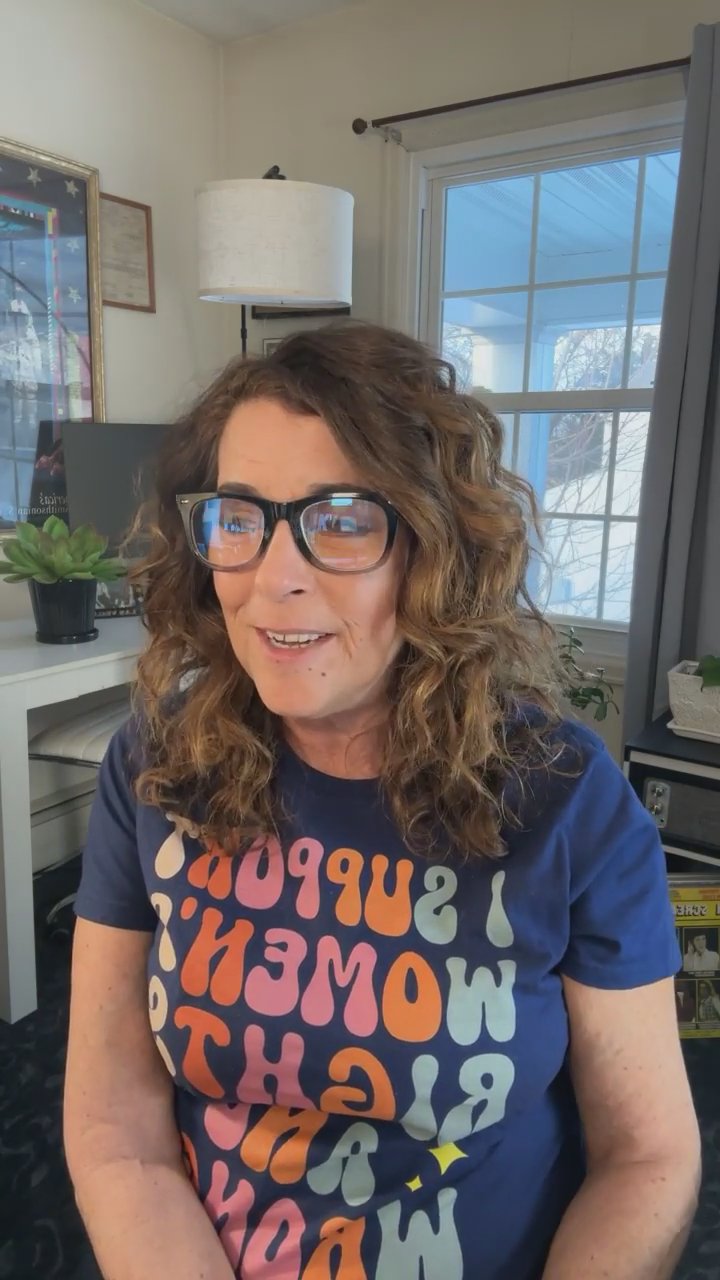
Some people don't like the daylight savings. Comedy Centered host talks about International Women's Day. Says he supports women's rights and wrongs. Also says he hates hierarchy. In many cultures, International Women's Day is a huge deal. It's the only day that women get.
Tiffany Norton: Happy Daylight Savings. Some people don't like the daylight savings. To me, it's always a happy time of the year. Whenever we spring forward, it means that it's coming to the end, the winter.
Comedy Centered host talks about International Women's Day. Says he supports women's rights and wrongs. Also says he hates hierarchy. Says we always have more to learn about ourselves.
In many cultures, International Women's Day is a huge deal. It's the only day that women get. The younger generation feels that it is a day to protest and activate for women's rights. You don't appreciate your rights until you don't have your rights.
When a woman becomes addicted to alcohol or drugs, it is a violation of the social contract of being a woman. Recovery for women looks differently because women for the most part are not treated as favorably once they enter like a recovery space. There's nothing more political than government. How are we going to raise our children?
Speak Wonder: How can I be a better communicator for people that maybe have questions about feminine. Religion, politics, gender, all these things. These are very real subjects. All you have to do is listen. Group therapy, group conversations, that's what's really, really made the difference.
When I isolate, when I don't share. When I stay in my house for a couple days and I get really antisocial. I get stuck in that futuristic fatalistic loop, and it really makes me want to drink. Even though I've worked really hard in the last two and a half years, I've not been perfect on my sobriety.
Comedian started bawling on the air. The day before St. Patrick's Day. Don't forget, stay centered as best as you can. Prioritize your mental health.
Hi. Hey, everybody. Hello. Cadre people, party people. It is I, Tiffany Norton, your fearless host for Comedy Centered. Hello. It is Sunday. Hopefully you guys had a good weekend. Daylight savings. I love it. I'm excited. Some people don't like the daylight savings. I like the daylight savings. I don't know why. Doesn't bother me to change the hour and look, I mean, there's light. To me, it's always a happy time of the year. Whenever we spring forward, it means that it's coming to the end, the winter, at least.
Right. As a Midwesterner, that is. That is the indication we don't. We definitely don't go necessarily just on temperatures. We have to actually go on the calendar. Hey, Ms. Jules. Welcome in. Happy Daylight Savings. Hope you had a wonderful International Woman's Day yesterday. And in fact, that's something I wanted to touch on a little bit today. I got my. My shirt. I support women's rights and wrongs, which I think is a very nonpartisan way to be. We all make mistakes, we all do things right, and we all do things wrong.
And one of the things we talk about a lot in Comedy Centered is recovery. And one of the things we always have to recover from is our own self sabotage, our negative self talk, and. And the thought that, you know, we're just. We're beyond help. Right. Which is never true. Never true. Never, Never. Well, it's usually never true. Most people are if they want to be here, and if they want to recover, then they can for sure. Yeah, I did. It was. But International Women's Day, it was interesting. So I was.
As I've shared before, I love my Cadre space. I'm also in some recovery spaces for my own stuff. Right. And in this one particular group that I belong is a woman's group. And we were meeting virtually online, like we do here, and it was Saturday. It was International Women's Day. And it was interesting because this call, it's a. It's a zoom call, right? And this group is international. There are ladies in the group that are calling from all over the country. Different times, the world, different time zones.
And one thing I did not realize, and this just kind of plays into the fact that we always have more that we can uncover about ourselves, and we really. We don't know what we don't know. Because here's an example, I consider myself pretty progressive. Like, I, you know, I know I studied feminist studies and women's studies in college and things like that. And I don't try to hit people over the head. With my feminism. But I'm definitely in that corner, right? And feminism, to me, is something that gets a bad knock.
Feminism. The idea of feminism is just that everybody's equal. Not that women are better. Everybody's equal. It shouldn't matter what someone's gender, skin tone, identity preference, any of that stuff. It shouldn't matter. We should all just be, you know, equal. Right. You know, no hierarchy, which is me. I'm neurodivergent. We hate hierarchy. We don't get it. Hierarchy. We don't get it. We think we're. We all think we're equals. Yeah. Anyway, so this International Women's Day international group that I was listening to, there was a woman who was.
Who shared this wonderful story. And I wish, you know, it's. You can't record or anything, obviously it's a privacy type deal. But she had read this letter from a friend of hers that she had received eight or nine years ago, her friend who lived in Afghanistan. And of course, we know that Afghanistan has just been ravaged for the last 25 years, you know, for one reason. Well, longer than that, because before it was Americans, it was Russians anyway. Right. I'm not talking. Trying to talk about politics, but what I did not realize and what was communicated through this woman's share was that International Women's Day in many other cultures and some other women chimed in later on, in many cultures, International Women's Day is a huge deal.
And the reason why it's a huge deal is because it's the only day that women get. There's no. The Mother's Day and all these other celebrations. The International Women's Day is their only recognition as women in their society. And so what was interesting was there's even generational differences for the women who grew up in these environments and in these. These countries about how to celebrate International Women's Day. The older women from these countries, I found out, they think that it's more of a party and we should celebrate femininity and feminine ideals and accomplishments in that the younger generation feels that International Women's Day is a day to protest and activate for women's rights and, you know, expanding those kinds of things.
And it hit me because there was once the one share happened. It was. It was a. It was a daisy chain of three other women that happened to be listening in on the call that had similar stories where either they themselves grew up in a country where women did not have full rights or they had dear friends or like the one girl, I think she worked for some kind of International, you know, organization or something like that. Right, that, that did human rights stuff. But that's the thing about rights, right?
You don't appreciate your rights until you don't have your rights. Right. And you don't, you don't see rights that are being honored, but you can see it very distinctly when your rights are not being honored. When. And as to bring it back into the Comedy center fold, rights are the same thing as boundaries in a lot of ways. Right. You know, when your boundaries are being infringed upon, you also know when your rights are being infringed upon and someone who consistently infringes upon your rights, they're kind of infringing on your boundaries.
Right. If they're infringing on your rights and they're saying, do you, or you know, conveying that you're not as your opinion isn't as valid as theirs, or you're not equal, or it's not the same, you know, or, or that you're wrong. It can feel very, you know, having your rights challenged. It's, it's something that we, as Americans, I, I think we're gonna have to start thinking about a great deal because there's, I know for me, like, I didn't realize, I mean, obviously I knew that women in other countries have less rights.
Of course I do, you know, and I've read all about it. But I mean, really thinking about it, going, that's your only day, though, that's your only day that society celebrates you, your contributions. And so I think one of the things I'll say for myself as a woman, a white woman living in America, I've definitely taken that for granted. I won't any longer. You know, there's definitely been a walking back of some of our freedoms, you know, or at least an attempt to, I don't know that they've been successfully walked back yet.
But the other thing that was shared with me in that call, and I think it, I offer it up to the group and people that are here that hear it in replay. But it was another thing that I hadn't really considered either. As I shared before when I was in college, even though I studied law enforcement, which is a very male oriented thing, I also studied women's studies. Right. We had to take electives in college and that was one of the few electives I, I took that and I blew my mind. Anyway, I suggest anybody who wants to, you know, to, to pursue it if you, if you've ever been interested in women's studies, but this Conversation.
So the gal who was hosting it had shared something. And I could tell after she shared it, she was even uncomfortable with her own share, which, you know, which we all do sometimes, right? But she expressed something. She wasn't even sure exactly why she felt that way. But the. The conversation kept going around feminism, right? And International Women's Day on this call, and our moderator, who's very neutral usually, she said, you know what? I have to admit something, and I share something about myself.
Everybody talking about feminism is making me very uncomfortable. And I was like, wow, okay, you know, And I know that these conversations make people very uncomfortable. Conversations about gender, conversations about race. So what are. Is it better to shy away from the conversation? Is it better to have the conversation? It varies from person to person, right? Some people think that being an ally to a marginalized group is by just not saying bad things about the marginalized group. Well, that's not really being an ally.
That's. I mean, that's just not contributing to the problem. Right? But in this particular instance of this woman, Sharon, in this particular group, there's some woman I've gotten to know quite well over the last six months, and I would consider her to be quite progressive. She is a gay woman. She has been married in the past to another woman. And then to hear a woman from the LGBTQ+ community sharing that she feels uncomfortable talking about the subject of feminism, I thought, well, my God, no wonder everybody.
No wonder I don't get invited to parties. I mean, I guess I shouldn't assume that. That women that are out about their sexuality would naturally want to talk about feminism or would be more capable about talking about feminism or more interested in talking about feminism. But she was even surprised that she said that. She said. But it. And it goes back. Her. Her explanation of it was that it goes back to her upbringing, right? And what are we always talking about? Always comes back. It always comes back to the first group.
The first group we had to exist in and show up in and succeed in our family. And I know in my family, discussing feminism is taboo, is maybe a little strong, but, boy, you're not going to get a second helping, a dessert, let's just say, right? It's a topic that no one wants to discuss, but we all know it's there. Like race. We all know it's there, but no one wants to discuss it. Why. Why do we get so uncomfortable with these conversations? Well, it's a lot of factors, first of all, and just right off the bat, no one wants to look stupid.
No one wants to say the wrong thing in a social situation, especially when it's a touchy subject, a subject you can get wrong quite easily. And if you're the type of person that maybe has not had a lot of free time to do studies in this area, or your education was not geared towards social studies, maybe, you know, maybe you design software and like, you know, just have not had a lot of these conversations in your life. But now that things are being so disrupted in our country that it's coming up, you may not feel that you have the right to discuss these things or the.
It's not your problem because you're not part of that group. And while those all things may be true, I would argue that that's a larger thing. And I want to walk it all the way back to the original family, and I want us to think about it. What were the subjects that we were not allowed to raise in our family? What were the things that were, you know, forbidden to discuss because, you know, the old recovery axiom, you're only as sick as your secrets, but it's the truth. And I know. I mean, obviously I'm a comedian and I'm a dj, so obviously, you know, like, I'm a communicator.
That's the way I like to express myself. Others are not as communicative as I am. Others are not as curious about knowledge and how in other groups and people and all that stuff as I am. And I. And I understand that. But I also want to maybe suggest that part of the reason we shy away from certain subjects is because we were literally, quite literally told as younger people, don't talk about that. My mother's favorite. My name as a kid growing up could have just been. Don't say that. Don't say that.
Norton could have been my. Because that was. That was the message I got often, you know, not realizing too, at the time that I'm neurodivergent. But. Yeah, right, Jules, right. You're told, don't talk about race, don't talk about religion, don't talk about politics. And I think while that is admirable in the sense of a dinner party, you know, of keeping harmony during the holidays, I think we've taken it too far as if we should never talk about any of these subjects. And I think we should because there's nothing more political than government.
There's nothing more political than how we structure our society. There's nothing more personal than those decisions around, how are we going to raise our children? What are we are. What are we going to agree to in the social contract as a country as what are our priorities and what are our knots and what are our boundaries and what are. What are, you know, what's a hard line, what's. What's too far, you know, but I feel like there is a thread there and I, I don't know that I've necessarily like, you know, fully made my point or the connection yet, but I know even through my.
When my friend was saying. Or the, the gal was moderating that conversation was saying that and she, she connected it to her mom. And it was funny too because she almost kind of, you know how you can look at someone, you can see them seeing something in their self, right? The recogn. Like I like your. Like you're. Oh, crap. You know. And she even circled back to it later on, you know, that she thought that that might be some of her mother's influence. Right. And so these ideas of what is right, what is a woman and what is a man.
Again, we have a lot of men in. In Cadre. And this is not supposed to be just a female focused channel. It's not. But today I'm going to talk about my experience as a woman and I. And I think it's important that we do that also. Recovery for women looks differently because women for the most part are not treated as favorably once they enter like a recovery space from the social networks and the, in the family dynamics. And I'll explain what I mean by that. There is, there is a lot of lore, I will say a lot of evidence, a lot of fictional and historical evidence where we see, we.
We've heard this story many times. The man, he becomes addicted to the alcohol, he's terrible. He screws around a lot. He's. He's. He's not good to his kid or his wife. But then he sees the light, he sobers up and then he becomes a changed man. He goes home and he. And he. And he does the right thing. All is well, right, for women. When a woman becomes addicted to alcohol or drugs, it is a larger violation of the social contract of being a woman than it is for a man. Do you know what I mean? A man getting addicted to drugs and then saying they're off drugs is, you know, one thing with women, though the fact that there was a drug addiction at all is a violation of the social norms because it is expected upon women.
Not written down, but expected. And I think we can all resonate with this, that women are supposed to not be interested in stuff like that. You Know, adrenaline, partying, loud music, intoxicating substances. These are supposed to be guy things, you know. So if you're a woman who acts like every other alcoholic does or you know, or every other addict and does all the addict behavior and the over drinking type stuff, when you get sober and you go around and you start doing your amends, I can promise you, you know, like, it's different for every person.
Of course, no two people's journey is exactly the same. But it has been my experience that there is more empathy for a man who gets his stuff together than a woman who does. Because the idea kind of being the woman shouldn't have gotten herself in that place to begin with anyway. Whereas if it's a guy, it's a choice, or if it's a girl, it's a choice. But if it's a guy, it's like just what guys do, you know? I don't know. So one of the questions I asked in the group at the end was how can I be a better communicator though for people that maybe have questions about feminine.
Oh, hey, welcome in Speak Wonder talking about feminism. Good timing. But one of the things I wanted to, that I asked was how can I be a better. Yeah, these are subjects. Religion, politics, gender, all these things. These are, these are very real subjects that have very real word complications and they are difficult conversations oftentimes, but I don't think they always have to be. I think we make them harder than they need to be in their mind because it really doesn't have to be you knowing a lot about a subject to learn.
All you have to do is listen. Listen to the person who knows, see what their perspective is on it, you know, and ask follow up questions that this idea that you, you shouldn't or you're, you're not able to talk about a subject or you shouldn't talk about a subject if you haven't had first hand experience with the subject. Well, I mean I've never had first hand experience with, you know, touching a star, but I, I still like reading my astrology charts, you know, like. But I think this brushing things aside because it's uncomfortable, I think this desire that we have to av.
Avoid. Avoid the hard stuff. Well, avoiding things is how we get in the trouble of substance abuse anyway. Right? But avoiding conversations, to me personally, if that's kind of knee jerk to you that you get uncomfortable when someone brings up a difficult conversation, I would just as an exercise maybe say, well, who are my family's behavior? Would that be mirroring who's the person who would be upset if I were to bring up a subject like feminism at the dinner table? You know, would. Are part of the reasons why you don't feel comfortable around those conversations?
Because not that you don't have thoughts or opinions on that conversation, it's just that in the past, maybe you brought it up and it wasn't received well, or it's. It's just not a subject that's allowed in your particular family unit. You know, we have a lot of invisible contracts in my family. I find I. I've found out through the years, especially since I stopped drinking. I. There's. And we kind of covered this last last week or a week before. But one of the main things that makes. That makes us lonely.
Right. Like I was having really and real talk. I was. Yesterday was really hard. It was. It was a hard day. Yesterday. Yesterday was. It was. You know, there's days where I barely think about my life before I quit drinking, and then there's days where all I can do is think about just like making myself not do it. And yesterday was one of those days. And I realized it's because I'm also too checking my speech too much. I'm not talking about the things to you guys and to my friends that are important now.
Right. And for my recovery, alcohol was the symptom of the larger problem. The problem was, and I think it's a fairly common one. I grew up in a family where, like, they didn't want you to say anything. Children are to be seen and not heard. I am the adult, you are the child. You do not have agency. You do not have a choice. You do what I say, do as I say, not as I do all that stuff. And so a. I've always had a questioning mind, but I'm not. I've noticed that the more anxiety and the more anxiety that I have and the more I worry about things and the more upset I am, the less likely I am to talk to people about it.
And that's the exact opposite of what I should be doing. You know, community is truly group communication. Groups, one on one is great, but group therapy, group conversations, that's what's really, really, really made the. The such a huge difference. And one on one therapy was good to a certain extent, but I learned more from stories and from other people's experiences. And so that's why I like working with Cadre. You get such a different variety of. Of where people are coming from in their personal, personal experiences.
And, and I appreciate that kind of a collaborative. Because, you know, I'm. I'm obstinate to authority too. I very much resist authority. I don't know if that's the neurodivergence or if I'm just difficult as a person. I'm just. But I've always been someone who questions things. Like I just question stuff. And so that. And that's got to be really frustrating. That's gonna be really frustrating. I know it's really frustrating for my family because all they want to do is have a nice dinner and everybody to shut up and I won't let it go.
Yeah, I know, but how can. And this is a question for everybody to answer for themselves if they want to. But how can we as people that are occupying space and we are people that are actively working on trying to do a better job of managing our lives, our mental health, and our expectations for ourselves and for others. Right. And the imaginary contract. Sorry, I got. I got distracted. But we get so lonely and we put so many expectations on other people that it. And we often this. The source of our misery is often that we've.
We've put these imaginary contracts into place that other people are not aware of and they did not sign on to them. You know, the. An example with my mother would be like, every time we get together, we'll be sitting around, there'll be a quiet moment, you know, a little break in the conversation, and she'll just look around and say, you know, you just never come and visit. We need to do this more. And I get mad every time. I'm like, I'm literally here. We're doing it now. I'm all right. I'm not, I'm.
I'm not. I'm falling short already in the future. I'm. But I'm here, you know, so. But I don't think that that's what she means. She just feels the closeness. She wants more of it. She's not great at asking for it. And I definitely inherited that. I'm not great at asking for it. So the way that I. If I self stifle and if I keep all this stuff in to myself, I end up getting stuck in a lot of what if, what if, what if, what if, what if. Thinking it's hard for me to pull myself out of it, I. I'm future projecting.
I'm only thinking about what could happen, not what is actually happening right now, which might be nothing. Future tripping. That's the word I was looking for. I am. And when I isolate, when I don't share. When I don't talk to people, when I stay in my house for a couple days and I get really antisocial. I get stuck in that futuristic fatalistic loop, and it really makes me want to drink. Really, really wants to. Makes me want to drink because I want to escape feeling that way. You know, it's all about escape.
And it all comes back to the first family. I've talked often times about how from a very young age, I don't know why, but it was about 5, 4, 5, and I started trying to run away all the time. I don't know if I just like. I mean, just liked Huck Finn or something. And I just thought I could just, like, have a knapsack and go live in the world or something. But I. Like, I was always trying to escape. And so the hard conversations, I'm escaping them too. I'm escaping them by not having them. I'm escaping them by pushing down what I actually want to say because I'm trying to keep group harmony.
I'm not doing myself any favors when I'm not expressing myself to. Because I am very sensitive. And I feel that even though I've worked really hard in the last two and a half years, I've not been perfect on my sobriety. And I feel like. I don't know, I feel like I don't get to pat myself on the back or that what I've done isn't really good enough unless someone else tells me it is. And I have to stop that, you know? Sorry, guys. It's really hard to face the future all the time not knowing if it's gonna go your way, but.
But what choice is there, you know, the future will come, God willing, right? Whether we face it or not. And so avoiding things that are difficult, avoiding things that are hard, there's the temporary payoff, and then like, oof, woof. I got out of that. But I know, at least for me, I'm. Usually. I have a real negative taste in my mouth afterwards, like. Like, literally, like, I. I feel bad about myself and others because I'll. Because I'm avoiding. It's just escaping, you know, the liquor is escaping, not having the conversations.
Escaping, not going to the thing, staying in your house, you know, But I mean, we only have this one life, like we only have right now. And so what am I doing? You know, so today was a good day. I had some friends that did swing by and. And hung out for a couple hours, which is nice, just to have some girl talk and. And that but so please, everyone, like, don't do. Don't do. Oh, thank you, Jules. Sorry. Yeah, I don't know. Oh, that's the thing, too. Like, oh, man. Recovery us. You know, there's sometimes it's like the tears just come, and you're like, why?
That's partly why I was isolating too a while ago, because I kept bursting into tears for no reason. And that's weird in public. I'm not afraid to, like, cry a little bit in public, but when you're like, it's just like, you're just, like, checking lettuce out at Aldi and all of a sudden, blah, like, what's going on with her? But as hard as it is to trust the world these days and push yourself outside that comfort zone, I'm really, really glad that yesterday I reached out to some of my friends, and even though a lot of people have plans and couldn't do anything, couple of them definitely showed up.
And we have to hold each other's hands through this. We really, really, really, really do, because there's a lot of flux, there's a lot of change, and there's a lot of fear and a lot of anxiety, and we really don't know what's going on. And I think we can all agree, no matter what side of the aisle you fall on, this is, this is the most confusing beginning of any presidency I've ever, ever experienced in my, in my lifetime. So I, I, I hope that this will not just continue to be the way. Because it would be nice if we could soothe our nerves a little bit.
I'll calm down. Maybe cooler heads will prevail then, right? So. Oh, my God. 6:30 already. Well, hi. We covered a lot of ground. Sorry. I cried again, but not really. I mean, like, that's real. Like, you gotta let it out. There's. You know, I maybe told you guys this story before, but right around the election when my CPT was really. CPTSU is really, really bad, I was promoting a comedy show. I coming up, and I booked a live radio spot on a very large radio station, a morning show here in town. And they gave me the most innocuous question, like, well, you seem like you've been really busy.
What have you been up to? Tiffany? And I started talking. I started bawling, bawling, bawling on the air. That during commercial. On the air. Explaining, just as I was beginning to explain about how hard it had been to quit alcohol. And I just burst into tears. And I'm like, well, great, that's great. By the way, they have not called me to come back to do it. Wasn't a very funny segment. Great job, comedian. Way to start crying. You're never supposed to cry in radio. I know that, but at least I didn't cry on my radio station.
I never cried when I was on the air on my radio station. I went to another radio station and cried on their ear, so that's okay. Anyway, all right, y'all have a good Sunday. I will see you all next week. The day before St. Patrick's Day. Ah, St. Patrick's Day. That is a hard one for the. For the drinkers, especially if you're Irish Catholic like I am. But do love it when St. Patty's falls on a Monday. All right, y'all have a good night. Take care. Don't forget, stay centered as best as you can. Prioritize yourself.
Prioritize your mental health. Turn off the phones, turn off the notification, and try to have conversations in real life as opposed to the on screen stuff. Right? Although this is a good substitute, I feel better at least. All right.