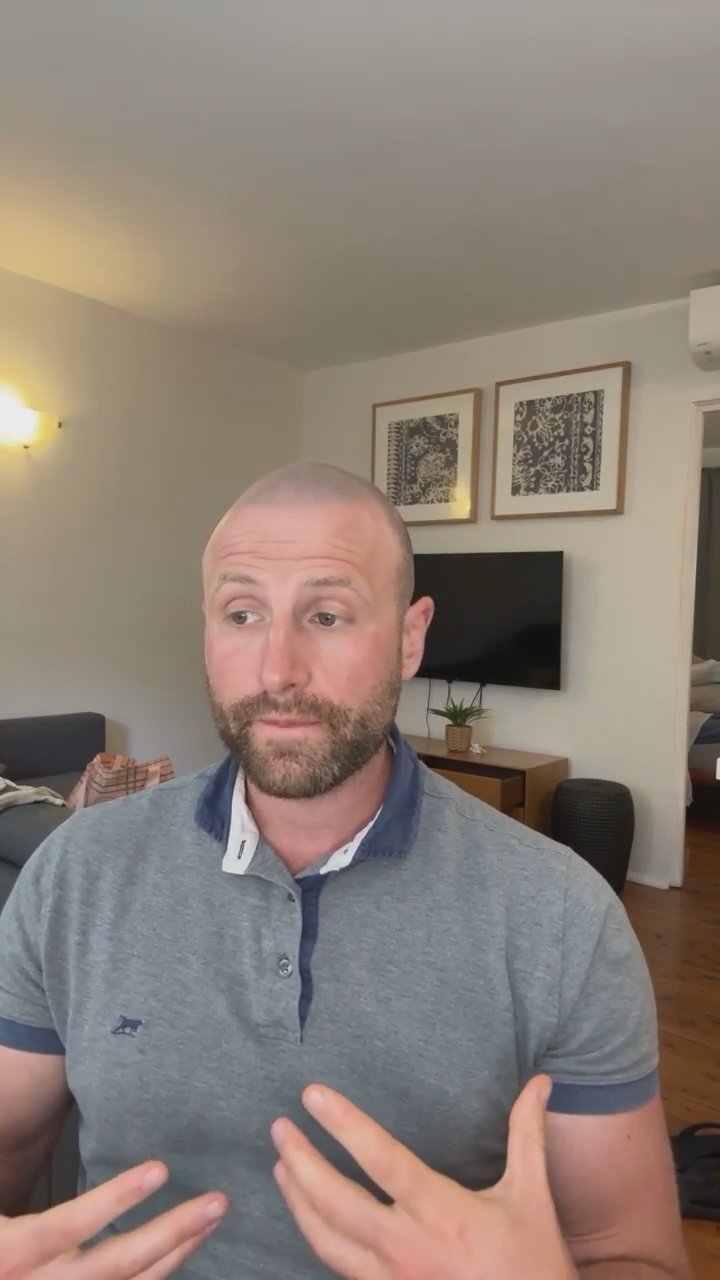
In this livestream I discuss some options to help people stop or decrease their drinking or use of drugs. We usually think therapy, treatment, or 12-Step–all great options, but these can be great add-ons or game changers in and of themselves!
Evan: It is good to be back. I'm settled a little bit better and can hop on more regularly. Today I have a topic that I think a lot of people will find interesting.
Today I want to talk about different medications that can help you to drink less alcohol. Some of these medications also can help with other compulsive behaviors. If you all have any experience or have questions, be sure to put those in the comments here.
One of my favorite medications that can help people decrease their drinking is called naltrexone. It does work on your opioid and dopamine receptors in your brain. Addiction tricks our brain into thinking that we need it to survive. The more space you have, the more time you have to think things through.
Naltrexone dampens the dry hay, so making it less likely to ignite at the first spark. People will take it to who struggle with, say, gambling. And maybe quitting smoking as well. Just like any other treatment, just remembering, remembering to take it.
All right, let's go with number three. This next one is called a camp roll. A camp roll is one that a lot of people have used for a long time to help with alcohol cravings. Just another prescription.
Ant abuse makes you extremely sick. Increase the time between stimulus and behavior, extremely important. You have to think twice before taking that drink of is it worth it?
Medications can make recovery and reaching your goals 15 to 30% better. When it comes to substances, especially if you have severe addiction, you can use all the help you can get. Next week we'll do a basic Q and A and ask me anything.
Cadre fam. Here we are again. Let's get a light on the situation. It is good to be back. It is good to see you live once again. I'm settled a little bit better and can hop on more regularly. I'm Evan, your resident mental health and addiction therapist. We'll see if we have some people joining, but today I have a topic that I think a lot of people will find interesting and I find that may generalize to a decent amount of people. We got a couple people hopping in, but today I want to talk about different medications that can help you to drink less alcohol.
What's up, Luke? But I think this is also pertinent for a few reasons, right? Because a lot of topics I may talk about may seem a little bit niche, whether it's about certain types of ptsd, trauma, other disorders. But I find that a lot of the videos that I make that are about alcohol. What up, Speak Warner? That are about alcohol, things like functional alcoholism. Right. A lot of people have questions about their drinking. And a lot of times alcoholism really runs a larger spectrum than maybe some of the other drugs, let's say, like heroin.
You don't have a lot of people that are just like kind of dabbling or functional heroin users. I mean, they're out there, but it's not the norm. But with alcohol, it really runs a gambit. So there's a lot of those people in the middle that may not be severe enough to go to treatment, but it still does have a negative impact. It's affecting their relationships. That's a really big one. Working with a lot of divorce cases and custody cases that I do. As far as addiction goes, that's a big issue that always comes up.
And I have some videos on that here too. So I find that a lot of people will find this beneficial. So whether that is for you, maybe who wants to drink a little bit less. But a lot of times, too, for folks who are in the more severe category, who want to maybe take more of a harm reduction approach and try to find ways to drink less or in general, a lot of these medications will help you not drink at all. A lot of them have different mechanisms to decrease cravings and urges. But also another reason this may apply more is it's interesting that some of these medications as well can help with other compulsive behaviors and not just drinking drugs, all of that different kind of thing.
So if you all have any experience or have questions, be sure to put those in the comments here. I will read them and we'll answer your questions. And it doesn't even have to be about the topic, anything mental health, addiction related or otherwise. We're just here to have some fun, have a conversation. But in the meantime, I'll just tell you about some of these different medications, talk about how some of them work in different ways. A lot of it may be a little bit above my pay grade in the biology neurology realm, but I'll do my best and just share some of my experiences that I've had with some of the different medications.
So without further ado, if you got any questions, comments, let me know. If not, let's get into it. So first, medication, let's just start off with one of my favorites out there. So one of my favorite medications that can help people decrease their drinking, we call it like a frontline one because this is a very common one that gets prescribed for individuals who want to drink less, have less cravings. It's used for opioids quite a bit as well. It's called naltrexone. So naltrexone is a medication and it does work on your opioid and dopamine receptors in your brain.
So kind of like, you know, the opioid receptors, obviously what goes with opioids? Endorphins. But dopamine also is that pleasure chemical, right, that anticipates reward, replay. What are we replaying? So it anticipates reward. So, for example, right, if I'm going to eat a meal, let's say I'm hungry, I'm going to eat a meal, right? And I start to eat it, I get that reward chemical because it is a survival mechanism, right? So the things that tend to feel the best, that give me that sense of pleasure, that quick hit of dopamine, are things associated with survival.
And that is why addiction is so unique and damaging is that it really tricks our brain into thinking over time that we need it to survive, not just want it to have fun. And that's really where that disease of addiction comes in, right? There's kind of a fine line there. But you know, in its most severe cases, it, you know, people will choose drugs or alcohol, overeating over their families, over everything, because you feel like you need it for survival. And that's why it could be so difficult for certain individuals who see others suffering with addictions and they can get really frustrated, like, how can you do this to yourself, to your family?
But what they don't understand is they don't know what it's like to feel be like if I just took your food away and said, you know, you can't eat anymore right now. Difference is, you would become malnourished and die. However, it is still to that same intensity, if not more. Those cravings are so powerful, right? So that's where naltrexone could come in and really help. Almost like I kind of view it, like, let's say if you have a brain that's really prone to addiction, it's like having a big pile of dry hay that even a spark that goes on, it will set that fire.
Whereas I feel like naltrexone, it's almost like spraying a little bit of water on the hay right now. It's not going to prevent it from going into flames if you put a lighter to it, but it will help where it won't spark up that addictive process quite as quickly. So maybe you'd have to hold the lighter to it for a few more seconds. But sometimes when it comes to addiction, just having that little bit of space between the thought, the craving and the behavior, the more space you have, the more time you have to go to that part of your mind that could think things through, that prefrontal cortex and make a more conscious decision to not use.
Where whereas a craving and use is a very impulsive. It's very reactionary, right? I have a feeling, Boom. I do it. I don't think it through. Alec, what's up? I didn't see that you joined. So Speak Wonder says. I've always wondered how it is that some people manage alcohol consumption with no issues, while some others are off to addiction with the very first drink. That's a great question. I think you could think of it, like, in a way of, like, how are some people better at playing basketball? It seems like you put a basketball in their hand and they just shoot.
They hit it. They're able to dribble, move. Right? So there's just some things that some of us are better at than others. There are some things that we are more prone to than others. Some people are more prone to cancers. Right. A lot of it is genetic, biological, pathological, our personalities. Right. And with alcohol, I find even more than some of the other drugs is they need to be new. It is much more genetic in the way that alcohol impacts you. Like, let's say with like, opioids. Let's take that as another example.
I find that when people take opioids, they have like one or two reactions. One is they're like, wow, this feels great. Wow, I'm loving it. The other is someone is, like, throwing up right now. There's maybe somewhere in the middle where you. You get sick, but you get used to it, and then you really like it. I'm sure you can teach yourself to like opioids if you just have a little practice at it. It's kind of like cigarettes, you know, the first time you smoke it, but then you do it enough. Oh, I kind of like this.
Right? So. But people have different reactions to different substances, and they're more prone to liking it or addictions or even thinking about it. Like, spicy food, that's another. I think that'd be a good example is like, spicy food. Whereas some people just naturally like it more than others. However, you could always develop a taste for it. Like, one of my favorites is Korean food, and pretty much everything they make is spicy to some degree. But, you know, there's no one in. There's probably not that many people in Korea.
They're like, I don't like spicy food. Right. So the more you expose yourself to something, the more you'll like it. However, there is, you know, just some people like certain things more than others. So I think that's maybe another. You know, these are just a few different ways to look at it with addiction, because it's really no different than any other thing that makes us different as people and our bodies. I always say everybody, and everybody is different. So you know what my body reacts to, whether it's different medications, foods, allergies, whatever.
Right. A lot of people compare addiction to, like, an allergy. And that's a good, you know, a good example because, like, I put something in my body and it reacts to it. And with addiction, the reaction is I crave more. It gives me the sense of ease and comfort that other substances don't. So bringing it back to naltrexone, for those who have these intensive cravings, draw to these substances like opioids, like alcohol. It really kind of dampens the dry hay, so making it less likely to ignite at the first spark.
Now, what's cool about the substance prescription is they're using it for a lot more now than just opioids and alcohol. People will take it to who struggle with, say, gambling. Sexual compulsivity is a big one. I used to work with this one clinic, and they used to often prescribe it to folks who were struggling deeply with sexual compulsivity. And they found it to be really helpful for all the same reasons. And maybe quitting smoking as well. You know, that's another. That's another one that could be a benefit.
So you have that naltrexone. So that again, is one of my favorite. And it can be given too. So it's like a pill that you would take every day typically, but now they have versions where it's like you could get a shot and it's longer acting. So I don't know if it's a month or three months or whatever it is. But you don't have to keep, you know, remembering to take it every day because like a medication is not going to work unless you take it. And that's probably one of the more difficult parts with any of this approach is just like any other treatment, just remembering, remembering to take it.
You know, you. You got to, you know, just the adherence of medication just without just on average is like 30, 40% or something like that. So it's important to be diligent about it because if you want it to work like any other medication, you got to remember to take it and be motivated to take it. And if so, it'll. It'll be quite helpful. So number one, naltrexone. Let's go for another. Now this one's interesting, and this one I'm sure you've heard of, and it's all the rage right now. And it's not necessarily in some ways that aren't gonna be like FDA approved quite yet for like this specific reason.
However, people are finding that when they get on the GLP1s, right, those weight management medications that are so popular right now, the Ozempics, Wegovies and whatever, mounjaros and all of those people are finding that not only does it help curb their cravings for excessive food intake, but they're finding two for alcohol. And this makes a lot of sense, and it really, to me sounds a lot like an naltrexone and how it impacts the reward system. A lot of this is mechanisms of the brain and not necessarily like, I need to eat this much food, but it becomes this intertwined of I need to eat for survival, but also getting trapped into cravings for these fattier, higher caloric foods where we live in a time and fortunate enough that we don't have to struggle for every single meal.
Most of us, right, that it's almost the opposite problem where there's almost too much of an abundance of calories and too much calorie density in our food. So it is this interesting interplay with the brain and body. Something like an ozempic could help. So is that something you should get on to just stop drinking alcohol. Probably not at this point. Unless, you know, you also had the weight management thing. So I don't know, maybe they will eventually do it for just that, as an off label or something like that.
But until then, we'll just have to wait and see. All right, let's go with number three. This next one is called a camp roll. And this one's been around for quite a while. And I probably should have, like, read up on it again before I did this. I forget exactly the. I think it may be an older, like, antidepressant or something like that. Don't quote me on it, Jules, what's going on? But just know that it's very similar. A camp roll is one that a lot of people have used for a long time to help with alcohol cravings.
A lot of people have found that one helpful. Just another prescription. I just forget. I mean, I just, you know, I'm going to do a more in depth video on this. So I did a little research, but it's been a few weeks. So that one I always kind of blank out on, but. But that's another good one as well. So let's go on to the next one. So this one is super interesting. This one is called Ant abuse and much different than the others. I don't know if it like really in and of itself decreases cravings, but what it does is it as it enters into your body and your bloodstream when it is in your system, when you take an alcohol, it makes you extremely sick.
I'm glad you found this helpful. Helpful. So it makes you really sick. So it's almost like. It's almost like negative reinforcement or something like that wouldn't be that. It's basically like a preemptive punishment, right? So like, knowing that I have this in my system, if I drink, something bad is going to happen. Whereas like some of these other drugs, it takes away something negative, which is like the craving that is unwanted. And some of those other drugs too, maybe even dampen some of the effects you can get when you take it.
But with this one, it does make you really sick. They may sound like, what would I want to do that? But it's something like it just. It's almost like an insurance policy, right? It's like, if I take this every day again, what I talked about before is you want to increase the amount of time between stimulus and behavior. Stimulus, meaning I want to have a drink. And taking that drink, the more time you have here, the more of an opportunity you have. To make a conscious decision not to do it again.
Use addiction is very impulsive. I want it, I go do it. I don't think about it. Don't think about the consequences. I just do it right. Be like, I'm really hungry, and I have for me a bag of Takis right here. And I'm just like, eating, eating. And then I'm like, oh, I got heartburn. Every time I eat Takis, I get heartburn. But I love those stupid things. So I gotta just be careful in my Takis intake. Like a high school kid in Minneapolis or something. They love those Takis, so. So do I. Where was I?
So, yes, increasing the time between stimulus and behavior, extremely important. Now, does this increase the time? Not necessarily, but it kind of forces to increase. Because knowing in the back of your mind, you have to think twice before taking that drink of is it worth it? Because in that moment, you're like, right, so you could have woken up that morning, no intention, no craving. Then all of a sudden, something happens during the day is something stressful, something positive even. You know, like, there's a lot of things that could bring on a craving.
Or just having that thought, man, it'd be nice. It's a nice, hot day. Let me have a sip of beer. Although I'm not in the US Right now, so it's a nice, hot day. But there, it's like, oh, it's a cold day. Maybe some cider, something like that or something, you know, this mental association. And maybe in that moment, in that craving, like, God, I wish I didn't have this antibuse in me because I really want to get drunk. But in that moment, you took it, when you took the medication, when you decided to get on it, you were in a more, let's just call it, sane place, right?
A place where you're able to think more logically and make a healthy decision. Whereas when you're in a craving, it's like it kind of brings you into this separate world where nothing else matters. You don't think about it. It's like you're kind of in this, like, wonderland of everything that's blurry. And all you could see is that drink. And all you want to do is get that good feeling. And everything else, the future and the past go out the window. Whereas with an abuse, at least, it kind of snaps you out of that a bit because you're like, oh, crap.
Like, I took this medication. It's been in my system. If I take this, I know I'm going to get really sick, Is it worth it? Then that gives you a time to actually stop and think, okay, is it worth getting. Do I want to drink this bad to get sick? And by the time, let's say you say, all right, no, I'm going to wait. Usually by the time that craving goes away because they're fleeting, then you have an opportunity to say, well, f***, I'm glad I didn't do it. I was almost. D***, I almost had a drink there.
I'm glad I had that Antabuse, because I, you know, otherwise I probably would have drank. And then you go back to that place of consciousness, insanity, you know, Whereas, like, you know, but again, it's not a foolproof plan because over time, if you really want to drink, you'll just stop taking the medications. And that's not the ant abuse's fault. That's just. That's just emblematic of you not being in a place or not having the right resources, support or even motivation for whatever recovery you're trying to seek, right?
So it's like, so a lot of these things are the medications. For some people, they can be that game changer. But probably most often there's something to. Let's just say I'm just throwing a random number out there. Make recovery and reaching your goals 15 to 30% better. So it's not everything, but it's significant enough that it can make the difference, right? Imagine if you could run 20% faster, be 20% stronger, whatever sport you're doing, you know, you're not going to be in the Olympics, but it's going to make a big difference in your performance.
Or if you could be 20% sharper, more focused. Think about that, right? May not fully change your life, but maybe enough and it would be really helpful, you know, or it's like if I told you have to carry this backpack of rocks up this mountain. You probably notice If I took 20% of them, 30% of them out there, and it would make your. So it improves your quality of life as well. It just makes things a little bit easier, which we can use. When it comes to substances, especially if you have severe addiction, you can use all the help you can get.
There is no shame in it. There's no shame in needing or wanting to take a medication because again, could make the difference of recovery or not, but also just quality of life. So there's probably a couple others out there, but those are four the main ones I wanted to hit that are often being used or at least interesting as far as like the Ozempic and we'll see where that one takes us. But if you have any questions, let me know. I'll have a video out on this detailing a little bit more. But next week we'll do a basic Q and A and ask me anything.
So if you have any questions, feel free to reach out to me on here, tag me in community notes, whatever, and have some questions that I've built up over time. So if not, we'll just do some of those and feel free to always join into the lives, ask questions, and I love to answer and interact. Thanks for all those who came in, participated or participated by listening. We'll see you all next week right around this time. Have a good rest of your evening over there and we'll talk later. Bye. Cheers.