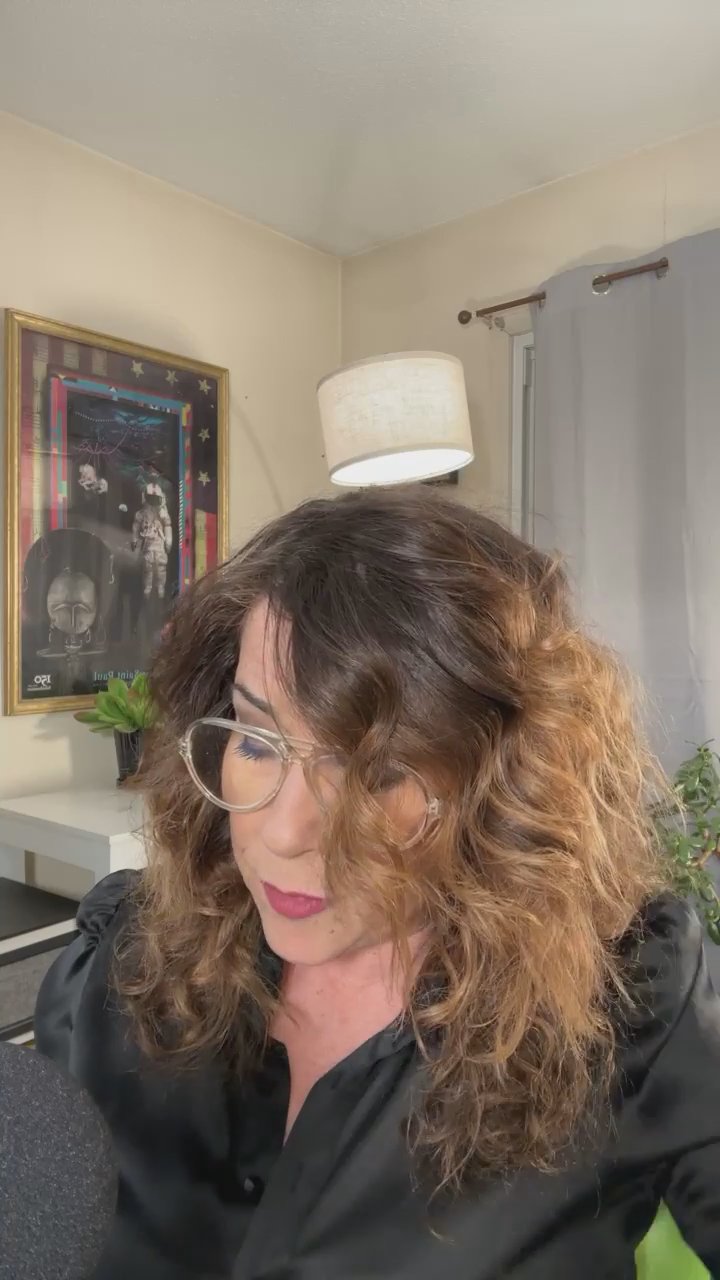
One of your resident comedians here on the Cadre Sphere. Shannon talks about her own PTSD and how she's trying to keep trucking. From Strength to Strength is about finding success, happiness, and deep purpose in the second half of your life. Brooks does not reveal who the person is in the book.
Tiffany Norton: Welcome to Comedy Centered. One of your resident comedians here on the Cadre Sphere. Barack Cable. Love it. Rockin the Barackin. Super excited.
Shannon: Valentine's Day is kind of a mixed bag. Shannon: By saying you love someone should be an everyday occurrence, not a holiday thing. Shannon talks about her own PTSD and how she's trying to keep trucking.
From Strength to Strength is about finding success, happiness, and deep purpose in the second half of your life. Author Arthur C. Brooks does not reveal who the person is in the book. Here are some passages to give you a feel for some of these ideas.
People who choose being special over happy are addicts. The likelihood of drinking rises with education levels and socioeconomic status. People in high Pressure jobs tend to self medicate with alcohol, including drinking at hazardous levels.
Workaholism was coined by psychologist Wayne oates in the 1960s. The average CEO spends 62.5 hours of work or hours a week at work. Workaholics convince themselves that the 14 hour day is vital to their success. Economists consistently find that our marginal productivity tanks with work hours beyond eight.
What workaholics crave isn't work per se. They kill themselves working for money, power and prestige. For some, the thrill of success blots out all blackness of normal life. If you are close to retirement or hovering around the 50s, this book is a godsend.
The moral case against objectifying others is straight, fairly straightforward. It starts to get more complicated when the objectifier and the one being objectified are the same person. Studies show that self objectification leads to a sense of invisibility, a lack of autonomy.
At its roots, self objectification is a problem of pride. Pride is often thought of a good thing. It hides inside good things. People who fear failure don't take much pleasure from their actual accomplishments.
Do you define your self worth? How about you know, and you can interact if you want. If there's one that you do react to in this and you want to drop that number in the chat, remember this is anonymous. It helps us see that we're not alone and other people are going through that same thing.
Do you define your self worth in terms of your job title or professional position? Do you dream about being remembered for your professional successes? Is your retirement plan to go on and on without stopping?
So how can we meet ourselves with Grace where we are? We have new information we talked about a lot. It should never be designed to make you feel bad. Storytelling is our most powerful tool as humans. How can we choose happiness over exterior success?
Arthur Brooks' new book is Finding success, happiness and deep purpose in the second half of your life. He says we can all learn from everybody else's story. There will be lessons, lessons we learned from. Keep coming around. That's what we call our problems. Hashtag positivity.
Hello, everyone. Welcome to Comedy Centered. Hi. I am Tiffany Norton, your host and resident. One of your resident comedians here on the Cadre Sphere. Welcome, welcome. Barack Cable. Rock. Love it. Rockin the Barackin. Very good. Thank you for joining. Super excited. It's a, it's a Sunday. I'm in better spirits than I have been in the last couple weeks. I've had some, had some good conversations with some people lately that, you know, are kind of reminding me of the important things. But also too, it was, hey, junk food junkie, come on in.
Welcome, welcome. So one of the other things that transpired, I don't know if you guys were aware. Hi. Oh, happy Sunday and good evening, too. There was a holiday on Friday. Did anybody, anybody hear that There's a holiday this past Friday. Valentine's Day. Yeah. Which, you know, is kind of a mixed bag. You know, on one hand it's like, oh, we shouldn't care and it's made up and, but also too, like, it's, it's, again, it's kind of like the holidays a bit. It's one of those benchmarks where you're like, well, where's my relationship at?
And this and that and the other thing. And, you know, anyway, so hopefully, you know, I know as someone myself who has struggled with a lot of, in the past, alcohol misuse and, and stuff like that. Those, those kind of nights can really get you down and really get to you and, you know, so, you know, you have to give yourself some grace. It's not, you know, it's not easy being alone sometimes, you know. Hey, Shannon, welcome in. Happy Sunday. How it was your Valentine's Day. But yeah, I, I was going to say too, I, I'm, I'm trying to incorporate more like polls and engagement into the chat.
So drop a one if you've ever had just like a miserable Valentine's Day. If anything else, it'll make me feel better. Anyway. Yeah, mine wasn't great. I'm not going to go into detail, but whatever, it's fine. I'm still here. That's the important part. Right. And so are you guys. So I'm trying to make sure that I'm keeping us in the light, you know, and myself especially, because there's a lot of stuff we can, I mean, there's a lot of rabbit holes and, you know, as I've been sharing over the last, you know, I think in April it'll be a year or so that I've been with you guys, but about my own PTSD and stuff, and I'VE I've been finding for a really long time.
I've been stuck in it for. On and off in varying ways for the last several months, so. But I'm trying to keep trucking. Oh, we're getting some comments in the chat here. Yeah, it was good with my kids. Right, Right. Guess the holiday where the florist restaurants, car companies. Yeah, yeah. Like, it's nice. The idea behind it is not a bad idea. We should all express love. We should all say thank you. Like, you know, it goes really fast, life. And, you know, if we get so fixated on what isn't or what we could have been doing or what it could have been and all that stuff.
You know, we had talked about that a couple of them ago, but, you know, oftentimes we make these, you know, my own ownership myself. I know I do this invisible contracts with people. Like, I, I, I have an expectation. I kind of want something. I think they understand that, and then they don't, and then I get upset. Well, I didn't. It was in my head the, the contract. So, you know, but that's the fun part about, you know, diving into why do we have some of these behaviors and, you know, they're unconscious, and they're unconscious for a reason, you know, but that's, you know, bringing them into the light, holding them up, looking at them.
Over time, it becomes a lot less scary. And the more ownership you kind of have and just own it, you know, the more you're like, well, and if people don't get it, well, then they don't get it. It's okay. Know, by saying you love someone should be an everyday occurrence, not a holiday thing. Yeah, it should be, you know, it should be, ideally. I don't know. I mean, like, although I've been in situations before where, like in relationships where I'm like, uhhuh, I do not love you right now at all.
But, you know, but you're right. And, And I think if you can't say I love you, you at least speak to each other with respect. That's. That's the part that, that's the part where, you know, that has to be that. That is love. You know, holding. That's real love. That's. That's not saying it. That's doing it. You know, holding space for someone's opposing opinion that may not be, you know, positive about you. That's. That's not easy, and it's not fun. And I said we were gonna have fun tonight, so. Okay, so, new book.
All right. I know, I was going on. I was in a rut there. But. So this is by an author, Arthur C. Brooks, and it's called From Strength to Strength. Okay. And the reason why? It's finding success, happiness, and deep purpose in the second half of your life. Now, I don't normally go for, like, I've read a lot of corporate management style typey books and you know, this. This title to me, kind of. I was like, I don't know if I'm gonna get real nuggets out of it, but I listened to a podcast that the author was on and his story was so engaging.
I was like, all right, I'm in, I'm in. I'm in on this title. Even though this wouldn't necessarily be where I plunked down for hardcover hardcover money, I paid. Okay. The man on the Plane who Changed My life. This is the first chapter. Okay, let me get a sip. I was. I've been. Oh, man. There we go. Cheers. It's Diet Coke time. Okay. It starts with a quote or a conversation. I should say. It's not true that no one needs you anymore. C. the plane was dark and quiet, and most people were either sleeping or watching a movie.
I was working on my laptop, feverishly trying to finish something now completely lost to my memory, but that at the time, seemed to be of very crucial importance to my life, happiness, and my future. A man I assumed to be her husband murmured something almost inaudibly in response. Again, his wife. Oh, stop saying it would be better if you were dead. Now they have my full attention. I didn't mean to eavesdrop, but I couldn't help it. I listened, half with human empathy and half with a professional fascination of a social scientist.
I formed an image of the husband in my head. I imagined someone who had worked hard his whole life and relative obscurity. Someone disappointed at his dreams unfulfilled. Perhaps the career he never pursued, the schools he never attended, the company he never started. Now I imagined he was forced to retire, tossed aside like yesterday's news. As the lights switched on after touchdown, I finally got a look at the desolate man. I was shocked. I recognized him. He was very well known, famous even then, in his mid-80s, he had been universally beloved as a hero for his courage, patriotism, and accomplishments of his many decades ago.
Of many decades ago. I have admired him since I was young. Now, the author does not reveal who this person is in the book. He keeps that private. And he doesn't reveal it in interviews either. So I know. I wanted to know too. Anyway, I've admired him since I was young. As he passed me up the aisle of the plane, behind me, passengers recognized him and murmured with veneration, standing at the door of the cockpit, the pilot recognized him and said, echoing my own thoughts, sir, I've admired you since I was a little boy.
The older man, apparently wishing for death just a few minutes earlier, beamed at the recognition of his past glories. I wondered which more accurately describes the man, the one filled with joy and pride right now, or the one 20 minutes ago telling his wife he might as well be dead. And I'm like, oh, well, I'm interested. I'm interested in that. So what I'm going to do is I'm going to pop through. I've got some passages that I had outlined in particular, and I want to just give you a feel for some of these ideas.
Then we'll, we'll, you know, we'll, we'll, we'll talk it out of it. But, you know, we've these images that we have in our mind of what something should look like as opposed to what something is. You know, those are ideas like, but how does situations feel? Right? So anyway, okay, this paragraph is called Hooked. Maybe I would prefer to be special rather than happy. The finance. The financier's words vaguely reminded me of something, but I couldn't put my finger on it for a few days. But then I remembered a conversation years ago with a friend who had spent a long time struggling with alcoholism and drug addiction.
He told me that he was desperately unhappy all through his addictions and was well aware of that fact. I asked him a simple question. If you were miserable, why did you keep doing it? Like the financier above, he paused before answering. I cared more about being high than being happy, he told me. That's when it struck me. People who choose being special over happy are addicts. Dang. Right? Maybe that sounds strange to you. Picture a person desperately hooked on booze. Probably the person you envisioned is down and out, self medicating against the traumas of a harsh world.
You probably don't envision someone who is successful and hard working. They are less likely to fall prey to addictions, right? That's what they say. Wrong. According to the Organization for Economic Operation and Development, the likelihood of drinking rises with education levels and socioeconomic status. Some agree, and I would believe, based on my work, that people in high Pressure jobs tend to self medicate with alcohol, including drinking at hazardous levels. Right, Shannon, That's a good punch.
Yes. This is Arthur Brooks. Yep. New York Times. Yep. Exactly, exactly, exactly. That bestseller. It's really good. But I mean, you got to take it. But. And he gives. It's like, I'm giving you the hard nuggets right here. But you go through this yourself because he's got. And we'll, We'll. We'll touch it in the end before we get out. Right. Some. Some ideas and things to, to, to, you know, noodle around. But. Yeah. Yeah. Okay. So drinking at hazardous levels, which can turn off the sensation of anxiety like a switch.
Tem. Now that I know. But alcohol isn't the only substance which strivers are prone to, or arguably even the worst. One of the nastiest and most virtual addictions I've seen is workaholism. This term was coined by psychologist Wayne oates in the 1960s after his own son asked for an appointment at Oats's office to see him, so scarce was his father's time. Oaths defined workaholism in 1971 as the compulsion or uncontrollable need to work incessant. Incessantly. The syndrome is epidemic. Or. I'm sorry, the syndrome is endemic to professionals.
Professionally successful people consider the sheer numbers of hours spent at work. 5 hours of work or hours a week at work. I'm okay. Sometimes when I'm reading just text. I get like, so ahead. My. My mouth can't get. Anyway. Leaders who work crushing hours often tell me that they have no choice if they want to do their jobs adequately. But I don't buy it. When I dig a little in my life and the lives of others, I usually find that workaholics are quite in a vicious cycle. They become successful by working more than others, thus more than necessary, but believe they have to keep up that pace to maintain their current astronomical productivity.
Yeah, because you're getting a big sense of your identity and your ego from that. That you. That you're the hero, you know? Okay, jumping ahead, if this sounds an awful lot to you like alcoholism, it should. Psychotherapist Brian E. Robinson has written extensively on the subject of workaholism and family relationships and shows that workaholics have many of the same patterns of behavior and estrangement with their spouses as alcoholics do. The addict feels misunderstood and under attack and engages in secretive behavior.
Meanwhile, the spouse feels neglected and Hurt. Marital dissolution often occurs. The workaholic then rationalizes the breakup as a case of ingratitude. You didn't appreciate me and all my hard work, right? As one man told me when I was writing the book, my wife wants the nice things that come from money, but is angry with me for doing what it takes to earn the money. Huh. Workaholics convince themselves that the 14 hour day is vital to their success, when in reality their productivity is likely severely diminished by that point.
Economists consistently find that our marginal productivity tanks with work hours beyond eight or 10 per day. So what is someone getting from the experience of being the worker bee? Well, you're getting a lot of praise, you're getting promoted. More than likely, you're getting a lot of good positive feels. But bringing it back to like group family dynamics. Were, was that, was that how you kind of showed up in your family? Were you the overachiever? Were you the one who was, you know, the very self sacrificing, I'll do anything for the team one, or was there another member of the family that used to occupy that role and then they exited out.
And you're like, I'll do that now. Because a lot of times these all cycle back to our first group. And that's the group we got to understand. How do we come up out of that group, right? And then how does it apply to the other groups that we've got to navigate? Because we all have to work, we have to figure these things out. So, okay, success, addiction. Before we look for solutions, we need to dig a little deeper still. Alcoholics are addicted to alcohol, that's true. But in reality, they are hooked on what alcohol does to their brains.
And how many times have I said that is a solution to a problem? It's what, you know, it's the, it's the chemical reaction, reaction to it. Alcohol is dopamine. It's a dopamine hit. So, okay, but they're, yes, they're hooked on what the alcohol does to their brains. And so it is with workaholism, what workaholics truly crave isn't work per se. It's success. They kill themselves working for money, power and prestige because these are forms of approval, applause, and compliments, which, like all addictive things from cocaine to social media, stimulate the neurotransmitters.
Dopamine, why? Right. For some I've met, the thrill of success, albeit monetary, blots out all blackness of normal life. Achievement is a way to pull oneself above a grim baseline mood. So if Your baseline is grim. And you, for whatever reason, the way it's. Again, it's a problem. Your baseline is off. And so how are you solving it? By working even harder. It's another attempt to solve a problem that ultimately isn't healthy for you. Okay, let me catch up on the chat. Okay. I was a workaholic before retiring and it definitely.
Yeah. And a lot of people don't realize too, once you. It's very hard. And that's what this guy goes on and on. And this. I so encourage this. If you are close to retirement or hovering around the 50s, this book is kind of a little godsend, honestly, because that's the perspective he's writing it from. And he's a journalist who's had success, but he's still chasing it and he's got a wife and kids to navigate. And, you know, his. This one plane, this one plane ride, when he's like, you know, when it dawns, I'm like, well, if you're not happy with your life, what am I doing?
You know, like if anybody should be satisfied that they've done enough, I mean, the guy's like a national hero, apparently. And, and like, if anybody should be cool with their accomplishments, it's this guy. And he's like, screw it, I'm out. What? You know, so I really encourage you, especially if you're going through change. Work change. Leia. Yeah, Layoffs. Anyway. Okay, okay. For some, I have met the thrill. Okay, yeah, okay, I read that part. Something is clearly wrong when the idea of being normal induces enough panic to make someone neglect the people they love in favor of possible admiration of strangers.
Owie, owie, owie. For me, I'm a stand up comedian and I spent a lot of my child's youth doing. I mean, I didn't start doing stand up until my kid was 7. But when you do comedy at night. So, admiration of strangers anyway. But it is strikingly common amongst among some of history's greatest drivers. Take Winston Churchill, perhaps the most impactful statement of statesman of the 20th century, he often referred to his black dog. Black dog. A melancholy that he treated with whiskey, obsessive work and an unquenchable thirst for greatness.
Unable to leave his tortured mind unattended during a crushing schedule, as a wartime prime minister, he simultaneously wrote 43 books. Similarly, Abraham Lincoln was desperately sad off and on throughout his life, and at times suicidal, admitting once to a friend that he never dared to carry a knife in his pocket for fear he would use it on himself, not the Stories, they tell you about greatness and what success looks like, right? Because it's not about what success looks like. We know what success success looks like, what does it feel like, and when is enough enough?
And what is success for you? My idea of success for me isn't your idea, you know. Okay. Making yourself an object. From my earliest days, I learned of the evils of objectifying others. My dad went to great pains to impress on me that a man growing up, I was never to consider others, especially women, primarily in terms of their physical characteristics. I love his dad already. To do is to dehumanize them, which he believed was a grave sin. There is nothing new or even especially religious about this moral teaching.
It was, for example, one of the key themes of the philosopher Immanuel Kant, who wrote, as soon as a person becomes an object of appetite for another, all motives of moral relationship cease to function. Because as an object of appetite for another, a person becomes a thing and can be treated and used as such by everyone. Ow. This focuses almost entirely on sexual objectification and how it degrades well being. But objectification takes other forms, such as in work. There is this focus of Karl Marx, who wrote in 1844 the spontaneous activity of the human imagination, of the human brain in the human heart, operates on the individual independently of him.
It belongs to another. It is the loss of his self. This was his indictment of capitalism as an economic and social system that make people unhappy by making them into part of a human machine in which humanity is expunged and only productivity remains. He felt that by only focusing on human productivity, it was objectifying and reducing people. Because you're only appraising people's values on their physical attributes, labor, what they can contribute to the workforce and their overall, you know.
Right. Makes sense. I'm not trying to get in trouble for like a big, you know, socialism statement here. Okay, we're not going there tonight. Okay. The moral case against objectifying others is straight, fairly straightforward. It starts to get more complicated when the objectifier is and the one being objectified are the same person. In other words, with self objectification, which scholars define as viewing oneself from a third person perspective that does not consider one's full humanity. Examples of this would be staring into the mirror and feeling inadequate or worthless, or for that matter, filled with fulfilled and happy merely because of one's physical appearance.
Or the case of, or in the one case of work, judging one's own self worth for good or ill, based on job performance or professional standing. Studies among young women show that self objectification leads to a sense of invisibility, a lack of autonomy, and has a direct relationship with eating order, eating disorders and depression, pride, fear, social comparison and withdrawal. And I'll, I'll do this one, and then I'm gonna, I'm gonna hop ahead to some of the conclusiony stuff. At its roots, root root.
At its root, self objectification is a problem of pride. Pride is often thought of a good thing. In a modern society, we use it to denote admiration. I tell my kids I am proud of them, for example. Or I might say without embarrassment that I am proud of this book. But this connotation is relatively new. In almost all philosophical traditions, pride is a deadly vice that rots a person from the inside out. Buddhists use the word mana, which is Sanskrit, refers to an inflated mind that disregards others in favor of the self and leads to one's own suffering.
Thomas Aquinas defined it as an excessive desire for one's own excellence leading to misery. Pride is sneaky. It hides inside good things. St. Augustine astutely observed that every other kind of sin has to do with the consumption of evil deeds, whereas pride lurks in even good works. Right. And as we talked about too, you know, there's a difference between the word niceness and goodness. Niceness is a learned behavior. Niceness is a social construct that builds group harmony and curry's favor with you in social settings.
It's polite. And we are social creatures and we do operate on hierarchies. And so group harmony is always of a, of a high that groups, generally speaking, always have kind of a high desire to be cohesive and, and, and harmonious. Right. So the dissenting opinions can get shoved aside. Anyway, pride is sneaky. It hides in good things. It is sad irony for people who strongly fear failure don't take much pleasure from their actual accomplishments. Now this is so true for me. Like, you get the thing and then you're like, meh.
And you have high anxiety about not performing well at a crucial moment. My panic attacks, that's when I started getting sober because I started having panic attacks on. During my comedy shows. In other words, they're motivated less by the possibility of winning and gaining something of value and more by the fear about the possibility of messing up. Right? You're now the thing you got into. And you could see this. Like, this is maybe a real. I don't know, this is a great example. But I can think of many stories about how there's a young musician and they've got this great talent and they rise up and then once you get on top, it's just about other people trying to tear you down.
And how do you not, how do you not skid back? And that's choosing success over happiness. And that's what he's talking about. Right? That's his whole point. So, okay, getting started on your recovery. Maybe you have never fully realized your addiction before reading this chapter and you still aren't sure. Let's take a little quiz. Okay. This is in the book. I'm not doing it. In fact, Ham, do you define your self worth? This is question number one. How about you know, and you can interact if you want, but if there's one that you do react to in this and you want to drop that number in the chat, remember this is anonymous.
That's just for us. But the reason why I ask for those engagements like that is because it helps us see that we're not alone and other people are going through that same thing. And the way that this, this our Cadre app works, I don't get to see you guys. So I don't know. You know. Right. I don't really know if this. Right. If you guys like anyway. So if you want to, you can play along. Don't have to. No pressure. Okay. Number one, do you define your self worth in terms of your job title or professional position?
Number two, do you quantify your own success in terms of money, power and prestige? Okay. Oh, I'm two for two here. Number three, do you fail to see clearly or are you uncomfortable with what comes after your last professional successes? Four, is your retirement plan to go on and on without stopping? Well, that's mine. And I'm not saying that that's necessarily cuz I'm narcissistic. I'm just not sure that financially I'm going to be able to stop. Yeah, yeah. What retirement plan is looking a little grim at this anyway?
It's fine. Little joke. Number five, do you dream about being remembered for your professional successes? Well, yeah. Yeah, I do. Yeah. But if that's where we're getting our pride and, and, and those exterior successes are what we're going to measure our self worth against. Those successes are going to stop coming at that point. At some point. Just like the guy in the book. There's a hard truth that no one wants to understand, you know, through all life until you're faced with it. And the fact is that it's not always going to stay the same.
And your hierarchy in the arc of society shifts quite seismically the later that you go in life, there's a lot of freedom in. In the invisibility of being older. That's what I like is that, you know, I'm. Some people view it as a liberation. I'm more free to just say what I want and do what I want, you know, because I've raised the family and I'm, you know, I've got the time and all that. But other people, they miss the dopamine. They miss the dopamine. And I think it's particularly hard on men, you know, statistically and socially.
There's. There's a lot of. There's a lot of information to support that. Women are just, you know, a little bit more naturally in. Inclined to form community. And when men struggle when they retire because, you know, the wife is their, like their best friend. The wife, the partner, the everything. And then she's like, you are around a lot. Go do something. Go golf. Anyway, let me catch him on the chat. True fact, one of our country's greatest generals dealt with demons in his mind during World War II.
The general was Patton. Yeah. Which shows no matter how famous you are, you all will have faults and fears. Right? And. And, you know, there's. Fill the fear and do it anyway. Like, if it's something you really want to do, like, if it's something you want to do, you're gonna feel free fear. If it's something you probably shouldn't do, you're gonna feel fear. So, like, you gotta take the fear part, you know, and. And hold up that nugget and kind of analyze where it's coming from, but. Absolutely.
Right. Okay, so number one. Nope. Nope. Sometimes. Yeah. Yeah, exactly. It's what it is. Right. You got to make adjustments. You got to make adjustments. Right. So how can we meet ourselves with Grace where we are? We have new information we talked about a lot. Not super necessarily, like fun fun, but it should never be designed to make you feel bad, because the fact that there is somebody who read this book, and now this book is on the New York Times, and this book came through a radio and I heard it and I'm bringing it to you, means that people connect with it for a reason.
And, you know, that's the thing. When you find people that. That when you find good journalists and good authors and storytellers, storytelling is our most powerful tool as humans. And it's what connects us, you know, going back to the caves and the fires and everything, you know, and so just putting yourself in the path of new information is tremendous. You're working on it, you know, and, you know, we live and we learn, but true satisfaction in life, I hope will, will reveal itself to my, to me even more, you know, as I go down the line.
But to act like these things don't apply to me and that, you know, I haven't had a lot of insecurity in my life and thinking that I just have to just do everything to, to get the validation I didn't necessarily feel like I got when I was younger. And so, you know, we wind it all way back down to the family stuff. And again, not because we think we have bad parents. It's not because we, you know, I'm not trying to blame everything on every, you know, everybody else. It's, it's my ownership. But, you know.
Yeah, yeah, yeah. It's, it's, I feel like you're better for it. Right? Like, let's, you know, how can we choose, how can we choose happiness over, you know, exterior success, interior success, you know, so, anyway. All right. Hey, another great one. Thank you for everybody who stopped by in the chat. We'll be back next Sunday for comedy centered at 6:00. If you catch this in the replay and you have any questions, again, I like to always end the author, Arthur Brooks. Arthur C. Brooks. From strength to strength, Finding success, happiness and deep purpose in the second half of your life.
And I just think it's a fantastic read for anybody who's going through career changes, life changes, kind of midlife crisis, period, you know, because we can all learn from everybody else's story. And, and we can also feel a lot less alone by doing that, I think. So. Cool. When the guys get together, it always seems to be status level. We always ask, what do you do for a living in a job? Right. And which is, you know, not, not necessarily bad, but we've been indoctrinated that financial success and work success just, you know, is some kind of, like, validation that, like, you're better, like you're a better person.
It's like, that's not how I roll. I don't, you know, like, we are all going to have successful periods in our life, and we're going to have unsuccessful periods in our life. And, you know, sometimes you're just seeing someone's successful period because, you know, there's, there's not a lot of people that get through this deal unscathed, it seems to me. And, and, and that is it. I mean, that is Buddhism in a nutshell. There will be lessons, lessons we learned from. We don't have to repeat lessons we don't learn.
Keep coming around. You coming around. Opportunities. That's what we call our problems. Opportunities. Hashtag positivity. Okay, everybody, stay centered. Have a great, great week, and I will see you next Sunday. Thank.