Tiffany Norton is a stand up comedian and a late diagnosis neurodivergent. One thing she thinks about is that she doesn't need to know everything about every documentary. It all comes down to motivation. The turning point towards healing is a mysterious and often exciting passage.
Tiffany Norton is a stand up comedian and a late diagnosis neurodivergent. We'll continue our conversation from last week about the Super Bowl. One thing she thinks about is that she doesn't need to know everything about every documentary.
"I feel very disoriented right now. I feel like there's a lot of uncertainty " Having a narcissistic tendency or reaction is completely healthy and a normal thing. It all comes down to motivation.
The turning point towards healing is a mysterious and often exciting passage. Sometimes a crisis is the catalyst for this healing opportunity. Other times, only one small, painful event occurs in a long cascade of similar events. We continue to employ these defenses in adult life to survive.
We have to develop a mask. That's the defense mechanism, that's the armor. If we use the same defense mechanisms to protect ourselves in childhood as adults, we're gonna seem very childish in adulthood. The assistance and support of competent therapists is strongly recommended and often required.
We should really start with ourselves. We want to identify others behaviors and categorize their behaviors, but we have very little interest in doing our own. I think it's nice to honor sports as an art form. Super Bowl Sunday.
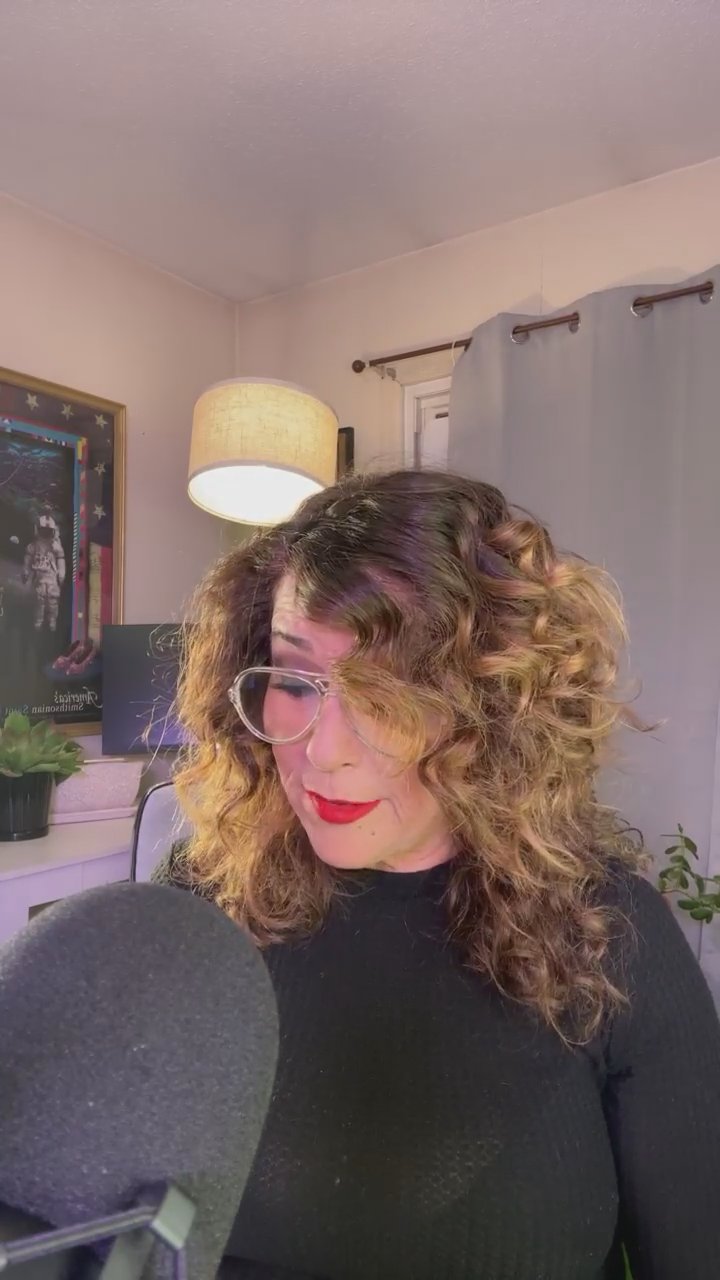
Greetings, everyone. Ooh, my lipstick looks extra red with my lights today. Oh, man. Looks like bright orange. How is everyone this Sunday? It is comedy centered. It is I, Tiffany Norton. Hey, it is. Did not dawn on me that it's the super bowl right now. So I don't necessarily anticipate a ton of people storming in the, in the room, but maybe no one cares about the game. Maybe, maybe no one wants to have snacks. That's a possibility. Right. But anyway, for those just joining in or maybe watching in the replay, my name is Tiffany Norton.
I'm a stand up comedian and a late diagnosis neurodivergent. Hey, Ms. Shannon. Come on in. Shannon. I was just saying I don't know if anybody's gonna pop in during the Super Bowl. I wasn't thinking about that. But yeah, like it's, it's interesting. I don't have a dog in the fight really as far as the game tonight, because I am a Vikings fan and we were, we were knocked out. Not necessarily unsurprisingly, if you followed the Vikings as long as I have. So there's that. But I thought it might be appropriate to maybe continue our conversation a little bit from last week.
I've been noodling on a couple of ideas. One thing I was kind of thinking about. Well, and we might, we might get into it later in the, in the chat, but I've been watching some documentaries and sometimes I will say this. I'm just something and I may be just saying it out loud. So I'll remember for my own self next week. I don't need to watch every documentary. I don't need to know everything about everything sometimes. Right? Like sometimes just having the amount of information I have in the beginning of the morning, it should just be fine.
I shouldn't, shouldn't necessarily have to feel like I constantly have to absorb this stuff because one of them I watched kind of freaked me out. But anyway. But I thought it might be interesting to return back to I after our discussion last week. We were, we were into the wizard of Oz and other narcissists and I was reviewing a couple of the passages and there's just so many great nuggets in this book. So I thought maybe it might be appropriate to, to share on this one because I don't know if anybody else is feeling this.
I feel very disoriented right now. I feel like there's a lot of uncertainty and a lot of unease as to what all of these large changes that are all suddenly happening in the United States are going to mean ultimately, and I'm not trying to project doom and gloom or any of that kind of stuff, but it's, it feels like an overwhelming amount of change in just three weeks. And I'm finding that I have to literally snap myself out of it a little bit. Like the constant ingestion of, of all of the, all the stuff, right?
So bringing it back to what we were kind of talking about last, misinformation, disinformation, you know, manipulation, all these types of things, these are all psychological human characteristics, right, that we all employ to varying degrees, right? You know, all humans lie at some point, right? All humans maybe manipulate at some point, right? Like know, cop pulls you over. Do you tell them exactly everything? Maybe, but maybe not, you know. And so again, I always try to caution whenever we're getting into discussions about narcissism that having a narcissistic tendency or reaction is completely healthy and a normal thing.
That's a totally human thing, right? Because we are self centered. We are the centers of our universe is always ourselves, right? So we can only process through our vessel, right? So I don't bring this stuff up to say, like, I don't want, I never want anybody going around like, well, you're a narcissist now and I know, you know, like, because judgment, blame, all that stuff, it serves a purpose, especially when you're hurling those accusations at other people. I mean, are you doing it to help foster communication with someone who might be challenging in your life or are you just throwing out your hot takes because it feels good and you feel like being, you know, you feel like picking on someone, you know.
So it all comes down to motivation. And if comedy centered is anything, that's one thing I try to at least try to get to is, is viewing things from maybe a more of a centered spot as opposed to right, wrong, left, right. I, I am. Gray is. Gray and black are my favorite colors. And I feel like most of the things that we wrestle with are, are in that range, you know, to varying degrees. But anyway, so chapter five in the wizard of Oz and other narcissists is titled you're not in Kansas anymore. Cute, right?
If you remember the wizard of Oz, the healing journey for the adult child of the narcissistic personality disordered parent. All right. The turning point towards healing is a mysterious and often exciting passage. Like the feelings before a rainstorm. A heaviness hangs in the air and then suddenly the pressure drops and a gathering of force forces transforms the clouds into a chorus of raindrops. Our psyche resembles this in the process as it signals a readiness to cleanse itself. I thought that was really cool, right?
What? It signals a readiness to cleanse itself. Sometimes a crisis is the catalyst for this healing opportunity. Yet other times, only one small, painful event occurs in a long cascade of similar events. Somehow this particular moment triggers a feeling of imperative need, the drive to break through the defenses and begin the journey of healing. And I can say for myself that that resonates a lot. My. My kind of breaking point with my. The way that my relationship with alcohol was going back in 2020, it was not unlike a bunch of other experiences that I had had.
But that storm had been gathering, and I knew that that claw was there. And that's when I was like, I've got to shed this there. Whatever this is, I've got to shed it, you know, so it wasn't a big. People like to talk about, like, well, what was your rock bottom? You know, And I like to remind people in recovery, sometimes it's not rock bottom. It's just a recognition of patterns. It's your. Your. Your pattern recogn. Recognition finally kicks in fully, and you see it, and you don't have to have a big to do.
You know, I. I once was a friend of mine. She was in a marriage, and it's ended now. This is a long time ago, 20 years ago. Girlfriend from high school, and she had called me, and she was fairly certain that he was being unfaithful and she wanted to leave him. And because she was fairly certain that he was being unfaithful, she was kind of being emotionally unfaithful with someone anyway. And I'm not saying that that was necessarily her justification, but a little bit, kind of. Right. But she kept calling me over a period of weeks saying, you know, she would lament the problem, but then she would just say, well, I want proof.
I just want to know. I want to know if he's actually being unfaithful. And I remember thinking to myself how damaging that is, you know, that you just not wanting to be with that person isn't a good enough reason in and of itself. But I think we all get locked into that, right? Like, we feel very much like we have to have a reason to leave. We have to be able to explain why we made the decisions, know that we did. And, you know, language is great until it fails us. And sometimes you don't even really know why the situation isn't healthy.
But if you are somebody with PTSD or cptsd, Or a variation like me, I often don't even think about what my stress is or, or, or, you know, it's not a cognitive. It's all of a sudden I'll notice that, like I'll take my hands off of a chair and like they're almost cramping because I've been gripping so hard. You know, like there's all of these. And as I've referenced many times in the show, the Body Keeps the Score is a great book by Bessel Vander Kolk. But talking about ptsd and, and so we have some of these muscle memories, right?
So these reactions. But part of the, the recovery process and so, and part of like deprogramming our own stuff is that yes, we needed some of those defense mechanisms for safety, but also to those, those defense mechanisms can keep us stuck and become its own cage in and of itself if we just let them run unchecked where we're on defensive. The defense of everybody. Right, okay, so the defenses. That's where I'm going with this. Anyway. So our psychological defenses can be compared to our own skin.
We are not conscious of their presence once in. Oh, I'm sorry. Once needed in childhood to survive, we continue to employ these defenses in adult life with almost no awareness that we're doing it. Right. These defense mechanisms are skin, except they're the defense mechanisms for our feelings. Right. Sig Freud once likened these Defenses to the 15th century Man's suit of armor. While a man living in the 15th century may require the use of such defense to survive, we can see that the same individual, taken forward in time to the 21st century, will experience his armor as an outdated and clumsy barrier, similar to the knight's armor.
The defenses we develop in childhood become the primary source of self sabotaging behaviors in adult life, interfering with our ability to achieve the goals we seek. Ding, ding. Familiar. Few of us in our early adult years are aware that these defenses exist, let alone the powerful role they play in our lives. Directing our behavior, influencing our inter interpretation of others, and most importantly, causing us to replay old and painful scenarios. Isn't that fun? I just love that. I love it. I.
I like to have a Sunday night when I gotta, I gotta go to bed and I'm about ready to, to zonk out. And I, I started thinking about how I embarrassed myself. And in ninth grade I threw up. I love to think about that story. For some reason, I don't know why, I drank a bunch of grape soda right before it happened. So it was purple, it was Quite memorable. I was puke girl for like a whole year anyway, and this is what happens. This is how you process your trauma. You become a comedian. Okay? A few of us in early adult life are aware of that these defenses exist.
Right, I'm repeating myself now. Let alone the powerful role they play in our lives. Okay? Only by the time we are well into our 20s or 30s do we begin to recognize these powerful unconscious forces. Finally, even when we do see that our history is negatively impacting our behaviors, choices and feelings, we must confront the unspoken commandment of our families and our culture to not look, not explore and not know our deeper self. Right? It takes courage, it takes guts to go inward and look at what role you play in the roles you play.
And are you playing a role or are you being your authentic self? You know, it's not easy. And you don't get an award or a prize or any of those kinds of things, but nothing in a tangible sense like that. But in the intangible, you get everything because you start to see yourself with more compassion when you can see that these defense mechanisms are just that you needed to defend yourself from something. There was something in your family that was triggering a feeling in you that it was not safe to show up as you actually were, as you actually are.
And that's when we have to put on the mask. We have to develop a mask. We have to socially mask. That's the defense mechanism, that's the armor. But like they're saying, the armor, if we carry it forward from childhood, if we use the same defense mechanisms to protect ourselves in childhood as adults, we're gonna seem very adult. We're gonna seem very childish in adulthood. Right, Sorry. Okay, let's go. The refrain I hear again and again from individuals is the argument, why should I look at my past?
I don't want to blame my parents, or why should I dwell on the past? It's over, it's in the past. What good will it do to look at all that? Or my childhood was great, my parents were wonderful. I'm not going to find fault with them when they gave me everything they could and so on. Maybe you have experienced some of these conscious rationalizations that discourage you from exploring your history, saying to yourself, it's disloyal, non productive, weak, ungrateful, etc, consequently, like the thunderstorm, the feelings that compel us to push through our rationalizations must gather a certain force to break through such pervasive taboos.
I mean, it's right in the commandments like honor thy mother and Father like, you know, don't, don't talk bad about the family, right? But it's the mom, like never go against the family, right? Otherwise our faint heartedness will allow us to give up and run at the first revelation of old pain, seeking its opportunity for validation and healing. For these reasons. Hey, Ms. Anna. Anna. Sorry, I would do that every time. I always do it the wrong time. Anyway. Welcome in. For these reasons, the assistance and support of competent therapists is strongly recommended and often required.
While we may find empathy and support in a friend or a support group, rarely can we look to these individuals for the gentle but firm push we need to confront the hitting feelings, defenses and behaviors in ourselves. Right? That is a play, that is a conversation for therapy. When you're trying to look at your own defense mechanisms, when you're trying to look at your own unconscious behavior, when you're trying to look at your own confirmation bias and things like that. It's nice to just talk to your family and your friends about that kind of thing.
But you really do need a neutral third party that can also push back on some of the ideas. Because when we are raised in environments where there is a, a very strong personality, personality, parent, a very dominant parent, maybe more than one. Yeah, you're not. What do I want to say? You're not always going to get permission to explore those kinds of things. But if we don't analyze them and see what behaviors and what, what aspects of these serve us and, and still protect us, but one ones that we should really, really, really, really shed.
And that's just not a conversation for a friend group, I don't think. Because friends should just be that Friends should be mostly just the support group. Like, you know, we all have friends that are like maybe a little too critical or something like that. And that doesn't feel good either. Let the therapist do that. You're paying them foreign. It's easier socially anyway. Okay. While we may find. Okay, there we go. In addition, we may invariably ally with our other individuals who assist us in minimizing these deeper issues.
Reinforcing the impulse to grab the quick fix, glossing over our problems with simplistic psychological recipes. Sometimes the process of working in therapy can itself be a version of avoiding the healing we need. If the therapist has not worked through his or her own personal issues. The critical evaluation process of finding the therapist who can help you with the problems or goals that you identify is addressed in the rest, you know, in the appendix of this book. So, and that's another thing too.
How do you know, who's the right therapist for you? You know, you can go to school, you can get degrees. Doesn't necessarily mean, you know, you're right. You know, I'm not trying to say that, you know, therapists are bad or any. That's simple. We're human. We're all human. And we all come into every experience with our past, with our prejudgments, and it doesn't make us bad people. I mean, if you think about it, at any given moment in time, we are taking in almost 100,000 pieces of information simultaneously.
The color of everything in this room, what I'm seeing on the screen, the noises I'm hearing, the things I'm smelling, all this stuff. So the brain has to sift this information, but because it's sifting it, kind of like an algorithm on a computer, you don't see what's being filtered out unless you ask yourself, am I filtering stuff out? Yeah. Anna. Yeah? Way better to talk to a therapist. Exactly. Well, and that's the thing, too, when you go and talk to a therapist, I mean, sometimes you want to talk about the friends, you know, maybe.
Maybe you want to talk about some family. Maybe it's your sister or your brother, and there's family dynamics. You know, it's often good to go and run these ideas past someone who's a neutral party that your best interest at heart to just double check and see if you aren't. I, I don't. I've been accused of overreacting and, like, you know, seeking attention and making a big deal stuff my entire life. So I don't ever want to minimize somebody who feels like they have been sidelined or shouted down or not taken seriously.
You know, But I will say this because I grew up in such a state where I had to kind of fight for my right to exist on a regular basis, and I had to do it hard. I get stuck there and I don't have to fight with everybody. I'm not being, you know, I don't know if anybody likes the Holy Grail, but Help, help. I'm being repressed. Like, I, I, you know, like, I'm not always being repressed. I might feel like I am, but is that a reality? Am I. Am I leaning too much on past behaviors and am I projecting it on to what I see in this current situation and saying these things are the same?
You know, because in a logical sense, like when you would, if, If I say it out here out loud to you, obviously I wouldn't do that. That doesn't make sense. You can't, you can't say that the relationship I had with a different person in 1989 is the same as this relationship I'm having with a totally in. In 2025 right there. You know, but your brain working as the algorithm, your subconscious working as the algorithm, until you start looking at one, some of your filter settings up here, you might have just already left to that conclusion.
Well, you know what? You know, he. He eats his. He eats his. His. His French fries and his hamburgers just like the old one in 89. Same. Same person, you know, so. And why would we do that? Well, because that protects our ego, that keeps us safe. Especially if you grow up in an environment that was hypercritical of you all the time. Like, if you ever felt like you were under a microscope. I constantly felt like I was under a microscope. Like, every behavior I ever had, I was micromanaged, which means as an adult, I'm off.
I'm a good manager, but I definitely don't micromanage people. And I hate it when they do it to me because it brings me back to parenthood. Is my boss who's micromanaging me because it's a new project and it's a big deal, and they just want to make sure it's right because their name's on it too. Do they mean me any harm? Absolutely not. Does it feel like they do? Sometimes. But that's not their fault. That's my filtering. So that's all we can really do. We cannot control the past, the future. But we can ask ourselves for some pattern recognition, and we can.
And, and. But we should really start with ourselves. We want to sit there and identify others behaviors and categorize their behaviors, but we have very little interest in doing our own. It's probably because we should probably spend a little time on our own. You know, if you're, if you're always looking out the window, peeking, being the nosy neighbor, but then you don't want anybody in your business, right? Well, you know, there you go. It's the Teflon. It's the, it's the boundaries. It's the, it's the, you know, it's the armor that keeps us safe.
Right? So, yeah, it's. Oh, okay. It's already. Man, it goes fast every time. It's already quarter or 625. I will wrap it up. I know it is Super Bowl Sunday. I don't know what's happening. I'm sure it's very exciting. I'm sure I'm missing some very interesting commercials and then some very nostalgic commercials and all that kind of stuff. But I think it's nice to honor, you know, sports to me in general gets way too much air and bandwidth in our society. But I think it's very valid to also look at sports as an art form because of how much, you know, people that play at that kind of level have had to master their own physiological, you know, stuff, their mental game, the preparation, the time, the energy, the effort.
I mean, you know, as somebody with attention deficit and an inability to like, stay with any kind of an exercise regimen, like, I can sit here all day but, you know, I'll never, they'll there. I will never, ever be, you know, an athlete. I, I knew that. I knew that early on. So I, you know, I hope it's a tie. How is that? I hope everybody feels like they won't because it's been a little weird this year so far. So we, you know, any wins we can get, but that's it. Thank you for stopping into Comedy Centered.
If you're checking me out in the replays, always love to hear back. Feel free to drop a post or a comment, you know, linking me in there if there's a subject you want to discuss more, if you had a thought, if there's another resource or something you think I might be interested or more importantly, if you think that there's a good topic that I could share for a Sunday episode. Because I, I love content too. So thank you, Anna, and thank you, Shannon, for stopping in in the live and I'll see all the rest of you guys in the Republic.