March is National Nutrition Month. This year's theme is Food Connects Us. Connecting with food can look like cooking your own meals. Have a wonderful, wonderful weekend. Stay warm, stay safe.
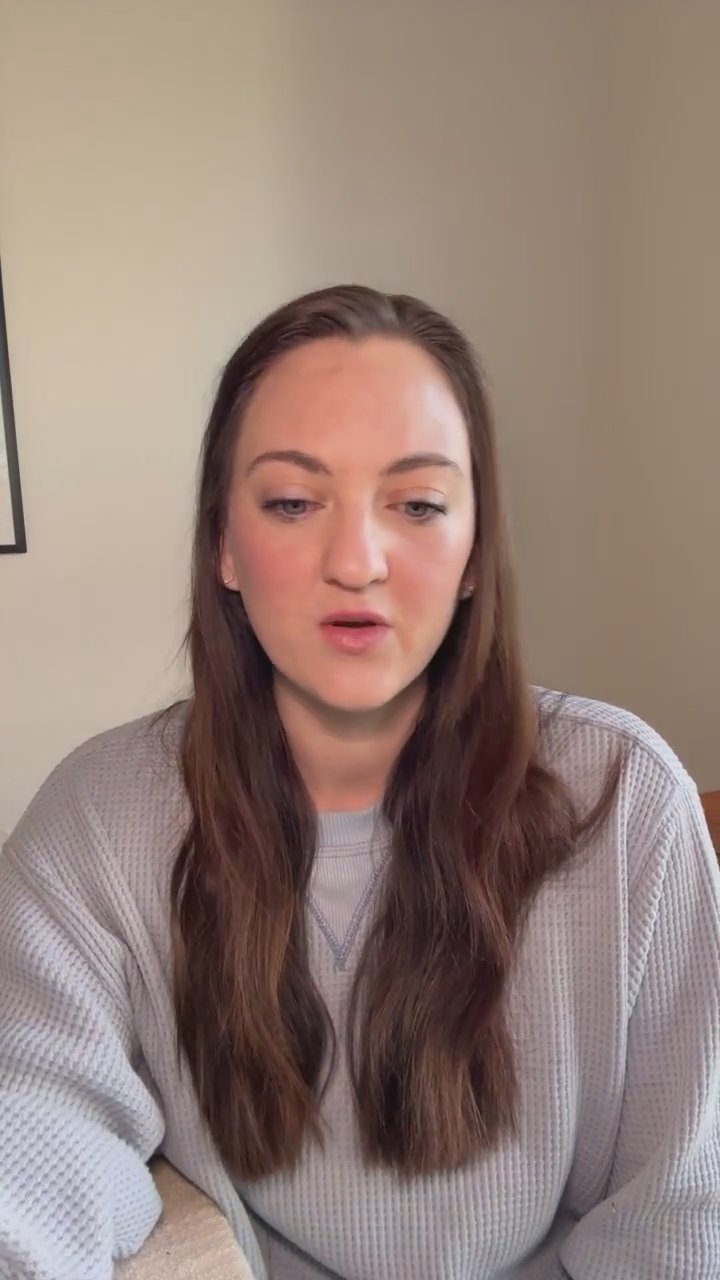
Good morning, Cadre. Happy Saturday. I hope you have your coffee with me or another beverage. Here in Denver, we do have sun and it's going to be like 65 degrees. So I'm excited to spend some time outside today.
March is National Nutrition Month. This year's theme is Food Connects Us. Food connects us to friends, family, community, and culture. Connecting with food can look like cooking your own meals.
The third piece that I wanted to talk about is connecting with others and sharing a meal. Food is really a universal language, right? I'm a proponent of bringing back the neighborhood block party. It really helps us to connect in big ways and small ways with other people.
As we continue through National Nutrition Month, I am planning to continue talking about these themes and some additional ways to utilize food for connection. Have a wonderful, wonderful weekend. Stay warm, stay safe.
Good morning, Cadre. Happy Saturday. I hope you have your coffee with me or another beverage. If you drink, don't drink coffee. That is always going to be a staple here in this live because it's the first thing I do when I get up. I. First of all, I guess Happy March. That is relevant to what I'm going to be talking about today. Good morning, Jules. Happy to see you here this morning. Can always count on it. And I love it. There's the sunshine, too. Yeah, I'll give everyone maybe a minute before I jump in too deep.
Jules, is it actually sunny where you are today or is this a. I know you say it every week, but I'm curious. Here in Denver, we do have sun and it's going to be like 65 degrees. So I'm excited to spend some time outside today. Okay, so as I mentioned, today is March 1st, and for those of you who don't know, March is March of every year is National Nutrition Month. Registered Dietitian Day is the second Wednesday of the month. So think of me when that day comes. But every year, National Nutrition Month is put on by the Academy of Nutrition and Dietetics.
There's a theme every year, and this year's theme is Food Connects Us. Oh, no, it was sunny. A negative two. At least. @ least you got the sun. I'll take the sun, Jules. Yeah. This year's theme is Food Connects Us. And the goal and all of the resources that they're putting out there are really to help us nutrition professionals emphasize the importance of connecting with the food itself, but also how food connects us to friends, family, community, and culture. So I wanted to take today just to kind of highlight a couple ways that I think that plays out and some of the benefits in connecting with our food.
So the first kind of tenet that starts all of this off really is connecting with food. And the most important piece of that is being able to even have access to food. So one of the things that I might. Maybe I'll do this next week. I. One thing that can be really helpful is learning about ways to get access to food and to be able to even have that connection. Many people don't have access to food. The economy today, rising costs, food deserts, just like time to even get to the grocery store. All of those things play a role.
And so learning one way to connect to food is even if you're not using the programs, learning about programs such as snap, the Supplemental Nutrition Assistance Program, or Food Stamps wic, which is Women, Infants and Children, which is additional support for women with young kids and learning what those really look like when they're played out, I think they're very stigmatized, unfortunately. And you never know who you might meet. And if you end up having a conversation with someone, if you have the knowledge around what those programs are, what they are, who they're for, and how to kind of get involved in getting access to those programs, you might be able to help someone.
So that, I think is first and foremost an important piece of Connecting with food. 2 Connecting with food can look like cooking your own meals. I don't know about you, but I feel very excited when I cook a new meal, and I'm proud of that. And I know the effort that went into it. I made pasta for the first time a couple weeks ago. I got a pasta maker for Christmas. But it feels so different when you understand the process and the time and effort that went into what you've made. And it's not always realistic to, like, hand make pasta.
Right. But if there's time, that can be a really fun way to gain some more appreciation for food. Another piece of that, I think, is also learning about where it came from. So if you're ever shopping at farmers markets, talking to the farmers, getting to know them, or even growing your own food in a garden, learning about different crops and their value, one of them that comes to mind for me is asparagus. I remember learning about how asparagus was grown. And it is. Once you plant the seed, it takes about two to three years to actually be able to harvest the asparagus.
So it really is like a future planning crop. But once it's mature, it can grow up to 12 inches in 24 hours, which is wild. You could chop down, right? It, like, grows in the little asparagus stalks. You can cut that down and have a full stock again the next day for dinner. So learning about different types of foods, how they're grown, that is one way to connect with food. Number two is connecting with culture and history. Right? Just like sharing a meal can connect us to different individual people, which I'll get to, it can also help to connect us to different cultures.
And maybe it's the cultures of people you're sharing a meal with. Maybe it's your own cultures from your family's lineage. But learning about the history and the traditions of food, you know, back when food was not as much of a convenience, it was much harder to have access to and much harder to utilize. Just kind of learning about how those foods were used and appreciating that Piece connecting with that. One that comes to mind for me in this category is hot chocolate. I don't know if you are hot chocolate drinker, Jules, but I definitely am.
When it's cold or I'm going to hockey game or just in general. Hot chocolate, I think is delicious. But hot chocolate dates back. I saw a couple numbers, but roughly around 5,300 years ago in Mexico, what is now Mexico and Central America in the Aztec, Oma and Mayan civilizations. And it was likely, obviously it was not exactly what we drink as hot chocolate today. It was more so the cacao beans ground up with different spices and unsweetened, but it was likely used for medicinal and ceremonial purposes.
And so I think that's just a really cool way to look at food. It's a different lens. It's a different experience when you're drinking hot chocolate and thinking about there were people doing this 5,000 years ago as well. Hot chocolate at Hageems. I'm a really big. I live in Colorado, so there's not very many. But growing up in Minnesota, caribou coffee is everywhere, and they have dark chocolate as an option. And that is my absolute favorite. We would. I never played hockey, but my in laws were hockey players.
My nieces are hockey players. So hot chocolate at hockey games. Top tier. Top tier. And then the third piece that I wanted to just kind of talk about today, and I appreciate you sticking with me, Jules, is connecting with others and sharing a meal. Because food is really a universal language, right? I think we all have. We all have to eat. We all have those experiences. We may have certain traditions, but we all have. We all share that piece. And so it can really transcend cultural boundaries, it can transcend language barriers, and it allows us to have that connection with other people when maybe we have nothing else in common.
Things like, I'm a proponent of bringing back the neighborhood block party. I think those were really fun because it offers an opportunity, right? Everyone brings food. That's kind of the culminating piece of a block party for a lot of people is like, oh, where's the food table? But it allows us to interact with people from different backgrounds who maybe we don't talk to on a regular basis, but they. That is a part of our community. That is our community. And that can help us to kind of strengthen our relationship with that community.
It helps us create connection. It helps us create different memories, and it gives us the opportunity to just learn about the people who live next to us. And that, I think, can help inform just how you interact Moving forward. And there's a lot of benefits to that. Maybe you learned something about them, you know, needing a dining room table. I don't know. And then you see a free dining room table on Facebook Marketplace, and you're like, hey, I can help this person out. It really helps us to connect in big ways and small ways with other people.
I was amazed when I started gardening. How flavorful. Yeah. Yeah. I think that is something that is just. It really increases our appreciation. My first year gardening a couple years ago, just, like, learning the new climate that I live in, I think I had. I got. I had, like, three pepper plants, and I got one pepper, and it was like a teeny, tiny little bell pepper. But it was. I remember being really excited because I was like, I put in so much effort, and it was a lot harder than I thought it was going to be to grow this pepper.
So it really helped me to just appreciate and recognize, oh, this is. This is harder than it looks if you're not experienced at it. The zucchini did great, though. I feel like zucchini you can't mess up. But, yeah, tomatoes, I think, especially taste different. It just is. It's a way to learn and appreciate. So that's all I have for you today. A little bit shorter of one. But as we continue through National Nutrition Month, I am planning to continue talking about these themes and some additional ways to utilize food for connection, because it's something I really care about.
You've heard me talk about in the past, the importance of living in community. Connection is such a big piece of that. So, Jules, I appreciate you being here. I hope you stay warm today. Maybe have some dark chocolate. Hot chocolate sounds great to me. Hopefully I'll see you back here next week for week two of National Nutrition Month. Yeah. Have a wonderful, wonderful weekend. Stay warm, stay safe. I appreciate your sunshines every week, and we'll see you back here next time.