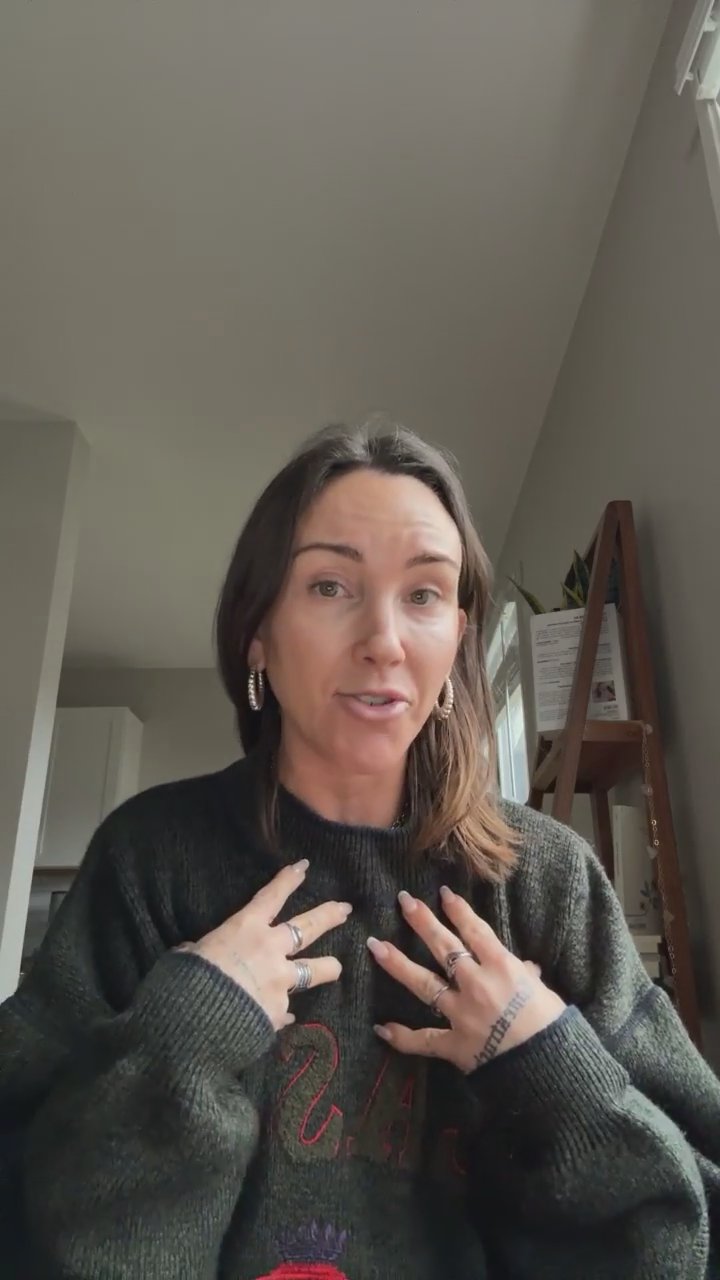
If you can't make it, you can always watch them as replays. It's okay if you experience a resurgence of symptoms despite having skills or despite being in therapy. This might be something that you navigate for life. It doesn't mean you're not going to experience joy again.
Happy Wednesday. Thank you for joining us an hour later today. As always, these lives will always be recorded and put on my profile. If you can't make it, you can always watch them as replays.
I have struggled with depression on and off for the last 20 years. It's okay if you experience a resurgence of symptoms despite having skills or despite being in therapy. This might be something that you navigate for life. It doesn't mean you're not going to experience joy again.
In the last month or so my depression has worsened. My eating disorder symptoms have started to worsen. So I know it's time for me to go back to therapy. I'm currently looking for a therapist, which is really, really overwhelming.
Luke says his depression symptoms have started to get worse. He says getting outside, even for 10 minutes, is very important. Luke says it's important to communicate what he needs from friends and family.
It's very easy for me to just sleep in and then work from my apartment. Going to a coffee shop to work forces me to take a shower, wash my face, put on clothing, get outside, move, interact with other human beings. Every single one of those little things add up.
Happy Wednesday. Cadre Crew. Hello. Hello. I'm gonna give folks a few minutes to trickle in. Thank you for joining me an hour later today. My schedule today was just a little bit different, so I appreciate your flexibility. And as always, these lives will always be recorded and put on my profile. So if you can't make it, you can always watch them as replays. Hi, Rach. So glad you could join us. Hello. Hi. Kara Strand. Hello. Happy to see you all beautiful humans. Hi, AJ So today I wanted to talk about navigating depression.
I have struggled with depression on and off for the last, like, 20 years or so. Oh, no, it keeps freezing. Oh, dear. Okay. I hope it's not. I hope it's okay now. So I've been struggling with depression on and off for about 20 years, and I've been in therapy for most of that time, and I still get depressed. I still experience depressive symptoms, and I still experience thoughts of hopelessness. I still feel like I'm not enough. I still don't feel like life is going to get better. I mean, these things come up still despite being in therapy.
And so I wanted to talk about a couple things. The first one being it's okay if you experience a resurgence of symptoms despite having skills or despite being in therapy. I really. It's a lot easier for me to, like, rationalize that when it's not happening to me. So I understand when it's happening to you because I know this is how I feel when I experience depression again. I feel like, am I just gonna be like this forever? Or I feel like. Like something is wrong with me because I keep experiencing these feelings or these thoughts, and I try to remind myself, and hopefully remind you that it doesn't mean there's something wrong with you.
You are not broken. You are not creating or causing the cycle. Yes. This might be something that you navigate for life. And it doesn't mean that you're not going to make it through. It doesn't mean that you're not going to experience joy again. It doesn't mean that you're not going to move through the dark period. And, you know, I try it, like, you know, like, the physical body. Like, let's say I had a really, really bad injury when I was 15 and. And shattered my. My leg or something. And I had to go through a lot of rehab to get all the muscles around that leg working again after surgery and to get strength so that that bone was protected and learn how to move or change or maybe modify how I moved around in the world.
So that I didn't aggravate or re injure that now fragile, vulnerable bone and fragile, vulnerable leg. As I move through life, there are going to be times where that leg hurts. There are going to be times where maybe I'm overexerting myself and I experience some pain in the leg. There might be times where I'm not practicing my regular physical therapy or doing the things I know that are helpful to keep that leg feeling good and it starts to ache more or maybe because that leg was injured, other parts of my body are compensating and so I start to hurt in other places, right?
So I try to remind myself that just because I've done all this work and I'm doing all this work to protect my emotional past injury, it doesn't mean it's not going to hurt sometimes. It doesn't mean I'm not going to have flare ups, it doesn't mean that other things aren't going to cause that injury to hurt because it's a little bit more vulnerable than other parts of me. And so I try to remind myself of that. Like there is not like, oh, I'm done. No, I'm never going to experience depression again.
And hopefully with practice and continuing to use skills and noticing when that pain arises, we listen to that pain instead of ignoring it or shoving it away and we, and we treat it, we, we take care of it. So again, like, if my leg started to hurt, I wouldn't be like, I'm going to keep running. I would say, you know what, for a few weeks I should probably stop running and doing high impact things and focus on stretching, mobility, icing, recovery, maybe massage, doing things to support some recovery.
Knowing that that doesn't mean it's going to be like that forever, right? So when I experience depressive symptoms, I do the same thing. I go, okay, for a few weeks, I need to stop doing things that are going to make this or things that are overloading my symptoms and I need to focus on rest and recovery. So that's the second part of what I want to talk about is what I'm doing right now because I'm experiencing some depressive symptoms, what I'm doing right now to be in that rest and recovery period.
So I really treat it like rest and recovery. So things like, you know, I've talked about this, I think many times on my lives and in videos about depression is what can I take off my plate? What is not absolutely necessary for me to survive, take it off my plate. So that might be things like Certain goals I've had for myself that are a little bit more personal or that are more like hobby oriented. Like, I really wanted to start trying playing piano this year. Now is not the time to start playing piano or starting something new.
Now is to do things that I know how to do, things that are part of my routine and things that are simple. So I take things off my plate that aren't things that I can do habitually and are not required for me to survive. So that's one thing that I like to do. The other thing is I'm going to go back to therapy. I took a break from therapy for a few months. I actually switched therapists back in the fall to work with a different. I wanted to work with a different style of therapist. And unfortunately that wasn't a good fit and I just stopped going and I did.
I did okay for a bit. And I've noticed that in the last month or so my depression has worsened. My eating disorder symptoms have started to worsen. So I know it's time for me to go back to therapy. So I'm currently looking for a therapist, which is really, really overwhelming. And I might make a whole video about that because it's very overwhelming to find a therapist. Even though I've been finding and using therapists forever, it is still really hard. I. Right now I'm using this app called Cocoon, which is basically like a dating app for therapists.
You put in like your insurance, your location. I think you can put in like what kind of therapist you're looking for. And then it's basically like you can swipe through profiles of different therapists and it'll show you like, their bio, It'll show you what insurance they take, where they're located, if they do online or in person, a link to their website. com or Psychology Today. So I'm hoping to find a new therapist. That's another thing I'm doing. Another one is because when I have depression, I.
I have a really hard time getting up in the morning. I tend to like, sleep is always something that gets disrupted. With depression for me, I have less. It's less that I have insomnia. It's more that I just. I just can't wake up. I start to have really, really like intense, stressful dreams that kind of like consume me and I feel like I'm in A coma. And it's very difficult for me to get out of bed. And I'll start to have thoughts in the morning of, like, what's the point? So I have very little motivation to get up as well.
Even though there are things worth me getting up for, my brain will start to have that narrative of there's nothing to get up for. So in the evening before I go to bed, or the day, like the day before, the next day, I try to pick one thing to look forward to. So that might be something that I have to create to look forward to, or it could be something that already exists. But I try and think of one thing that I can get excited about. Almost like, you know, like waking up knowing that you're going to get to go on a vacation or knowing the next day is a weekend or whatever it might be.
I pick one thing. So, for example, last night I was. Well, I. I scheduled an appointment today to go see a new apartment. I'm apartment hunting right now. I'm trying to downsize and just. And I don't need. I don't need this much space and I also don't want to pay this much rent. But. So anyways, I found a really cute apartment that I've been excited to see. So I made an appointment with the person to view it this morning. So when my alarm went off, I had a reason to get up in the morning. And. And I did.
And that was. Today was the first time I've gotten up before 9, 9am in about two weeks. So that's a. That's a big win for me because that a. Like, that sets me up really, really well for the rest of the day in terms of meals because I'm actually having breakfast. It sets me up better with my cortisol because I'm getting up more so in line with the light outside. It helps me with my circadian rhythm, which means that I'm gonna have a better time sleeping. Ton. Being able to wake up like that is a huge, huge deal for depression.
So finding one thing to look forward to the next day. Hi, Luke. So happy to see you. So happy to see you. Another thing I'm doing right now that I like to do when I'm in this sort of like, season of rest and recovery to kind of like recoup with depression symptoms is get outside. That is really hard where I live. Not as hard as where a lot of other people live. Luke, I know for you it's probably really cold where you are. For us in Seattle, what makes it hard Is it's very gray and very rainy. So we don't see a lot of sunlight.
We don't see a lot of blue sky. The sun's down at like 4:30. It's not out until 8 or 8:30. So there's a lot of darkness. So getting outside is hard and very, very important because getting fresh air, getting sun on our skin, hearing the sounds of life, whether it's like a car or nature, it brings life energy into our bodies to know that there are other people around who are also existing in the world. Making eye contact with people, feeling that micro connection helps us feel like we exist. I know for me, a lot of my depression comes from feeling like I'm not real, like I don't exist, like I'm not seen, or like I'm invisible.
So even just having that small human contact, like literally going to my 711 and seeing the person that works there, who recognizes my face, that's human contact. That's being seen and witnessed as a human being. So. So I find getting outside, even for 10 minutes, very important. It also allows me to move my body. It forces me to put clothes on, which is a big deal when we're experiencing depression. Getting dressed, hygiene, those kinds of things. So those small things, yes, little things are everything.
And then what's the last thing I'm doing? Also my memory is bad when I'm experiencing depression. I get bad, bad, bad and brain fog. So forgive me if I'm. If I get foggy. Oh, accountability. Telling people so right now, doing it right now, talking to you. But also the first thing I did yesterday when I woke up, when I had that recognition of like, okay, things are getting bad again, I texted my best friends, we have like a little group chat, and I said, hey guys, I just want you to know that in the last few weeks my depression symptoms have started to get worse.
And I'm realizing it's at a place where I need to actually start to seek help. So I'm so a. I told them what was going on. Then I told them what I was planning on doing. So I told them what I told you. I'm looking for a new therapist right now. I'm going to try and really focus on my sleep schedule and just try and focus on bringing my routine back to sort of like a baseline. So I told them what I was going to do and then I told them what I needed from them. Because oftentimes when we tell our friends struggling with mental health symptoms, if we're really, really lucky, they understand they get mental health, they've educated themselves or they struggle too, so they know how to respond.
Oftentimes they don't. So it's really important that we communicate what we need or what we want from. From people. So for me personally, when I am experiencing any symptoms of my mental health, I don't. I don't necessarily need anything right away. I just need somebody else to know. I just need to know that they're in my circle. So I told them, right now, all I need is for you to know so that I don't know, so I don't feel like I'm alone and so that I don't isolate. So this, like, sets me up. This is a foundation now for, like, if in a week I need something because I'm struggling more, they have context.
They already know what's going on. So it's for them. It's not like, where is this coming from? We thought everything was fine. Which again, I wish people didn't have that response. But again, you know, we also do a really good job of masking. So oftentimes people in my life don't know I'm struggling because I mask it really well. So they have context for what's going on. If in a few days I need some super extra support, or if in a few days I've kind of figured out like, okay, here's my plan. And one thing that's actually going to be really important for me is that I have some social time and some movement.
So I think I'd like to be able to schedule some walks with my friends. So if I tell them, hey, guys, I actually think that what would be really helpful is if I get out for a walk once a week or twice a week or whatever, are either of you available? Again, they have context. They know that this is not just like a walk I want to do for fun, that this is really important for my mental health because I'm struggling. And so that creates also for, for them and for me, this awareness that this is something that holds a little bit more weight and it's really important.
So I find that telling people is. Is less about just like, I just need to notify them and more about I'm setting myself up for success and I'm also setting up my support system for success that they can successfully support me. Because as much as we need support people to show up for us, if they don't know how to, they're not going to do it right, because they really want to. But that doesn't mean that they know how. So there is some onus on us to let them know what we need, which I know is hard.
And with practice, it does get easier. So let's see. Rachel says I don't have people to stay accountable with anymore. Okay, first of all, yes, you do. You have me. I know you've got Luke, you've got this whole app. So that's, that's two people plus a whole app right there. So I know that you, you can slide into my DMs anytime you need to if you need to stay accountable. And then the second thing I was gonna say is, I am so sorry that that's how you feel. And that feeling is real. I. For many, many years after I got divorced, I did not have people that I could stay accountable with in my physical life.
I. And that was really, really, really f****** painful. And I went from having a huge support system and a literal partner in my life to nobody. And at that time, my mom and I were not speaking. My dad and I did not have the emotional relationship that would create a possibility for me to feel safe, to reach out to him. And I didn't have anyone. And that was a really, really, really hard time. So I also just want to validate that I know that like online people are, are real. Like we are real humans.
And there's something very different about having a physical person in your life or having someone that you've had a long term relationship with or a friendship with. That feeling is really different. So I also just want to validate that feeling and remind you that if you need accountability, I'm here. Jewel says I tend to seclude myself when I start struggling. I do the exact same thing, which is why I've had to really challenge myself to reach out to people and to get outside and do things. Another thing, another thing I do that again, has gotten easier over time, but was not easier, like was not easy years ago is as I take myself to like a coffee shop.
So because I work for myself, I like technically work from home. It's very easy for me to just like I could just sleep in and then wake up and then work from my apartment and not get dressed, not really take care of my hygiene, not really speak to anybody. And then it's almost like I don't have any accountability in the world for improving my mood. And so I've had to force myself many times to pack up my stuff and go to a coffee shop to work, because what that does is it forces me to take a shower, wash my face, put on clothing, get outside, move, interact with other human beings.
Which is a lot when you're experiencing depression. And it always helps me. It always, always, always helps me. Because every single one of those little things, like Luke said, those little things add up because then I've, I've, I've taken care of my physical body because I took a shower. I've taken the time to put something on that makes me feel good or at least better about myself. I'm not saying that like our clothing or our appearance should make us feel better, but it's more about how I'm taking care of, of my physical body.
I like to think of it like if I had an apartment and I could choose to live in it with nothing on the walls and that would be fine. It would be a livable apartment, totally. Or I could cover the walls with things that bring me joy. And there's something about that decoration. There's an expression of self, there's something about it that brings out a creative energy. We have to put thought in how we put things together, how colors go together, how patterns go together. And that creativity and that expression of self is incredibly helpful for our mood and our mental health and our self esteem.
So putting on an outfit is a pretty big deal. And then again, I'm getting outside, I'm moving my body. Whether I'm just walking to my car or I walk all the way to the coffee shop, I'm moving. So we get blood flow, which brings us some energy, which brings us some dopamine. And then we get human contact, which helps us co regulate. Again, being around other human beings reminds us we're not alone and that we exist in the world. So sometimes I think we can really diminish or downplay these small things.
Like, you know, I think I say this all the time. Like when I'm depressed, something that helps me is literally like going out to a coffee shop to work instead of working from home. And like in that small sentence, it can seem like nothing. But every single step to get me there is humongous. It is huge. And the shift I feel after I've done that than from before versus if I don't at the end of the day is astronomical. So I'm a big proponent of that. And yeah, those are. Okay, so those are my, those are my things that I'm doing right now and that I typically always do when I experience a resurgence of depressive symptoms.
And again, like I said at the beginning of this live, if you experience symptoms of anything that you have worked on before or have been working on for a long time. It does not mean that there's something wrong with you. It does not mean that you are broken. It. It does not mean that a. Your life is always going to be this way. And it does mean that it might happen again, and that's okay. Like, these are not things that you're going to have to fully be healed from and then be done with for the rest of your life, because that's not what being human is like.
We. We just. We cannot control what happens in our environment. We cannot control what happens in the world. And life will continue to happen. We will get stressed, we will get insecure, we'll feel rejected. People in our lives will go away, we will lose things, we will get older, we will age. I mean, life is going to keep happening. And so it's not about perfecting life in ourselves. It's about being incredibly compassionate and having a lot of grace for ourselves when those things happen and for how we respond.
I'm really, really proud of all of you and I'm so grateful you're here. Thank you for joining me today. A little bit of a different time next week. I'll be here at the same time as usual. Thanks, Luke, for being here. Thanks, Rach. Kara, Strand, thank you for being here. Aj, Jules, thank you for being here. I appreciate you all so much. I'll see you next week.