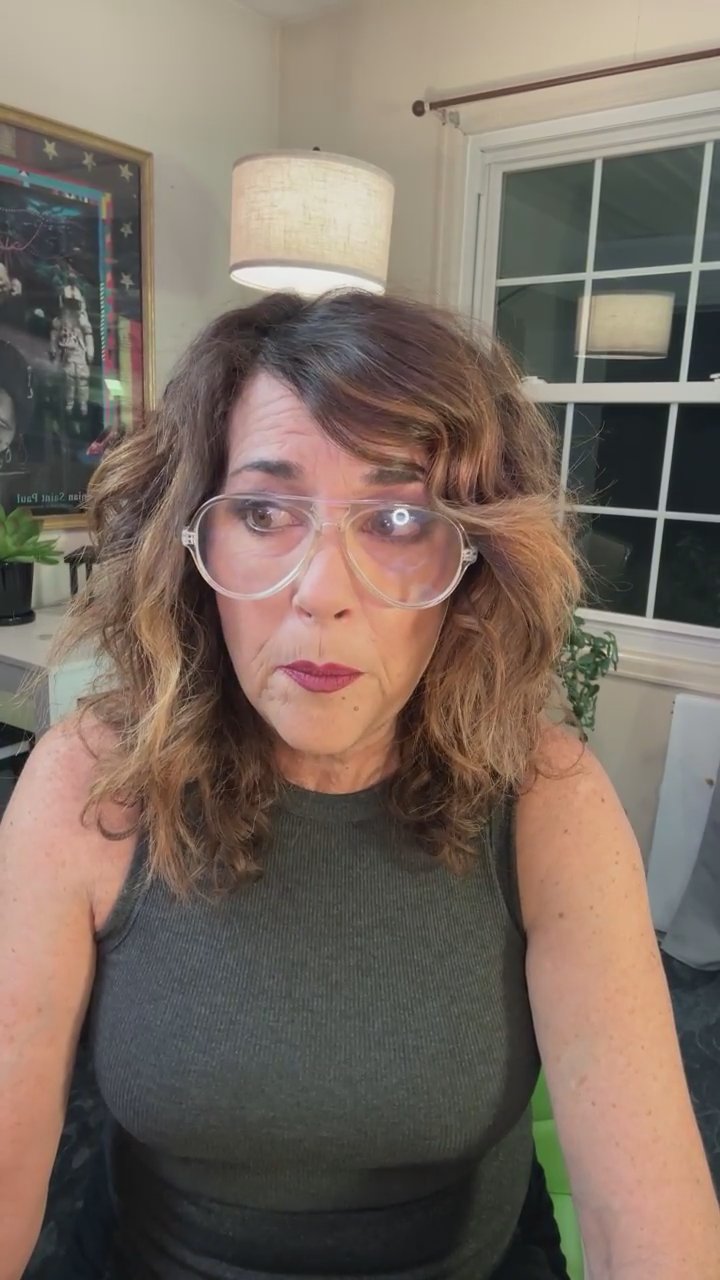
She moved to Wisconsin. Because the packers are playing, there's no cars on the road. This is the time to do any errands. Complex post traumatic stress disorder is post trauma or is PTSD with a little bit of a twist.
Tiffany Norton: It is playoff season. She moved to Wisconsin. Because the packers are playing, there's no cars on the road. This is the time to do any errands. She says it's difficult for those of us in the Midwest.
Complex post traumatic stress disorder is post trauma or is PTSD with a little bit of a twist. You are going to see a huge spike in people with PTSD because of this event, regular ptsd.
Luke Skywalker urges people to not constantly put themselves in a state of distress. If you have friends that are affected by the wildfires, don't try to talk them out of it. We've got to keep ourselves as centered as we can.
A friend of mine has recently been diagnosed with attention deficit disorder. She's got almost a year sober now. Now that she's abstained from the alcohol though period of time, she's seeing herself more accurately.
How much control plays in our life? Have you ever been in a situation like that, Drop a one in the chat. The biggest learning is you can't control anybody else. Only your response.
Sometimes people use control as an excuse to just be bossy and to control others. How much is control getting in your own way? And how much is the lack of control from childhood playing into a hyper vigilance and an over control in adulthood?
There is no such thing as work life balance. Your work is part of your life. So every part of being alive isyour life. What are the actual activities and people in your life and do they spark joy?
Wow, the time went already. It's 6:30 already, you guys. And again for everybody suffering from those terrible, terrible fires. Have a great night, Stay centered.
Greetings, everyone. Hello, it's Tiffany Norton. Hi. Welcome to Comedy Centered. It is Sunday. I might have some light attendance tonight. It is, it is playoff season. I am a football fan, not a super huge one. Like, I don't do fantasy football or any of that kind of stuff. But it's the packers playing for the playoffs right now and as many of you know, I, I moved to Wisconsin. Hey, Ms. Jules, welcome in. Talking football while people are coming in. Hey, Ms. Colleen. But yeah, I, I just ran to the store real quick because like, I, I think I've told you guys before, I live in Wisconsin now.
And, and because the packers are playing, there's no, there's nothing, there's no cars on the road. There's no, it's just, you know, everything. This is the time to go to the grocery store. This is the time to do any errands you have is whenever the packers are playing. The focus, the focus is different at this point. Right. Anyway, well, welcome in. Happy Sunday. Trying to start this off on a chipper note. Gosh, I mean, this whole thing. Oh, welcome in. Hi. Update. Thanks for joining us. Just getting started on Comedy Centered first off.
Right. Like, and I'm sure everybody's done this a million times, but I've got friends and family that live out in California and woof. This, this, this thing is just unfathomable to me. I've been to LA a few times. I didn't really ever stay for very long or anything like that. And one thing I'll just say is that I think it's, it's difficult for us who live in the, like, I know that we are, you know, know, international really at Cadre. But for those of us that live more in the Midwest. And this is where I'm coming at it from.
C. when I was younger, right. So I've lived in bigger cities in Minneapolis than that. But driving in la, I remember we were visiting and we were staying near the airport and I looked on the map and I was like, oh, the place we want to go is about eight, nine miles away. Well, that should take us what, 15 minutes? No, the. Down, the density of that area, the density of that city, that eight or nine mile drive which we take for granted, we think a mile is a minute around here. That was, that was a, that was almost an hour drive, you know.
So let's just pray for everybody that I, as a, as someone with complex post traumatic stress disorder. Complex post traumatic stress disorder is post trauma or is PTSD with A little bit of a twist, but you are going to see a huge spike in people with PTSD because of this event, regular ptsd. And let's talk about that for a minute. Ptsd, as. As. As many of you maybe know, it's a newer thing that they've been studying, right? And a lot of the research in and around PTSD was started by a man named James Van Der Kolk.
And he was. Up until that point, it had only largely been studied in soldiers, right? And they called it shell shock. Coming back from the war, having traumatic memories, horrible nightmares, all that kind of stuff, right? Real skittish, if any loud noises in that. So Vander Kolk is a young psychiatrist, and he is working at the VA in the 70s, and he's working with all of these men and women that are coming back from Vietnam and having a really, really hard time. And so as we've learned more and more and more about this, and obviously it's only been about 50 years that we've been studying it, and we're going to learn more and more, right?
But ptsd, the class, in the classical sense, is when a horrible event happens, unforeseen, nothing you can do about it. One of the things that comes to mind, because it's something I'm most familiar with being around here, we had a bridge collapse. It was many years ago. It was the 35W bridge. But people who went through that disorder or that ordeal, and I listened to an interview of a gal that was there after an event like that, your animal, primal frontal lobe, right? You are hypersensitive to any threat.
You're on constant threat assessment after that. And this gal that was talking about, she survived. She had. She had fallen. She had survived the. In the. In the bridge situation. But she gave a very good example. And I think. I think it was something that really clicked it for me. And this is many years before I'll find out that I also have ptsd, a variety of it, right? She said she was sitting out on the patio, beautiful sunny day, have cocktails with her friends. There's a little band. It's great, right?
And she's sitting. And it's. It's a. It's a. It's a patio and it's wooden and it's got slats, right? We've all been in, you know, a situation like that, right? She's sitting in the chair. Well, someone stepped on one end of the slat that was underneath one of the legs of her chair and her leg of her chair. All of A sudden dropped, like the board went kind of like a seesaw, right? She felt like she was falling backwards again. And she was immediately into a PTSD attack because of that sudden shift.
Because the fight or flight, the, the core, your survival instinct, the thing you can't logically talk yourself out of your body is like, oh my God, is this the threat again? Like, miss, what are we doing? You know, and she explained how it was, even though she was among friends that understood she'd been through this ordeal, even though she was among friends that were, you know, supportive and, and, and known her a long time, that was a really, really, really traumatizing and isolating moment for her because nobody really got why she had to suddenly leave that event.
And she was freaking out and she, her mind went right back to that moment in time. And this has now happened simultaneously to millions in our country, you know, with all of these catac, you know, these, these horrible, horrible, horrible storms. And even though maybe it's not millions of people that lost their homes, right? And maybe that seems like a little bit of an exaggeration, but if you think of the upending, I mean, in, in Los Angeles, what is that? The population of the Los Angeles counties, 40 million people.
I mean, you've upset everybody there. I mean, like, and I don't mean somewhat upset them, I mean, but the natural order of everything has been upset, right? So, and ptsd, you know, really what we're talking about is trauma. Now here's some good news. PTSD is not forever normal. Like, I don't want to say normal. Nix that. Not normal, but classic ptsd. And I guess I'll make the distinction a little more clearly when I'm saying classic ptsd. I'm saying, saying there is one catastrophic event, right?
Complex Post Traumatic Stress disorder is more of a low grade post traumatic stress in the sense that you may have been in long term conditions where, you know, this CPTSD is more common if you have suffered imprisonment or some type of long term abuse, religious abuse, familial abuse, spousal abuse, any of that kind of stuff. And so with CPTSD is generally not like one instant, right? Like, we all remember 9, 11. We all will remember this fire. We all remember Hurricane Katrina. Those. Because it was so you couldn't expect it.
CPTSD wines along over time. And it's from living in toxic situations, right? Regardless of how you got there or whether it's your choice or not. So what are the signs that you're maybe bordering on one of these types of Things I think that we are. One of the things I'm just going to urge people to, to do out there is to not constantly. I've, I'm, I'm a bit. I understand from. And I think a lot of people know this. I have a background in broadcasting. On one hand, I understand you have to have constant local news coverage for a catastrophe like this so that the people on the ground can coordinate.
Right. We need one spot where we can get disseminated information that's fact checked and a way to get it out to the public right through Public airways and all that kind of stuff. There's that. But right now on cable television they have two, like channels of other news channels that are just fires. And it's not. Even if it's not you, that's not good. I don't think you should be absorbing that. You know, we've got to find a way. We are never going to be able to work out the problems that we have in this country if we constantly put ourselves in a state of distress.
We're never going to have the strength to work together because we have really hard questions we've got to answer. I know a lot of people that know me in the past and I think we've got some new people in here tonight that don't interact all the time. So welcome in new people. Thank you. But this summer I got certified as a master naturalist. I'm very much an environmentalist. And, and this is, this is a problem. LA was built on a desert. This is. They've had water, drought and drought problems and agricultural needs have superseded human needs for a hundred years in that valley.
And you know, people, everybody wants to have their hot take and say it first and own the other guy and this and that and the other thing. Mother Nature doesn't care. She doesn't care. You know, we're guests on this planet. It's not the other way around. The planet doesn't live on us. We live on her. So anyway, I'll stop talking. That was, that wasn't even really what I was gonna talk about tonight. But I kind of, you know. But so, but if you have friends that are out there. Oh, I did want to say that.
But if you have friends that are in that area that have been affected by the wildfires and they call you and they're snapping and they're freaking out and they are very dark and very bleak and they see no optimism and no light. Let them just talk. Do not try to. We do not try to talk them out of It. When someone's having a PTSD attack, I say that's what I think. It. I feel like it is because it does. It attacks you like it attacks your nervous system and your cortisol levels and just hijacks you for a while.
Right. And. And bringing yourself down from that and self regulating yourself out of that sometimes can take days to get yourself out of that. It can. For me, at least. I don't know, maybe other people are better at it than I am, but. So if they seem off and they seem extra doomy and whatever I want you to remember, just listen, hold space for them, whatever their emotions are, let them run it out and say, you know what? You're right, that sucks and it's terrible. And there's no words because there aren't.
There aren't. There aren't. And I just, you know, I hope we can engage in a less calloused conversation because it doesn't really matter whose fault it is. It's all of our problem right now. Doesn't really matter. Doesn't matter if it started 100 years, doesn't matter if it started last week. Doesn't matter if it started with one administration, another administration, doesn't matter. What are we gonna do? You know? So we've got to keep ourselves as centered as we can. Yeah. That's why it's called comedy centered.
Right. Anyway. But yes. Oh, thanks, Shannon. And here I want to catch up on the chat. Yeah, thanks. Thanks for chiming in, guys. Colleen and Shannon. Appreciate it. Yeah. And Luke. Hi. Yeah, I know it's. It's. Anyway, so. But this is. This is not necessarily my best pivot, but here we go. So one of the things that was. I was. My plan for talking about this week was I had an interesting conversation and it was. I'm in a couple of different recovery groups for myself, Right. And I got the permission of one of my friends to share this.
I. I said why? But I mean, obviously there's going to be no details. It's an anonymous type deal, like here, you know, what happens here stays here. But we were talking about the holidays, right? And some of that stuff. I mean, we're past the holidays, but not that long past it. Right. And she was sharing this story about a time when she was struggling in and around the holidays. And it was shortly. It was in between that kind of that gray period between Christmas and New Year's where there's a lot of downtime, but there's not a lot of structure to it.
Anyway, so she herself is in her late 60s and has recently been diagnosed with attention deficit disorder. She's similar to me in the fact that she got her diagnosis like two years ago. So she's a grandmother, she's raised her family, she's got grandkids. She's trying to figure out for herself, well, what does this diagnosis mean? You know, and there's, you know, there's some, there's some grief that goes with that. There's some, wow, what could have my life been like? Blah, blah, blah, blah, blah.
But that's not really where she was coming from. Right. And she's got almost a year sober now. She's ahead of me on that in that regard. But al cuz I had a relapse, but whatever. Dang. I would though. I should have, I should have longer dates. But anyway, so she had her. Now that she's abstained from the alcohol though period of time. She's seeing herself now a little bit more accurately the things that she'd been pushing aside, the things that she thought were strange about herself. The things that, you know, and sometimes you just don't have time to work on yourself, especially for the kids and you're working full time and the husband's working full time.
Like when you have time to work on yourself, if you've got time to come to something like this. Hey, that's, that's, that's good. That's more than most. Right. So the family's visiting and she, shortly after a diagnosis was starting to kind of notice that she was suspecting that maybe her daughter also might be attention deficit. Maybe there's a little something, something spicy there, a little something there. Right. And they had had some conversations about it a little bit, but not really. The daughter didn't really want to talk about it anyway.
So they're together. It's between Christmas and New Year's and the grandson's visiting. And so from the perspective of Grandma, Grandma's really trying to do everything kind of make up for lost time as far as. Because there were other Christmases that weren't great because she was drinking. And so she's put all this pressure on herself. This is gonna be amazing and it's gonna be so great. And she's. You know what I mean? She's trying to make up for lost time, which I completely understand. We all want to do that.
And pretty much everything that she did was completely rebuffed by the family. It didn't really work the way that, that she wanted. And she had had this idea in her mind of what was going to happen. And like I said, she had suspected that the daughter was a bit neurodivergent. Well, she hadn't spent her daughter and grandson live out of, out of state. And so when they were visiting, it's not, they don't get to interact for long periods of time like that very often. And now she's noticing heavy, heavy indications that the grandson is definitely expressing some, some symptoms, some very, very strong symptoms of having some type of a neurodivergence.
And she's trying to figure out a way to talk to her daughter about it. And the daughter's reaction is basically, well, you know, you weren't really here for me, so you don't really get an opinion. So she got through it. She managed to not drink. But in the meantime, like the, the daughter's doing kind of the soft parenting style. I, I have some friends that engage in the soft parenting, if you're not familiar with that term. It's, it's an idea where you, you know, sometimes you. Everything's like, you discuss things with the child.
It's, it's. I, I get the gist behind it. I don't know, maybe I was just raised because I was raised by military people and really strict people. I don't. The concept. I don't get it. But the. So the mother was really, the. My friend was really struggling. The grandson was completely running all over the place. He decided he wanted to cook. And it sounds like. And he's, He's a young man, he's like in high school, but he decided he wanted to cook. He didn't like what she had. He started pulling out all the plates and the pans and everything in the kitchen.
He got distracted, left the room. All the pans caught on fire, ruined her pans, all this kind of stuff. But she feels so guilty about how she wasn't there in the past that she's, she's just letting all this slide, all this behavior, all this stuff, and we're past it now, obviously the holidays are over and they've returned. But it resonated a lot with me personally because I know that I know how many times I wasn't personally present the way I wish I would have been. I was using alcohol during the holidays to kind of cope and get through.
Right. And as much as, yes, I like to explore the fact that I'm neurodivergent. And there's some reasons why I gravitated towards alcohol. I still have to own the fact that I abused alcohol. I did, you know, and and where I'm taking a long way to get there. Sorry. Neurodivergence on full display. But. But what I want to talk about is control. What I heard her when she was expressing that she's trying to relinquish control. The control. The idea that she's got to control all the behavior around her.
Right. But when she's letting other people dictate and have the control around her, it's bringing a ton of anxiety to her because they're not addressing it the way that she would do it. So drop a. Let's do this. I haven't done a poll yet tonight. Okay. Drop it in the chat. Let's see, is there anybody else who has ever felt like God? I want to correct someone's child, but I'm. I'm afraid no. That's probably not the best one. Right. What do I want to, what do I want to ask? Have you, have you ever been in a situation like that, Drop a one in the chat.
If you've ever been in a situation like that because you feel so guilty about your past behavior that you kind of let everybody just run all over and do whatever they want? Now, I know I've done that. I would drop a one in my own chat, but I'm hosting anyway. But how much control plays in our life? Well, you know the, the serenity prayer in a. Right. Well, and it comes from before A. But the AA has adopted it. Right. But God, grant me the serenity to accept the things I cannot change, the courage change the things I can, and the wisdom to know the difference.
See, and that's the hardest part. The wisdom to know the difference. So, you know, I love to bring my books and my, my audio visual and stuff into the, into the party. So I don't know if anybody has read this. I just started it. It is, it's a book by Jeanette McCurdy, who is a child actress and it's called I'm Glad My Mom Died Trigger Warning. Right. Oh, Shannon, what are you saying? She's chiming in. Yes. And the biggest learning is you can't control anybody else. Only your response. I know, it's so annoying.
It is, it is. You know, and so I'm just. I just got this book and she's talking about her mother and this idea, the control. Because when my friends relaying the story, I could see the pots on fire. I know how a*** she is. I know how like perfect in every clean and every little corner and the, the white gloves and everything. And this child running around making a mess in the kitchen and ruining the pans. I'm like, girl, if you'd have been drinking. She was very proud of herself that she wasn't drinking.
Anyway, but. So there was this. So I just cracked this book, and it totally reminded me of her story. Okay, I'm just gonna read a little bit of it. Just one page, right? Okay. The present in front of me is wrapped in Christmas paper. Even though it's the end of June. We have so much paper left over from the holidays because grandpa bought a dozen roll set from Sam's club, Even though mom told them a million times it's not even a good deal. Here's the part I don't. I peel the paper. I'm screwing up the reading.
I peel. Don't rip off the paper, because I know mom likes to save a wrapping paper scrap from every present. And if I rip it instead of peel the paper, it won't be intact as she'd like it to be. I've literally had things like that in my life. I've literally had things like my mother. Well, we had to see the paper. We have to save the ribbon, and we have to fold it this way and that way. And so how much control? How much. Let me ask it this way, because sometimes I feel like people use control as an excuse a little bit to just be bossy and to control others.
The idea that you. I have to peel the paper, not rip it, walk it back. How many conversations had there have been before that? Before she got to. So that is now a rule that is understood. Understood in the family dynamic. She goes on to list on. Like, her. Her brothers all know this rule. And like, you know, and she's setting up. This is the beginning of the book where she's setting up the identity of. Of. In the. In the group dynamics of her family. And sometimes the people. I mean, I like control.
Everybody likes control. Right? We like to. We like to have things the way. Like to have their things. Right. There's nothing wrong necessarily with that. But when we start putting together imaginary contracts with people, that's where I have a problem. The idea that I have to. I decided that I want my children to come and visit during the holidays. And I've decided I want my grandchild to act a certain way. And. And then when they didn't do that, they violated the contract. But it's a contract you wrote and made up in your own mind.
You can't control other people's behaviors. Right. So how much is control getting in your own way. And to bring it back to my PTSD and CPTSD crew, how much is the lack of control and feeling out of control from childhood playing into a hyper vigilance and an over control in adulthood? And what are we also passing on kid wise? Right, because it's difficult to un. Un. You know, to untangle these things. And I, and I mentioned this stuff not to blame my parents or say, oh, you're, oh, you're terrible parents and that's why I had that, you know.
No, and blaming people doesn't matter anyway. It doesn't matter. It's still your problem. Like again, full circle back to the LA thing. It still doesn't matter who. It doesn't matter. It doesn't matter who caused it. You have this one beautiful, precious life. What are you gonna do with it? This is it, Sunday night. You know, it doesn't matter how we got here. It matters that we are here. You know, but what control? What, what can we let go of? What is something that we feel that we need to have a lot of control over in our life that maybe we don't?
I don't know. I was just thinking about that. Plus, I cannot wait to get back in this book. It's so funny already. Just even the beginning of it, she's. I know, I don't know if anybody else has read that, but I remember when the, when the press came out and they're like, yeah, she got some, she had some questions about the title of it, but from what I understand, the mother was a stage mother. And also the mother was, you know, insistent that she constantly have a specific weight and always wanted her to weigh like under £90 and things like that.
And so as someone who has also has disordered eating and things like that, there was a lot of things ringing true. But I think, you know, specifically, I know there's men in the room as well, but specifically to women, there's a lot of, there is a lot of pressure on us to have the great career, the great home, the great family. But as Shonda Rhimes said, the author and writer and all of that, she said, you know, it's hard when people celebrate successful women because what you have to understand is if you see me at the Golden Globes, I'm not at my daughter's practice.
If I'm at my, if I'm not. If I'm at my daughter's practice, I'm not at the last night of shooting of Grey's Anatomy or something. Right? But you don't see that none of us see that. We don't see the trade off. So it can look all pretty in that. But you know, like we've talked to about before, there is no such thing as work life balance. There's no work life balance. Is that, that's it's made up, that's not real. Your work is part of your life. All you're alive. So every part of being alive is your life.
Right. So this idea that you can get like some kind of a, I don't know, meal plan thing delivered to your house, it's going to give you 10 minutes back in your week, that's going to make all the difference from being a good parent to a bad parent. No. You know, there's a lot of societal expectations that we have to look at and it's kind of like if you remember back to the Marie condo, does it spark joy? Truly, but not just like stuff in your house, you know, like little random things in that. What are the actual activities and people in your life and do they spark joy?
And maybe if they don't, there's certain people you can't remove from your life. Right. You know, can't necessarily. Right. But sometimes you can. And I don't mean remove like, you know, something dangerous or something like, like permanent. But you know, if it's not sparking joy, I mean this is 2025. This is, this is, this is how we've started our year. Fires are raging. Like we have to pick our battles literally for our own well being because we have to keep our peace. So just remember what other people think, however other people think, how far along they think you should be, how far along you think you should be.
It really doesn't matter. There is no competition for your life because it's yours. You know, you have this one beautiful, precious life. You know, and we're all just here really with no control. And if, and if, and if the wildfires, fires haven't shown us that, I, I don't, I don't know what else can, you know, so. Wow, the time went already. Oh my God, it's 6:30 already, you guys. I love it. All right, well, hey everybody, thank you for coming. Stay centered. We will see you next Sunday. And again for everybody suffering from those terrible, terrible fires.
I can't. It's just, there's no words for that. Yeah, update. What do you. Oh, update says chosen family. Right, right, right. And there's people that you can kind of just nudge out for a while. You don't actually have to tell people get out. You know, like it's not like a soap opera. Just throw a drink in someone's face. Like, you're terrible. Like, you don't have to do any of that. You can just step, you know, just sit, slide to the right, slide to the left. You know, just maybe exit stage left on some of those.
So, yeah. All right, Ms. Jules, have a good night. Thank you again. Shannon and Colleen, update. And Jules, appreciate you. Everybody watches in the Restream. Have a great night, Stay centered.