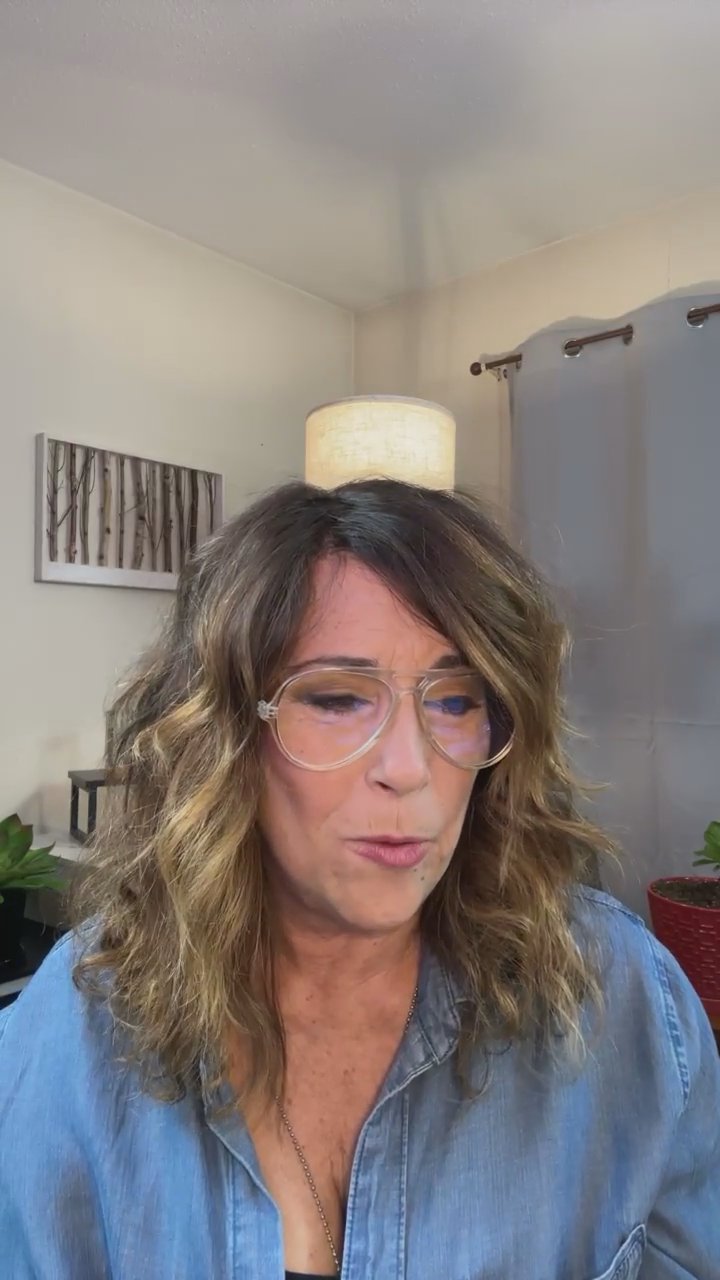
It is 6pm on Sunday Central time. It is comedy centered. Great to be back live. More than geopolitically, this is a critical moment.
It is 6pm on Sunday Central time. It is comedy centered. My Vikings are undefeated this weekend. Gotta get excited about the little things, right? Great to be back live.
In my family, our generations run a little bit different. My stepfather is of the silent generation. My son is millennial, born in 98, and is transgender. Generational trauma is something that's been kicking around in my head quite a bit.
Most of my relatives and most of those stories would not be possible if they were not sponsored in some way, shape or form by the US Government. What is being proposed in our society right now is a stripping down of all these institutions. How do we fix it?
A lot has changed in the last month and a half, two months of our country. What stays the same? The fact that we love in this country an underdog. No matter how many hurt feelings either side might have, I'm hoping we can find a way to bring it in.
You know, we're not that different. More than geopolitically, this is a critical moment. Do we want to listen to people on TV to tell us how to feel, or feel our own feelings? I vote for the latter.
Greetings and salutations. It is 6pm on Sunday Central time. It is comedy centered. I'm Tiffany Norton. Hello. And how are you? I hope you had an excellent weekend. I did because my Vikings are undefeated this weekend. Hello. Little joke. They don't play till tomorrow night. So. Undefeated this weekend. Gotta get excited about the little things, right? Hey, thank you for tuning in. Hey, Ms. Jules. Hey, Colleen. Great to be back live. I teased it a little bit. I put a post up. I'm not sure if it went through.
Hey, Ms. Colleen. Hey, Katie. Welcome in. I'm not sure if you guys saw the topic that I've been toying with today, but generational trauma. Hi, Ms. Jules. Good evening. Good evening. Generational trauma is something that's been kicking around in my head quite a bit. I am planning for the upcoming festivities of the holiday season. And you know, as I kind of shared a little bit last week, I haven't necessarily been my best self of late as far as mental health wise. And Thanksgiving I kind of had to go no fly on pressure.
Love a family, but a little bit of pressure there. Those types of relationships and so, but you know, I want this to be a really good Christmas. I and, and I'm in a situation I think is similar for most but a little different because in my, in my family, our generations run a little bit different. My stepfather is of the silent generation. Yeah. So we have four generations in my family. But we started the silent generation, then baby boomer, then Gen X, then my son, who's a millennial. Right. And no grandkids yet.
So. But it's my stepfather's 98th Christmas. And you know, to put it in perspective, okay, he's 98. When the queen of England died a few years ago. God rest Ms. Queen Elizabeth, longest reigning monarch. Right. So I called my mother because we're big fans of the royal family. And I was like, oh my God, can you believe that the Queen died? And so the phone got passed around. Right? Because that's what you do. At least that's what us old people do. We pass the phone around. When someone calls the house, everybody talks.
Right? And so I'm talking to my stepfather and he's like, yeah, 98. Yeah, I remember when it was the other guy. Yeah, he's that old. Queen Elizabeth was coronated when she was 21 years old. And my stepfather was born in the same year as Queen Elizabeth and has outlived her by three years. And so, yeah, he does remember when he was 21 years old when it was her Father that was the king of England. So when. And then full range of things. On the. The other end of the generational spectrum, my child is.
My son is millennial, born in 98, and is transgender. So we have the silent generation, we have millennial, and we have the other guy. Yeah, exactly. He's like, yeah, I remember. It was the other guy. Exactly. Colleen's talking about the. The previous monarch. Right. And, and, and. And so this idea. So this man has gone through 98 Christmases, 98 years. He. His first job. It was. He was born shortly after the Depression, had to drop out of school, had to go back and get his diploma from high school in his 60s so he could come become a realtor.
But before that, he dropped out of school and started working on the railroad and eventually became. Worked his way up, got a union job, advanced, advanced, advanced, and eventually became one of the major labor negotiators for Burlington Northern Railroad in Chicago, Illinois. So, like, you know, the little guy makes good. This is a fantastic story, but the, the, the. This, this promise that America is and was like my, my. And. And this is another aside, but again, adhd, I jump around a bit, but the other main man in my life was my grandfather.
And my grandfather and my stepfather would have been about the same age. My stepfather is older than my mother. And my grandfather passed. Right. But my grandfather and grandmother were immigrants to America from Ireland. Well, their. Their. Their parents were. And so they were technically dreamers. They were born here in the United States, but their parents were here from Ireland. Right. Well, my grandfather, my mom's dad, they had been in America maybe six years in. In New York. And my grandfather was the second youngest of six children.
And then his mother passed away, my great grandmother passed. And because there were terrible conditions and basically died of just being poor. Right? Unsanitary conditions. And so my great grandfather, an alcoholic, thought, you know what? I've got six kids and no wife now. I can't keep all these. I can't feed all the mouths. I'm gonna keep the four that are old enough to work, and I'm gonna send the other two off to an orphanage. So the youngest two were my grandfather and then his little brother Charlie.
So from the time my grandfather was 8 years old until he was 18, he lived in an orphanage in New York City. And he knew where his family lived, and he knew they were only about 16 blocks away. But no one ever came and visited my grandfather or his, you know, my great uncle or my uncle, great uncle Charlie. And so when he turned 18. He joined. He got out of the orphanage and joined the military, right? So my mother, now we're getting into baby boomer generation, right? Is a retired school teacher and loves the institution of school teaching, right?
So what I'm trying to drive at is the narrative of the little guy doing good in my family is a fabulous narrative that there's these terrible odds. They worked hard, they overcame, and they had a good life. That's a. That's a great story. That's an American story, right? But bringing it back to Christmas and bringing it back to where we are right now and bringing it back to my son in current conditions. The narrative that we all tell each other, and I've been told my entire life, generationally, is that this is an instance where the individual achieved in spite of, in reality, most of my relatives and most of those stories would not be possible if they were not sponsored in some way, shape or form by the US Government as much as they want to.
Everybody wants to claim that it was all done by themselves. If there had not been established rules and a place for my great grandfather to bring my grandfather, I wouldn't be here, right? I mean, you're talking about an uneducated, unskilled young man coming out of an orphanage, joining the military, right? So if it wasn't for the military, then what? And if it wasn't for the military, how could he have afforded to get married, have my mother have a family? Right? So. And with my stepfather, the other member, the member of the silent generation, if the railroad hadn't been there, that was his.
That was. That was where. That was how he became successful, Right? What is being proposed in our society right now is a stripping down of all these institutions. This is what's being proposed. It hasn't happened yet, but it's on the docket. And I'm struggling with this because I'm trying to go into this Christmas in the right mindset, but I'm also trying to do it with a sensitivity, but also a proclivity to helping them understand, at least come into our side of things generationally a little bit, that those institutions do not exist and work the way that they have in the past.
And those pathways are not set. I have numerous friends, myself included, that are all sitting on college degrees that they paid a ton of money for, they went to an institution, they gave the institution the money, and in return, you're supposed to get a job or security or a path or something, right? Not always. Those. Those things are not assured right now. And this is obviously Causing a lot of distress in anybody that's not currently in these other two generations. So having a son that is transgender isn't actually as hard as you imagine explaining to my stepfather, who is of the silent generation.
He's very open minded as far as a lot of things. But this idea of changing the institution of education or pronouns or. Or this idea that a younger person, a person of a different generation can dictate to an older person how that older person is supposed to address the younger person, it feels irreverent. And reverence is a big deal. And, well, I mean, pretty much any culture, right? Especially a religious one, but it feels disrespectful. Right. We're supposed to honor your elders. However, as someone in the middle of this situation, seeing both sides, this is also called comedy centered for a reason.
And that's mostly because I feel like I'm always in the center of these arguments because I can see your point. I can see your point. How do we fix it? And that's where I get frustrated, is that people don't. Like. I hear your. Not to use too much language, but I hear your. I hear it, but what do we do? What do we do? How do we move it forward? Right. So what's interesting, though, is as I'm trying to get this conversation framed a little bit before we go into the actual festivities, right, Where.
Because there's definitely some hard feelings after the election and, and my. The older generations of my family support the incumbent president. And, you know, myself and my child were supporting the vice president, but this is probably his last Christmas. And I also, this is more than likely one of my mother's last Christmases with her husband. And although we don't see eye to eye, like, but also too, like, no one should go, no one should be forced to go into a situation where they have to feel like they can't be themselves and leave the situation intact.
And I, as a mother who wants to protect my child and having a lot of respect and honor for the older generations, I also kind of can't let certain things slide. So to me, and maybe this is a bit off, I know I'm not always, like, thinking like everybody else, but to me it feels a lot like generational trauma is a lot like the government. Like, if you, if you don't follow the tradition, you're going to screw it up and you're going to wreck it for the rest of us. But I don't think that's true. I. If people really love you, and I believe that we always have more in common than we have different.
And the easiest thing in the world is to say I don't have anything in common with that person. The hardest thing to say is I probably have a lot in common with that person. You know, and as we age, our neural pathways get more set. It's harder for us to understand these different topics. Right. But agreeing in advance to something that's harmful, you know, for you, to. You thinking that you have to completely check out about your needs to keep the harmony and the peace, if you're kind of in the middle spot, I, I don't think that's helpful either.
But ground rules, of course, are great. I mean, in my family, we don't necessarily follow ground rules all that terribly well. But I want to believe that we as a country, we as a people, are bigger and smarter than this moment. And that no matter how many hurt feelings either side might have about what's going on out there, I'm hoping we can find a way to bring it in. Whereas towards us, and maybe not agree, but at least compartmentalize what piece of it is ours and what ownership we have to take of our piece of the puzzle.
My ownership, the thing I take ownership of is the fact that I'm, I, because I'm in the middle, I'm kind of railing on both of them. Like, you need to be more respectful and you need to be more understanding, and then I just look like the nut in the middle, whatever. But, you know, a lot has changed just in the last month and a half, two months of our country. Right? But what stays the same? What stays the same? A lot. A lot stays the same. A lot of things. The fact that we love in this country an underdog.
And I kind of feel like democracy is the underdog right now. I kind of feel like taking a risk and challenging yourself to meet someone new or put yourself out there or put yourself out there in a different way is at risk. Because we're so worried right now about what other people are going to think about what we do. You know, and this ties back into all this social media stuff, like how we're obsessed about, well, is this going to be popular? Is this going to look well on LinkedIn? Are we going to be okay?
Right? Like, is this, Is this okay? We've got to stop nitpicking ourselves to death first. What also stays the same? You know, the concept of the constitution of our country is that a priest is as important as a pig and vice versa. No one's better than anyone. Now as someone who's neurodivergent, who has attention Deficit disorder and is not great at understanding the concepts of group hierarchies, I 100% agree with that. Real talk. I think Jesus maybe. I mean, of course, all reverence, right? And I'm not trying to be disrespectful to anybody who is Christian or religious, but as someone with neurodivergence, I kind of feel like Jesus was also neurodivergent because it is.
One of the hallmark characteristics of this disorder is that you don't understand hierarchy. You don't think one person is better than another one. We're all people. We're all made in God's image. Right? We're all the same. Okay? But what I'm gonna try to do through actions and probably a lot less words than I normally do, and my family function is I wanna. I wanna honor. I wanna honor the elders in my family. I want to. I want to show them respect and decency and honor. And I. In doing that, I want to respectfully ask for them to consider that even though some of these opinions are not shared by them, that they are equally valid and important to my son.
I'm not trying to pick on you about your grammar. I'm not trying to say I'm smarter than you or better than you, but. And I know it's difficult, you know, for a man who was born in 90, who was born 98 years ago, to understand the concept of someone, let alone who's gay, being open about being gay, but someone who is his grandchild saying, I no longer align with the gender that was assigned to me. This is a big putt. This is a Tiger woods kind of b***. But the conversations we've had recently, I'm encouraged by, you know, and having to explain, you know, like I said, my mother's.
My mother's got a master's in education. She's a very smart woman, and so is my stepfather. But this idea that this. That transgenderism just popped up this election cycle, and it's brand new. I mean, it's not, obviously, however, it's new information to them. And this is a big. It's a big paradigm shift. But I feel like this particular Christmas in. And. Or Hanukkah or Yom Kippur or. No, not Yom Kippur. That's in the fall. What am I thinking of? Rajeshana. No, wait, that's in the fall too. What's the Kwanzaa?
If you are thinking along those terms and you are going into Those events, I, for, I, I want to believe. I'm kind of a softie. I want to believe that some of these conversations that you maybe have been trying to have for many years with someone, somehow I feel like this year you might have a different, you might have them listening from a different ear. Cuz we got a lot on the line right now, no matter how you feel about it, no matter how you voted. And also, too, I'm supposed to be like the, the, the collaborator or the leader on this.
Hey, if anybody has any advice, please, please tell me what I should or shouldn't say. And Christmas, it's gonna be, it's gonna be interesting. I want to believe, though, in my heart of hearts, Love, loved ones. You know, we're not that different. Nobody is that different. I can guarantee you whatever flaws you think you have, I, I probably can echo them. I may even be able to elaborate on them. But, you know, this is a critical moment. More than geopolitically, this is a critical moment for where we want to go as humans.
And I mean, do we want to listen to people on TV to tell us how to feel, or do we want to actually feel our own feelings and then decide what we want to do? I, I, I vote for the latter. But also, I had to go to a lot of institutions myself, several Catholic schools, so I've been institutionalized as well. So anyway. All right. Oh my God, it's 23. The time goes so fast. All right, you guys, love you. I'll be on next week and then we'll have the big Christmas. Ta da. Like I said, any advice, shoot it right at me.
Also, I do accept cookies. Anyway. Hey, I know it's a lot, but, you know, stay centered if you can. And if not, pop popcorn. That is popping popcorn. It's a good out in life. Jules. Oh, Ms. Jules. Thank you. Thank you so much, Ms. Jules. All right, you guys, see you next week.