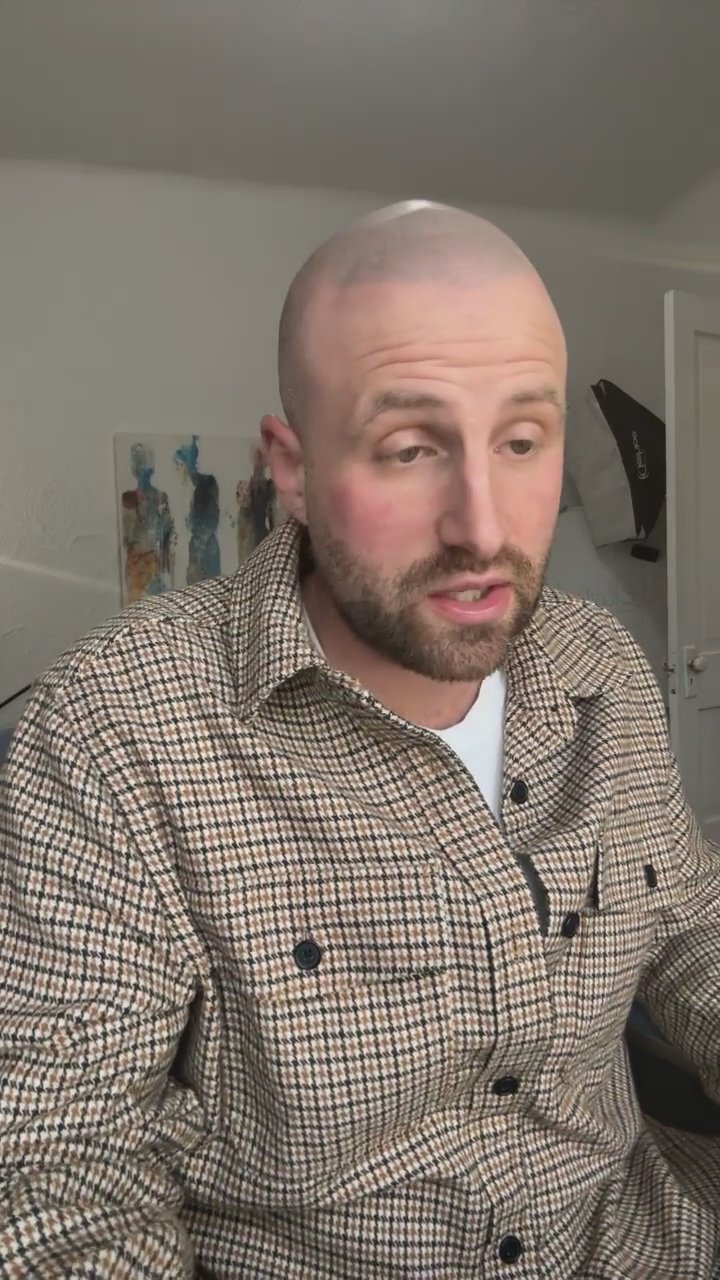
Coming soon to Cadre I have a video breaking down some of my top tips for boosting your mood if you are struggling with depression. Of course these are no substitute for ongoing therapy however, it’s good to have these at your disposal. So join me live to have a discussion about some of these tips before the video drops.
Evan: Welcome to another episode of Mental Health Matters. We are going to be talking about, as per usual, matters around mental health and addiction. If there's any topics you want to hear me talk about about mental health, addiction or if you have any questions, please put them in.
There are multiple types of depression. The core type is what's known as major depressive disorder. By incorporating these things into your life or just doing them when you need it most, that can have a very significant effect. It is not necessarily a replacement for ongoing therapy, medications, etc.
Take a walk through a park. Get your heart rate up. Listen to some upbeat music. Avoid mind and mood altering substances. Let me know if any of these works for you.
What's up folks? Welcome to another episode of Mental Health Matters. I'm Evan, your resident mental health and addiction therapist and we are going to be talking about, as per usual, matters around mental health and addiction and because mental health is important. So hopefully we'll get some folks coming in. Whether they're our usual suspects or some new folks is always awesome too. So for this live stream I typically do an ask me anything episode where I bring questions in and that will actually be later this week.
I'm going to do two live streams this week to make up for my inability to do that. And just like that, on cue, we have Jules, what is going on? So yeah, do the ama. But today I brought a topic and this is one that I found to be quite popular and a lot of people get some benefit from. And then we have Speak. Wonder what's going on. Probably our two greatest regulars on this here series. So let's see any announcements. I do have a big batch of videos dropping. We'll see what happens. What up, LC So what's going on?
Let me get an update from everyone. Where are you at right now? Yeah. And if there's any topics you want to hear me talk about about mental health, addiction or if you have any questions, please put them in. It does help get this live stream cooking and makes it interesting. Otherwise I did bring a topic. Good afternoon. So today I brought a topic and I'm going to drop a more in depth video about this. But it is five things you could do to help with your depression right now. And one of the reasons I thought to talk about this is because I mean so many people, whether it's just situational, if it is more ongoing major depressive disorder, whatever that is, what's going on?
PA People, you know, are struggling and sometimes they can't access or just haven't accessed the care that could be beneficial with this therapy, medications, et cetera. So when I give some of these tips, it is not necessarily a replacement for ongoing therapy, medications, etc. However, by incorporating these things into your life or just doing them when you need it most, that actually can have a very significant effect. Finish with court. Sorry, what are you in court for? Hopefully nothing too bad or are you doing some legal professional stuff.
So yeah, so we have that and so we talk about depression, right? There are multiple types of depression. The core type of depression is what's known as major depressive disorder, essentially having a series of symptoms. And I think people have a general idea of what depression is, what it feels like. Oh, you're A bailiff. Cool. Have you always been? I guess. Did I ever know that you do that? Interesting. So major depressive disorder, right. This core of symptoms that are pervasive. Right. So not just like, I've been feeling this way for a week or two, but, you know, having them for at least I believe, a month or more.
You know, things like losing interest in things you were once had enjoyment from. It could be, you know, difficulty motivating to do the things you want to do, need to do. Getting out of bed, oversleeping under sleeping, overeating under eating, are all symptoms that people will uniquely experience. Yeah, so, yeah, that's kind of just a general. And there's other ones too, that just aren't popping into my mind. But again, we all know what depression may look like or. And it's really just, you know, what's the difference between feeling depressed or just feeling sad?
And down is an interesting question too. But, you know, so these things may look exactly the same. Right. If you're having. Let's just say you're having like a really bad day, while you may maybe may lose your appetite, you may oversleep, you may, you know, have those intrusive, you know, down depressed feelings, but it may only last like a day or so and you snap out of it. Or there's a particularly stressful period at work. One of the many aspects. So how's it you a bailiff? But what else is that mixed with?
I don't even know how that works. I don't even know exactly what a bailiff does. I just think of the dude on Judge Judy. I forget his name. It just stands there stoically. So I don't know if that's a job. You stand there stoically and then make sure things are going and you grab the documents, give them to Judge Judy. I'm sure there's much more to that, but I'm ignorant, so. Yeah, so the difference is the depression is persistent even in the face of not really having obvious circumstances as to why you're feeling that way.
Right. So a lot of times when people are depressed, there's really. I mean, you could always try, like, find some reasons. Like, if I ask, why is your life not perfect? You'll give me some reasons why. Right. We all have them. So sometimes there may be a tendency to work backwards and say, well, I'm depressed. Oh, it's because of these things where that may not be true. Of course, those things contribute and play a part in it. However, for some people, it is circumstantial and when their depression is circumstantial, when the circumstances changes, you should, should see a change in mood.
Right. So that's the difference. Now, regardless of whether it's a situational type depressive state or an ongoing major depressive state or just a dip in your mood throughout the day. Oh, sorry about my anxiety, depression, etc. So here are five things that you can do. Myself, my clients and research shows to be beneficial and sometimes like I need to remember to do these things. Sometimes folks don't even fully realize when they're in a state of depression. Which is kind of interesting too. Right.
Maybe it just becomes normalized. You don't really. It kind of happens in a slow way anyway. If you're feeling down, if you're not feeling the greatest, here's some five things. Number one, pick up the phone. Connecting with other people really gets you out of your head. Whether it's, you know, sharing about your problems or even just being able to help somebody else. Getting out of yourself, you know, a mixture of that getting things off your chest is going to be beneficial a lot of times, especially if the person, someone we really enjoy talking to, an old friend, someone that makes us laugh.
That is a great way to just shift to get you out of that scene. You can think of it like a wheel that's going and you keep hitting the wheel and it just keeps going. But it's a good way to throw a stick in the spokes and stop that thought cycle and redirect it. So a lot of this is redirection. So winter is your struggle season. Yeah. And that's super common. And maybe. Yeah, I should definitely talk more about that. I'm going to write that down. Seasonal effective disorder, we call that. Or now they just call it depression with seasonal onset essentially.
So yeah, anyways, so now this is more pertinent than ever because, you know, especially as the, as it gets darker and darker. So it is associated with sunlight. And not only that, we're doing the daylight savings. So unless you're up pretty early, you're gonna get even less sunlight. Early risers will maybe get more or something. But most of us are a little lazy, so more pertinent than ever. Number two, get into nature. I always say we come from nature, we're meant to go back and be in nature. Maybe not all the time.
We don't need to live, you know, in a makeshift hut like in a survival show. But you know, whether that is going to a cabin, going camping, but it doesn't even have to Be that right. So for a lot of these things, you know there's always easier alternative to that you could fit into your daily routine. So that could be taking a walk through a park. That does lower anxiety, it lifts mood and it lowers your blood pressure, believe it or not. And so they call it like a nature bath. But it actually is good for your overall physical health.
So that's one I really like too. Similar is getting your heart rate up. If you have the ability or motivation to do a tough exercise, you're going to feel better after unless you injure yourself. I've never heard somebody regret doing a workout after they were done with it. When it starts to become a habit, a pattern, people will usually tell you they can't live without it because it really doesn't help that much and really probably is one of the most effective antidepressants if you do it regularly.
And some people like myself do both even better. Double dose of goodness. So it doesn't have to be a hardcore workout, doesn't have to be a crossfit but you know, it could just be taking a long brisk walk. Crank up the pace a little bit, get that heart rate up. You know, that's one of the healthiest things you could do as well. Helps with mind, body and spirit. So that's number three. Number four, listen to some upbeat music now. Doesn't always have to be upbeat. Some people like sad music, makes them feel better.
I mean I like it. I don't know if it makes me feel better sometimes, but yeah, put on some of your favorite music, upbeat tracks, throw on your headphones, maybe do a little dance when no one's looking. That'll get your heart rate up a little bit too. But that is a great way to shift mood, make you feel a little bit better. 1 and that'll be what you know, something funny. Watching a stand up comedian who's your favorite or checking out a new one. But laughing is another way that really does throw a stick in the spoke of a negative thought cycle and can help redirect you.
And by laughing it does immediately change your mood in that moment. Number five. So this is a negative. So this is what not to do which is avoiding mind and mood altering substances. Now it for most people, if you're feeling that way and you use them, it will work, it will redirect maybe even more powerfully than all these other ones. The problem is as you know it reinforces that cycle. And so let's say your normal baseline of mood is here. You're feeling down, you use a substance, brings you up here.
However, when you come down, it does lower your baseline over time. So when you do have those down periods, it's going to be further down and your baseline is going to be below average. And that's why people get caught in that cycle. All right, so anytime you use a substance to fulfill a certain purpose, other than something I use once in a while for pleasure, that's when it becomes dependent, forming, and really is something that is detrimental in every way, as you may know, as I know as an addiction therapist.
5 things. So I encourage you to try those out. Let me know if it works. The video I have will come out on this soon, which is essentially, I guess, pretty much saying the same thing I just did, but it's more fun in video form anyway. Yes. If y'all don't have any other questions, that's cool. You could always ask me questions in the community feed. You can always. What else can you do? Oh, you could comment on my videos. It's always nice to see if you have a question. Go watch those and I'll bring some for, I believe, Friday.
We'll hop on and do that AMA episode. So thanks for those who came in, participated. I look forward to seeing you next time. Take care.