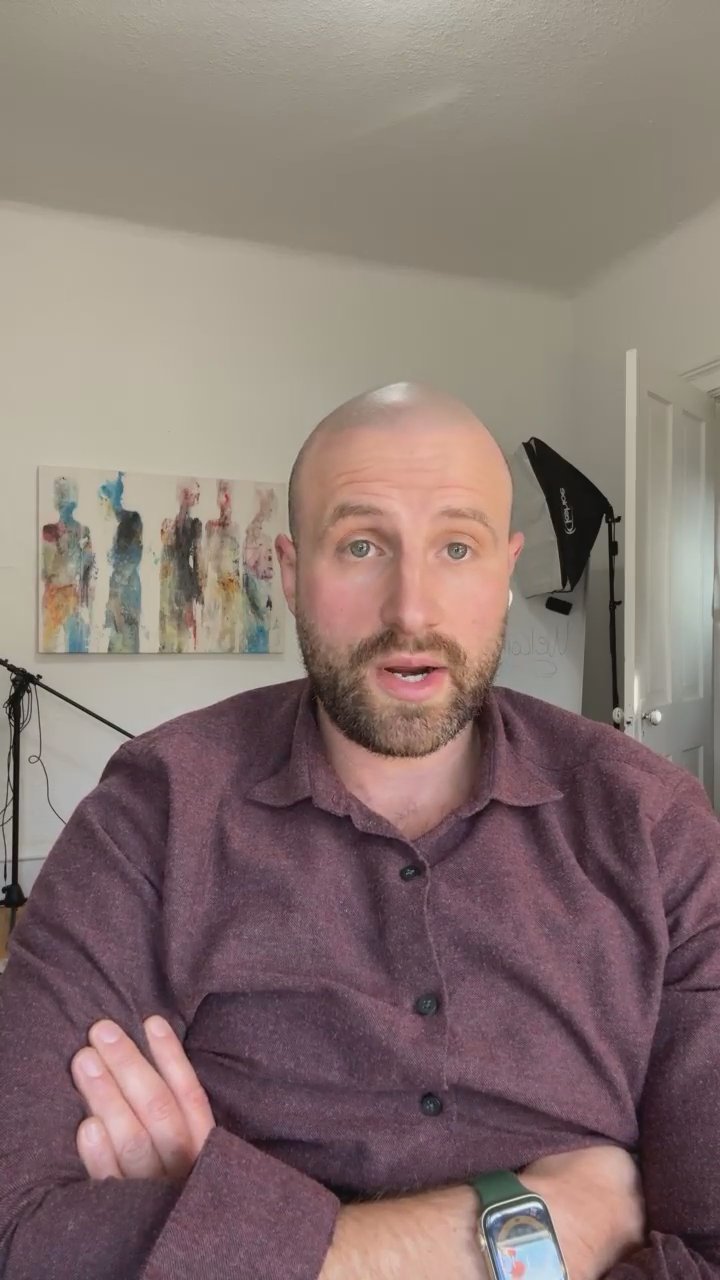
On this episode on MHM, we are doing our bi-weekly AMA episode where I take your questions as well as questions I get by email, social media etc. to address issues around mental health and addiction. So come join us and bring your questions and personal experience.
Evan is your resident mental health and addiction therapist. Every other week he does an ama. Ask me anything. If you all have any questions whatsoever about mental health or addiction, I'll answer them.
We got a little crazy weather yesterday and some melting today of the snow. Somehow in Minnesota it was, I think on Tuesday it was 75 degrees. Yesterday was like 30 something and like sleet and snow, but only in Minnesota. That's what we like, though.
Chronic pain affects roughly 20% of the population. Not too many people talk about it. A lot of it is around, like, shame. People often don't get validated for it. And sometimes it can get perpetuated in a cycle.
When you're in chronic pain, it saps you of those positive brain juices, serotonin, dopamine, get sucked out like a vacuum. It causes undue stress and stress leads to symptoms of mental health. Becoming a member of Cadre is very inexpensive.
A lot of people have relapses even if they aren't opioid addicts. Many people who have addiction histories who use opioids after surgery will tell you it just doesn't hit the same. Do the minimum and getting off of it and finding alternatives as soon as possible.
Folks, welcome to another episode of Mental Health Matters. I'm Evan, your resident mental health and addiction therapist. And here we are talking about matters regarding mental health, substance use, and because mental health is important, play on words. Gotta say it every time. Anyways, every other week I do an ama. Ask me anything. I compile questions from you from the Cadre sphere, social media. I get a lot of questions, emails, all that stuff. So I compile them and I bring them here for you.
Chells, what's going on? Chels for mn. Anyways, folks, so if you all have any questions whatsoever about mental health or addiction, I'll answer them. Really, at the end of the day, that's what this is all about. But I brought those questions just in case. So, Chells, what's going on today here in Amman? We got a little crazy weather yesterday and some melting today of the snow. Somehow in Minnesota it was, I think on Tuesday it was 75 degrees. And then yesterday was like 30 something and like sleet and snow, but only in Minnesota.
Um, good morning. Let me get some of these questions pulled up. All right, so we got about seven questions, but maybe we'll do two or three today. You gotta save some for next time. Oh, Jules, good morning to you. Getting to the end of our morning, but yeah, wild weather here. That's what we like, though. Okay, so I had a lot of questions regarding chronic pain. Some of my videos started recirculating on that I did like three years ago. There's a couple videos that I have that it's always interesting when I go and look at like some of my notifications on social media because, like, there'll be videos from like two years ago that randomly get pushed out.
And those are a couple that. It's one of the topics of a couple videos I did on chronic pain that garner a lot of attention. And I found that really interesting. And I really should do another video about that. But that's one of the reasons why on here I have a series on chronic pain. So you could look that up. I think I called 15% better did that one like a couple of years ago. You're not ready for the snow? I don't think we are. Although if it's going to be winter, you may as well have snow. That's only good part about it.
Nice little winter wonderland and some skiing, snowboarding stuff. But yeah, so you can check out that series on chronic pain. And so I thought I would just, instead of going to like, some of the questions, just kind of do a recap as to why it's important to talk about and some of the considerations, implications and some of the reasons why. If you. If that's something you struggle with, why, you could check out my series. So, yeah, there's that. So chronic pain affects roughly 20% of the population.
And so what chronic pain is defined as, I think, any sort of pain that you have from any physical ailment or otherwise that lasts for more than six months, whether it's an injury, whether it's a chronic condition. And so another part I kind of wind into that chronic illness. So if you put that in there as well, I mean, we're talking like 30% for it. I don't know. But a significant percent of the population has it and not too many people talk about it. Especially for how many people have it. There's a lot of reasons for that.
A lot of it is around, like, shame. It's around not feeling heard. It's around. You know, people often don't get validated for it. For example, a lot of people with chronic conditions, they go to doctors, especially if they don't have an answer. A lot of times they just go, well, it's probably your anxiety or stress. And though that can play a part, very often people get dismissed for it. Yeah, I'm going to do another video. I got to write this down on my video list. Chronic pan. It's been a while.
And people always appreciate when I do videos on it. But here at Cadre, I have an insane amount of content of a whole series. Please check it out. So, you know, people get dismissed by the doctor. They're told that it's in their head. I mean, there are such things as, like conversion disorders. There are such things. Oh, Lake Erie, the blustery. Oh, you got a. How'd you get cool font. You got a different font. Coffee to YouTube. So there are things called conversion disorders, like unexplainable pain, sometimes of a psychological origin.
A lot of times certain conditions that we thought were just kind of psychological, we do find out later. Yeah, no, there is a specific reason for them, a physical reason. And then it's like, oops, sorry about that. But a lot of times doctors can be a little too quick to be dismissive of that. And so that's just like all the more reason why people just kind of eventually shut up about it. Sometimes people are told to tough it out. Sometimes people don't believe them. Sometimes people think that they're just using it to get attention.
Sometimes people think they're using it to get out of duties. And Responsibilities, whether it's like your partner being like, well yeah, you don't want to get up and go to this event, you don't want to do this. And you know, and to be fair, it can be very wearing on partners and supportive individuals when someone has a chronic condition, especially if they, you know, enter a role as caretaker. And it can be frustrating. You know, though I would say most of the time when an individual has a chronic condition or disease, they don't want to have it, right?
Even if it is like, well, I could get out of helping my friend move, you know, they probably would much rather help than have that chronic condition. And sometimes too it can get perpetuated like in a cycle. And I talk about that in my series as well, where some of that avoidance of activities or whatever gets reinforced, causing you to actually avoid more, maybe even more so than what's actually possible for you or within reason. So that's a big consideration. Another one where it gets a little bit trickier is in treatment.
So some people have to be on opioids. Now this gets a little controversial, depends on how you view it. But there are some people that found that as the only thing that gives them any relief. And even though it may not be the best thing to do in the long term because of dependence issues, the level of how it may impact you, I mean, there's some ways around it, you know, there's some different medications like withdrawal meds that people use to get off of heroin and such, you know, like methadone or Suboxone, where people, I actually use it for chronic pain as a better alternative than the faster acting opiates, your vicodins, oxycodones, percocets, etc.
So that creates a whole bunch of, a bunch of issues, you know, because it's like, is it addiction, is it dependence, is it just simply that an individual needs it? But again, that's something that's a self perpetuating cycle because if you don't have those opioids, you're going to feel 10 times worse and in more pain than you would otherwise. So I know just a consideration for anyone hopping in, right? So if we got 20 to 40%, let's see, we got three people in here, you know, odds have it it's a good 50, 50 shot or more that, you know, one of you three struggles with that, right?
But my guess is it's something that's not, you know, often talked about or addressed. So you know, at the core of this and the reason I bring it up, especially in my role, is that it is very much a mental health issue. Very much somebody's mental health is impacted. When you're in chronic pain, it absolutely, I say, saps you of those positive brain juices, serotonin, dopamine, you know, all of those that give you an overall feeling of well being, get sucked out like a vacuum. Now endorphins as well.
So if you think about like some of the good feelings you get from like, you know, running, you get that runner's high, the endorphins, these are naturally painkilling substances. Also what you get from opioids. So when you're in chronic pain, those become depleted and then, not to mention, right. The more limitations we have on us, if you can't walk certain distances, if you can't partake in certain activities, especially ones that you once loved, right. That's like a symptom of depression. But you're not doing it because of depression.
You're not, you're doing it because you literally cannot do it. Right. So that's going to, you know, cause depression. You know, when you're having to put so much thought, you know, so much time, thought and energy around going to appointments, doing treatments, you know, feeling pain, feeling symptoms, right. It's can be very depressing and it just, it just causes undue stress and stress leads to, you know, symptoms of mental health, whatever that is, that you're more susceptible, whether it's depression, anxiety, personality disorders, ptsd, whatever that may be, whatever the vulnerability is that we all have, stress turns on that light switch, right?
And so it's pretty easy to see why those things impact overall well being. Yet we just treat it like a physical issue now for of course you have to address that and if you could figure out a root cause and proper treatments that's going to impact your mental health. But on the other end, there are actually direct therapies, modalities that are shown to be helpful that are not just fix the problem, but it is different ways of approaching chronic pain, processing the grief and loss around it. So there's just so many different intricacies about it.
And that's why you should go check out that series or send it to somebody if you know someone struggling with chronic pain or illness. Right. Becoming a member of Cadre is very inexpensive and as you all know, has so many benefits and so much content. So we could be sure that folks are able to access that. And you know, sometimes it's hundreds of dollars for video series and such, but you know, in this case It'd be five bucks, whatever, ten bucks a month, and you get access to an entire series and then everything else that's involved here.
So I recommend that. Okay, let's do one more question. I don't know, I kind of took up all the time with that, but that's that. I think that just goes to show how much there is with that. Let's do one more. You know, let's do a related one. Yeah. So I had one person talk about how they cannot use opioids after surgery because they have a history of addiction. And it's good to take that conservative approach. And a lot of people have relapses even if they aren't opioid addicts. Right. Because it is such a powerful mind and mood altering substance.
Maybe they're alcohol dependent and then they get a surgery and then they, you know, then they're on opioids and then it kind of brings them back to alcohol or they just get addicted to that. So it's important to be extremely mindful. However, there are certain surgeries that you have to. It's just like, for example, when I got a spinal fusion, I'm sitting there, I'm like, yeah, I had a bad addiction to opioids. It was horrible. It was h***, never going to touch them again. They're evil. Then fast forward four years, me laying on a hospital bed, I'm like, thank God for opioids, you know, so it's not just about the substance itself, it's about how and when it is used.
And that was the problem with something like oxycodone, where, you know, suing the manufacturers. And that was because they pushed it for management of chronic pain, which was highly irresponsible. What it does best is acute pain, those coming out of surgery, severe injuries, you know, palliative hospice care. Right? That's the best application, you know, so anyone, Anyone. But you know, many people who have addiction histories who use opioids after surgery will tell you it just doesn't hit the same.
It doesn't give you that. I mean, yes, you will have that feeling of euphoria, of getting high, but it's not the same as if you don't have pain. And so the big variables, I say for individuals with addictions who are going to be doing opioids is, you know, if you want to have it be successful, you know, and not impact your recovery is one, be sure you're in a good place with recovery, that you're well connected, being open with individuals, telling them that you're going to be on the medications, even having people hold on to for you, having them administer it for you, making sure that you're taking no more than what you're prescribed, making sure you are taking the minimum amount that you could possibly do without being in an unreasonable level of pain.
So doing the minimum and getting off of it and finding alternatives as soon as possible. If you could do that, you know, and you stay plugged in to your connections, I would put my money on you to be successful. So those are just some considerations under that. So, yeah, I think that was a good segue into both topics for today. So feel free to, you know, put questions for me in the community feed, comment on my videos and. Yeah. And just pop into the next live if you have questions. And if you send one, I'll answer it.
All right, folks, it's been awesome. Take care. And for those of you in Minnesota, let's just cross our fingers that things don't get crazy weatherwise. Take care. Cheers.