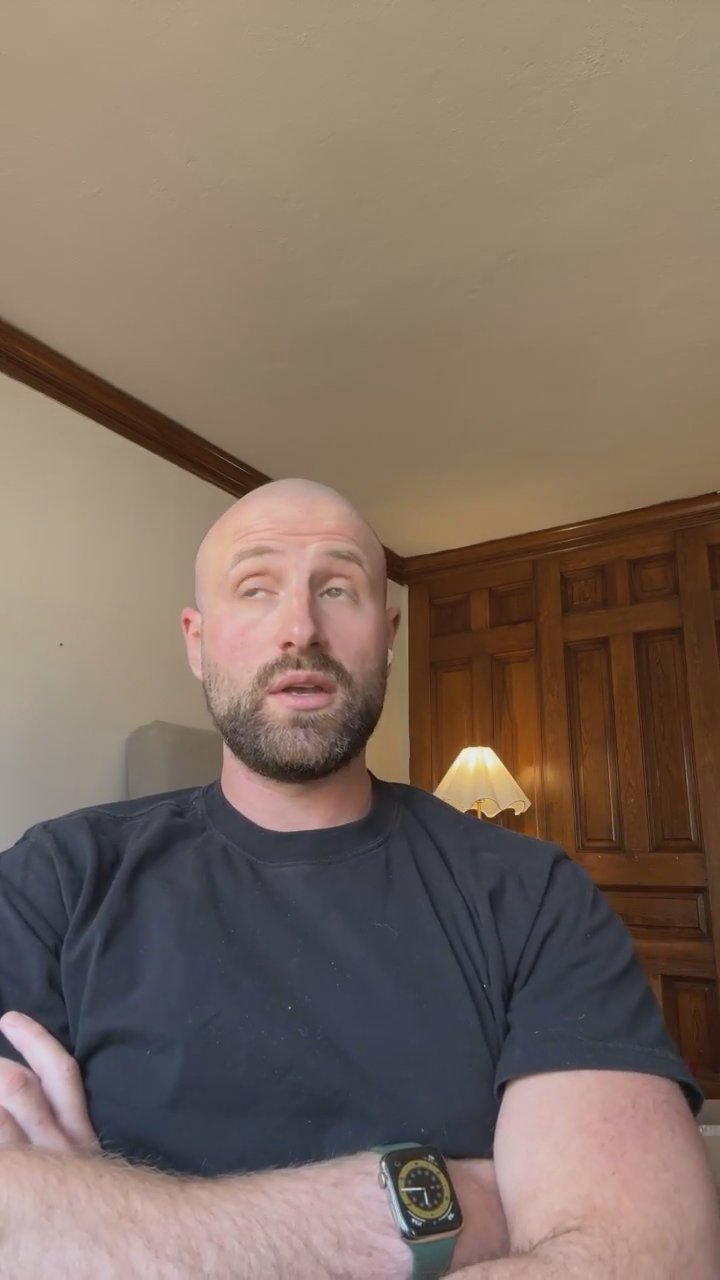
In this live stream of Mental Health Matters, I am going to share about a frequent question I get from followers and even the media. I have had several interview requests to talk about this topic as there has been a lot of sensationalized coverage about teens and even adults self-diagnosing or even developing symptoms from learning about disorders. So I will break down the problem and my opinion as a clinician who creates social media content.
This week's Mental Health Matters is all about mental health and social media. What is responsible consumption and production of social media, really in the healthcare space in general? There are actually upsides to individuals consuming content. However, the key is seeking professional guidance and treatment.
Hey, folks, welcome to another episode of Mental Health Matters. I'm Evan, your resident mental health and addiction therapist. Here we talk about matters involving mental health, addiction, and because mental health is important, it is a play on words. And every other week I bring a topic, or I do an. Ask me anything where I bring questions. So today we have a topic, and at any point, feel free to come in and ask me any questions. That's the fun of it. So we could have a little live interaction.
And today, the topic I'm bringing is all about mental health and social media. What's up, Jules? How's it going? What is the update with you? So, there's a few different dimensions here as far as mental health and social media. For one, individuals who consume it, what are the benefits, what are the risks? Then there's some elements of how mental health, or how social media impacts our mental health, which I may not talk about quite as much, but there is that interaction there as well. But also, what is responsible consumption and production of social media, really in the healthcare space in general.
And the reason I bring this up, you may see in the description, is that the few times that I have been reached out to by the media, whether that's like, let's see, who did I have? I had the LA Times. Who else? A couple other, like, bigger publications reached out to get a statement about my thoughts on this phenomenon of, let's say, individuals diagnosing themselves, individuals who are maybe developing symptoms based on what they see on social media, mainly children, and what my thoughts are. So this became a pretty sensationalized thing, especially around 2020, 2021, TikTok is becoming huge.
More and more people are consuming content. People are cooped up, they are in pandemic lockdowns, or whatever you want to call it. And people are consuming a massive amount of content. And around that time is when I started producing content, new creators are coming out. And so we're in this huge adjustment period of this new technology of sorts. Not that TikTok was like all that new, but like the algorithm itself and how it worked was something very new. And they were kind of going through their own growing pains.
And so you saw some of these phenomenon develop as more this content was reaching a greater amount of people. And so you were seeing things like that with children, where they were developing symptoms of, like, tourette's, or believed they had, like, dissociative identity disorder, you know, the social influence phenomenon, you know, kind of creating like a placebo effect of some sort. Right? And so that that was a thing, however, I think it did get blown up and over sensationalized, you know, and applying that to other things, like, for example, like ADHD, autism.
A lot of people may be identifying or quote, self diagnosing based on what they're seeing from, let's say, actually licensed mental health creators or people who just have the diagnosis and disorder themselves and create content about it, which is pretty good stuff. So what's going on here? Well, you know, again, there is some truth to that, but again, I think a lot of that was overblown. Right. And that there are actually some benefits here. So let's say someone's consuming social media and they see someone who talks about the symptoms of ADHD, whether it's someone who has it, a creator talking about it, a professional talking about it, and they're like, wow, I could really identify with that.
You have a lot of funny videos of people having certain struggles associated with ADHD. For example, not wanting to do laundry. Now, the criticism here is that, well, probably very few people like doing laundry. Therefore, you don't have ADHD because you don't like doing laundry. However, at the same time, folks who do have ADHD really do struggle to a greater degree with some of those types of, like, mundane, boring tasks. But so people kind of think it generalizes to them. So the question I have is, like, what are the upsides, downsides of that, etcetera?
Because there are actually some upsides to individuals consuming content, learning more about it, identifying with it. However, the key is part two, step two, which would be then seeking professional guidance and assistance for a diagnosis and treatment versus just saying, oh, yeah, I identify with the symptoms, therefore I have it, and going to act accordingly. I had a friend who's a psychologist, who is a psychologist, and he would test for things like autism, adhd, and et cetera. And he said with kind of the advent of TikTok, those diagnoses went, or people seeking to get diagnosed, went through the roof.
And I asked him, I was curious what percentage of these people actually have it. He said about half. So I thought about that and I'm like, well, these are people, all of these people, whether they have it or not, either a, because of social media, got tested and ruled it out, or b, got tested, diagnosed, and have opportunity for treatment. So overall, that actually seems like a net positive. I don't know very many people who have just gone and diagnosed themselves, they say the self diagnosis, but I'd say maybe it would be more like self identification with the symptoms themselves, and maybe they do believe they have it, and I'm actually someone, too.
It's kind of ironic where I started consuming a lot of their content, too, not just creating it, but consuming it from my peers and other folks who have some use disorders. And I actually started to identify with certain things myself and kind of did the same thing. And it actually really helped me gain some awareness on some of the struggles I have in getting, like, some appropriate help for it. So I actually am someone who benefited as well. So it really is a double edged sword. I think it does get over sensationalized.
Now, I guess a question would be, how do we safely consume social media? Right? So I think it's important to know where it's coming from. You see this a lot in, like, more probably the medical space than I've seen with mental health. I mean, the one thing with mental health I've seen is, like, maybe you have some of those creators who, like, have it themselves and maybe over generalize get some of the information wrong. I've gotten some information wrong, or at the very least, maybe I communicated it in a way in which I didn't intend to or got taken a certain way.
Right? Like, I say something and I mean one thing, but then others took it another way and it was just like, an oversight. But sometimes I've, like, blatantly gotten things wrong. I think I've made about, I think I looked and I didn't realize, but I've made about probably 700 videos, which is, like, insane to think about. At least that's what it said when I looked at my TikTok the other day. But, you know, so in that I've probably accidentally given, you know, some false info, definitely not on purpose, you know, so it's important to verify.
It's important to know the source. I think it's especially true when you look at, like, health content, especially around, like, diet, nutrition. You have, like, an exercise science. I think you see this a lot more where you have a lot of people who spew a lot of absolute nonsense, especially, like, that nutrition space. So knowing, so it'd be like someone who has a million followers or more, but they're giving health advice, and nutrition is like a chiropractor. So it'll be like, yeah, I'm a doctor, but it's completely in an unrelated field.
And so then they're spewing a lot of nonsense in that area. So there's a couple people that I like to follow in the nutrition space that I find interesting that are one like Doctor Terry Simpson, who's a gastric bypass surgeon, but he does a lot of good info about diet and health and, you know, that's based in like, actual research and not like folks that are like the carnivore MD or something like that who's like a psychiatrist who has this huge following for just like literally eating meat, you know, and, you know, some like, doctor ids.
Idz is another one who dispels a lot of myths out there, whether it's about seed oils or, you know, very common, you know, things that you may hear demonizing certain foods and exercise stuff. So that's what, like, I try to do, you know, as best I can, is find those creators that I trust, you know, that are open to changing their minds, that aren't trying to sell you something, you know, and that's okay, you know, like most creators need to make a living and maybe, you know, sell certain things, but, you know, you want to be careful, you know, of what, what it is they're selling.
For example, Doctor Terry, you know, sells a book on the mediterranean diet. You know, that he just donates the charity. So it's like a passion for him. So, yeah, again, social media, it isn't all bad. There's some good that comes from it. I think we're in a huge adjustment period right now, just like you have with any new technology, and we're just going to have to figure it out, how to live with it and benefit from it and, you know, use it in more moderation and maybe moderating some of the more harmful types of content that really do have a negative impact, whether it's on teenagers especially, or just about anyone else for that matter.
So hope you found that interesting. Hope that helps. And with that, folks, I will check in with you next week for an AMA. Take care. Have a good weekend.