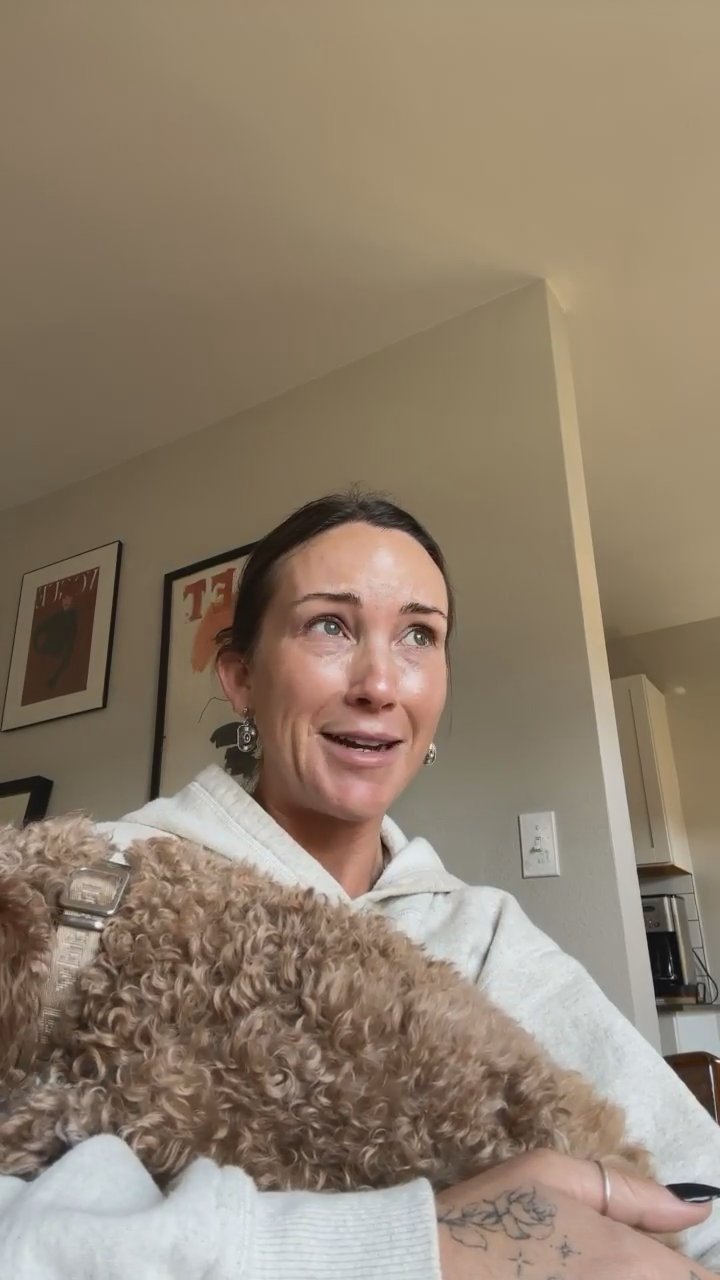
Milo wanted to come say hello. The weather in Seattle has been so bizarre. Like it was 70 degrees on Monday in October in Seattle. Making things that are really simple and easy and accessible is incredibly helpful. If you kind of want more specific skills there, go ahead and check those out.
Milo wanted to come say hello. The weather in Seattle has been so bizarre. Like it was 70 degrees on Monday in October in Seattle. Happy Wednesday.
Last month I was really, really struggling with my depression. I'm very happy to report that I feel like I'm on the other side of the depressive episode. It's a huge win to be able to use these tools that I've developed over the years and actually see them in practice and be effective.
In times when I'm feeling depressed or overwhelmed or maybe I'm symptomatic in my eating disorder, I go back to the basics. Making things that are really simple and easy and accessible is incredibly helpful. And then taking anything that's not necessary off my plate.
Most recent videos on my page are all about coping with depression. If you kind of want more specific skills there, go ahead and check those out. I will see you same time, same place, next week. Bye, Cadre.
Happy Wednesday. Cadre Crew. Hello. Hello. Oh, hi, Milo. Do you want to join us? I've got a little floof. I think it's a day for a little Milo, don't you? He really wanted to come say hello. Hi, everyone. I am enjoying a sunny view. The weather in Seattle has been so bizarre. Like it was 70 degrees on Monday in October in Seattle. I don't understand. Hi, Jada. All right, so I wanted to go live today and talk a little bit about depression. If you have been to my page recently, I. You'll see that there's four episodes or four, four videos all about coping with depression.
And I posted those because last month I was really, really struggling with my depression. It was a. It was. It was a maybe a month long episode and I hadn't experienced that in quite a long time, like maybe over a year. And it was pretty. It was rough. And I'm very grateful to have had to have a lot of tools in my tool belt and have been in a lot of therapy. So I kind of know what to do and how to navigate it. And I practiced as many skills as I could. And I'm very happy to report that I feel like I'm on the other side of the depressive episode, which to me is a huge win to be able to use these tools that I've developed over the years and actually see them in practice and be effective.
So I kind of wanted to just share a little bit about some of the things that I did last month to manage my depression and to kind of pull myself out onto the other side. So there are a few things I did. And again, like these are all of my standalone videos on my page, but I'm just going to kind of break it down for you in this live. So one of the things that I talked about this yesterday, actually on a podcast. One of the things that I learned many, many years ago when I was in eating disorder treatment was a dialectical behavior skill, dialectical behavior therapy skill, which I also talk about a lot.
And it's all about just returning to the basics. So in times when I'm feeling depressed or overwhelmed or maybe I'm symptomatic in my eating disorder, oftentimes the feeling I have or the urge I have is to try and fix or try and solve or try and make things better. And so I start placing rules or I start adding things into my routine because I think I need to do something more in order to feel better, when the reality is I actually need to. I need to do less. I need to reduce choices. I need to reduce anything that I'm doing that is causing any extra stress or any extra brain activity or taking up any extra energy.
Because chances are if I'm struggling with my depression or if I'm struggling with my eating disorder or anxiety, it's because there's already so much going on that I'm overwhelmed and I am struggling to cope. I go back to basics. So that means focusing on things like just my basic hygiene. So making sure I'm showering and brushing my teeth and washing my face every day, not adding in any extra like, doesn't need to be like some big beauty regimen. Like just focusing on basic hygiene, focusing on basic meals.
So like I will buy pre made meals from Trader Joe's. So all I have to do when it's time to eat is just pop something in the microwave or something together that only takes a couple minutes and I and I'll eat the same thing every single day. And that might seem not very exciting or like it's not giving me like I'm not loving myself because I'm not cooking for myself. But the reality is like I need to reduce decisions, I need to reduce energy. So making things that are really simple and easy and accessible is incredibly helpful.
And then taking anything that's not necessary off my plate. So as a writer, oftentimes that, you know, there are things that are on my workplate that I've put there because it's a personal career goal. So like right now I'm writing a book of poetry, but I'm the only person who has a deadline for that. It's not something that, you know, that I'm, that is, somebody else hired me to do it. There's no deadline around it that is going to change my, you know, the amount of income I have for that month.
So last month I said, okay, you know, this is not the month for me to work on this book of poetry. This is the month for me to only work on the things that you. I've been hired to do and just focus on that bare minimum, which I recognize not everybody can do. But for me, if I can take something work wise off my plate, that's not necessary temporarily while I'm struggling with my depression or whatever else it might be, that's also really helpful. This also might include taking some social things off my plate.
So it doesn't mean isolating completely or eradicating any social time or human connection. And it might mean I'm not saying yes to every single invite. It might Mean that I'm not going to parties or events or dinners that I know might drain my energy. Maybe focusing more on one on one time with friends at home, watching movies or taking walks with friends, like things that don't require as much energy or maybe social engagement, because that can also be really draining and exhausting. And reminding myself that when I'm doing these sort of bare minimum basics, sort of, you know, skills or whatever, you know, whatever you want to call it, that it's temporary.
I remind myself like this is, this is not forever. Like this is just while I'm struggling so that I can give myself time to rest and recharge and focus on bringing myself back to baseline. And I find that that really, really, really helps. So I, I really did that a lot in September and I now feel like I actually have more energy and more motivation and I don't feel as lost or I feel like giving myself that time to kind of create more space and rest. Really, really helped with a lot of my mood. Other things that are really helpful when I'm struggling with my depression is focusing on my physical health.
There's such a huge relationship between the physical body and the emotional body. So sometimes if I'm not feeling well mentally, chances are it's because I'm probably also not feeling well physically. And that might mean reducing my alcohol intake. That might mean really focusing on a good sleep, sleep schedule. I've talked a lot about sleep on my page as well. So trying to have a good sleep routine, making sure that I'm getting enough sleep and going to bed and waking up at around the same time to create some, you know, a nice circadian rhythm internally so that my body feels energized throughout the day and sleepy at night, which is again going to impact my mood.
Choosing foods that I know are going to nourish my body, protect my gut, which there's a huge connection between the gut and the brain. So making sure I'm taking care of my physical self as well, mood moving without overly stressing myself out. So, you know, taking long walks, doing light, light physical activity as opposed to like high intensity exercise that was going to put more stress on my body, maybe practicing a little bit of yoga, things that are going to allow my body to feel a little more at ease, which then will reflect mentally as well.
So those are kind of the big things that I was doing in September alongside, you know, sticking to my therapy appointments, calling my friends if I was feeling sad or, you know, lonely or whatever, call my mom. Like just having somebody to talk to, I think is really, really helpful, too. Whoever you trust sometimes, too. If I don't have anyone to call or it's too late. Journaling is helpful. Getting things out of my head and onto a page or like, doing a diary, a lot. A lot of times that can feel like we're actually talking to ourselves, which could be really therapeutic, too.
So that's kind of what I did last month. And it's not a prescription. It's not like a. You know, this is gonna definitely pull you out of a depression right away. And I know that this is. These are the things that I did that were effective. And it's why this month so far, I have felt really stable, and I haven't felt depressed. I have felt sad. I've had days where I feel sad and I've cried. And that's different than when I'm depressed. And I'm aware of those differences as well. And to be able to also acknowledge, like, I'm.
Just because I'm not depressed doesn't mean I won't feel sad anymore. I think also was something that was really helpful for me to learn because I used to think, like, not being depressed meant I was always going to be happy. So anytime I felt sad, I was like, oh, great, I'm depressed again. When the reality is I just was feeling sad about something because things make us feel sad because we're humans. So Milo is looking at me so sweetly. You should do this. Hi, bud. Wanna say hi? Oh, I love that little munchkin.
All right, my loves. I hope this was helpful. And like I said earlier in the live, there are four videos. The most recent videos on my page are all about coping with depression. So if you kind of want more specific skills there, go ahead and check those out, and I will see you same time, same place, next week. Bye, Cadre. Love.