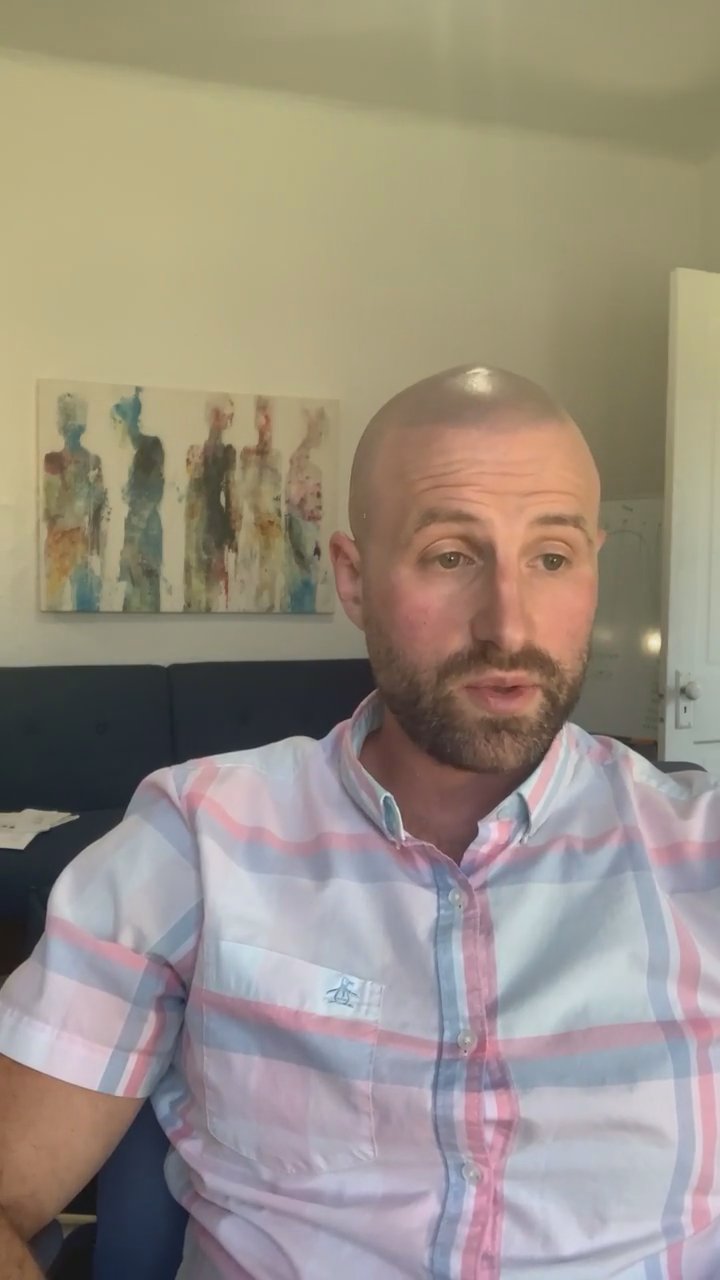
In this biweekly AMA episode of Mental Health Matters, I bring questions I have compiled from therapy clients, social media followers and Cadre members in regard to mental health and addiction. So come join with your questions and personal experiences and let's have some fun!
Evan: This is our ask me anything episode where you could ask me whatever you want in regards to mental health, addiction, or any other questions that I may or may not be able to answer.
The first question, does weed, cannabis make you lazy? It does affect people's motivation. Some of the people that weed affects the least for regular users are people who have a really sharp edge. It doesn't really help most people's mental health.
When you start to open that floodgate, can you manage it? That's the question for people in twelve step recovery. It really matters your specific situation, how you use it and that kind of thing.
People who are in recovery very often have using dreams. Typically, when you get into recovery, your using dreams are more about anxiety. Keep your eye out for some more videos coming out.
Welcome to mental health matters. I'm Evan, your resident mental health and addiction therapist. Got our weekly livestream today. This is our ask me anything episode where you could ask me whatever you want in regards to mental health, addiction, or any other questions that I may or may not be able to answer. If it's out of my expertise, who knows? Show recommendations? Probably not. I don't watch that much tv. Travel recommendations? Maybe a little bit. I'm going to pull up some questions that I have here.
So I brought some pre done questions, and this is from you folks. People wonder what's up? So questions from you all. Looks like I did these two questions. Questions from social media, comments on videos, direct messages, etcetera. Jewels. We got the old. The old band back together. How about that? So let's see if there's any other good questions I had come in. I think I might have enough as it is. Honestly. Where are my DM's? Oh, this is a good one, too. We'll add this to the list. What's up, Jules?
Tell me, what's. What are the updates with you all? So this one was. Yeah. What's going on? What's new in your life? What's going on on the Cadre world? Yeah. And if you have any questions, mental health, addiction wise, and I will answer them and go from there. The first question, does weed, cannabis make you lazy? Now, the traditional thought, the stereotype is kind of the lazy stoner. And I bring this up because I saw this article, or maybe it was a video. I don't remember a post, I forget what it was.
But it kind of referenced a study that was done and they concluded that. No, but they had these interesting methodologies. Basically, having people who smoked every day or, you know, different levels and then giving them a task of various difficulty and that they didn't find a difference. However, to me, this didn't seem to make sense whatsoever. Right. So if you. So I call b's on it. So how would I measure this? So it's my belief that folks who have a problem with weed almost always smoke every day.
Now, not everyone who smokes every day may have, like, a problem, but everyone who has a problem smokes every day, usually throughout the day. Some use it more medicinally, some people say they do, but it's kind of. Okay. So the effects of cannabis act for quite a while when you're high, it lowers your iq points. It does affect people's motivation. I mean, think about how many people who are on it report that it does. How many people in recovery from it. So it was interesting. I met someone last night at a meeting, and they've been going to both the meetings that I go to, but I never really had an in depth conversation, so I struck one of them like, hey, what's your story?
And basically they said that, you know, yeah, they drank pretty heavily and stuff, and it was an issue. However, their main thing was cannabis. So I've met quite a few people. I mean, they have programs for this, too, so we know it's addictive. So what are some of the downsides? And that's a big one, being less productive. I think for certain folks who may not have as much going on, or maybe it impacts one's ambition, or maybe it is just correlated with that for some reason. I mean, when I was using it every day, it did affect my motivation.
You know, it does have, like, a sedating type property to it. I always say that it kind of. It rounds your edge, right? So it's important to have a sharp edge as we go through life if you want to be successful, productive, if that's your goal. However, some people may not care, but at the same time, I do say that some of the people that weed affects the least for regular users are people who have, like, a really sharp edge, right? So folks who are like, highly motivated individuals, highly productive, maybe to the point where they can use a little blunting of that edge, because if it's too sharp, maybe you go around cutting everyone and yourself.
So, like, an example would be like, think of like a Seth Rogen or a Bill Mahere, a snoop Dogg, you know, I don't know. They're smoking. Bill Maher talks about how he smokes, like, not every day. So, you know, he's like a big proponent of cannabis, but then he admits he doesn't smoke every day. He doesn't do it before stand up. He doesn't do it before a show. Maybe he says it helps him write, but, you know, he's someone who has this insanely successful show tours he does. What else does he do? Writing, you know, podcast, all these different things.
So for him, it may not have a negative impact at all. Maybe a little bit on his lungs or whatever his relationships, right? So you go through and at least what he says doesn't have that negative impact. So, like, if I were talking to him, I'd probably challenge him a bit in his promotion of it because that's him, and he's like an extraordinary outlier as a human of, like, success and productivity. Right. So that's good. For him. But what about for individuals who aren't like that, who are struggling, who are struggling to find their way?
So I find that it like fills the gap for individuals who do struggle pretty intensely, you know, with, let's call them like the failure to launch type kids, adults, twenties, thirties, right. It just seems like weed just fills that void for them in a really unique way and it just kind of holds them back. Now it may not be just the weed itself, maybe for some it is, but it's certainly not helping, that's for sure. It doesn't really help for most people's mental health. Now there's some exceptions.
So I had an interesting conversation with a friend the other day and it really kind of opened my eyes a bit. So this friend, I've known her for a long time. She's been recovery longer than me, let's just say 25 years she's been in recovery and she's really struggled with PTSD and things that have happened and raising your kid and just like, it's a whole long thing. And so she's really struggled with her mental health in recovery. Now if she ever started using drugs and drink again, of course it would make it ten times worse, but still was at a point where it was really unbearable, but kind of.
And she was asking me my opinions of cannabis and stuff like that, or I maybe just brought it up with sober housing because a lot of people with medical and people in early recovery, so drives me a little crazy. And so we're having this conversation and then she kind of was like pushing back a little bit, saying, well maybe for some people and that. And I started to get to the impression that maybe she's doing it. So I asked and she said, yeah, you know, are you judging me? I'm like, no, not, you know, not at all because I'm really not a judgmental person and I keep my mind open.
And again, everybody is different. So she was telling me how she, you know, started exploring certain psychedelics which do have a good effect when done correctly, cannabis for some people where she's actually found this group of like, so it's like because she is a twelve step person and that's kind of frowned upon, whatever. So people feel ostracized, so they don't talk, they either don't go or they don't talk about it. They just kind of keep it to themselves. And so she was saying that she found some like group locally, that of people that do practice twelve step principles who do identify as someone in recovery yet utilize some of these substances as medicine.
And she was saying how that's actually been helpful now. She was saying, too, that she doesn't believe it's good for someone in early recovery, intention matters. Are you doing this to get hired or, like, actually help? Are you, again doing this every single day? Are you doing this? You know, are you doing it every day? Are you doing it just, you know, to escape whatever? And for her, she's like, you know, I do it in the minimum dose I can. I try not to even feel high when I do it to the best of my ability, and I find it to be helpful.
Okay, so is it a net positive on your life? Yeah. Is there some sort of risk maybe. Right when you start to open that floodgate, can you manage it? That's the question for people in twelve step recovery, that's one of the foundations, is the inability to manage mood altering substances. If you don't believe it, just keep trying, come back when you're ready type of thing. That's just kind of the way that the philosophy behind it, which a lot of people is kind of necessary. So, you know, another story.
I had a guy, horrible PTSD from work things, a first responder, and, you know, started smoking cannabis, you know, stopped going to meetings, stopped going recovery, started smoking cannabis, then was just smoking it all day, every day. Turned into drinking, turned into. Right. So the floodgates opened, and right now they're apparently in a really bad spot. No one's heard from them. They may be using harder drugs again. This person had like, 15 years, 13 years sober when this all happened. Right.
So just, it really matters your specific situation, how you use it and that kind of thing. So that was just a long answer for that. Doesn't make you lazy. Let's do one more question. Save some for later. What's a good one? This is one I got today. Let's do this one. So what does it mean when you have a drinking dream? Or we could just say a using dream. So people who are in recovery very often have using dreams. It's kind of our subconscious, and I think this comes from a place where typically, when you get into recovery, your using dreams are more about, like, anxiety.
Like, were you used and have anxiety about it? Right. You're afraid of the consequences. And so, like, I would have a lot of them where I, like, was smoking weed or drinking. Now, the weird thing about my using dreams, and a lot of people have had this, too, is I never actually use the drug in the dream. It's always like, I just did. But then in my head, I'm like, wait, how am I justifying this? I'm sober this long, but in my head, it's like I've been doing it for a long time and somehow justifying it, and I'm trying to square that circle in my mind.
Then I wake up, I'm like, oh, thank God. So for me, it's drinking our weed. Because those. And very often those are the drugs that people often think, well, I was doing hard drugs before. Maybe if I just drank or smoked weed. It's kind of one of those things that people may have at the back of their mind and wrestle with, can I manage these things? Because maybe they're perceived as a little less harmful if alcohol is not your drug of choice or weed isn't either. So I think it comes from that. But a lot of it is anxiety of loss if you relapse.
So it's that anxiety around relapse. And that's where the using dreams come. You know, for a lot of people, it's not pleasant. You know, like, it's never like, oh, that was fun. It was. Usually there's this element of anxiety around it. So I think it makes perfect sense. You don't need a super in depth dream interpretation. I think they get less and less over time. And I think, too, that as you go further, and that's when it kind of becomes a little more anxiety provoking, because at the beginning, you're ahead.
You know, you're really close to that using period, so the dreams may be a little more vivid and it's just you using. So, no, those are just the things that I've heard as to why people have using dreams that would make a good video. So anyway, for those who came participated, I thank you. Keep your eye out for some more videos coming out. I'm working on a bunch. Be sure to check out some of the videos I have out there on mental health and addiction. I think a whole new batch has dropped and we'll go from there.
Take care. We'll see you next week. Bye.