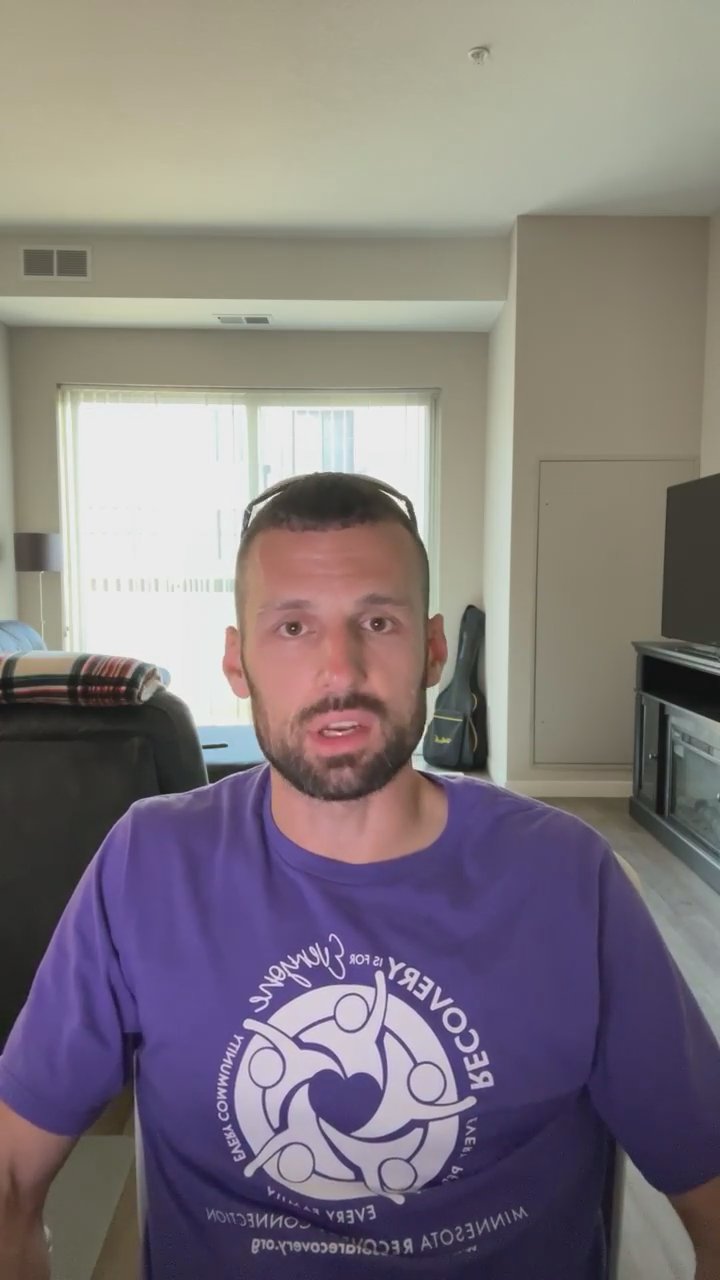
September is national recovery Month. Five Sunday serenity livestreams here this month for recovery months. Grateful to be here for recovery month and hope you all are as well. Hope your holiday weekends are going wonderfully and that you're ready to step back into the groove of September.
September is national recovery Month. Why does recovery month matter? I think it matters for several reasons. One is we can talk about recovery, and one, we can act on things in recovery.
Jules: Recovery from addiction, we know that it's a disease. We can talk about recovery this month and really every month, and then we can act on it. Of all the people I've met, the ones that I find in recovery, are the world changers.
Five Sunday serenity livestreams here this month for recovery months. Grateful to be here for recovery month and hope you all are as well. Hope your holiday weekends are going wonderfully and that you're ready to step back into the groove of September.
Hey, good evening. Happy Sunday to everybody in the cadres sphere. My name is Jason Lennox. I am your resident recovery champion here to talk about all things recovery, mental health and well being. Happy to be here with you on a Sunday. Just returning home from a week long trip up to the cabins with my family. There are about 40 of us. That's where I came to you from last week. So happy to be back home and sharing with you on this first day of September. Hard to believe that we're here already, but also happy that we're here already.
September is my favorite single month of the year and for many reasons. One, I love the weather. I love that the colors start to change. We have this mix of beauty and the things that we can see, but also still have that sun and staying nice and warm during the day. But most of all, I love September because it is national recovery Month. Why does recovery month matter? I think it matters for several reasons. Good evening, Jules. Good to see you here. But recovery month, you know, matters. Like I said, for several reasons.
But I'm going to give you a couple reasons why I find it so valuable. I think there are two key ways in this month that we can affect change. One is we can talk about recovery, and one, we can act on things in recovery. And September gives us the opportunity to do both. You'll hear a lot of people, you'll see a lot of people sharing about this and about their experience and their own recovery. And it's just a time that people kind of come together and voice and share with the world that recovery is real and that we're here.
So recovery month is again, just one of my favorites. And then it gives us also many opportunities to act on it. We have things like the walk for recovery, which is a statewide massive event with hundreds and hundreds of people from this industry and sprinkled throughout the month. You're going to find something almost every day somewhere in the state of Minnesota and certainly beyond for those of you not here in Minnesota. And, you know, again, recovery month has just always been one of my favorites.
I love to talk about recovery. I love to act on the things in recovery. And so why do those things matter? I think I'm going to talk about them separately. When we talk about recovery, there's a level of release that happens. I can tell you just from my own personal experience, I didn't go to treatment. I didn't entertain anything recovery related. I just didn't even want to talk about anything for the longest time because there was so much stigma and guilt and shame. And so I failed to even share, even in the slightest.
And the weight that I carried around for care, hiding that for so long was so tremendous. And I can remember some of those first moments in treatment. And when I actually asked for help before I got to treatment from the jail cell, just the release that came over me because I was actually sharing and being honest. I've talked about this before. I talk about this a lot. We hear these terms around recovery, like the pink cloud or the treatment high or things like that, and I just don't subscribe to them because I believe those are moments when we are actually being authentic, genuine, and trying to do something to better our lives.
And that's a grace of some sort of power there. So talking about it releases us from that burden and that feeling of guilt, shame, just the hiding and living that double life. And I know that's not always easy. There are certain cultural affirmations, cultural factors. Depending on where your family is and what neighborhood or what area you grow up in, it might not feel as easy to talk about things like recovery. But I can, again, only speak from my experience. I was so sick for so long because I was hanging onto this and not sharing it with anyone and not showing anyone what my life was like.
And I was doing that when I was still sick, but also early in recovery, it was fearful. I didn't necessarily want to share about those things. I found out very quickly, though, as I began sharing about those things, not only did it release again from me what was hiding on the inside, but it began to show other people that, oh, my gosh, here's this person that I know. Here's this person who's got this life and who's willing to do x, y, and z. It's a good person, you know, good heart. All those things that I believe we have deep down in us, people are able to see that, and they start to realize that, okay, so maybe it wasn't really about this person and the choices he was making and the things he was doing.
Maybe there really is a sickness to see that. There's this person they have a picture of who used to live like this in a really bad way and have all these things. And so, again, it just starts to make it make a little more sense for people when they hear from someone's personal experience what addiction and recovery is like. That's why I published my memoir. When I got in front of people who realized, you know, and I heard from them after, I'm so sorry. I didn't. I thought this way for so long. But I'm so glad that I was here and I listened and I think about this and I'm going to look at this differently.
And then they share with friends and so there ripple effect happens. So talking about recovery is so critical. And I use this month just like every other month, frankly, but this month especially to kind of portray what it was like for a person over here going through addiction compared to what my life is like today. You know, I like to say from the, from the mugshot to the headshot and just all the things. So, you know, my favorite thing to do in this month is on social media. Blast out a picture that really shows mug shots, mug shots, mug shots and then all the beautiful moments that I get to capture with my family, with my friends and in my profession.
And so I just think there's so much value in talking about it and sharing with other people. I can't tell you how many pieces of feedback, hundreds, maybe thousands over the years that I've gotten because people grab onto that and they realize they have information that may be what they thought wasn't actually true. And then we act on it. Again, we have the opportunity in September and in every other month but September with all these different events, the walk for recovery, again, there are rally caps, a twins game.
We get to go to all these events, and again, they're nationwide, they have national walks for recovery. And we have the ability to get out and get with hundreds, if not thousands, if not tens of thousands others to really make a movement and create more momentum and force. And when we know when we act on these things, when we bring our voices together and we can really put 1ft in front of the other, that's how we get more resources into this game. And resources are critical. That's what we need.
And we need more people. So again, we need more people to talk about this because I believe, and I have the statistics that show that most of the people that need help don't get help. And really, I'm a firm believer that that's because of the stigma, because of the shame and the guilt. But when we talk about it, we give other people the opportunity and we grant them permission to do the same because they look at us and they think if they can, then I can, and then we act on it. So that the people that do need the help and who are willing to help and are willing to step up, have our support and have the resources.
Yeah. Ben Love, recovery month. It's the best working in this profession. We know that this is the month where we really get to spread the wealth and show the world that recovery is real, because we need to normalize recovery from self substances, from other addictions, just like we've normalized, you know, recovery from cancer treatment. My aunt undergoes cancer treatment and she has to recover every single month. And guess what? Everybody is there. People like, there are groups and they want to deliver meals, and family is checking in, and all these things happen.
They support it because they know that that's a battle and that that person, you know, really deserves a. The support that they need in those moments. And there's no difference with recovery, right? Recovery from addiction, we know that it's a disease. It's a baffling disease. It's one of the only ones that has this psychological component that makes people believe that somehow we can find a different way. But again, stigma contributes to that. So we come together, we learn how to support each other and give people, give people the care and love and support that they need.
Jules, when you started sharing with someone, coworker saw difference, and they ask you what you were on and can they get some? Yeah, exactly. So people start to notice, and especially if we're able to talk a little bit and share, they start to, the heads start to turn. And I gotta tell you, I just, I should really keep track of these moments. But over time, I've been so surprised and so shocked that just the little things, just the little things that we talk about that make a real difference for other people.
And again, that's why it's so critical. Again, the two ways to affect change. We can talk about recovery this month and really every month, and then we can act on it. We can get out there and we can start joining the movement, attending events, supporting other people. There are a lot of people that need our help. And oftentimes we get into this thing that's called recovery, or we're just stepping into it and thinking that we don't have a lot to offer. I promise you, you're one day ahead of the next person who's going to need some support at some point.
Action and get in the middle. So recovery month is going to be fun. I'm going to do some fun live streams here on Sundays throughout the month, talk about a lot of things, recovery and advocacy, and how we can get out there and do this deal with other people and how we can integrate recovery, the recovery community, into the rest of the world. Because, you know, I got to tell you, recovery not only is a beautiful life, but of all the people I've met, the ones that I find in recovery, are the world changers.
These are the people. We're the people, the ones here, the ones that attend, the ones that get this and that relate. We're the ones who've come out the other side of something so horrendous and terrible that it would kill a lot of people. It does kill a lot of people. We come out and we survive that, man. The rest of the world's challenges are not that great. We can get through and we can do things that probably not many other populations can. To talk about recovery month if you have anything you want to talk about, feel free to message me.
Feel free to drop comments. Would love to incorporate some of that as we go through recovery month. I'm excited. I'm excited for September. I hope you all are. We've got one. We've got five live streams. Of course we do. Five Sunday serenity livestreams here this month for recovery months, we get a little extra burst. I'll share some cool pictures and things like that as I talk about and maybe it'll spark some ideas for you. But really grateful to be here with you all. Grateful to be here for recovery month and hope you all are as well.
And hope your holiday weekends are going wonderfully and that you're ready to kind of step back into the groove of September. If it means school, if it means going to end of the summer and getting back into the work mode, whatever that is, I hope your weeks go well. It's a short week for all of you, and you have Monday off. I know I do. Going to celebrate my great aunt's birthday. So again, grateful to be here, grateful to be in recovery. Look forward to chatting with you all next week and we'll see you then.
Bye.