Sometimes to move forward, we need to go back.
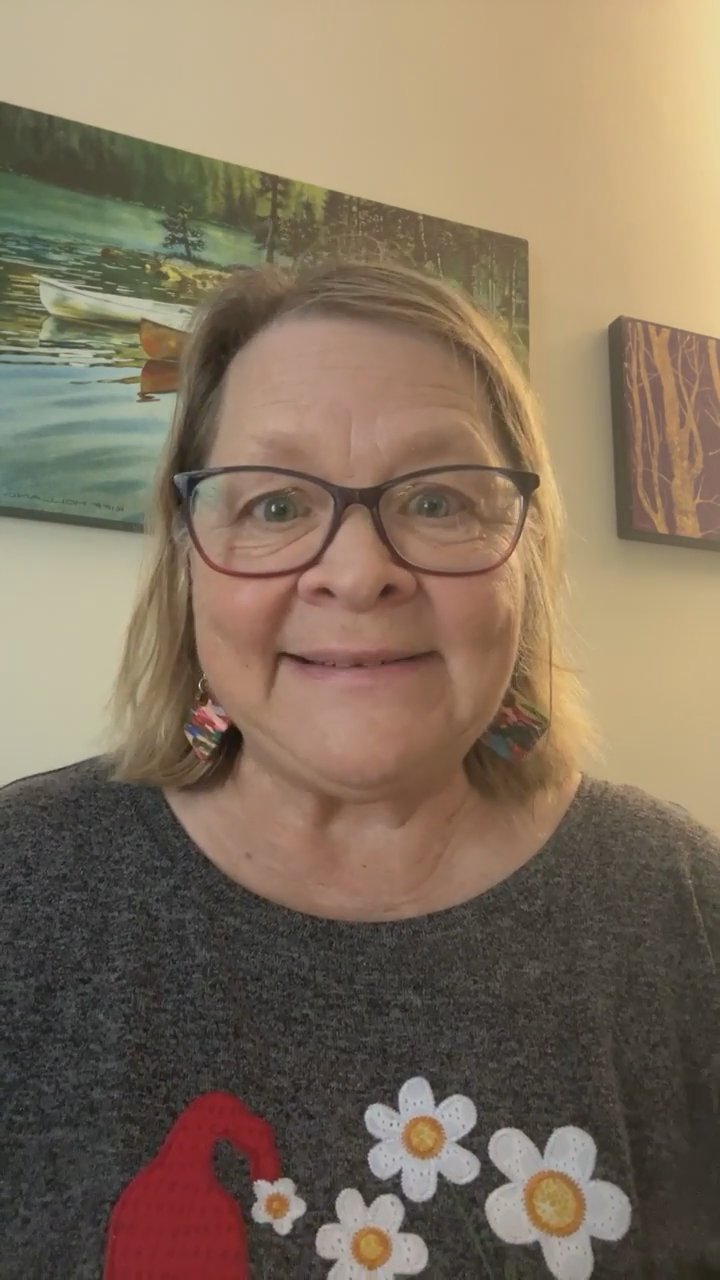
Cadre is my clan, my tribe, my place to reset, refocus, and relax. It is an uncharacteristically chilly day in July in Erie, Pennsylvania. Kathy Joy has new glasses.
My mom is in a nursing home, and I am her emotional caregiver. I'm also her poa, so I manage all her stuff. The hub holds it all together. To be the hub is quite a calling.
On this caregiver day, I want to talk to you about dead reckoning. Dead reckoning is when a captain or anybody navigating a vessel is in a place where they feel lost. To move forward, being willing to go back and to feel like you're maybe losing ground is okay.
Stephanie Irwin: Great things never come from comfort zones. As a caregiver, she said, we're entrusted to care for one another and for ourselves. Dead reckoning is calculating where you are in order to go forward. Sometimes it's estimating how you might need to go back.
Lorenzo's oil is based on a true story about a small child who was diagnosed with a terminal disease. In order to embrace an adventure in his future, he had to go backwards, save some finances and move in with his folks. Mom needed to go back in order to move forward.
Hello. Hi, Cadresphere. I'm Kathy Joy, otherwise known as speak, wonder and Cadre is my clan, my tribe, my place to reset, refocus, and relax. So I noticed some of our other Cadre providers are holding coffee cups. So am I. It is an uncharacteristically chilly day in July in Erie, Pennsylvania. I think it's all of 67 degrees. Somewhat of a relief because we have just come off of a several days heat wave. Like a lot of the country, we also had tornado warnings yesterday. So I'm looking traveling light.
Hello, traveling light. Thanks for joining my live. I'm glad to have you. You may notice I have new spectacles. Hello. New glasses. Just went and picked them up about 45 minutes ago. I've been waiting, waiting and very eager to have them because I am post cataract surgery. I had to wear readers. I finally got these things, these glasses, so that I can see all the time, and I'll just wear them all the time instead of scrambling to find my reader glasses. These are progressive lenses, meaning that to read, I have to kind of look down through the progressive bifocals.
Isn't that just so interesting? I came here to talk to you as a person who is experiencing caregiving on caregiver day. My personal situation is that I am caregiving emotionally. My mom, she is in a nursing home, and I am her emotional caregiver. I'm also her poa, so I manage all her stuff. And as Colleen described in her life just a little over a half hour ago, I learned in her live, which I invite you to replay, that I am a hub. And so it's daunting, it's heavy, it's unrelenting sometimes to know that unless I assume that position of the hub, the other wheels can't spin, or the wheel or the spokes cannot spin around me.
The hub holds it all together. So I do the finances, I make the appointments, I talk to the head nurse, and I also talk to mom on the phone, and I go visit her a couple times a week. It's an honor to do so. And to be the hub is quite a calling. On this caregiver day, I want to talk to you about dead reckoning. As some of you who have been following me know, I like to talk about all things harbors. I enjoy terms that are nautical, from the sea, the lake, the bodies of water, from captains of ships, and I love history around that, and it does feed into the caregiving template.
So dead reckoning is when a captain or anybody navigating a vessel, whether it's a ship or life, is in a place where they feel lost. They feel like their moorings have come loose and they're not sure how to proceed forward. So dead reckoning, as far back as Columbus, was an actual thing on the sea, where if the captain, you know, if those navigating new waters, and especially Columbus and the new age of discovery, they're trying to figure out where they are. Dead reckoning is figuring out where you've been before you proceed forward.
So that is dead reckoning, in a nutshell, is going back in order to move forward. Another term I found is for dead reckoning is when somebody on the vessel sees something dead in the water, and then they just navigate from there. They just find a focal point and navigate from there. So, to me, in life, in caregiving, dead reckoning is when you're lost. It's a good place to kind of drop anchor, reflect, remember your good tetherings, your good moorings, your safety zones, kind of reconnect with those and then untether from any negative connections.
And sometimes there are negatives in our life, and we need to figure out how to maybe cut the rope there again, dead reckoning is moving forward in the. To move forward, being willing to go back and to feel like you're maybe losing ground, it's okay. So, from this morning, a newcomer to the Cadre, Stephanie Irwin. Welcome, Stephanie. Her coffee mug says on the side of it, she held it up for us to see. Great things never come from comfort zones. Truth, great things never come from comfort zones. So sometimes we have to jiggle out of that comfort zone after we've dropped anchor for a bit and consider how to move forward.
Stephanie also said something that just really helped me, my heart today. As a caregiver, she said, we're entrusted to care for one another and to care for ourselves. That's completely okay. Both can coexist. We're caring for others and caring for ourselves. We're pouring into our cup so that our cup is full and we can pour out of a full, overflowing, abundant cup of caregiving. Recently, JC Libbold was talking about getting ahead by moving backwards. If you ever can catch JC on the live or on the replay, please do it.
You'll be happy you did. In fact, he's coming up a little bit later today as well. So dead reckoning is again, just a little recap is using a stationary object that's dead in the water, calculating where you are in order to go forward. And sometimes it's estimating how you might need to go back in order to go forward. Dead reckoning. Other terms or synonyms would be like an educated guess, eyeballing it to come in for a landing, guesswork, an estimate. So you reevaluate, you go back and you say, hey, I always did it like this.
How come I feel lost now? Have you seen the movie Lorenzo's oil? If you've seen it before, I invite you to visit that movie again. It's just a tremendous movie. The actors, the main characters, are Susan Sarandon and Nick Nolte. Lorenzo's oil, 1992. And I remember seeing that movie when it first came out, and I was blown away. So, Lorenzo. The story of Lorenzo is based on a true story about a small child who was diagnosed with a devastating disease and one that was deemed terminal. His parents decide to make their own miracle.
They take matters into their own hands, and it's just an amazing journey. The reason I'm citing that movie now is there's a scene that sticks with me, and it's a scene where Lorenzo is being read to by a caregiver. Mom needs a break. Dad needs a break sometimes as caregivers. And so they have someone come in. I think in this case, it's a younger lady. And she reads to Lorenzo, and he's lying prone on his bed. She's reading to him. And the mom in the story gives her books to read to Lorenzo. But along the way, Lorenzo is growing.
His maladies are physical in nature. His intellect is completely intact. And so mom realizes why Lorenzo is getting anxious every time the babysitter comes to sit with him. It's because he's grown out of the children's books. He doesn't want Winnie the Pooh. Now he wants Robert Louis Stevenson. He wants something that matches his growing intellect as a 1213 year old at that point, not a child learning from children's books. So just to kind of delve into this scene a bit, the mom is arguing with the babysitter, who insists that Lorenzo hasn't gotten beyond kids books.
And why should she read books of higher intellect for him to absorb? And mom is livid. She goes into her mama bear mode and she says, oh, no, Lorenzo wants you to read stories that he can relate to now as a teenager. And eventually that babysitter gets fired because she can't accept that Lorenzo has moved on and that he needs to be addressed as who he is now. Mom needed to go backwards in order to go forward. She had to look back and say, oh, those books were serving him at that time, no longer.
We need to move forward with our boy. What an honoring thing. As she was caregiving her son, Lorenzo's oil highly recommended a movie from the nineties. Maybe you weren't born that then. Bless your heart. Let me see. One other example I'd like to give you of going back in order to move forward is a young man I talked to recently who confided in me that he had met the love of his life and that she was in another city. And he was ready to make a go of it, make this lasting relationship. Realized he couldn't do it long distance, couldn't sustain it.
She realized it, too. And he said. He said to me, I needed to figure something out. And the only way I could figure out to finance moving out to her town and accepting a job position there was to leave my apartment and move in with my folks. And he was approaching the age of 30. And he said, it just feels wrong, it feels backwards. And he said, I went ahead and did it. I saved the money and things are going well. So by this time, he was visiting home. He had moved to the new city. Is dating this gal.
They're establishing a solid relationship, which may or may not lead to marriage. Who knows? But he has a job he loves. So in order to embrace an adventure in his future, he had to go backwards, save some finances and move in with his folks. Where before he had lived on his own. Well, now he's got his own place in a new city, new job, a steady girlfriend. I just love that. I love that he shared it with me another generation. And I'm a widow. And yet I love love stories. Matter of fact, I'm a wedding officiant.
And the reason I became one is. Is because I love to tell the couple's love story to the guests who come to the ceremony. I just. That's my favorite part. It's called writing the ceremony. And of course, you know me, if you know me, I. I do incorporate some poetry that's particular to the couple on their special day. So this young man, that was his epiphany, his dead reckoning, his realization. I do have to go back in order to move forward. I invite you to drop anchor, look around. Even if you don't feel stuck.
Why don't you do some evaluating or re evaluating? I've done that with mom recently. I sat quietly and considered what was working a year ago. Is that still working now? It isn't. She's 93, mom, and she is experiencing some more and more frequent bouts of dementia. Or paranoia. Sometimes it's called sundowners. Some folks are familiar with that term, sundowners with the elderly. So strategies and things that worked to comfort mom in the past no longer work. I have to go back and look at that, reevaluate and think about how can I speak to mom, how can I keep vigil with her silently?
How can I honor her needs as they are now? And how can we move forward together in a way that is life giving, that engages her in conversation and that makes her feel confident and calm. Caregiving is lots of things. The number one thing it is is a great honor and it changes all the time. Thank you for joining my live stream. I invite you to check in with the Cadre speakers that are coming up and thank you for being a part of this community. I'm so glad to have you and I'll talk to you next week from harbor pilots on Caregiver day.
Bye for now.