This orients viewers to the purpose of the video. He explains that the mindfulness taught here is a secular practice focused on neurobiology and psychology, while also noting its origins with the historical Buddha. This sets expectations about the approach and context.
Stefan opens the livestream with casual greetings and a brief personal anecdote, then introduces that today's session will cover how to start a mindfulness practice. This orients viewers to the purpose of the video.
He explains that the mindfulness taught here is a secular practice focused on neurobiology and psychology, while also noting its origins with the historical Buddha. This sets expectations about the approach and context.
Through the history of croissants and cronuts, Stefan shows how mindfulness has moved from its origins to contemporary adaptations and highlights influential modern teachers who have shaped current practice. The analogy helps viewers understand transmission and change over time.
Mindfulness is described as paying purposeful attention to the present moment without judgment, and Stefan contrasts it with relaxation-focused practices. He emphasizes the practice's power and how it helps expand capacity to be with present experience.
Stefan shares his personal turning point and the three core steps he learned: take your seat with an upright but relaxed posture, shift attention to the breath, and when thoughts arise label them as 'thinking' and return to the breath. He also gives practical tips on posture, where to look, how to notice sensations, and suggested practice lengths (e.g., five to twenty minutes).
He reassures listeners that starting a new practice is common and recommends setting aside ten minutes daily to build benefits, likening practice to going to the gym. The livestream ends with thanks, welcomes, and a friendly sign-off.
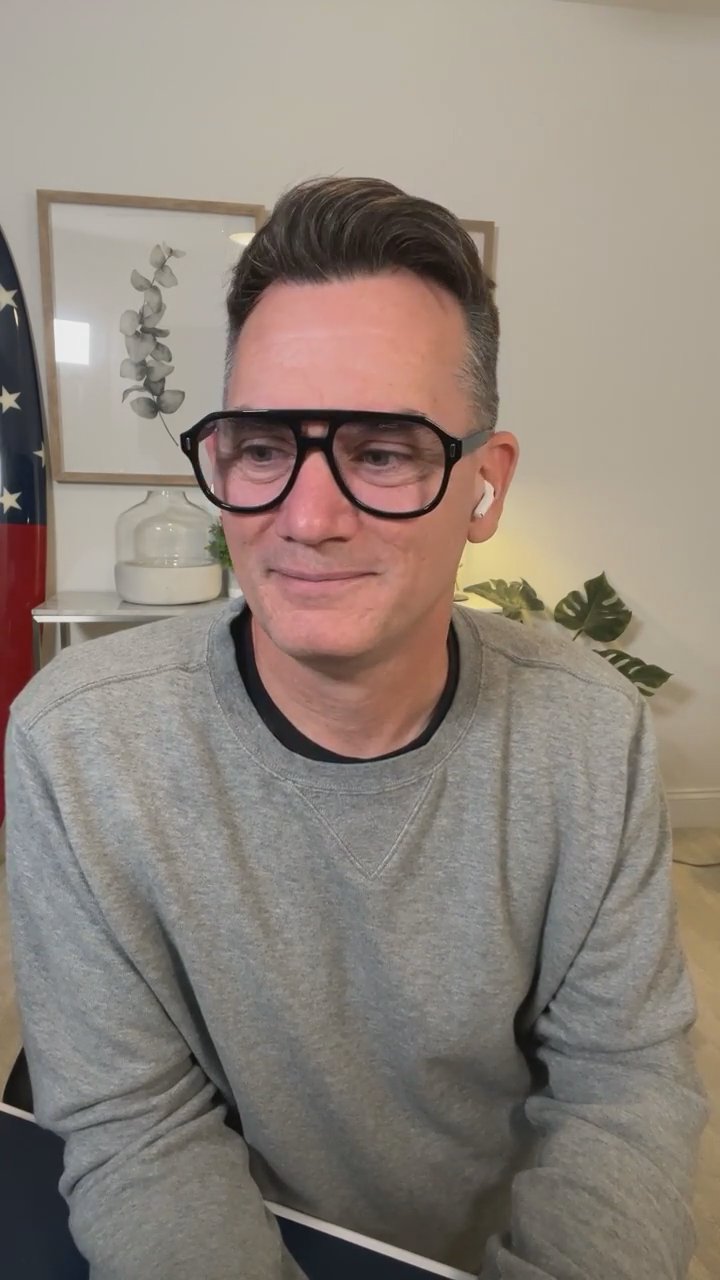
Hey CadreSphere, it's Stefan. Welcome. It's July and I'm sitting here bundled up in a sweatshirt and long pants because my partner likes to keep our house at the temperature that would be appropriate to store produce. Not me, so I'm a little cold today. Counting down the days until the start of the school year. So I think we have 41 days until school starts and although I love having my kids around in the summertime I am looking forward to them starting school in the new year. My older boy will be going into the second grade and my younger son will be starting kindergarten so I'll have two kids in school which is crazy to me but exciting.
So Last week I did a live stream and then I realized it wasn't working. If you're here, please say hi so that I know that you can hear me and that this is working this time. Today I'm going to talk a little bit about starting a mindfulness practice. I happen to be on this personal mission. Hello, Jocelyn. Welcome. I'm on this personal mission to help 25,000 people start a personal daily mindfulness meditation practice. Oh, it's JC. Welcome, brother. So good to see you. So I'm on this mission and I want to help 25,000 people start a daily mindfulness practice.
So today we're going to talk about the foundations and what you can do to do that. Let me start by saying mindfulness and the practices that we'll be doing today. It's secular, right? It's not affiliated with a specific spiritual tradition or religious tradition. It is a secular practice. So it's not about spirituality. It's more about our neurobiology and the psychology of how our minds work and observing that. But I don't want to erase the fact that this started about 2,500 years ago with the historical Buddha who created these practices.
And the practices do have their roots in Buddhism. But today, and what we'll be doing and what mindfulness practice is often thought of as today is a purely secular practice. I like to think about this like croissants, and I know that sounds kind of crazy. But croissants are this kind of crescent moon-shaped pastry that everyone thinks of when they think of Paris. And when you think of a croissant, you certainly think Paris or France. But the truth is, croissants didn't come from France. Croissants are actually based on an Austrian dessert called kipfel.
It was an Austrian pastry. And in about 1840, a baker from Austria opened a bakery in Paris, and he started selling kipfel in the shape of a crescent moon. And all of a sudden, it became this Parisian dessert. Paris kind of claimed it and became famous because of Auguste Seng's work in bringing kipfel to Paris. That continued for a long time. Of course, you don't have to go to Paris to have a croissant these days. But in 2013, there was another evolution of the croissant. This chef in New York named Dominique Ansel, he took what was the traditional kind of croissant recipe and process for making croissants, and he turned it into donuts, and they were called cronuts.
So there is this lineage of croissants originating in Austria and then moving to Paris and then being reinterpreted in New York as donuts. And mindfulness practice is similar in that the Buddha may have written this recipe 2500 years ago, but now it's our job as mindfulness teachers, as practitioners to get up and actually make the recipe every day and therefore it changes. And there have been amazing teachers like Jon Kabat-Zinn and Rhonda McGee and Lama Rod Owens and so many that I can't even begin to mention them all, who have added to the practice and what we understand of it.
What is the practice really? Mindfulness practice is really about paying attention to the present moment on purpose without any judgment. So we're not judging what happens, we're just paying attention to what's coming up in the present moment. And This is an incredibly powerful thing. For me, I had gone through kind of this transition in life. I became a dad right around the same time that I lost my own father and had tried many different types of personal development programs, thanks for the heart, some inner work programs, shadow work, and somatic experiencing.
I was really involved with the men's work world. And what I found over time is a lot of that stuff wasn't helping me. In fact, if anything, it was kind of making me more confused and I was having a harder time. So ultimately I stopped and I said, I'm not going to do any of these kind of personal development programs anymore. I'm just going to focus on my meditation practice, which I had started a long time ago. I had started meditating 25 years ago at the end of yoga classes, which JC was part of.
And not 25 years ago, JC don't want to imply that. 25 years ago when I started practicing and then I ended up practicing with JC. So I had practiced for a long, long time, but it was a casual practice. And often the practice was more about relaxation. It was about kind of doing a body scan or some sort of practice to relax after a really difficult yoga class or a difficult asana practice. And that's different than mindfulness, right? Mindfulness isn't always about just relaxation. Mindfulness is about-- yeah, it does feel like a lifetime.
Mindfulness is about observing what's happening right now and being with what happens right now and allowing whatever is here right now to be here and expanding our capacity to be with them. So it's an incredibly powerful practice. So after I did all of these inner work programs, I said, I'm not going to do anything else. I'm just going to take a break from all of this stuff. I'm just going to focus on building meditation practice. I went and I got some instruction actually from the teacher who I had started practicing with 25 years ago and said, I want to start meditating every day.
What do I do? And the instruction that I received is the instruction I'm going to share with you today. So there are really just three steps. The first is that we take our seat. Now I'm sitting in an office chair today so I'm going to demonstrate this a little bit sitting in a chair. But over there on the floor you can see my blankets and I have a cushion there and often I do my practice sitting on a meditation cushion. Some people prefer to sit on a yoga block kind of in a kneeling position. In whatever way you're sitting in a chair or on a cushion or a block there's a couple things to keep in mind.
In a chair I like to sit skew to the front of the chair. so that I'm not leaning back, right? I'm sitting up nice and tall. So nice long spine, shoulders stacked above the hips. And I like to lengthen through the back of the neck to help reduce any kind of strain or fatigue there. Hands can just rest on your lap, palms down, on your thighs, maybe on your knees. It kind of depends on how long your arms are, and that can be sitting on a cushion, sitting in a chair or kneeling. Think about a nice strong back, but a nice soft front.
So you want to be upright, but not uptight, right? Then in the case of this practice, you can leave your eyes open and really just going to find a spot on the floor, maybe six feet in front of you, four to six feet. Have a really soft gauge, you're not really focusing on anything, you're just kind of looking out there into the distance. So this is taking your seat. It's about starting to kind of make this intentional shift from the doing mode that we spend so much of our time in during the day into the being mode and just being here in this moment for practice.
Maybe doing a check-in, noticing whatever comes to the front of your mind. Maybe that's a sensation in your body, maybe that's some thoughts. Maybe there's an emotion that comes up to the surface. Maybe you have some sort of impulse or urge to not do this or to get up and move. All of those things are OK. So in the beginning, we're not changing anything. We're just noticing what's here. And now start to shift your attention to your breath. So your breath can be felt maybe in the belly as your belly expands and contracts, maybe in your chest as it rises and falls, maybe at the nostrils as air comes in and out of your nose or your mouth, maybe in your throat even.
All you're doing is connecting into the sensations of breathing. So noticing breath coming in and breath going out. Keep noticing the breath. So step one, we took our seats and now we've shifted our attention, our awareness to the breath. And the final step, thoughts are going to come up. Our mind is going to continue to think. So every time a thought comes up and you notice that you've been kind of carried away by that thought, I'm just going to gently kind of label that thought as thinking, and return our attention to the breath.
And that's going to happen over and over and over again. One of the common misconceptions about mindfulness practice is that we're going to stop thinking, and that just isn't the case. And that's not even the intention of the practice. The intention is to become aware of what's occurring and being able to be with it. So you've taken your seats. Brought your attention to the breath. And step three, when thoughts arise, you're going to label them as thinking and come back to the breath. It's not a complicated practice.
It's fairly easy. You can do this for five minutes. You set a timer on your phone. Often I practice for about 20 minutes at a time, sometimes 20 in the morning, 20 in the afternoon or evening. sometimes longer. That's it. You've done mindfulness practice. So in future live streams we're going to build on that a bit. But that's the core of the practice and you can start doing that today. Taking your seat, shifting your attention to the breath, labeling whenever you notice a thought come up as thinking and returning your attention to the breath.
Cool. So this is a new experience for lots of people. It's a new way to practice for a lot of people because maybe they've practiced meditation on an app where they've had someone guiding them through and talking in their ear the whole time. Maybe they've practiced meditation as a way to help go to sleep. And all of those things are really wonderful applications of practice, but not necessarily what mindfulness practice is about. So mindfulness, as we said, was bringing our attention to what's happening in the current moment, the present moment, without any judgment, just being with whatever arises.
So I know that you can do this. I know that sometimes carving out the time is challenging. We've all been there. I've been there for sure. And to get the benefits, you really do have to do the work. It's kind of like going to the gym, right? You practice. So my suggestion would be to set aside 10 minutes a day and sit, take your seat, focus on your breath, label your thoughts as thinking, and come back. It's been great to be with you all live here on cadre. So fun to be in the cadre sphere. Welcome to Amy.
I think my eyes were closed when you joined, but welcome, JC. Always good to be in this space with you, ma'am. We've got to connect sometime soon. All right, everyone, have a wonderful day. Talk to you soon. Oh, it's giving me a count.