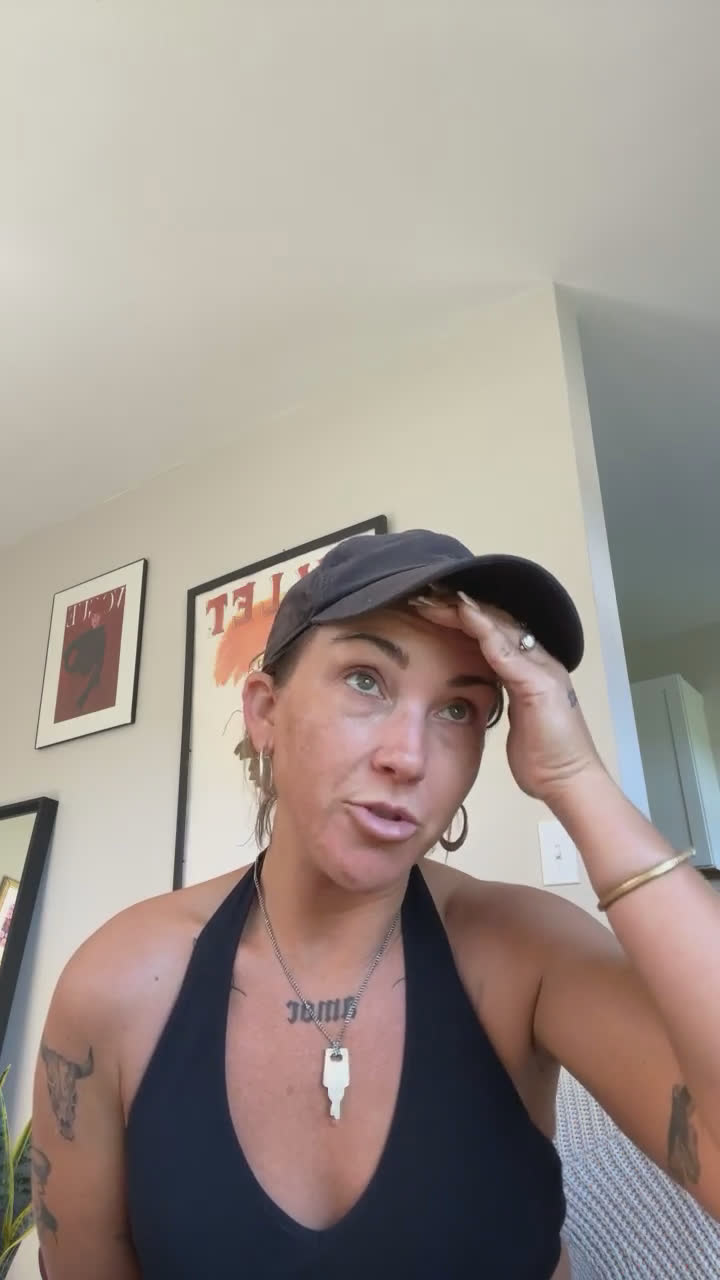
She says while her actions have improved, her thought process hasn't caught up. JC Lippold talks so much about the concept of enoughness. To not be seen is probably one of those most painful things as a human being.
Happy Wednesday, Cadre crew. If your username is not your first name, I would love it if you introduce yourself in the comments. I'm hoping today we can kind of have a little bit of a discussion.
Rachel: I'm gonna talk about productivity and mental health. The intersection that happens for me with my mental health and productivity. She says while her actions have improved, her thought process hasn't caught up. JC Lippold talks so much about the concept of enoughness.
When we struggle with depression or PTSD or anxiety, we have less energy to manage the other things in our life. To not be seen is probably one of those most painful things as a human being. Let me know in the comments if this resonated.
Happy Wednesday, Cadre crew. How's everyone doing today? It is a beautiful, beautiful sunny day in Seattle. Blue skies. I just went for a lovely walk with Milo. Hopefully we don't hear too much out of him today. He has a tendency, if you've been live with me before, he has a tendency to like to bark when I'm live. He likes to. He likes the attention. So I'm going to give folks a few minutes to come in the room, and then we will chat. I'm hoping today we can kind of have a little bit of a discussion.
Hi, Rachel. Hi, Mo Sunshine. Hi, Elsie Wallace. Hi, Jay Weatherly. If you're just joining, if your username is not your first name, I would love it if you introduce yourself in the comments. I do my best to remember people's names, but sometimes it takes me a couple times. But it's always lovely to be able to call you by your name or if you wanna use it different than alias, totally fine. You can use whatever you want. Hi, Steph. Hi, Jules. Rachel says, hi, Sotan. Yeah, I was in Mexico for two weeks, so my tan is slowly starting to wear off.
And it's wild how much my body dysmorphia is connected to everything about my appearance. I'm realizing that after a week of being not in Mexico, I'm not as tan as I was, but I'm still really, really tan, especially in comparison to people in Seattle. And my brain is like, oh, I'm so pale, I'm not tan enough. Like, my. My brain automatically goes to not enough, not enough, not enough. Which is actually something I'm going to talk about today. So. Hi, Jessica. Thanks for introducing yourself, aka J.
Weatherly. Happy Wednesday, Jules. Hello. Hello. So today I'm going to chat a little bit about, and please pipe in because I'm hoping we can just have a conversation about this. I'm gonna talk about productivity and mental health and the intersection that happens for me with my mental health and productivity and how I'm sort of, like, managing and coping with it right now. So yesterday I was talking on the phone with my mom, because the last week or so, I've been waking up really, really anxious.
Like, I get out of bed and I just have. I have anxiety, I have low motivation. I don't feel full blown depression. And I'm feeling like I'm just lacking the motivation to do the things that I need to do, like work or, you know, move my body or feed myself. And it takes me several hours to, like, get kind of, like, get my brain and my body going during the day. And so I was on the phone with her while I was on a walk, because one thing that's really been helping me is getting outside first thing in the morning.
So I try and take Milo out for a walk first thing in the morning, and that really helps a lot with my anxiety and just getting kind of, like, getting my energy flowing. So I was on the phone with her, and I was saying, I just, you know, I just keep having these thoughts in my head that I'm not doing enough. I'm not doing enough. I'm not doing enough. I'm not doing enough. And she was like, well, what do you mean you're not doing enough? And I was like, I just have these. This idea that I'm not working hard enough, I'm not producing enough in my work, I'm not trying hard enough, I don't care enough, I'm lazy, I'm unmotivated, and I'm just not doing enough.
And she said, well, are you getting everything you need to get done, done? And I said, yeah. And she was like, are you getting feedback from people that you're creating work for? What kind of feedback are you getting from people you do work for? And I was like, that I'm doing a really good job and that they want to hire me again. And she was like, well, then it sounds like your brain, Rachel. I love my mom. And so it was just an interesting conversation because it made me realize that even though I've done a lot of work to detach myself from hyper productivity, because I used to be super hyper productive, I was a workaholic.
I like to call myself a recovering perfectionist because I still struggle with perfectionism. Hi. Speak wonder. Welcome. And. And I've come a long way in terms of hyper productivity and reducing the need to constantly be producing or succeeding at a higher level or doing more, doing more, doing more. And what's interesting is that I've adapted and I'm not doing as much as I used to. I'm not producing in the ways or at the volume or the intensity that I once did that led me to burnout or mental health breakdowns.
That's a good thing. Yay. That's a winner. And I've noticed that while my actions have improved in terms of doing less and being okay with that, my thought process hasn't quite caught up. So there's still this part of my brain that's like, I see that you're doing less, which must mean you're not doing enough. And so I'm realizing that my brain still has some work to do to catch up with the doing less and reminding myself that I actually am doing enough. No, I'm not doing the most. No, I'm not doing it perfectly.
No, I'm not doing it all the time. More and at a higher volume than everyone around me. And I'm doing enough. I'm feeding myself, I'm paying my bills. I'm doing the things that are asked of me, and I'm resting. I'm finding moments of joy. I'm taking time for my relationships and for my well being. I'm doing enough. If you haven't yet stumbled upon JC Lippold on this app, he is the king of enoughness. He talks so much about this concept of enoughness. So if that's something that resonates with you, I highly recommend that you go find him and check out his videos and his live streams because he talks a lot about this concept of enoughness.
Him and I actually did an in person event here in Seattle back in February or January. It was January. Wow. Where we spoke a lot about radical acceptance and enoughness and, yeah. So if that concept resonates with you, he's brilliant, and I definitely recommend checking him out. So, yeah, it was an interesting realization that while I've done, you know, I've done a lot of work in therapy to get to a point where I don't force myself to over. I don't overwork myself. I don't bring myself to the brink of my energy levels and capacity to the point of burnout.
And I've gotten in the routine in the habit of acting in that way. And my mind still has some catching up to do around recognizing that even though I'm not doing the most, I'm doing enough, and kind of counteracting that anxiety of I'm not doing enough. I'm not doing enough. And so it's an interesting intersection, right. Because we want to be able to produce enough that we can function, right? We want to be able to do things that we want to do and. And have enough. I don't like the word discipline.
Somebody. Somebody used a different word one time that really resonated with me. It wasn't discipline. It was. I can't remember it. I feel like it was on one of my lives, but I did a live one time about self discipline. I can't remember. If I find it, I'll put it in the comments. But essentially it was like, you know, it's like, we want to have enough self all you. Self discipline, for lack of better word. We want to have enough self discipline that we accomplish our goals and we do the things that we want to do, and we want to have enough follow through that we are reliable friends and loved ones.
And it's important that we still maintain our well being. And that requires rest, that requires taking time, that requires pausing, that requires listening to our bodies and our hearts when we need a moment to slow down. So. And not pushing ourselves to the point of breakdown. Right. So this is something I'm working on right now and thinking a lot about, and I'm curious to know, you know, if that's something that y'all are working on, too or have experienced. I see some comments here. I've had to let go of productivity, culture.
I don't have the energy to do much of anything, and everything is draining. Yeah, that's the other thing, too. When we struggle with depression or PTSD or anxiety or, you know, there's a lot of different things that we can struggle with, you know, obsessive compulsive disorder symptoms, really anything that causes us to use a lot of our energy that we have at our disposal to manage symptoms of our mental health or if we have physical health conditions. We're using a lot of our. We're using a lot of our energy just to manage that.
Right. Which means that we have less energy to manage the other things in our life. And so finding ways to mitigate. How do I. How do I make sure I'm taking care of myself? And then with whatever energy I have, doing the things that I need to do in order to stay alive and survive without getting trapped in this notion of needing to be hyper productive. Have you heard we are human beings, not human beings? Yes, we are human beings. Not human doings. Absolutely. At night, when my head hits the pillow, I like to say, you've done enough.
Time to rest. I love that. Speak, wonder. I love that so much. I love that Rachel says it's also physical. Unfortunately, since I don't have a diagnosis, people disregard it. Yeah, that's really tough. Not having our symptoms or experiences validated is pretty painful. To not be seen is probably one of those most painful things as a human being. And we're actually reading this book right now. I think it's in my room. I think it's called how to. How to see crud, how to deeply see others. How to see others, how to read people.
No, I can't remember. But it's about this concept of if I. I'll find it, and I'll put it in the comments of, um, how to, how to see human beings. Because at an innate level, that's what we all desire is to be seen. We desire to be seen and understood and, and yet we don't know how to do that. We don't know how to truly see other people, and we sometimes don't know how to let ourselves be seen. So it's a really fascinating book. I really am enjoying it. So if I, I can, I can put it in the comments when I go and see what it's called.
So that's what I wanted to chat with y'all about today. Let me know if you're watching this as a replay. Let me know in the comments if this resonated. And as always, if you have topics you would like me to make live streams about or static videos about, let me know. I'm always open to your ideas and your suggestions and feedback and I will see you here next Wednesday. At the same time, have a great rest of your Wednesday Cadre.