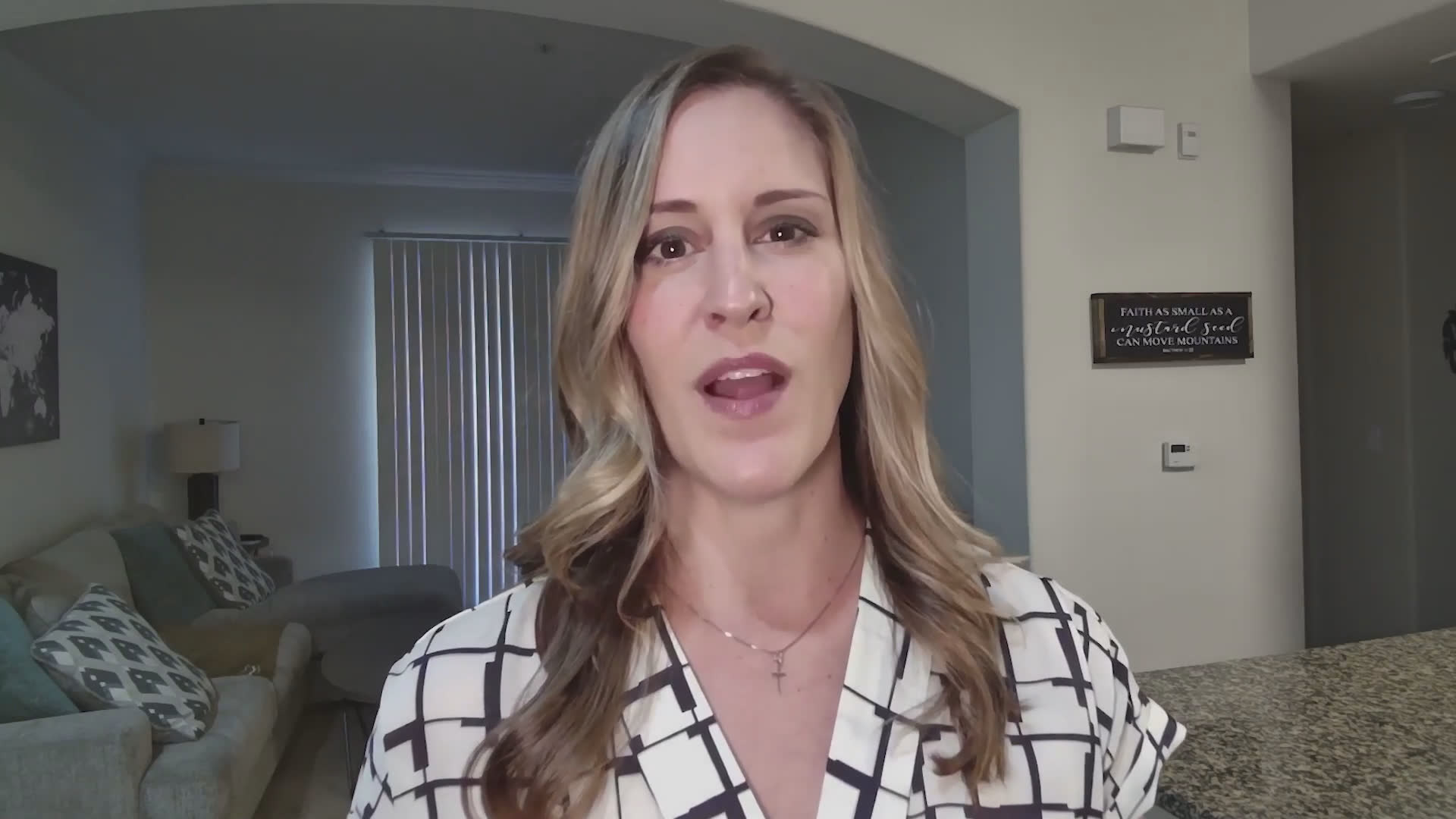
Useful for meditation, calming down after a stressful event, or trying to fall asleep, learn how to engage your parasympathetic nervous system and calm you body in this Progressive Relaxation Technique.
Family doctor Carey is walking you through an exercise called progressive relaxation. It really does engage every muscle in your body and helps you relax. Use this exercise when you're having trouble sleeping.
Hey, Cadre, family doctor Carey here. Today I'm going to walk you through an exercise. It's called progressive relaxation. I use this exercise when I need my body to relax, to calm down, to really engages your parasympathetic nervous system, and it works really well, especially if you're having trouble sleeping. I will use this when I am struggling to fall asleep and I just kind of need my body to just relax. And it helps you to focus on something so that your brain isn't wandering. So I'm going to walk you through this exercise today.
We're going to do it together. I'm hopefully not going to fall asleep while I do this with you because it really does engage every muscle in your body and helps you relax. So first you start at your feet and you move all the way to your head. And you can either choose to do small muscle groups or big muscle groups, depending on how long you want the exercise to last. But essentially you're taking breaths and flexing or contracting your muscles and then relaxing them. So we'll start really simple with the toes.
I want you to curl your toes up really tight, take a deep breath in, and as you release your breath, you're going to release your toes from being curled up. So it releases the muscle group as you're releasing your breath. Now we're going to flex the whole foot, whatever that looks like for you, and take that deep breath in. You're holding this flexion of your feet as you're taking that deep breath in. And then as you let it go, you're relaxing that muscle. RELAX Your feet. Nice job. All right, now we're going to go to the ankles.
I want you to, like, clench Your AnKLe muscles as much as you possibly can and take a deep breath in and let that breath out. Nice job. All right, now let's focus on the calf muscle. It's another BIg Muscle in your leg. Flex those calf muscles as tight as you can and release them. Nice job. All right, now we'll move to the Quads. Flex Those quads, tighten them up as much as you can. Deep breath in and let it out. Great job. All right, we'll focus on the hamstrings next. And you can pair the glutes with this if you want.
Just flex that as hard as you can and take that deep breath in and let it out and relax that muscle. Good job. All right, so as you move up your legs, you can do smaller muscle groups. Sometimes it's hard to flex like a particular thing. Like I want to flex my knees. Sometimes it's hard to flex certain things like that, even if you don't feel like you're actually flexing that muscle or that body part that you want to flex. The focusing on just that one body part really also helps the focus in your brain to to engage your parasympathetic nervous system and induce that relaxation and calming response.
It's very restorative to your body to do this, to pair it with the breath. And as you move up your body, you can clench your abdomen next. Clench that abdomen, deep breath in. And then as you let it out, relax your abdomen. Good job. Moving up to your chest or your pec muscles, flex those muscles, deep breath in and let it out. Good job. Now you can either start down at your fingertips and move your way up your arms, or you can start at your biceps and move your way down your arms. Either way works.
I choose to do all the way up. So I start with my hands next and I clench my fists, cleanse them. Take that deep breath in and let it out. And relax your fingertips. Now clench your forearms, deep breath in and let it out. And relax your forearms. Clench your biceps. Really clench them tight. Take that deep breath in and let it out. Relax those bicep muscles. Now you can move to your back, flexing your lower back. Contract the lower back, taking that deep breath in and let it out. Now you can flex your upper back, deep breath in and let it out.
You can clench up your shoulders really tight and your neck. Another deep breath in and relax those muscles and breathe out. You can do your face all at once. You could try to clench your jaw individually, then your cheeks, then your eyebrows. Whatever you want to do. There's no specific count for, for the breaths in this activity. Just as long as you're not going like really fast. You just want to make it a slow, controlled breath in and a slow, controlled breath out. Just focusing on those muscle groups.
Trust me, when I do this, if I'm trying to fall asleep, I usually make it just up the legs and then I'm already asleep. Because it's really helpful to just engage your parasympathetic nervous system. Put that restorative oxygen into your tissues and it just really relaxes you. So this is a technique I use mostly when I'm going to bed. But there are times if I'm sitting at work or wherever the case may be, and I just really need to like, relax for a second. Pairing it. I mean, you could even just focus on a couple of things like clenching your fists and your feet.
Just do that a few times and relax. You can really tailor this exercise to however you want. Whatever works for you. You obviously don't want to fall asleep if you're sitting at work, sitting at your desk if you're driving, but just be careful how you do it because it is really relaxing and pairing it with that restorative breath is really what brings that oxygen into your tissues and calms your body. So I hope this was a helpful exercise for you today. I've been using it for years. It's super awesome and I love it.
I would love to know how it works out for you. Please share that with me and let me know if this has made a difference for you in any way. Thank you guys for tuning in with me today. God bless.