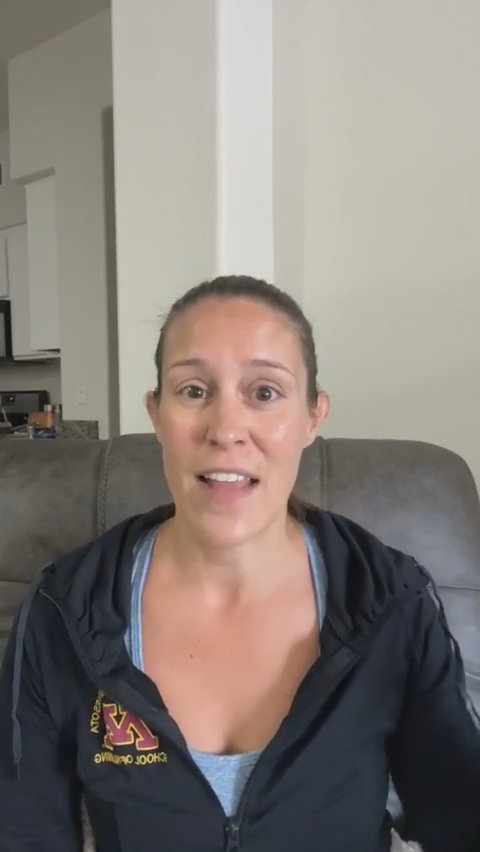
Planning for the worst-case scenario might seem smart, but it simply lets fear run in your mind. On this livestream, Dr. Carrie will talk about how to stop the fear monologue in your brain.
Doctor Kerry: The diagnosis of fear is the number one under diagnosed, or maybe misdiagnosed, mental health issue in our world. When you engage in fear in your brain, you're actually letting your sympathetic nervous system activate and take over. May is Mental Health Awareness Month.
The third thing you can do is distract yourself and just go do something else. Our minds are our own worst enemy of plague scenarios. If you are struggling with this, don't be ashamed. Reach out, get help.
Good morning, Cadre fam, or good afternoon, depending on what coast you're on. Doctor Kerry here tuning in live and for mental health Awareness Month in May here I wanted to shed some light on a topic that I believe is the number one under diagnosed, or maybe misdiagnosed isn't the right word, mental health issue in our world. And that is the diagnosis of fear. Now, I know that's not a diagnosis in the DSM book. I'm not a licensed therapist in that way. But I, I would venture to guess that this is a rampant problem in so many people's lives.
And I know it was for me and it's really hard to quantify it because it is not a diagnosis yet. It can cripple people. Like, it can be as disturbing as another mental health diagnosis that you live with on a daily basis. A lot of times, people who have this, quote, diagnosis, I know I'm using that word of fear, often have an anxiety disorder with it. But, but sometimes that's not the case. Sometimes it's just somebody who has fear constantly running through their mind. So I just wanted to talk a little bit about that.
See what happens when you engage in fear in your brain. Good morning, guys. Nice to see you. When you engage in fear in your brain, you're actually letting your sympathetic nervous system activate and take over. Because what happens when you start to kind of like, think about all of the, let's take this example for, for just sake. If you are starting to envision, okay, what is the worst case scenario that could possibly come out of this? I used to do this all the time and I actually thought I was being prepared and I was really doing a good service to my brain by saying, I'm gonna envision what is the worst case scenario that could possibly come out of this?
And then I'll be prepared for whatever happens. What actually I was doing, I was letting fear just run in my brain. So what happens when you do this? When you start to go to that worst case scenario of like, oh, my gosh, then this could happen. Then this could happen. Then this could happen. What you've done is you've allowed your sympathetic nervous system to take over, which is that fight, flight or freeze mechanism in your brain. And then it affects your whole body. It affects your whole, like, stress system.
And what you've done is essentially put your body into that state for a temporary amount of time. What happens then when you allow that to continue and you live like that? You live in like a chronic stress state. And a lot of people who have been through trauma in their life have had this experience where they kind of, like, live with that chronic stress state, that chronic sympathetic nervous system activation, where they're kind of, like, always jittery, always irritable, but they always are very fear based in their mentality, because what they're doing is they're saying, I need to be prepared for the worst because the worst actually happened to me.
And it took me probably a year and a half, two years to finally deliver from fear, like, completely rid my body from fear. However, it is still my natural go to in life because my brain was so used to that for so long that it's like a natural mechanism to want to go back to it. So what happens for me, I'll just share, like, my recent experience was that my fiance's job is very unpredictable. In the military, we're moving in three weeks. We literally can't plan a vacation just because there's so much unpredictability in the future.
There's been financial unpredictability in my life right now, and there's just so much that's unpredictable. So I sometimes let that fear start to talk to me and say, oh, well, you guys are going to be stuck in the desert for this long. You're not going to find a job. This, and this, this could happen to you. You could end up, you know, not being able to pay your taxes next year. I mean, there's just, like, all of those, like, things that are very, like, unrealistic, but they are somewhat realistic, which is what fear tells us and makes us believe in the moment that these are realistic things that could happen.
So that's why we entertain them. And your mind just kind of goes to all of these things that could possibly happen, and what you've essentially done is allowed that to happen. And sometimes entertaining those is valuable. I'm not saying just shut it down immediately and say, you know what? I'm not listening to that voice. Because sometimes that is the voice of reason, that is like, the voice of conviction, saying, you should probably pay attention to this possible outcome, this possible consequence of what you're doing.
But when it starts to turn into that running monologue of, but then this could happen, then this could happen, then this could happen, and your heart rate starts to rise, then you've engaged in the fear. So how do you stop that? This is the hardest thing that I've done as far as my mental health work, because there's not a pill, there's not a specific treatment that works for this. It is a really hard thing to stop. And I used to tell myself that this was a healthy thing that I did because I was preparing for the worst scenario, right?
So that I would be emotionally, mentally, financially prepared for whatever outcome was going to come. And so what I had to do was first just cut that mindset off and say, you know what? Yes, I am going to maybe entertain some of these thoughts, thought so that I'm prepared, but I'm not just going to let it run because that's not realistic. Oh, that's not healthy. I'm sorry. So I'm going to listen to the realistic things. So if you are starting to have that monologue run in your mind, I want you to.
First of all, you need to recognize when it happens. And that would be the first step to figuring out how to stop your brain from always going to fear is recognizing when this happens. And then the second thing would be to do is stop and just say to your brain, okay, you're swirling. Or for me, it almost, like, feels like I'm going down into, like, a funnel cloud of a tornado. Like, as, like, the next thought comes. The next thought comes. And, like, it just keeps going and going and going. And so it's saying, like, okay, I'm making, like, a mental stop to whatever that is.
It's happening in my brain right now. And I either need to do one of three things. I either need to coach myself through it right now. It kind of like, sometimes that involves journaling, like, what are all my biggest fears right now? And once you start to see them on paper, you're like, those are a little unrealistic. Or maybe it feels good to just get it out of your head, or you need to do some self talk. Sometimes I do that. Sometimes I literally go into my bathroom and I stare at myself in the mirror and I do some coaching to myself.
And so you just need to kind of, like, talk it through out loud. The second option would be to call someone and have them talk you through it. Because what can happen is when your brain gets into that state, you're very tunnel visioned and you can only think about kind of those things. So to talk to someone else, what they can do is they can pull you back to kind of like the high level and say, okay, sure, like, some of these are valid fears, but what is the probability that's actually going to happen?
Maybe it is super probable and that is why you're having so much fear. But let's then talk about kind of like, the emotional hijacking that's happening right now with you. And I have my go to people I call when I'm, like, running that fear monologue because I need to, like, talk it out and have them say, all right, Carrie, but you're a math person. What is the probability? And to have someone ask me that question kind of like pulls me out of that, right? It takes me out of the tunnel vision in my mind.
And the third thing you can do is distract yourself and just go do something else. And what you're saying is, I am no longer going to entertain this in my brain and I'm going to make my brain focus on something else. And I would argue that it should probably be something healthy, like, just don't go drinking, don't go partying or something like that to go distract yourself, but do something healthy. You could take the sympathetic nervous system activation that's already going on and use it for exercise being one addiction to another.
But it is a healthy option when you are stressed and that fear is running in your brain to then go exercise, because then you'll get some good hormones coming in your brain. So that is another option. Or go for a walk. Or maybe you like to do puzzles. Maybe you like to do something that just totally takes your brain off. Maybe you go on my new guilty habit Instagram reels, and I look at all these funny videos of dogs. Maybe that's your distraction, but something to just turn your brain and say, you know what?
You need to stop right now, because this isn't helping me. It's not healthy. It's not helping me. So I hope this was a helpful topic. I feel like I could do, like, an hour presentation on this. I actually do an hour presentation on fear. So I tried to just pack it in as much as possible for you guys today and just know that so many of us struggle with this. It is so common. I lived my whole life like this. So if you are struggling with this, don't be ashamed. Reach out, get help. Get help from our coaching team.
You know, watch some of the other videos on the app. I talk about fear on some other videos. We've got some amazing creators who talk about mental health on this platform. So use us for that to get. To get help in these areas. And I just read the comments really quick here. Our minds are our own worst enemy of plague scenarios. That makes fear things. Yes, that's so true. So true. Jungfood junkie. Our minds really can be our worst enemies. The dog reels. Yes. I send Risa some of my dog reels. They're hilarious.
So I hope this was helpful. I love you guys, and please take care of yourself this week. God bless it. You.