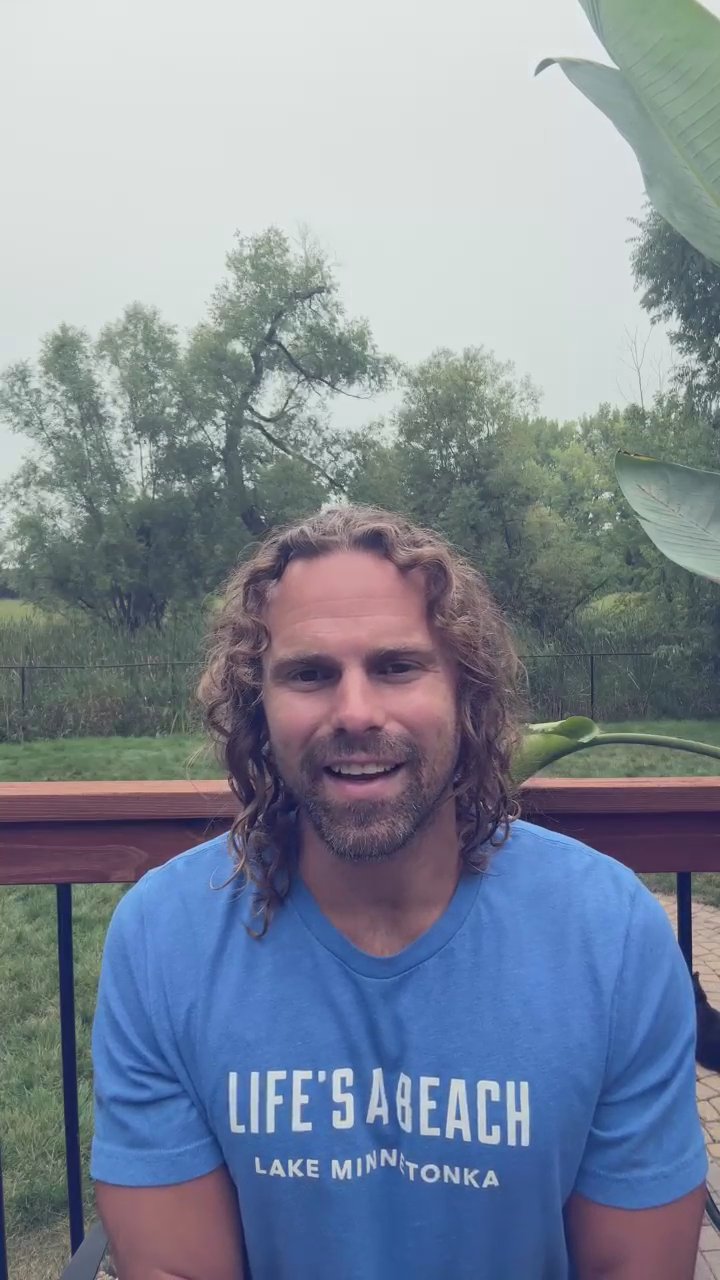
Brief greeting and setup as the speaker says hello and explains they want to share a recent interaction. This orients viewers to the video's purpose and tone.
The speaker recounts returning to their old brewery after two months, reflecting on how absence affected them and why re-experiencing feared situations can prevent lasting fear. This section frames trauma exposure and personal authenticity.
The speaker tells how a friend revealed that a past job caused PTSD and uses that anecdote to observe that many people only 'discover' mental health through negative experiences. This illustrates how recognition often follows harm.
The speaker discusses their early encounters with depression and anxiety, how they've used positivity and community to cope, and why they feel responsible for keeping mental health conversations alive. This helps viewers understand long-term awareness and destigmatization.
Through audience comments and examples, the speaker argues for proactive maintenance rather than reactive fixes, warns against sugarcoating life on social media, and encourages celebrating when you feel good while supporting others when they're struggling. The talk ends with encouragement and a closing sign-off.
Happy Saturday, Cadre. How's everybody doing today? I'm doing pretty good. And I woke up with a desire to share a story about an interaction that I had the other night. I went to Back Channel, my brewery that I've moved on from this summer, and I haven't been there in like almost two months, which is its own, mental health ordeal of this is the first summer I haven't been at that establishment every single day. Yes, happy Saturday from Northwest Pennsylvania. What's up? And so, you know, it's been two months and it's very different, difficult to not be there, even though it's the right thing for me to do to lean into my authentic self and help people.
I mean, that's the name of the game for me going forward. So it was good to get back there. It was kind of good to just get over that hump in a sense and not let time delay. I don't know, just not let time prevent that from happening so much. Sometimes when you have a traumatic experience, it's important to get back up and experience it right away so it doesn't become a fear. A similar example is my mom who got in an accident a couple weeks ago, totaled her vehicle and she hasn't had a vehicle to use since then and I'm trying to get her to just drive the vehicle that I have so that she can get over that fear because the longer that you wait to do something that causes trauma, the greater the fear can be.
But that's not my topic here. So I went to the brewery and I was chatting with a good friend of mine who is a beer tender there. And I just asked him how he was doing. And I don't like surface level conversations. So I always, you know, I'm asking like, how is your life? How are you doing? It's been a while since I've seen you. And he told me about a job that he had recently left. And he said, gosh, this is, I never thought mental health was real until I had this job and now I have PTSD from it.
And it got me thinking that mental health, when people discover it, it's usually something bad. You don't usually hear people saying, oh man, this mental health thing is awesome. I feel great. It's like, oh, mental health is real and it sucks. So it's just an interesting dynamic when you think about it like that. And there's a lot of people out there that they're oblivious to it. They don't want to recognize it. They don't want to call it for what it is. Maybe they're just calling it a bad day or a bad experience, but it's mental health, right?
It's that feeling of unease making you aware that you're doing something or you're part of something that isn't serving your best self. So I told my friend, I was like, hey, at least you realized it and you got out. There's people that endure for way longer, years, a whole lifetime of mental health because they can't recognize it, they don't want to recognize it, they're too comfortable where they're at in life, and it would be too much of A burden to try to find something new. So I remember when I got introduced to mental health, It was in my early 20s and it was through a depression.
And then in that depression I realized that mental health had been affecting me way before that in the form of anxiety, in the form of like not feeling worthy in some categories. So mental health has been with me for a long time and I have kind of made the effort to counter it with just being positive and appreciating all the good things in life. Because when you've been in a pretty dark, deep, depressive state, the only way out is time and the power of positive thinking and communicating with loved ones, communicating with people in community, sharing, sharing all that.
Whereas the latter, I didn't really have that option when I was in my early 20s because mental health wasn't talked about as much. So now I feel a responsibility to keep the conversation going. And when I have friends of mine who, they don't understand it or don't see it, at least they're hearing about it. And when they encounter it in their life for the first time, they'll understand what it is and maybe not be so afraid of it. Yeah, I have a comment here, mental health maintenance is so important.
So grateful for Cadre and yes, absolutely. It is all about maintenance. It should be about proactive maintenance, not reactive maintenance, where you're almost too far behind the eight ball to get that relief. So I know so many people that think that they've got what it takes to prevent the slippery slope from taking you downhill. But when you're in that position and you think you have what it takes, you're probably already in a position where you're going to need that extra help in the form of talking to somebody, instilling new habits and routines to counteract the negative patterns.
So Yeah, I'm loving your comments here. Speak wonder. Your name is escaping me, so please share that. But the comment is, people in my life are always surprised when I mention my depression and the ways in which I cope. It's like a portal opens for them to get the help that they need. And that's exactly right. I mean, if I'm out here just sugarcoating everything in life, as a great thing, then I'm perpetuating the problem of what social media is. Hi, Kathy. And thank you. And I'm not here to sugarcoat life.
I'm not here to just pat the stats. I'm here to showcase the realness, the reality of what Life is and life can be a struggle. It has ups and downs. we have peaks and valleys and plateaus and we're navigating it all throughout our lifetime. So I guess just the message I wanted to share today was that little story of how usually mental health doesn't get recognized by somebody until it's the bad side of mental health. So how can we celebrate mental health and say, hey, you're feeling good today. Embrace that.
Celebrate that. As opposed to recognizing just only when we're feeling bad. So hopefully this weekend is a win for everybody and you can recognize how you feel to the best of your ability. And it's okay if it's on the struggle bus side of things. And it's also okay if you're feeling great. Share that with the world, right? So yeah, so if you know somebody out there that needs to pick me up, give them a big hug. Or if they're loving life, go reward that and say, that's awesome that you're feeling good today.
I want to feel that too. And spread that love, spread that energy, and people will feel it. I know I always do. All right, well, thanks for listening to me on this Labor Day Saturday. Kathy, thanks for all the wonderful comments. until next time, cheers cadre.