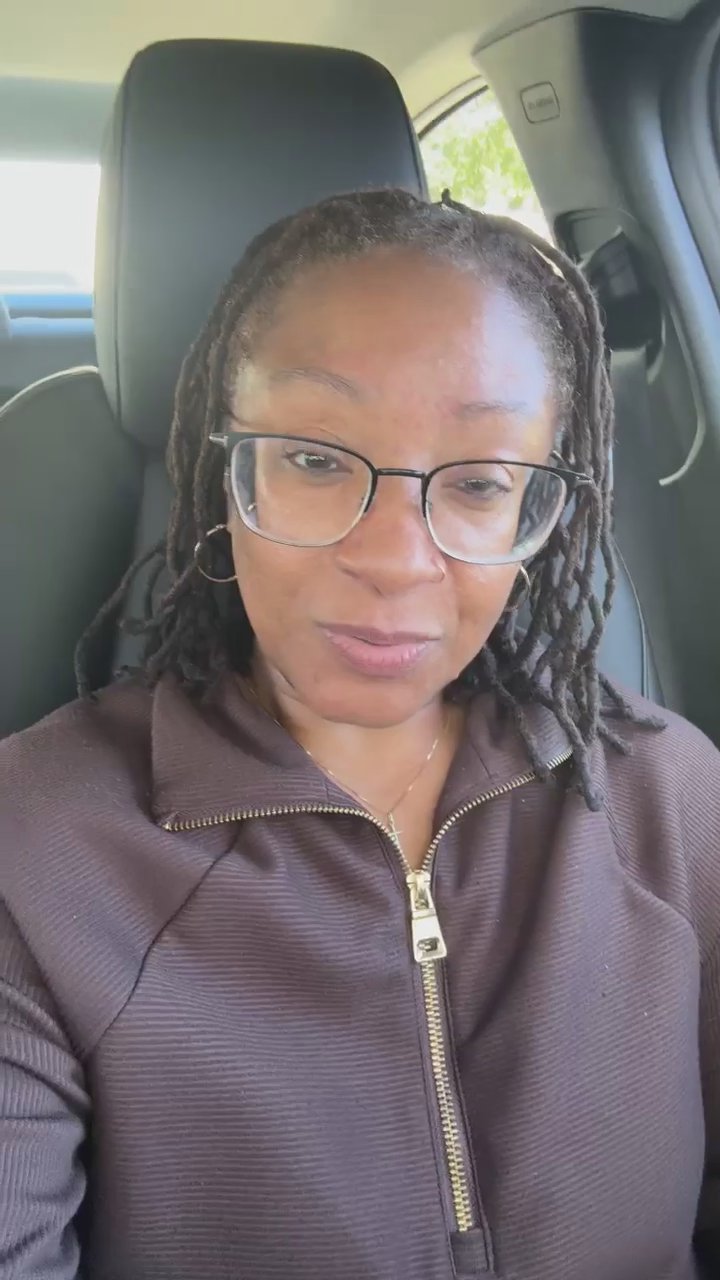
Coffee Chats with Dr. D ☕ Join Dr. D every week for real talk on relationships: romantic, friendship, or family. Come for the connection, stay for the reminder that you're never navigating this alone.
Dr. D opens the chat, apologizes for the late start, and announces that the episode will cover domestic violence during Domestic Violence Awareness Month. She also shares her own survivor disclosure and explains why talking about these issues matters.
Dr. D describes seeing a young woman with an older man and recognizing patterns from her training on trafficking and sexual assault. She reflects on the bystander dilemma—wanting to help but fearing unintended consequences—and invites viewers to share similar experiences.
This section defines multiple abuse types—emotional, psychological, sexual, financial, and cyber—and highlights that physical abuse can be concealed in less obvious places. She explains how clothing choices (e.g., dressing inappropriately for weather) can signal attempts to hide injuries.
Dr. D explains warning behaviors such as brief or withdrawn attendance at gatherings, constant phone checking or forced check-ins, and avoiding discussion about the relationship. She suggests gently asking about the partner and observing how the person responds as a way to probe for trouble.
This chapter covers noticeable changes in a person's drive, routines, or social engagement that may reflect financial exploitation or coercion. Dr. D emphasizes that abusers intentionally isolate victims, and she urges friends to stay connected and ready to listen without judgment.
Dr. D reassures viewers that it's okay to ask about someone's relationship and to offer a supportive, listening space. She notes timing matters, promises to share resources in the community, and reminds viewers that help exists when a person is ready.
In closing, Dr. D thanks participants, says she'll post resource links, asks viewers to react and return for future chats, and signs off with encouragement to stay aware and connected.
Hello, Cadre. It's me, Dr. D. I was having issues trying to log in and I am showing you how short I am. I'm pulling myself away from the steering wheel right now so I can have a little bit of space. But I'm here. So sorry for the delay. I thought I needed to like reschedule. the chat and it wasn't allowing me to do that, but it was it worked. So here we are. So today is the today's topic is a little touchy. And so I want to kind of give you that trigger warning ahead of time that we will be talking about domestic violence and abuse.
This is Domestic Violence Awareness Month, and it's something that I know has most likely impacted everyone at some point in their lives whether you have been a victim yourself or you know someone who has been a victim of violence and it's something that doesn't often get talked about especially in detail because I mean it's very triggering it's hard to hear it's hard to retell the stories um I will say hi speak wonder I will say that I am a survivor of domestic violence and it is a story that I never told until actually just a few years ago because I was randomly asked a question of how I'm able to help women who struggle with toxic relationships and my answer to that was because I've lived it myself.
And so that was the first time I broke out and broke my silence of my own experience for the public. And ever since then, I've decided that it's important for me to not just tell my story, but to empower others to tell their own stories, because that is how we stop this. We have to talk about it to know the signs. And so what we're going to talk about today is some of the hidden signs of someone who might be experiencing abuse in their relationship. So this is about intimate partner violence. So I want to rewind just a little bit.
Yesterday I was out shopping and I noticed a young, I think she may have been Hispanic, but a young Hispanic girl walking through the store with an older white male who did not appear like they would have had any type of relationship. And I've seen this before. And I don't know if this is just common in my area in the Midwest, but I've seen that pattern before. And so I'm big on patterns. And it made me think about some of the training that I've experienced with working of victims of sexual assault and victims of trafficking.
And so I recognized it, but at the same time, I was in the space of, should I say something? I don't know what to say. I mean, I do know what to say, but how to say it without causing problems for that young girl. But recognizing that I was a bystander in that moment and I could have said something that helped, but maybe me stepping in could have also caused problems for that young girl. So I didn't say anything, but I clocked it. And so I wanted to kind of bring that into today's discussion. And if that's something you've encountered yourself, let me know how maybe you have handled that or if you just decided to stay back as well.
It's really hard to speak up in those moments, but that's the bystander effect. So, but let me go through just a couple of things and this is top of mind. some hidden signs that someone is in an abusive relationship. And again, abuse is something that is experienced not just physically, but also emotional abuse. There's psychological abuse, there's sexual abuse, and even financial abuse. And now I think they're also including cyber abuse as something that people are experiencing. And that is part of all the signs of power and control.
So one hidden sign that I think, it's obvious when you see someone with bruises, you can just assume like, something's not okay there, right? That's a physical sign that is easily recognizable, but sometimes what we don't see is the bruises that may be hidden. So maybe there's intentional abuse happening where they have bruises in spots where no one would normally see. So for example, on their side, like maybe they're being pinched. Maybe there's bruises on their chest. Maybe there's bruises on their thighs that can be easily hidden with clothing or their arms, their shoulders, things like that.
Where the abuse is the physical abuse is not happening on their face or where we would normally see physical abuse. So these hidden signs that abuse is happening is when you see someone who is wearing clothing that is not really appropriate for the weather. Maybe they're trying to hide some bruising. So pay attention to that. Another hidden sign of abuse is when you have a friend or someone that you know that maybe they're in a relationship and They want to go out and spend time with friends and family.
Maybe it's a birthday party or some type of celebration, but they are not there a long time. And so they kind of pop in and they have to pop out. Or if they are there, they're not really fully present. So maybe they're physically there, but they're always on their phone. They're checking messages. You might see them pull off to the side and make a phone call. And it can appear that they're just distracted but it could be that they are being forced to check in or maybe they feel the need to check in with their partner to let them know, like to assure them like, oh, everything's fine.
I'm not talking to anyone. And so there's this hidden power of control that's happening there where they have to reassure their partner that they're not doing anything wrong. That's a hidden sign. So pay attention to that if you see that with some people that are close to you. And another hidden sign is when you start noticing that your loved one or your friend is not talking about their relationship. Usually when someone's in a loving relationship, they're proud of that. They might keep some things to themselves, but they might be posting pictures or they're talking about, oh, my partner did this and they're so happy about the relationship.
But when you start noticing that person is not talking about their partner, They have nothing positive or negative to say. It's just silence there. And so you have no idea what's going on in the relationship. And this is more for someone that you feel really connected with. Like maybe even it's your best friend where they're not talking about who they're dating. That could be a sign that there's something going on there. There's just something to pay attention to. Okay. And it could be nothing at all, but that does give you the door to open that up and ask questions.
I noticed you haven't been talking about so and so. How's that going? Right? And pay attention to how they respond to that. Another hidden sign I want to share with you today is when you start to notice that the person that you are friends with or that your loved one is starting to just change your behavior overall. So for example, if it's a high achiever, so someone who is a go getter, who is, they're always kind of doing something positive and they enjoy what they do. When that switches to, if they're in a relationship and you start noticing the switch where they feel pressure to perform, they feel pressure to go do these events because now maybe the financial abuse has happened where they are being forced to work more to take care of the person that they're in a relationship with.
And that is a sense of control as well, where it's kind of like a pimping relationship, just to be honest. That person is now being forced to work harder to be away from their partner and be in spaces. And it doesn't sound like that's abusive, right? It may sound like, well, they're just, they're successful, but why are they doing all these things? That's the underlying question we always have to ask. Why are they doing more all of a sudden? That's not in their character. When you start to see character changes, That could be a clue.
It's a red flag, something to pay attention to, that there might be a change in their relationship, a change in their dynamics there that you can just start to ask. And I want to give you a little of empowerment to ask the questions because what happens in abuse is the person in the abusive relationship is being isolated on purpose by their partner. They're being told things secretly. You know, like no one loves you but me. Your friends don't care about you. See how they don't talk to you anymore?
Like these little messages that make that person believe that no one does care, or maybe they're not being invited to spaces anymore, or maybe their friends aren't reaching out, or maybe they have been in abusive relationships over and over and over where their friends are like tired of it. And so I want to challenge you, if you know someone in that space, to stay connected to them because eventually when they get to a point where they're feeling like they can open up, they're gonna come to you and you need to be ready to hear what they have to say without judgment.
But if you disconnect from them, they have no one and they stay stuck in that relationship where they wanna get out but they don't know how to get out or they don't have a place to go, even just emotionally, they don't have a place to go. It may not just be a physical release. So challenge yourself to look for these signs. There are more. There's so many more, but we don't have all day to talk about that. I might do a part two next week. We'll see. But pay attention to the signs, the hidden signs, the ones that are not so obvious.
But the biggest clue is when you start to notice changes in that person's behavior, changes in their lack of communication with you. changes in even their appearance Okay And if you see those signs Ask the questions. It's okay. It's the same thing with asking someone if they are having thoughts of killing themselves It's not bad to do that. It's perfectly fine to say hey, is there something going on your relationship that you want to talk about? I'm here. I'm here to listen to you. I'm here to offer support Because they need to know that they're not alone people stay in toxic relationships because they feel like they have nowhere to go, no one to talk to, and that no one will understand or care.
Okay, so offer that space. And if that's you, if you are in this space of being stuck in a toxic relationship and an abusive relationship, there are so many resources. I will post them in Cadre, but just know that timing is a factor and you can get help and help is there for you when you're ready. All right. So thank you. Thank you Speak Wonder for joining me today. And for everyone watching the replay, thank you for watching. Hit the heart button, drop me a coffee emoji. Let me know you're here.
And I will see you guys next Tuesday for another coffee chat. All right, bye.