Let’s talk about Emotional Coordinates (on your heart’s map) and maybe a little fiddle music too. 🎼
The speaker opens the session as the Caregiver Day host, shares her identity as Speak Wonder, mentions her love of poetry and violin, and describes a brief camera hiccup and rescheduled live. This orients viewers and sets a warm, informal tone.
She outlines the musical group (fiddles, banjo, mandolin, guitar), explains they will play at Soldiers and Sailors care home in a gazebo, and notes practical concerns like wind and the plan to move indoors if needed. This previews the event and context for listeners.
Pulling out an old Cracker Barrel map, she recalls planning trips with her daughters, identifying rivers and stops, and shares a playful hobby of folding maps into paper boats she now sails with her grandchildren. This personal vignette supports the navigation metaphor.
Using the navigation motif, she defines 'emotional coordinates' and describes intersections like chaos and calm, hurt and mending, grief and recovered joy, and anger and relinquishment. She emphasizes grief's nonlinearity, trusting your gut, and that timing for emotional shifts is personal.
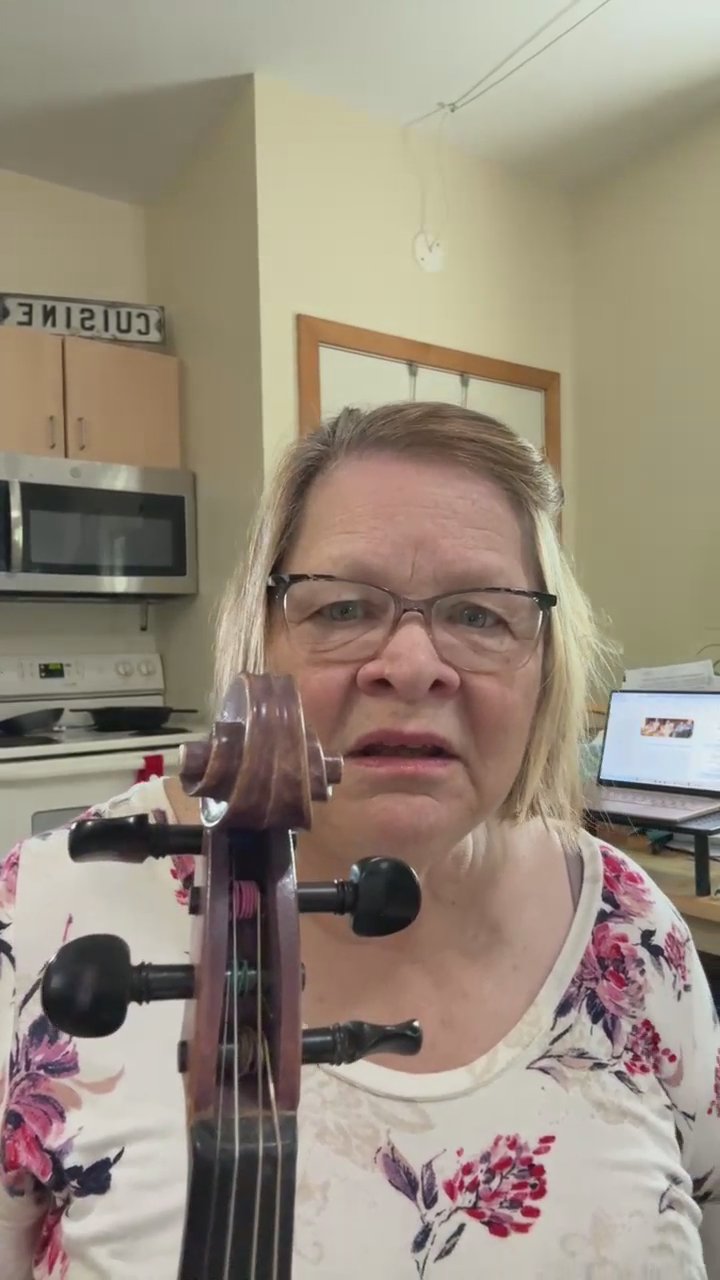
She performs a brief fiddle solo for her dog, describes the casual outdoor audience at the nursing home (wheelchairs, picnics, sing-alongs), and mentions specific songs they'll play. This gives a feel for the performance and community connection.
She highlights rest and intentional pauses as a theme for June, relates the musical 'power of the pause' to caregivers needing rest, and closes by thanking listeners and reminding them they are someone's safe harbor.
Hello! Hi everybody! It's Caregiver Day, Thursday. I am known to the Codrosphere as Speak Wonder, and I like to do poetry, haiku. I love symbolism and metaphors. Yes, I was an English major way back when I went to college. And one of the things I love about my life is that I live near Lake Erie in Erie, Pennsylvania, and I love harbors. So my metaphor, if you will, for the cadre on Caregiver Day Thursdays is that as caregivers, we're sailing each other into safe port. We're navigating waters that some of us know better than others.
Some of us are more seaworthy or lake worthy and have traveled in waters that we're just entering. Some of my best mentors are friends who have walked a parent through Alzheimer's because that's where I am now. I am an emotional caregiver to my mom who lives in a nursing home about an hour and a half away from my home here in Erie. Yes, I play the violin. I need some hearts, y'all. I need some reassurance. Somebody give me some hearts. Christy, you joined me for my very brief live that started at 1130 Eastern and then I was unable to figure out how to flip my camera so that you could see me.
You were able to see my dog and my empty violin case and my sofa. I tell you, I'm sure it was very simple, but then I had to reschedule the live to now and So if you're with me, good on you. If it's a replay, that's great too. Isn't that what life is? Just pivoting, adapting, pivoting, adapting, et cetera, et cetera. I'm going to play a couple of fiddle tunes because today I will be performing with a circle of fiddlers, guitarists. I think we have our banjo player today and our mandolin, and we're going to be playing at Soldiers and Sailors, which is a care home, a facility for our veterans.
And it's really cool. They have a Civil War cannon on the grounds. It overlooks Lake Erie. There's also an Ave. of flags and lots of history there. And we'll be playing some Civil War music, some actual music from the era. as we approach our Independence Day, just because we're at a venue where patriotism runs in our veins and American history just pulses through the hearts of the people there. And so we're going to be playing in a gazebo outdoors. I hope the wind goes down a bit because Most of us have to use music to play.
I do. There are a few of us in our fiddle circle who play by ear. And if it gets too windy or if the rain comes, we'll just move to the indoors. I'm going to put my fiddle down for just a moment and ask who remembers these. Okay, we used to carry these in our cars. This is a map of the good old United States of America and yeah Cracker Barrel distributed these maps. I don't think they make them available anymore because of good old GPS. GPS has become the way that we do things. I remember being a young adult and planning trips and opening maps and marking my course and then I remember being young mom with kids who were coming into their own uh and when we traveled the two girls would take one of these maps and help us mark out our journey and then my one daughter particularly was uh still is very good at finding um places to stop I mean she was better than a AAA trip tick really uh she would just figure out intuitively, I think, sometimes when we should stop and a good place to stop.
And of course, we became pretty good at traveling because our family would travel yearly, sometimes twice a year, from Colorado to Pennsylvania when we lived out west. And Pennsylvania, which is where I am now, is the seat of our family, our roots. And so we would come back and We would use the legend and all the symbols and my daughters could identify the rivers and then we would sometimes take a side trip to see a body of water along the way. I also make little boats out of maps. That's a cadre for another time.
I love to make these little paper boats. Now that I have grandkids, sometimes we sail them. We make a little regatta at the water that runs near my property. The property where I live, I should say. I'm a renter. So anyway, back to the topic. I thought today we could talk about emotional coordinates in the realm of maps, and then I'll play you a fiddle tune or two. Emotional coordinates, what I mean by that is basically just checking yourself emotionally. You know, whenever you went traveling or go traveling, whether it's GPS or a paper map or an atlas or your gut, you get from A to B.
You figure out a way. And that's how we do navigation emotionally. Sometimes you have to trust your gut. I do this talk for women. I talk to women's groups a lot, and one of them is meet me at the corner of chaos and calm. It's about finding the coordinate, if you will, as you're traveling through life. When it's chaotic, where can I find the street corner that says calm? And can I get off there, please? And it goes on. to talk about other coordinates. There's chaos and calm, there's hurt and mending.
Meet me at the intersection of hurt and mending because I'm tired of being on the street called hurt and I wanna take a right turn or left turn or a U-turn so I can mend, so I can rest and heal and mend. There's also the juncture of grief and recovered joy. That's a big one, talk about that a lot. as we do our grief work, as we do our different seasons, if you will. I know that's an overused word. Grief is not linear and grief lurches up at odd and unexpected times to visit us, no matter how many years have passed or no matter what the grief point is.
Because we're humans, we have memory, we have triggers. We have situations that hearken back to something that is a wound. And so how do we deal with that? How do we figure out the intersection of grief and recovered joy? Something to think about. It's okay to travel the grief road and then let's get on the highway of recovered joy and see what that feels like. And then there's loss and acceptance or some might say loss of respect and then acceptance or misunderstandings and then acceptance. And that happens through the lens of a good conversation or a long overdue phone call, perhaps a letter.
The intersection of misunderstanding and acceptance. Those are hard to find. Those are hard to find. You won't find them on a map. You'll find them in your gut. Your emotional coordinates are basically the highways and byways and pathways of your heart. And how do we find those intersections? The last one I listed here is the corner of anger and resentment. Those are kind of one and the same. So I probably should say the corner of anger and relinquishment. That's even better. How in the myriad highways of our heart do we find that juncture, that junction, that intersection from anger to relinquishment?
It's personal and it's Your timeline, not mine. And there's no shame on staying in a certain lane until you're ready to get in the other lane. There's no poor judgment in getting on the turnpike or the toll road or driving the country roads. Trust your gut. Trust your gut and find your emotional coordinates. By my screen, I think there's no one on here, but I do believe I'm live. And so I'm going to play a solo for my dog. Hey, Gracie, you want to hear? Oh, Susanna. OK, she did look up, but I don't think she really cares.
This poor sweet dog has heard me rehearsing for this event today. Yeah, we're meeting today at Soldiers and Sailors. nursing home for veterans in Erie, Pennsylvania will be in a big gazebo and our audience will be folks in wheelchairs, on lawn chairs, standing up, sitting on the grass, having a picnic. It'll be very casual and we have some sing-along songs too. We like this one. And this one is really a heart tucker honor. Hard times, hard times come again no more. Thanks for being here. Yeah, little sidestepping today, a little adjusting, pivoting, adapting.
And one of the themes for the month of June here in the cadre is rest and pause. if I've learned anything about music over the years, it is that there is built-in rest. I'm going to play probably the last line of that song as I end this cadre, and there's an intentional rest in there, meaning I stop my bow and I let the song breathe for a minute. Whether you're a musician or not a musician, I'm sure you understand the power of the pause, the power of resting, and the way that pausing For a moment, whether it's a musical score or you listening to your heart deciding to take a rest, either way, it's a way to hear the rest of the music all the better.
Remember, as a caregiver, as a human being, you are somebody's safe harbor. Thanks for the good work you do in watching out for each other.