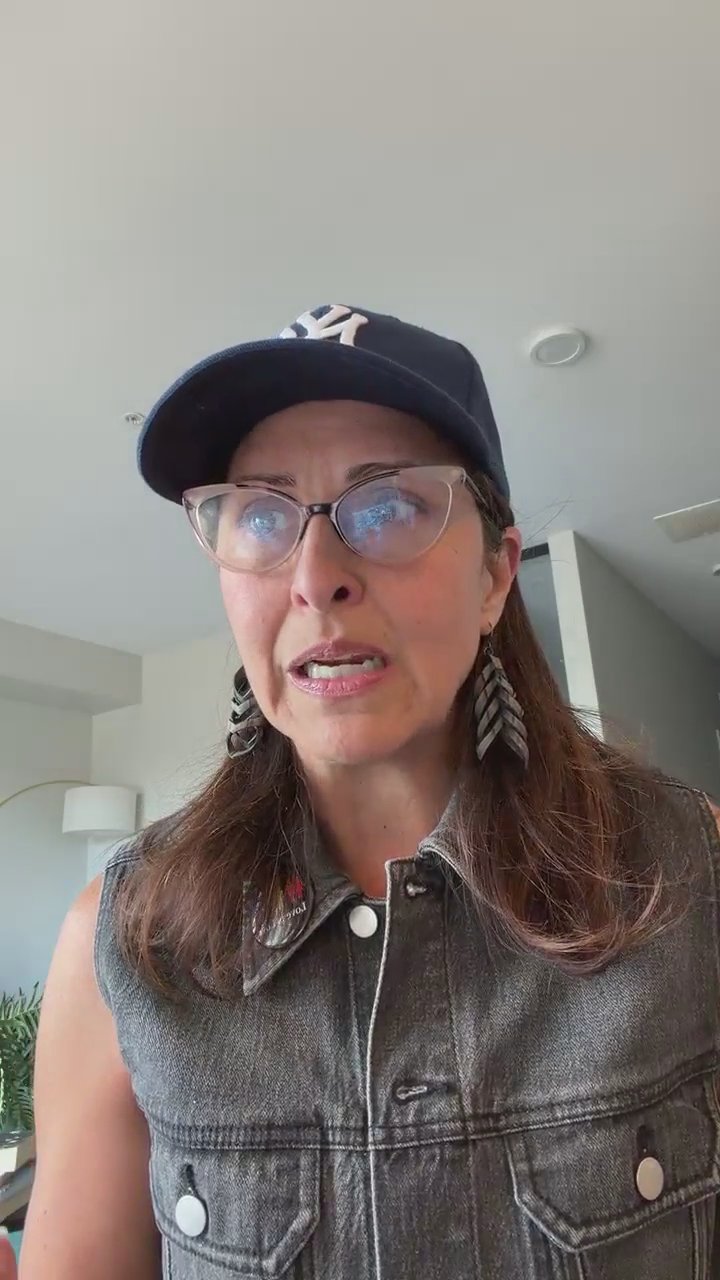
The host opens the sober happy hour, mentions Pride and her dogs, introduces the topic of escapism, and mixes a botanical non-alcoholic drink while describing its ingredients and flavors.
The host opens the sober happy hour, mentions Pride and her dogs, introduces the topic of escapism, and mixes a botanical non-alcoholic drink while describing its ingredients and flavors.
She recounts nearly 12 years of sobriety, reflects on using alcohol for decades to numb, and explains how substances provide escape until they stop working and end up numbing all emotions.
The host invites reflection and names common triggers—boredom, anxiety, grief or loss, and general discomfort—explaining how these states can recur and drive substance use.
She presents concrete tools like naming the feeling, 'playing the tape', the 10-minute rule, moving the body, deep breathing, and planning sober activities to create space and allow cravings to pass.
The host suggests tailoring coping responses for different emotions, emphasizes that feelings are not facts, promises to drop the recipe in the chat, and closes by encouraging alcohol-free happy hours.
Hey y'all. Welcome in sober not somber hour. Just getting adjusted here. I'm going to be making a cocktail today for our happy hour together. Yeah, welcome in. Hi Rachel, Jen Varoli here. Sober not somber hour. My dogs always present and with me. So if He squeaks or barks. That's what's going on. We usually get in his W-A-L-K right after this. So asking for him to be patient. Yeah. Happy Pride Month. I've got my pride button. Love is love. Got a little bling going on celebrating this month. And yeah, today we're going to talk all about escapism.
and how it relates to sobriety. But first, I'm going to mix up a cocktail as we start the conversation. So I have a favorite glass of mine. And then today we're going to be highlighting abstinence, which is kind of funny actually, thinking about escapism. And yeah, I love this beverage. So this is a botanical, zero calories, you guys. This is a cape floral. It comes in a few different varieties, but this is one of my favorite botanicals. And I will start actually just with a shot of lemonade. And this is no sugar added lemonade by Uncle Matt's.
It's the best lemonade ever. And then I'm also just going to pour a shot of abstinence in here and then add one of my favorite tonic waters by Thomas Henry, which is actually out of Europe. And if you've heard me talk about tonic waters in the past, I thought it said absinthe, funny. They are not all alike, then this is a favorite one of mine. So just for a little extra bubble, I love to add that. And then I'll give it a little stir and we can get into the conversation. Yeah, so my sobriety journey in all earnest started 12 years ago, almost 12 years ago now, coming up on 12 years in July.
And I just really was reflecting on how I actually used alcohol for two decades through my 20s and 30s. I used it to escape or to numb. Here's this beautiful drink. I'm gonna have a little sip. Oh my gosh. Oh you guys, that is so good. Oh my gosh, that is one of my favorites. Geranium. It has juniper, rose geranium, angelica root, coriander, and lemon. Gosh, everybody rush out. Get this at your local NA bottle shop. It's probably at Total Wine. Also, you can get it online. It's called abstinence.
Yeah, so escapism in the beginning and using alcohol to cope. I always say it worked until it didn't. So the thing to remember whether you are struggling to let go of alcohol or release it is to know that it is really the brain's job to like seek this sort of release and alcohol and substances actually work. Again, until they don't. They don't require any emotional skill or What do I want to say? Attention whatsoever. Just numb everything. But when you numb it or escape using a substance, you are also numbing the full effects of every other feeling, including joy, happiness, overcoming challenges, all of the other emotions.
Everything is numbed because you can't selectively numb pain or grief. Let that sit for a moment. You know, maybe we all know this, but I was just refreshing into this topic and I was like, wow, that feels really true. And in early addiction and for years, I just numbed everything because everything felt overwhelming. And I was never taught that the wide range of experiences and the human emotion or the human experience and all the emotions are what's designed for us. Like it's all part of the journey.
So I think it's important to sort of name what we might have numbed for if we are currently in sobriety or making better choices. What did we numb for, you know, when we experienced escapism in our past? And I'll give you some ideas. Boredom. This is one that kind of sneaks up. Like you don't think that boredom would cause you to drink or use a substance because We are so busy, right? And our culture and our lives are full. But surprisingly, we can also be really bored because busyness is just structure and filling our days.
And that can be really dulling or non-challenging for us. So as humans, we need some sort of excitement and challenge and fulfillment in life. Otherwise, boredom becomes let's just drink to numbness. Another one, anxiety, you know, racing thoughts all the time and just wanting that chatter to stop. It's real. It's real. And that also contributes to lack of sleep and spirals on a pattern. Thirdly, grief, loss are old wounds that never really ever truly got processed. And grief is also you know, constant.
It's not linear. It's a revolving thing that can always appear. So what do we choose to do when that grief happens? What are we, what tools, right, are in our toolkit to cope with grief or loss as it comes back years later, decades later, can come back into our lives. And then the discomfort of just existing, like just being Uncomfortable in general, not living up to certain standards you've maybe set for yourself, feeling like imposter syndrome or I can't do this or stressed financially or with as a caregiver completely stressed.
There's so many reasons humans would want to escape. Yeah, Rachel says boredom is when the mind starts wandering. Like, let's see, how can I cope for this? What do I do? I'm desperate for relief from this emotional state that I'm in that I cannot get out of. I feel that. I feel that deeply. Anyone else as you're chiming in later, whenever drop in the comments or any one of these four had been maybe a past trigger consistently for you, or they may be now and they are boredom, anxiety, grief or loss, discomfort.
Those are just a few. And then, you know, what I want to do is kind of flip the conversation to, you know, saying it's okay. We, you know, growing up weren't like really taught to handle these deep emotions and sit with them. What does that mean when somebody says, You know, sit with your emotions. Ugh, I just, I have a reaction. Like I, again, don't want to be in that state. We're always trying to move out of states that feel uncomfortable, but there's value, especially in sobriety, early sobriety and understanding.
There are hacks and tips that, you know, that I can share that you can do to sort of overcome those. Yeah, Rachel, they all kind of connect. Like as soon as you get rid of boredom, anxiety might appear. Like it's just, you know, like a constant evolving door of all these things. So it's also a good lesson to understand that nearly everyone then, everyone copes with these. I don't know anyone who doesn't have all of these things come into their lives. So I'm gonna give you some strategies. One of the first ones is to actually just name it, which like the topic or the idea of boredom, like that hardly seems like a legit cause to drink.
But if we're naming it and talking about what happens when we're bored, you know, writing this down, writing down with alcoholism, I always said play the tape, play it forward. I know it's going to happen when I feel anxiety, you know, it's five o'clock, I'm off work and I'm going to just sit in my anxiety about the workday all evening, or I could start drinking alcohol and see how that turns out. So playing the tape and actually kind of going through what will happen if you choose to use a substance to cope with that and naming it actually and being very simple about it reduces its power over you.
There's neuroscience to actually back all of this up, which is crazy. Second, 10 minute rule, cravings and discomfort can peak and pass. I talk a lot about this book I quote from Scott Carney called The Wedge. And it is that time where you interrupt those patterns that are so ingrained for pain, discomfort, grief equals treat with substance. Your brain goes there. So to interrupt those patterns, We need to create more time and space into that and that craving will pass. It will pass. And then I always say do the next right thing, which is right now take an amazing drink of this non-alcoholic beverage.
Oh my gosh, I wish I could share it with you. Third. Placing your body before your brain. So much of these decisions are just hardwired in our brain. What if we could slow down, tap into our own body? This could be going for a walk, stretching, or even 60 seconds of stepping outside and being in direct sunlight will improve your mood. So there are simple things you can do and it, you know, also just deep breathing, right? So coming into your body and having that sort of override what the brain is trying to solve for, it's huge.
The other piece, and this is more related directly to sobriety, which is sort of like this idea that you can handle boredom, but you have to recognize that in past addiction or maybe if you were using substances, how much time that actually took up in your life. So if you are in early sobriety or thinking about it, I always say make sure to plan for what are you going to be doing if you are not drinking because it frees up a lot of time, especially if you were at the end stages of active addiction where it can be very destructive in your life.
So yeah, being bored, being bored, but being sober. What a gift. What a gift. Learning that it's possible to sit with feelings and it won't in fact kill you. Yes. I actually, that's so insightful because I mean, I literally was like, I would do anything to avoid this feeling of anxiety. Anything, anything to avoid it. I really just didn't even have the awareness of what was happening. And then I would say there's also a way that you individually can figure out what works for you when it comes to the different emotions that you feel that might have caused substance use in the past or might be triggering.
So for example, talking with a friend, journaling, going to a meeting, some way to get outside of yourself and do it quickly, like not giving yourself an out. Like when this happens, I open my journal, I write. whatever that is. So that's like the container for those feelings. And it can be different for each of the emotions. Boredom, the solution can be different than dealing with grief or loss. Maybe you light a candle and say a prayer if you are considering using alcohol or a substance to cope with grief or loss.
Like that's what you do in the moment. That's your first step. And this is a big one, feelings are not facts. Who knew that? I did not. I took everything, every single emotion. And I am a cancer sign, sun sign, which is ruled by the moon, which emotions just run all day long. On any given day, I experience so many extremes, but I didn't know not to take them as facts. I thought I was listening to my body and then I would react to these feelings of anxiety by wanting to cope. didn't realize that, you know, my brain was in that space, but it really should have been looking at what are the facts, you know, around my life and why was I feeling so anxious?
So that's what I got for you guys today. Yeah, just escapism. Trying to escape all the time when being in it is the experience of being human. This is a recipe I need to drop in the chat in the in the cadre feed. I will do that. It is one of my favorites. Again, it's abstinence, not to be confused with escapism. Yeah. Thanks for tuning in y'all. I'll see you next week. Until then, enjoy your happy hours alcohol free and we'll see you next week. Chow chow.