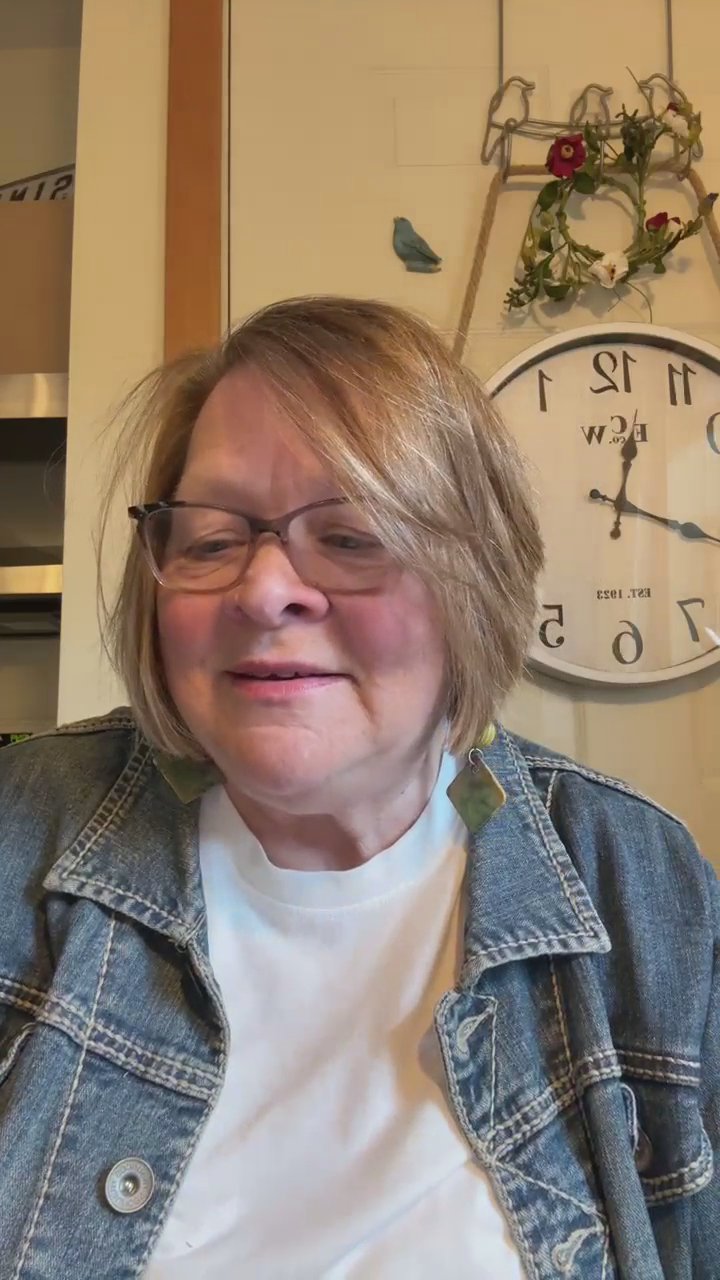
The host opens with casual greetings, a brief musical aside, and recites the start of Emily Dickinson's 'I'm nobody' before naming the poet. This orients viewers to the poem that frames the episode.
The speaker explains Dickinson's posthumous fame and uses her life to invite listeners to be proud of surviving privately. This section sets the episode's central theme of quiet resilience.
The host describes feeling invisible at grocery checkouts and ties that experience to caregiving, illustrating common moments when people feel marginalized. These concrete examples help viewers recognize similar feelings in their own lives.
After small-tech asides, the speaker expands on feeling unknown even to loved ones and emphasizes how such experiences often go unspoken. This deepens the emotional context and validates viewers' hidden struggles.
The host challenges viewers to reverse that invisibility by noticing someone else, then shares a FedEx driver story showing how a simple 'thank you' opened conversation. The anecdote introduces the 'harbor pilot' metaphor for guiding others to safe harbor.
Building on the story, the speaker expands the harbor pilot idea across time zones and urges listeners to find someone to notice and encourage. This is a direct call to action to offer small nudges of support.
The host highlights upcoming shows and Cadre community resources for mental health, then closes by repeating the poem and saying farewell. This wraps up with practical links and an emotional send-off.
Hey Jen. Hello everybody, welcome in. I'm playing instrumental music and this is Let It Go from Frozen. The end. I'm nobody. Who are you? Are you nobody too? There's a pair of us. Don't tell, they'd banish us, you know. How dreary to be somebody. How public, like a frog, to tell your name the livelong day to an admiring bog. Emily Dickinson. Yeah, prolific poet. And despite her notoriety, she wrote, so many poems, about 1800 or more, she remained largely unknown to the general public while she was alive.
Her major recognition came post, after her death, I don't know how to say that, posthumously, posthumously, after her death in 1886 when her sister Lavinia discovered Emily's extensive collection of poetry and then it was published. Now I've heard, being of a poetic bent myself, that Emily Dickinson really didn't want to be recognized during life. In fact, some of her poems were published against her will and not even under a pen name. So I guess she was okay being obscure. I'm going to ask you today to be proud of how quietly you have survived things that no one else ever sees.
Quiet survival. It's not a skill. It's more like a necessity. And sometimes it feels lonesome. And don't kid yourself. You're not invisible. Somebody is noticing you. Be proud of how quietly you have survived things nobody ever saw. Have you been to a grocery store checkout lately? I know we're doing things differently. We do a lot of things differently. My daughter, who is managing a husband and two toddlers, a very busy life, orders her groceries to be picked up curbside so that she doesn't have to get the children out of the car and go inside.
So she doesn't have some of the hassles that come along with poking around in the grocery store and picking out your own produce. I like old school. I like to go in and I have, you know, probably more time than she. So I go in the store and get stuff. My point here is, have you ever felt invisible to the checkout person? Sometimes they're delightful. Actually, always they are. They have good days and bad days like any human being. But when I feel the most invisible and the most annoyed is when I'm in the checkout line getting out my card, getting out my coupons.
I don't really have those. Getting myself situated and putting my groceries on the conveyor belt. When the checkout person talks over my head to the other checkout person in the next aisle, I don't know, they could be talking about their relationships or what they're going to have for dinner or a movie they just saw or a song they like. And I feel completely marginalized, if not wholly invisible. They're talking over me, past me and not to me and not looking in my eyes. And to me, that is poor customer service.
I think to you too, when your customer is right there getting her groceries, paying for her food, she needs to be acknowledged, right? Of course, right. And so that's an example of feeling invisible. And in the caregiving world, today is Thursday, Caregiver Day. I'm always I'm always worried that Alexa's too loud. Alexa? Softer? I mean, last time I asked if she was too loud, if the music was too loud, you said it was just right. So now I feel like I've toned it down too much. It's one thing to feel invisible in the checkout line and quite another to feel marginalized, unknown, even undiscoverable to people who you love and who love you.
Maybe it's the person you're caring for. Maybe it's someone you share living space with. Maybe it's a child or a good friend who you personally feel needs to be more attentive. You'd really love that. Alexa, louder. What about feeling unknown or unknowable, undiscoverable from those who actually do love you? It is occurring. It is occurring. It's just not verbalized sometimes. I'm going to ask you in today's cadre if you might flip the narrative. Since we sometimes don't feel discoverable, that must mean there's a lot of human beings milling around today in your world who feel the same.
How about if we took that feeling and flipped it and decided to acknowledge somebody. I did that recently with the FedEx guy. He came up my driveway and delivered a package and he seemed very frazzled. He got his truck all situated and I happened to be out watering some of my plants outside that I'm starting. And I happened to be available to come to the truck, walk over to him and receive the package. And so just as he was just turning to get in his truck, I said something very simple like, Thank you for what you do.
Thank you for what you do. I appreciate you. This gentleman turned around. He looked at me. And he actually told me a couple stories of things that had happened that day. Brief little ramblings because he felt seen and heard. He told me about how he had to direct traffic and that's not in his job description. He said sometimes when I park, it's on a busy road and can't get in the driveway safely. So he was explaining how he has to make sure the motorists know that he's there with his blinkers on.
And I think he just was venting a little because someone, myself in that situation, asked him a simple question or made a statement about the work he's doing in the world and acknowledged it. And we chatted for just a little bit. A remarkable young man, very professional. and friendly and I was glad that we could have that chat. Do you know, in that moment I was his harbor pilot. I was the vessel that came sailing up to his vessel or his cargo ship, his FedEx truck to assist him in reaching safe harbor.
We all want to get home at the end of the day. We're all surviving something. We are all about to survive something that we don't see yet. We're about to overcome something or solve a problem. Getting into safe port and wrapping that rope around the dock, climbing out for a rest and a respite is what we're all aiming for. If we can help each other on the way, that makes us harbor pilots. That makes us boats coming up and guiding each other in in the harbor. I live on the shores of Lake Erie in Erie, Pennsylvania.
I dwell in Eastern Standard Time. You Minnesotans, I think you're central. And then we've got the out west folks, Pacific time. I love that we can cross time zones and be with each other and be harbor pilots to one another. On the days when you feel discouraged, unknown, perhaps unknowable, another way to say that is misunderstood, or on your worst days when you feel not worthy enough to be seen, I would challenge you to find the person on your radar who needs to be noticed and give a compliment or ask a question, engage that person in maybe a story of your own.
A nudge of encouragement is sometimes all we need to keep going towards safe harbor. You are not unseen and you are not invisible. Let's encourage each other with that. Coming up later, we have Shannon Paul, Comedy in the Chaos, and we have Comedy Through the Chaos, I believe it is, and then Rachel's Room this evening. Cadre at any given time has something to offer you. We have the lives like this. We have these little discussions available immediately, almost immediately on replay. and then you can go into the stream.
You can also go up into the corner of Cadre and click on those three lines in the upper left hand corner and discover all the communities in Cadre. Caregiving, that's today, grief, getting sober, I'm just thinking of all the things. I didn't write them down. There are so many categories in which mental health is paramount. And Qadri is here to sustain and support that for you in real conversations, in real life. Good days and in-between days, stellar days, quiet days, reset days, reclaiming days, victorious days, and days that are meh.
It's all there. It's all rolling out. organically, realistically, and not in neat little packages. That's what I love about Cadre is that we hop on here and we get real and we are in the grit and grime with each other. I'm nobody. Who are you? Are you nobody too? then there's a pair of us don't tell they banish us you know how dreary to be somebody how public like a frog to tell your name the livelong day to an admiring bog go and be nobody because you're somebody to me and I want to hear you Beller in the bog because you are known and knowable see you next week in the Harbor