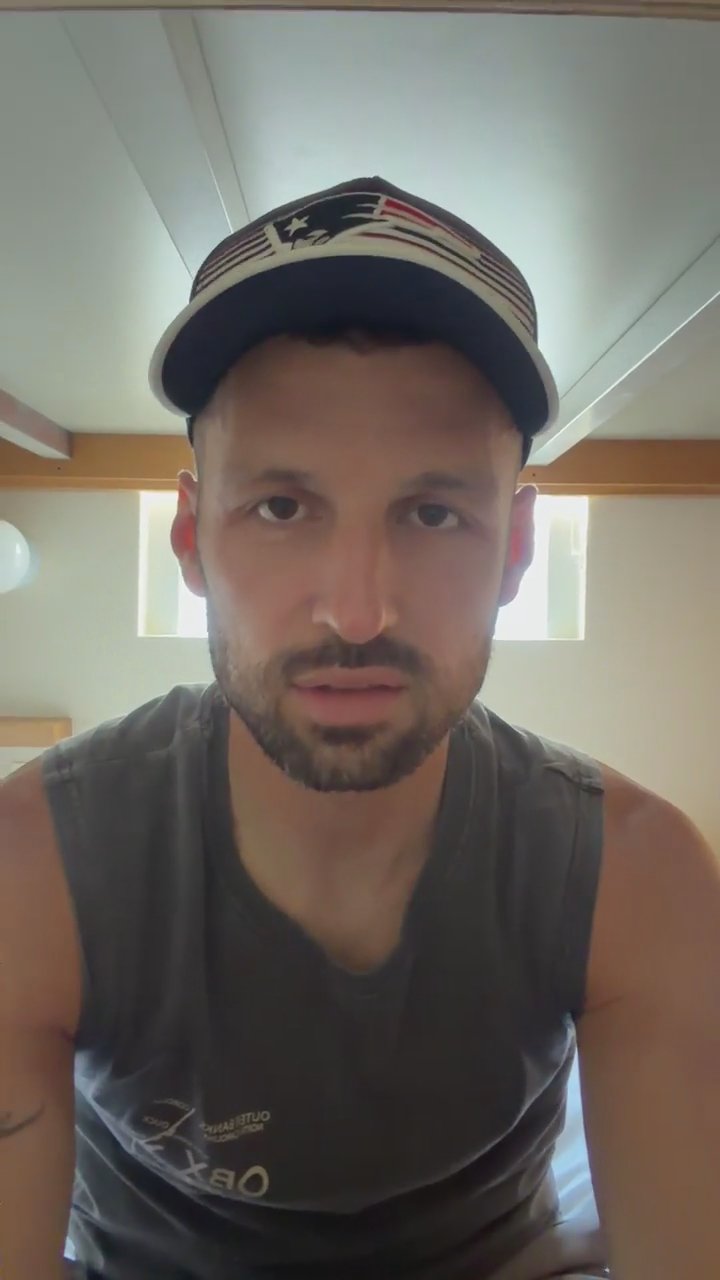
Jason Lennox coming at you with weekly Sunday Serenity. Coming to you, just talking about all things recovery from substances, mental health. It doesn't have to be something massive like that. Everything was about five mile chunks. Anyone can do five. If it's $5, if it's 5 minutes.
Jason Lennox coming at you with weekly Sunday Serenity. The Patriots excited that, that we're back in the big game. Coming to you, just talking about all things recovery from substances, mental health.
This year we're going around the perimeter of Minnesota, which will be 1,776 fitting miles for the 250th anniversary of our country. I want to ask this question and maybe get some comments and then use some of that data to just inspire some of this walk.
What would be the one thing you would hold on to in terms of the why? We lost 307,000 people to suicide in 2024. Jen: For me, the why was very easy. But the why doesn't always get us there.
The why is crucial to any big thing that we want to do in any. It doesn't have to be something massive like that. Everything was about five mile chunks. Anyone can do five. If it's $5, if it's 5 minutes. It's just anything.
Good evening. Happy Sunday everybody in the Cadre sphere. Hey, Jason Lennox coming at you with weekly Sunday Serenity. A little bit early because it is super bowl day and if you can't tell who I'm cheering for, it's my hometown team. The Patriots excited that, that we're back in the big game. There are a lot of jokes, a lot of things going around about the Patriots and about Patriots fans. Like, oh my gosh, it must be so horrible being a Patriots fan. There are six year old kids who've never seen a championship, all the things.
So it's pretty funny. They had a few bad years, but good to see them back. So I'm gonna be checking it out. I'm actually down in Miami, Florida, so I'm gonna go find a spot here on the beach to enjoy the game here and in about an hour. But excited to just chit chat a little bit this week. Again, Jason Lennox, and this is Sunday Serenity. I like to say I'm your resident recovery champion. Coming to you, just talking about all things recovery from substances, mental health, everything. Good afternoon, Jules.
Great to see you here. And today I want to talk about. Happy Sunday to you, Luke. Luke is inspiring a little bit. What I'm sharing. We were talking a little bit earlier and then maybe again Friday about a big walk that we're going on and we did this last fall, it was about 500 miles. This year we're going around the perimeter of Minnesota, which will be 1,776 fitting miles for the 250th anniversary of our country. One of the things that stuck out last year and that just became very apparent has been apparent over time in my life and all the things in recovery is when we're doing hard things, we really, really have to be tied to a good why there's got to be something underneath.
And so I want to ask this question and maybe get some comments and then use some of that data to just inspire some of this walk. But then I'll move on. The question that I have is if you had to walk 1,776 miles or even 15 to 20 miles in a given day just to participate in something like that, what would be the thing? Whether it be a person, whether it be a cause, whether it be a community that would actually sustain you, that you would continue to, to continue to be able to show up for and push through when things get challenging, when things get hard, what would be that one thing again?
What's one thing? If it's a person, if it's a community, if it's a cause, if it's an institution that would sustain you and help you kind of push through, what would you hold on to in terms of the why? So I'd love to hear your thoughts in the comments there, and I'll tie back into those. But for me, this thing was always personal. It was always about recovery and the people that, you know, we continue to lose. We lost 307,000 in 2024. We'll find out how big that number is in 2025. But thinking about those people that we lost, thinking about all the people we didn't have to lose, of course, thinking about the person that I once was.
I heard a speaker say something one time that just has stuck with me forever, and that's that we are best positioned to serve the person we once were. And that just landed with me. And I have latched onto that and realize, young Jason, little Jason, I'm here to serve that person and all those people out there that are on that path. So for me, the why was very easy. Emily. Suicide prevention, I love that. So that puts you right in the front seat of the Cadre van for at least part of that journey, because it's exactly what we're doing.
So excited to have you there. I know you'll participate in some way, shape or form, but nonetheless, the. The big why. 307,000 people. I lost my dad to alcoholism. He was 39. I'm 39 now. So it's. He was very young. I was young. Just have seen a lot of people lost to this thing. It's very unfortunate, but that's my why, and that's easy. But the why doesn't always get us there. It's not always enough. In fact, I don't know if it ever is. Let me give you a couple examples of what else is required. Hi, Jen.
Great to see you here. But give you a couple examples of when it actually took a little more. I wrote a memoir. I published it three, a little over three years ago. I was trying to write that thing for probably six or seven years. And for the first two or three years, the furthest I would get is I would write an intro and a really neat story. Loved it. Great little intro. And that's all the farther I could get. Nothing else would come after that. It was just such a daunting task that it was really hard for me to understand where I would start, where it would go, how I would finish.
Seeing the finish line, it was really a challenge for me and a lesson I learned there was. I had to chunk that out. So I had the why, knew I wanted to write the book because I knew that people would understand substance use, mental health a little bit differently if they had the information, if they had the correct information, accurate understanding of what actually happens for people who struggle with these things. I realized that when I spoke that people didn't believe what they believed about drugs, alcohol, mental health, because they just wanted to think we were bad people.
They just didn't know any different. They believed what seemed logical. If you. You do drugs, you drink, you get in trouble, you just remove the drugs and the drinking and you won't get in trouble. Right? It seemed like a simple equation. But as I started to share what was really going on, when those choices were facing me, I think people started to get it. So I knew I was going to write the book. I had the why. I wanted to carry this message to as many people as I could. I couldn't get off the start line again.
Just a little intro. And I reach out to my cousin, she had written a book, and I asked her for some guidance. And she said, why don't you just start a blog, chunk out your journey, just tell different stories from your journey, and then by the time you get to the end, you've got, you know, the compilation of all these stories, which is a good start for a memoir. And so I did that and I took that thing, I took it to an editor. The editor had some very specific feedback, kind of started from scratch again, though.
Not really. And, you know, within a year and a half, boom, there I was done. And that's what it took, was actually taking my brain from not being able to see how the whole thing was going to work and chunking it out. The second example, and Jules, I see are first responders, mental health, suicide prevention. I also saw your note that will be coming through your neck of the woods. So again, would love to have you join. We're going to have opportunities for all kinds of people to. To come out and join us.
And that's part of why I asked the question, because I want to know what gets people motivated, what helps people, what it would be that someone would go, I want to go participate in this thing because we need to have this conversation, be as big, far and wide as possible. Another example I'll give you. And yeah, look at that. The culture book. There you go. And the stories. It seems very. It is a really good way to write a book. So if you ever feel like writing a book, anyone happy to chat with you, I learned a lot of lessons and probably could save some people some time, some energy, etc.
Second example, we went on this 500 mile walk last, last fall, which actually seems pretty short when I start thinking of 1776 and everything is kind of relative, right? Like a 15 mile walk in my life. It only happened once, 15 miles in a day, once. Before I took that walk. We did 35 on the first day and then I think 25 or almost 30 the second day. We averaged 22, 23 miles per day over a three and a half week span. So it's all relative. But in those moments, and this was more naturally. So the first, first example memoir, I actually had to reach out and share with somebody, hey, this is where I'm struggling.
I need some help. Can you offer some guidance? And that's, that's what came. The second one was natural. It just after the first day, I think it was even the first day, you know, thinking about walking 35 miles in a day is, is absolutely daunting, brutal. It just, and I don't even think we thought we were going to walk that far. Certainly if we had set that as a goal and just kind of went and not stopped, we probably would have made it, but would have been, would have been much more challenging.
What naturally happened was we said, you know, let's just meet five miles up, just go five miles and then we'll regroup there, we'll, you know, maybe fill up on liquids, stop in, grab a little snack, a little bite to eat, see how it goes. And the next thing you know, five miles became the thing. Everything was about five mile chunks. And it made the entire journey so much more doable. And Luke and I, you know, we kept saying, and we keep saying, that's gonna be a theme this year. Anyone can do five.
Anyone can do five. Anyone can do 5. If it's $5. If it's 5 miles, if it's 5 minutes, if it's 5 conversations. Five was a digestible number, something I could swallow and go, yeah, we can just do another five. It's just another five. And we would meet at the two and a half mile park and spot and, and kind of carry on to finish the five. But the point is, anyone could do five. We could easily comprehend just, I miss walking another five miles. It's going to be about an hour and hour and a half, hour and 45 minutes, but it's just five miles.
Five miles, I can do five miles. And that's what happened. And that ended up carrying the day. So we would do four or five of those stretches. So it was easy to break that day up. And the next thing you know, day is over, one after another, 24 days later, and there we were. And I felt better at the end than I did at the beginning. So my point in all this is the why is kind of crucial to any big thing that we want to do in any. It doesn't have to be something massive like that. It's just anything.
We want to write a book. We want to figure out how to get sober thinking about that for the rest of life. I couldn't do it in the beginning, but chunking it out to what they say, one day at a time, one day at a time, and doing that and thinking about it in that way in 24 hours, okay, I can hang on for 24 hours. So the why is critical, but it's chunking that out and realizing there are pieces to this, components to this, and we don't have to bite it all off at once. And yeah, Jen, exactly 5,000 words.
I can do that. I can write a page and a half on Word document, get to 5,000 words, and I do 5,000 more, and you times up by 10, and you've got. You've got the beginning of a book. And again, five. Anyone can do five. That's how we had to chunk that thing out. So my point is all these great ideas, and I think we should all have some big ideas and some things we really want to do, things that challenge us. Because I think a huge part of the serenity that I like to talk about comes from living a life that's fulfilled and living up to what we know we have inside of us, what we could be, what we would be, and what we should be.
And I think there's important. It's a very important part of me feeling aligned in life, which allows me to kind of feel that serenity, get back to the nothingness that's there that just helps me feel like I am where I'm supposed to be. I can appreciate things, I can be present and, you know, living into those big ideas, big dreams, however big they are, is a big part of that. And again, we have to have our why to kind of get off the start line, in my opinion. But we've got to chunk that thing out.
Otherwise, these little races get to be long, they get to be hard, and we end up quitting before we know it because we can't see the finish line. So, again, big idea requires the. The why behind it all. And then chunking it out and, you know, five miles at a time up to 1776, it's gonna take a little bit longer, but one town at a time, five people walking at a time. It's. It's just. Just those kinds of things that will help us get there. And I'm a firm believer that anybody can accomplish anything we set out to when we have those rules and we have those principles and we have the people that can support us.
So I'm grateful that I have the opportunity to do things like that, to kind of get behind the why, to have the people in my life who can help me understand how to chunk it out and to have the people in my life who can participate and, you know, each of those chunks and just drive me to get a little further. So it's great catching up. I'm gonna head out here. I'm gonna go find a quick bite, like I said down in Miami, and do one last little walk here before the big game here in about an hour. And if you are neutral and you're watching this game and you feel like you have it in you to not be neutral, you can cheer for my Patriots.
I will not be mad about that. If you hate them like a lot of America does, I get it. You know, I was a Patriots fan. I am a Patriots fan. And watching the Chiefs dominate year after year, it's just like, I just want to see someone else win. So it's okay if you're cheering against the Patriots, but if you don't have a dog in the fight, like I said, you can cheer for the Patriots. I'd be happy to welcome you to the. To the bandwagon. So hope you all enjoy the Super Bowl. If you're not watching the Super Bowl, I hope you enjoy Sunday night, wherever you are.
Look forward to talking more. 1776, the big walk, the wise, mental health, everything with you all as we gear up for that starting this summer and again, hope you all enjoy the rest of your Sunday and have wonderful weeks, and we will see you again next week. Thanks. Bye. Bye.