A recent interaction or even incident I had got me really thinking about men’s issues and the putative crisis facing men these days
This week, Jarrett ponders why we care about men's pain and suffering. He says men are not the problem; the problem is how women have been raised. How can we have conversations about men and women without affecting society?
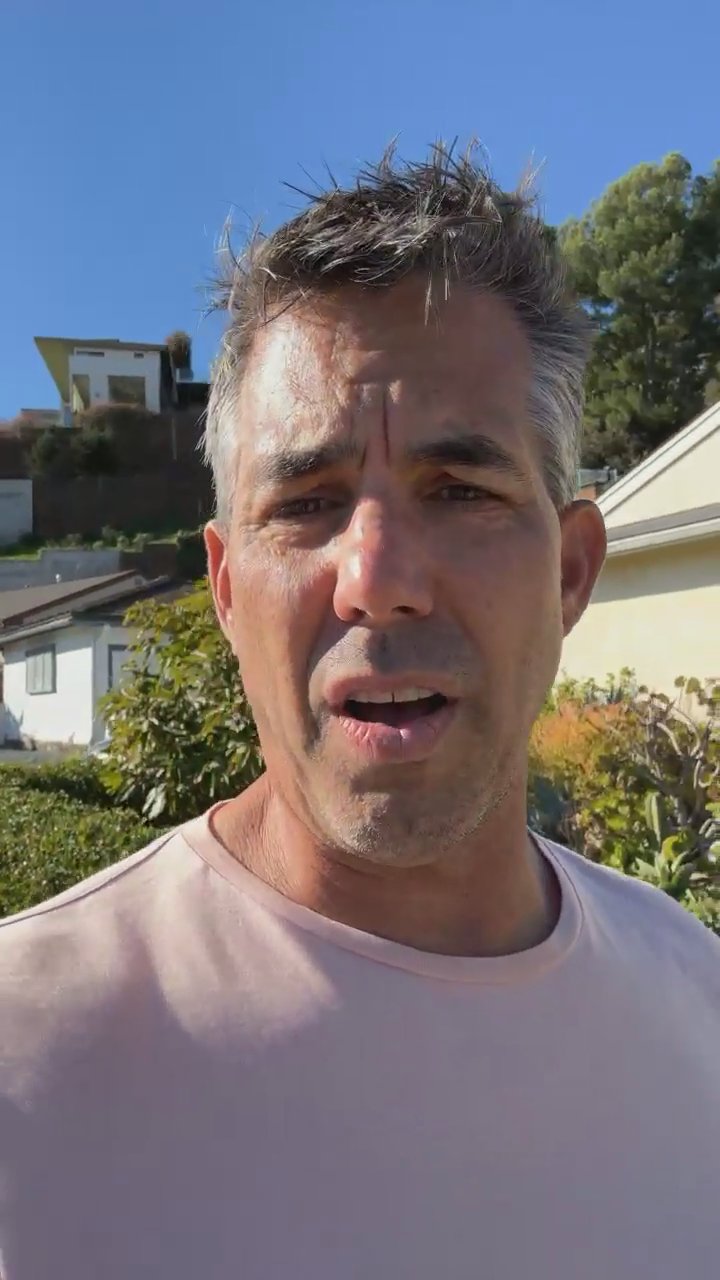
Well, hello, Cadre sphere. I thought I'd try something a little different. I'm walking with my daughter and my dog, both of whom have asked me not to put them on camera. And so they're actually speeding up now to get away from me, which, you know, that's what happens sometimes, and that's okay. So it's a beautiful day here in Los Angeles, and it's actually quite warm, which I know is not the case for everybody who's gonna maybe be checking this out. So one of the things that's come up recently, and it's the title of today's.
Today's conversation, is when we think of, like, men, masculinity, healthy masculinity, why should we care? Right? Should we care? That's one of the questions. And, you know, it's. So two weeks ago, was having a conversation. It was not intended to be a conversation. And I'll just kind of. I'll give the. The spoiler. I did not handle the conversation well. Was at the gym. Woman made insensitive, insulting comment about men. I took the bait. I said something. Then it became me and six women having a conversation.
Nobody listening to anybody, myself included. But it was clear that any conversation that was attempting to say that there is an epidemic of male loneliness, that there is a reason for us to care about men's pain and suffering. Like, it's so hard sometimes, I think, for women to hear that without hearing what is not being said, which is that women's pain and suffering also matters, that women are experiencing a lot. And of course, that there are a lot of women who are experiencing a lot of suffering from.
From men, especially men, who buy into a lot of patriarchal stuff. Well, I got stuck on the idea that we're all in this together. I got stuck on the idea that women are part of the problem as much as they can be part of the solution. But women are part of the problem, too. It didn't go well, as you can imagine, but it really got me to think, like, how do we talk about all of this in a way that programs that talk about, you know, styles, that sort of stuff have those conversations? Those are the hard conversations that we have to have if we're genuinely, genuinely going to make a difference in the world of not just men, but men and women.
So do we care? Yes. Is it a hard conversation to have? Hundred percent. The easy conversation is to say men are the problem. Right. The easy conversation is. I don't know other things as well, but it's just not the truth. Men are not the problem. The problem is how men have been raised. The problem is how women have been raised. Gender conditioning affects us all. I can't tell you how many at this point, hundreds of men I've worked with who have been brutal, brutalized by women, emotionally, verbally, in relationships.
And the way it used to work with me is I used to always assume they had done something, too, that they had done something wrong. Sometimes they have, sometimes they haven't. Because in relationships, especially when you have abuse, especially when you have attachment stuff, especially when you have past trauma getting churned up in these relationships, who. What. Who's doing it? Men. Yeah. Women. Yeah. Doing it to each other. Mutual stuff. All of this is part of what we're talking about. All of this is like how we heal relationships.
I don't know how to do it any way other than being honest. And I know on that day, I know on that day with those women, I failed, right? I failed to appreciate the nuance. I failed to understand the fact that even though they've known me a long time, they don't really know the work that I do because I don't talk about it at the gym. And then I started the conversation defensively. That's the perfect way to set up, to have a setup. Not only then did I. Did I set it up for failure because I started defensively, I then I then started sharing things with not enough context, with not enough understanding or appreciation for the nuance that was needed.
So, okay, I made a mistake. I beat myself up enough for that mistake. I beat the crap out of myself for that mistake in many ways. And it's not completely resolved, frankly, because people got pretty upset about the conversation. But I'm pretty clear about my part. I spent some time talking to people, working through it emotionally, and just kind of really like, where am I responsible? And then where am I not? Where do I not need to take responsibility? But it really got me thinking. How do we have these conversations?
How can we send. How can we have the conversation about men and what's affecting men in our society without it feeling competitive or an either or, with what's happening to women and how we need to help, helping and support women? So those are my thoughts. I don't know how compelling they are, but I know that starting this nonprofit, I'm going to have to confront these issues, these challenges, probably on a daily basis as we attempt to really make a difference. And I'll look forward to having these conversations with the Cadre community to help me learn how to have the conversation, help me appreciate the nuances and the things I can't see.
But I think it's pretty clear for me at least at this point, I'm not going to stop having the conversation. There's too much at stake and there's too much opportunity to help men who are suffering. So there you go. Happy first December 1st, Saturday of December. Wishing everybody well and have a great weekend and take care of.