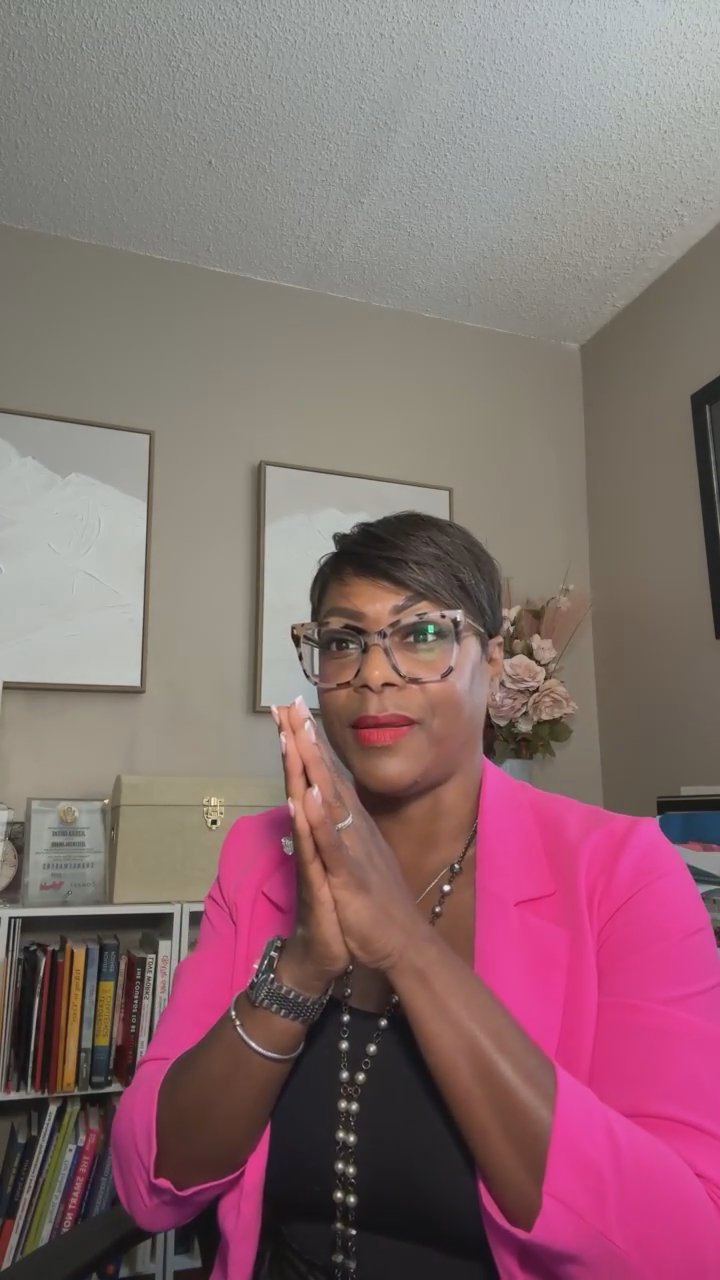
Today is going to be a fabulous and awesome day. The rain has stopped, so here in South Carolina, that rain has been coming down for the past couple of days. Grief isn't always about losing, physically losing a person to death. There is so much more to grief.
Good morning. Today is going to be a fabulous and awesome day. The rain has stopped, so here in South Carolina, that rain has been coming down for the past couple of days. And now we have again our bright, sunny skies. So I want everyone to let me know where you are located and how's the weather.
Today is officially October 1st, and we are venturing into the season of fall. Rachel's joining us from, from Dallas and it's finally getting nice out. Let me know where you are and how is the weather.
Today we are going to talk about the important of the importance of rituals, but also our ability to celebrate beginnings, but then also being able to let go. Grief isn't always about losing, physically losing a person to death. There is so much more to grief.
The first is write a letter of gratitude. The second is create a symbolic action. This could be lighting a candle, releasing balloons, planting flowers. Lastly is sharing stories. Speaking what was good also helps us take a different approach.
Grief involves losing a job, relocating, losing a coach, or even moving to a different school. Is it going to look different? Absolutely. But that growth often requires us to see vulnerability as a positive. Next week, we talk about the importance of personal growth and ways to manage our mental wellness.
Good morning. Good morning, Cadre. Today is going to be a fabulous and awesome day. The rain has stopped, so I don't know about you all, but here in South Carolina, that rain has been coming down for the past couple of days. And now we have again our bright, sunny skies. So we wake up. We wake up with enthusiasm. We wake up with that sense of today is going to be an awesome, fabulous day. And we wake up with that sense of gratitude. So I want everyone to let me know where you are located and how's the weather where you are.
Michelle, good morning. Thank you for joining us. So I want to talk about the weather and I want you to tell me how the weather is where you are. Good morning, Rachel. Here it is, shining bright, which means today is going to be a great day. So again, let me know where you are and how is the weather because Today is officially October 1st, and we are venturing into the season of fall. But then we're also venturing into. Okay, what are some of those things that I have to say goodbye to? Rachel's joining us from, from Dallas and it's finally getting nice out.
Yes. And here in Myrtle beach, that humidity can sometimes get the best of us, too. So, Rachel, I am glad you are enjoying Dallas and I am catching some of us as we come in the live stream, which is wonderful. But some of you who may be joining me for the first time, My name is Dr. Jessica Green and I am a licensed therapist in South Carolina, but I also practice in Florida and I practice in North Carolina. So when it comes to seeing clients, I wear multiple hats. And, and I am also a CE provider, continuing education provider for South Carolina where I take on LPC associates.
Those who had just passed their license exam, they're so excited, eager to get ready in the to the counseling world. And we make sure they have those tools that they need. So when they do receive their full license, they are ready to hit the ground running. So today, as you know, we talk about that and wait some others to come in. Today we are going to talk about the important of the importance of rituals, but then also our ability to celebrate beginnings, but then also being able to let go. Being able to let go.
So a lot of times we celebrate those beginnings, but we don't always talk about those innings and endings. And when I say those endings, I'm talking about those moments where we may leave a job, those moments where we may be moving into a different place or even letting go of a season of life when we had to say goodbyes, you know, for my parents who have those high school seniors or those college freshmen, think about that moment when it was hard for you to say goodbye, but it was that moment that we were waiting for, that moment that we have built up and that moment where we knew it was coming, and our ability to see vulnerability in a positive way, because this is something that we have been waiting for.
So when we think about creating rituals around them, I want you to think about what we can do to support not only our mental health, our mental wellness, but then also support personal growth. So when we think about endings, right, endings can stir up grief, they can stir up fear, and they can stir up that uncertainty, which increases that anxiety, because we go into a lot of the unknown and our ability to be able to focus on what will happen and what could happen. So when we have that unresolved emotions, sometimes it leads us to not honoring who we are.
And in those moments, we react as opposed to respond. So remember, when we talk about responding versus reacting, responding is when we take that deep breath and we think about the consequences before we take that action. But when we think about reacting, it's all for that impulsiveness where we're not thinking about what we're saying. And sometimes this happens in the workforce. It happens at home with those people become those innocent bystanders. Had nothing to do with what you and Rachel, you and Michelle had going on in the office.
We get home, our kids are ready to hug us. Our husband is, you know, or wife or partner ready to give us a kiss, and we say, oh, get away from me, or I'm not in the mood, when they had nothing to do with that. So we have to recognize our ability in that transition to home, being able to transition from that worker to that partner to that mother to that caregiver. And yes, Rachel, this is definitely an important topic. At least once a week, we need to talk to someone about how irritating it is that grief is so often only associated with death.
Absolutely. People don't realize there is so much more, and there is so much more to grief. When we think about moving, there's grief in. In that component. Our kids, they have grown up elementary school, middle school with these same students, kids in the neighborhood, and we're moving them. So they're grieving those relationships. They're grieving losing those friends, my student athletes. It's a grieving process for them. And as Rachel said, everyone grieves they may be losing a coach. You know, and we know with the.
With the transfer portal, our athletes lose their roommates and those roommates are just like family. They're losing coaches, you know, coaches being fired or getting a better position. So, yes, Rachel, when we think about grieving, it's definitely a lot more. A lot more than death. So thank you so much for recognizing that and being. And holding us accountable. And in that reminder, grief isn't always about losing, physically losing a person to death. So when we think about those rituals and we think about that closure, reminding ourselves that we need that closure, I want you to.
To think of some things in ways that we can acknowledge it. All right, so we are going to talk about what are some things that we can do in order to say goodbye. So the first will be write a letter of gratitude where you're thinking that person, that place or season for what it gave you. And, you know, you don't have to send it, but it's important that we write it. For example, I was a part of a board where I completed my term and I transitioned off. But I received a wonderful letter from a board member expressing their sense of gratitude.
And let me tell you how that moment and what it felt like for me. It allowed me to feel appreciated. It allowed me to feel wanted. But then it also reminded me my worth and my value and what I brought to the table and what I brought to the table. The second is create a symbolic action. All right, so this could be lighting a candle, releasing balloons, planting flowers, or even packing away an item that represents the ending. Now, say we play. We play golf, right? And due to an injury, we're no longer able to play golf.
Or due to a circumstance, we're no longer to participate in that sport. Or even when we talk about grief and losing someone, what is it that that person really enjoyed? And as we're approaching, you know, our holiday season, between Halloween, between Thanksgiving and even Christmas, I want you to think about what's one ornament that I can use that represents that person? For example, if a person loves golf, a retired football coach, you know, you may try to find an ornament of a football jersey, a football, but something representing football.
Grandmother who loved to cook. You know, she loved baking apple pies. You know, we may find that ornament that's an apple, and we could put it on the Christmas tree. Or even when we talk about lighting candles, it was, you know, their favorite scents. Or it's a scent that reminds me of being back home. So I want you to think about utilizing some of those. And sometimes it's going to take us thinking outside the box, which is okay. And even getting some input from others. And lastly is sharing stories.
If others are involved, it's important that we gather and we share those memories because speaking what was good also helps us take a different approach. And we are more engaged as a being resistant or we're not avoiding those. Those critical and crucial conversations. So when we think about loss, again, it's not always losing a person to death. Grief involves losing a job, relocating, losing a coach, or even moving to. To a different school. So as we talk about grief, as we talk about the importance of saying goodbye, these goodbye rituals, they are not about forgetting.
They're about integrating. You know, how can we move that person, place it, place or thing with us. And they also remind us that even if something is ending, there are lessons learned, there are memories, and that gives us strength to be able to move forward with them. And the importance of that legacy. Is it going to look different? Absolutely. But that growth often requires us to see vulnerability as a positive. That growth allows us to recognize it. And that growth also allows us to ask for help when needed.
And there will not be that sense of shame, it will not be that sense of bias when it comes to asking for help. So I want you to think about your personal board of directors and those individuals that you can reach out to where you can talk to them. What you talk about stays between you all, and whenever it is time to go to battle, they are ready to armor up. Thank you for listening, and I hope I see you next Wednesday as we talk about the importance of personal growth, but then also ways to manage our mental wellness.
Thank you for listening. It.